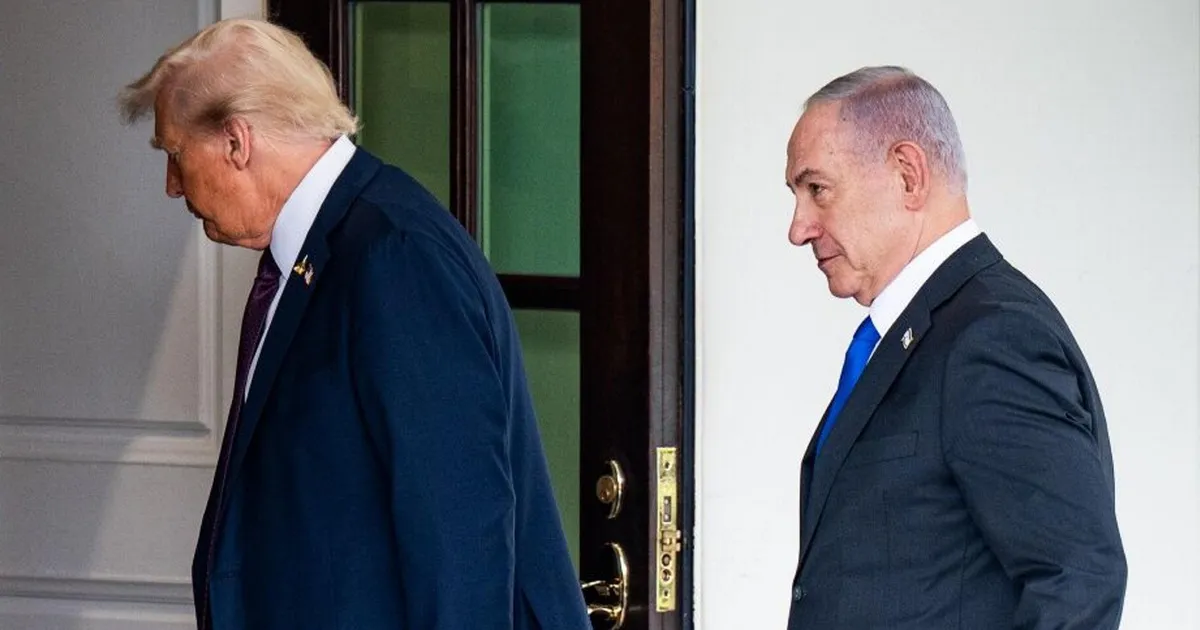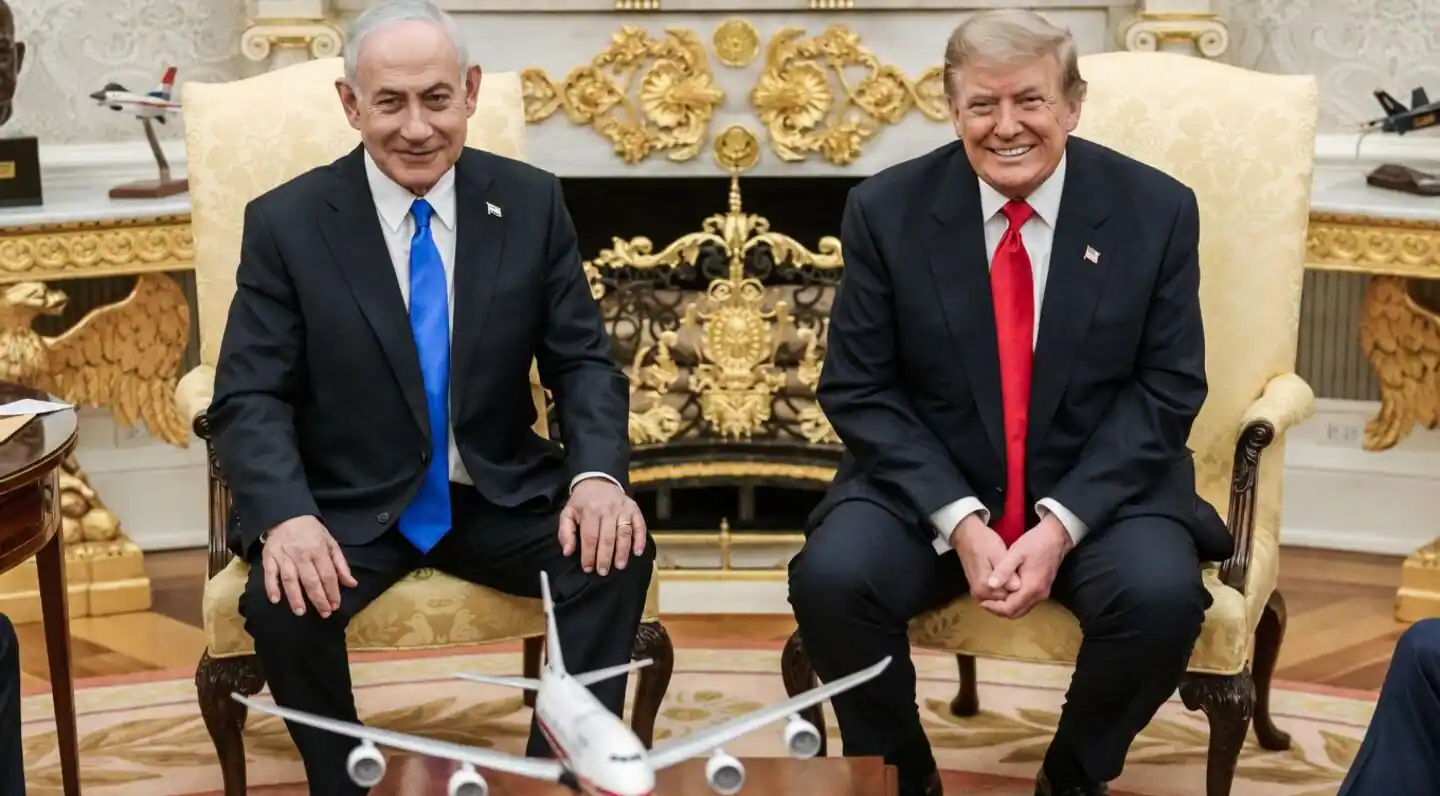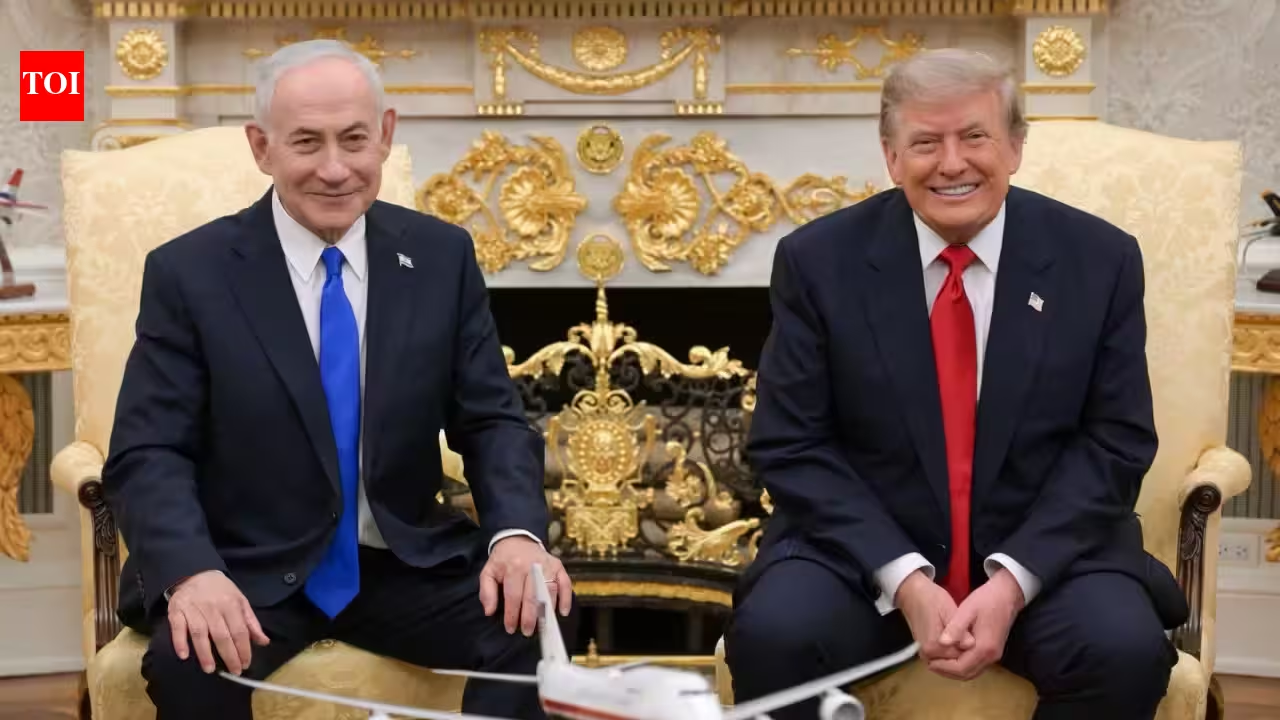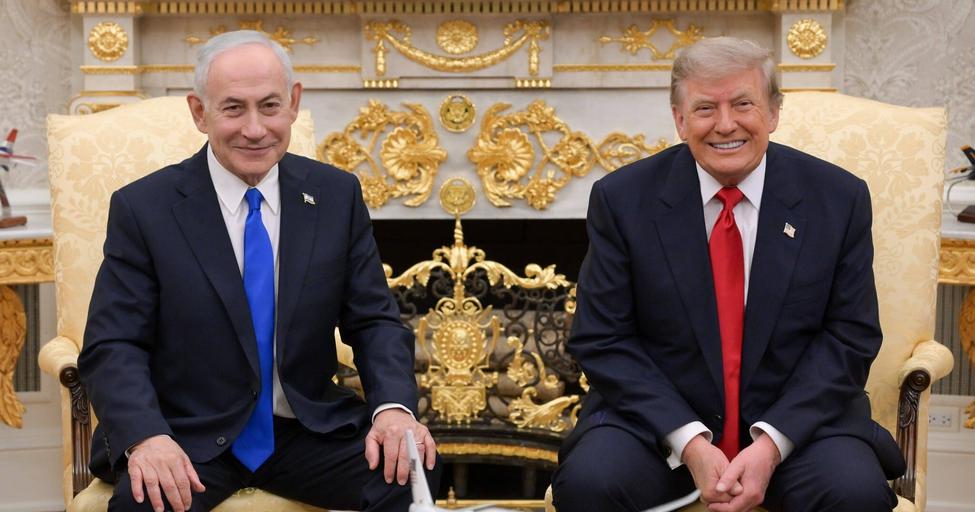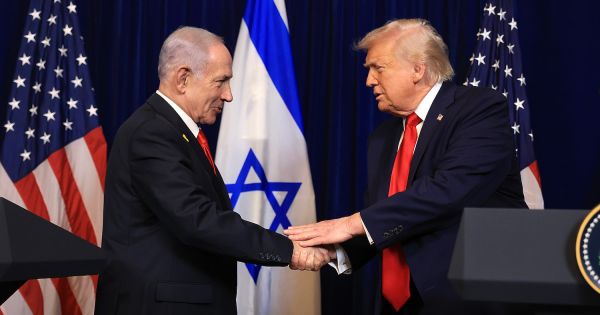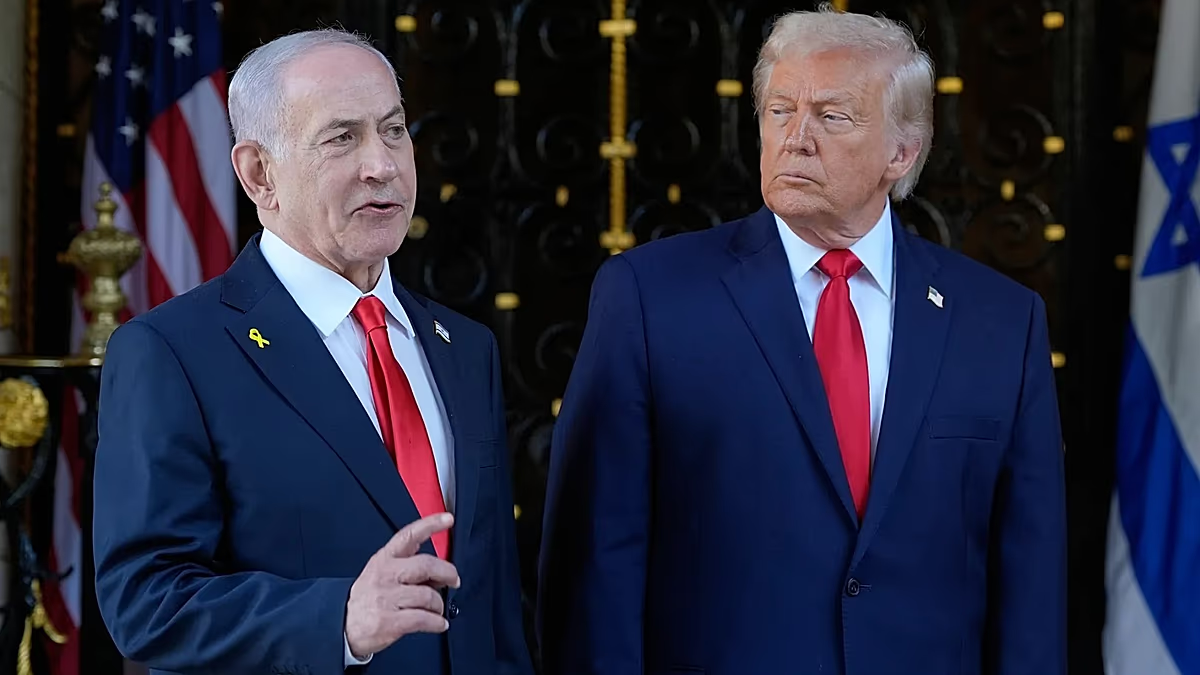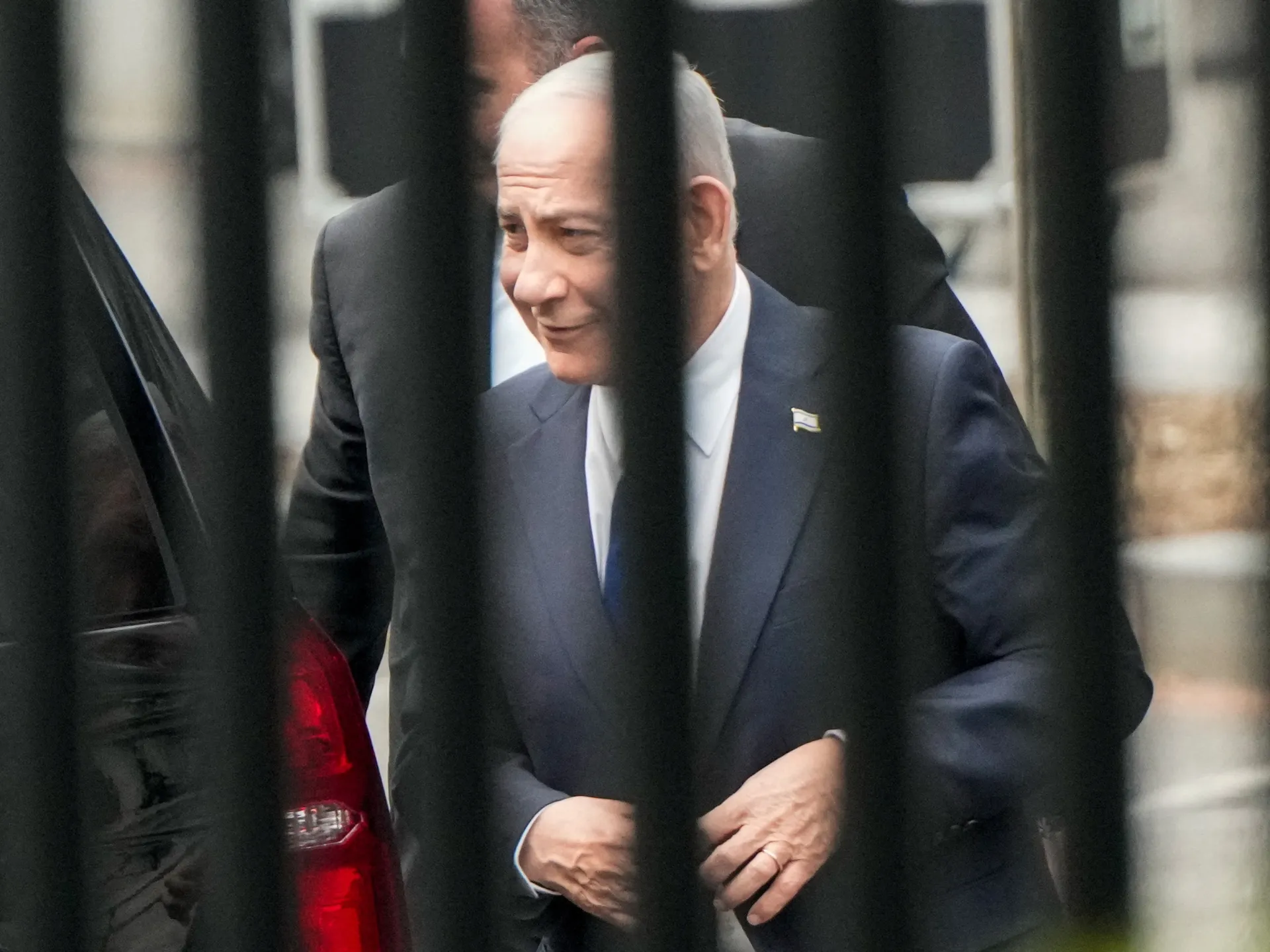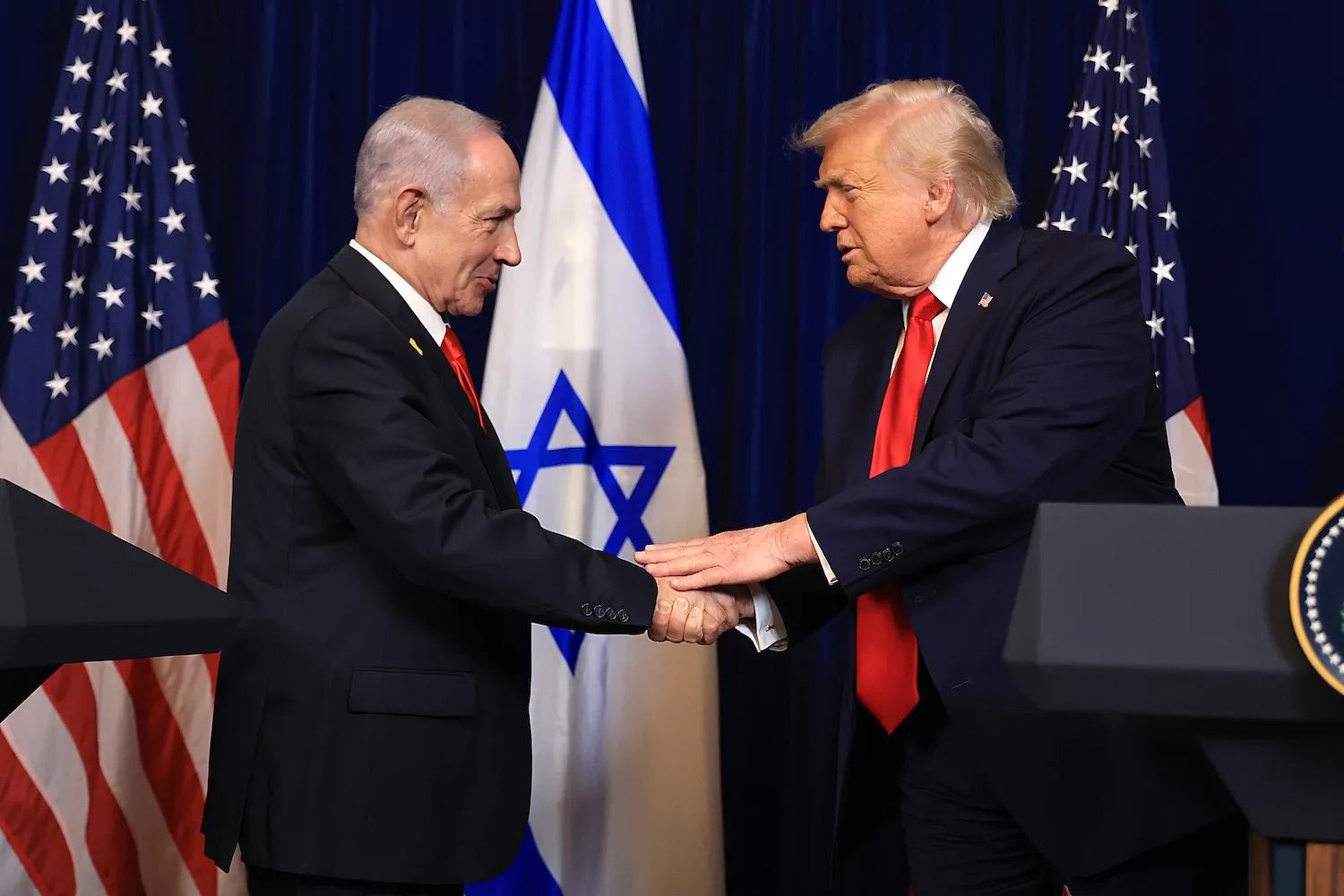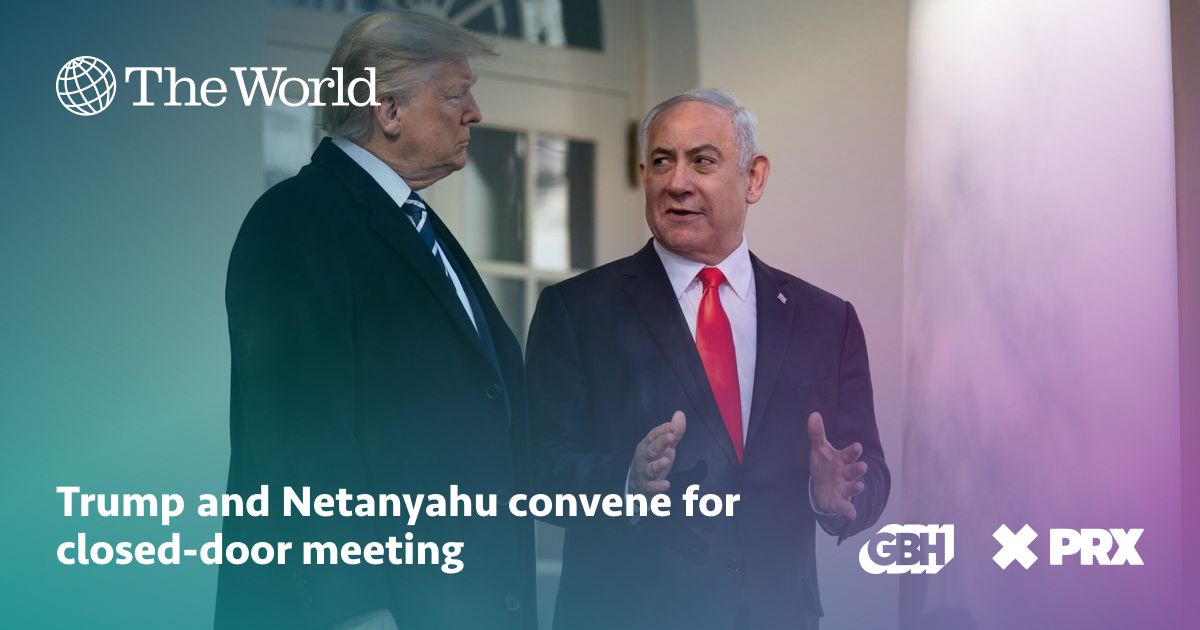
Public radio’s longest-running daily global news program.AboutContactDonateMeet the TeamPrivacyTerms of use©2026 The World from PRXPRX is a 501(c)(3) organization recognized by the IRS: #263347402.Trump and Netanyahu convene for closed-door meetingIsraeli Prime Minister Benjamin Netanyahu arrived in the Oval Office on Tuesday facing growing differences with US President Donald Trump over the war with Iran and Mideast strategy. A White House official called the meeting “positive and productive,” but it was closed to the press. Host Carolyn Beeler speaks with former Israeli diplomat Alon Pinkas about what is at stake for both leaders. Global PoliticsJuly 29, 2026Updated: July 29, 20267:00President Donald Trump and Israeli Prime Minister Benjamin Netanyahu talk with reporters before a meeting in the Oval Office of the White House, Jan. 27, 2020, in Washington. Two leaders at the center of two major conflicts visited the Oval Office on Tuesday. US President Donald Trump met separately with Ukrainian President Volodymyr Zelenskyy and Israeli Prime Minister Benjamin Netanyahu.Netanyahu faces growing differences with Trump over the war with Iran and Middle East strategy more generally.To learn more, The World’s Host Carolyn Beeler spoke with former Israeli diplomat Alon Pinkas. He served as Israel’s consul general in New York in the early 2000s and joined the conversation from Tel Aviv. Pinkas mentioned that the optics of the meeting were telling.“It was not a one-on-one. There were large staffs present,” Pinkas said. “President Trump included Vice President JD Vance and director of the CIA John Ratcliffe. And I mentioned those two because they were two highly skeptical gentlemen when Netanyahu presented the war assumptions or premises when he met with Trump in mid-February, two weeks before the war. Trump was expecting Netanyahu to come and essentially try and lure him or drag him into another round of war with Iran, pleading that, ‘You can’t trust them, you’ll never have an agreement, you can’t believe a word they say, look, they’re playing you,’ etc. So, I think that Trump, by virtue of not having a one-on-one meeting and including those two gentlemen, basically fended off this approach by Benjamin Netanyahu. The fact that there was no one-on-one says to me that Netanyahu did not get what he wanted.”Israel’s Prime Minister Benjamin Netanyahu, CIA Director John Ratcliffe and Supreme Court Justice Brett Kavanaugh arrive for the funeral of Sen. Lindsey Graham, R-S.C., at the Washington National Cathedral, July 28, 2026, in Washington. Alex Brandon/APAlon Pinkas: Absolutely. I mean, look, there are about six or seven topics that you would imagine were raised in the meeting. One is Iran that we just spoke about. The other is Lebanon, where the president is asking Mr. Netanyahu to withdraw, and Mr. Netanyahu is intransigent about this. The third would be the decision the president is on the precipice of making, and that is the sale of F-35 jets to Turkey, whose leader [President Recep Tayyip] Erdoğan is using extraordinarily bellicose language in reference to Israel. Then there’s the Saudi-US nuclear deal, Gaza and what have you. And let’s not forget one important thing here, Carolyn. The president doesn’t see how the war evolved in the same way that Netanyahu does. And they have diverged since April 8, when Trump, totally sidelining Israel, announced a ceasefire and then went on to negotiate an MOU (Memorandum of Understanding) sidelining Israel. On top of which, a week ago, Vice President JD Vance was lashing [out] at Netanyahu, accusing him of trying to undermine talks with Iran and undermining him, Vice President JD Vance personally. So, I think the conditions for this meeting were not ideal or optimal to begin with.A hundred percent. I mean, I look at a statement that was made today, or a quote that I read today, by Steve Bannon, someone I don’t usually quote, but here he was saying to Politico that Mr. Netanyahu visited the White House twice as much as Winston Churchill did in the entire Second World War, and every time he came, it was a negative impact or it was detrimental to the whole idea of America First. Now, it’s not what Bannon said as much as it reflects the criticism, and you look at the polls as well; the war is extraordinarily unpopular in the US. So, these two gentlemen are looking at this from completely different vantage points.Activists protest near the White House while President Donald Trump meets with Israel’s Prime Minister Benjamin Netanyahu in the Oval Office, July 28, 2026, in Washington. Alex Brandon/APWell, that’s a good question. I personally, I think, and I worked toward that end, unsuccessfully at the time, that Israel should voluntarily relinquish that military aid. But Israel needs, desperately needs, access to US state-of-the-art weapons systems. So, instead of the $3.8 billion that Israel receives annually, according to a 10-year agreement that was signed by President [Barack] Obama, a new one is to be negotiated in the next two years for another decade. In place of that arrangement, Israel could sign some kind of a defense treaty that enables Israel access or a right of refusal or first in line when it comes to advanced American systems without getting the $3.8 billion.Look, Israel is a relatively rich country. You can’t boast, Carolyn, on the one hand that you have the GDP of the upper tier of the European Union, and with your other hand beg the American taxpayer for $3.8 billion. And the arguments that this money is well spent in the US and it creates jobs at Raytheon and Boeing and McDonnell Douglas, that no longer carries any weight. You just look at the votes in the House of Representatives and the Senate, and you see how they dramatically change from two, three years ago, wherein much more, particularly the Democrats, vote against continuation of this aid. So, I think it needs to be repackaged. And the initiative should come from Israel. Without the money, Israel would survive. Without access to the American state-of-the-art cutting-edge systems, it will not.I think that the US should end the war with Iran and explain to Israel that some goals are just not achievable, not attainable, not feasible, meaning the collapse of the regime and, and the popular uprising. I want the US to strengthen alliances in the Arab Gulf states — Saudi Arabia, the United Arab Emirates, Qatar, Oman and the rest. And I want to see an American commitment, a real commitment, to the Israeli-Palestinian issue, because Israelis and Palestinians, left to their own devices, seem incapable or unwilling or both to begin a political process. Only the US, hypothetically, can make them do that. And the US right now is not doing that.Parts of this interview have been lightly edited for length and clarity.
Trump and Netanyahu convene for closed-door meeting - The World from PRX
Israeli Prime Minister Benjamin Netanyahu arrived in the Oval Office on Tuesday facing growing differences with US President Donald Trump over the war with Iran and Mideast strategy. A White House official called the meeting “positive and productive,” but it was closed to the press. Host Carolyn Beeler speaks with former Israeli diplomat Alon Pinkas about what is at stake for both leaders.
1,119 words~5 min read