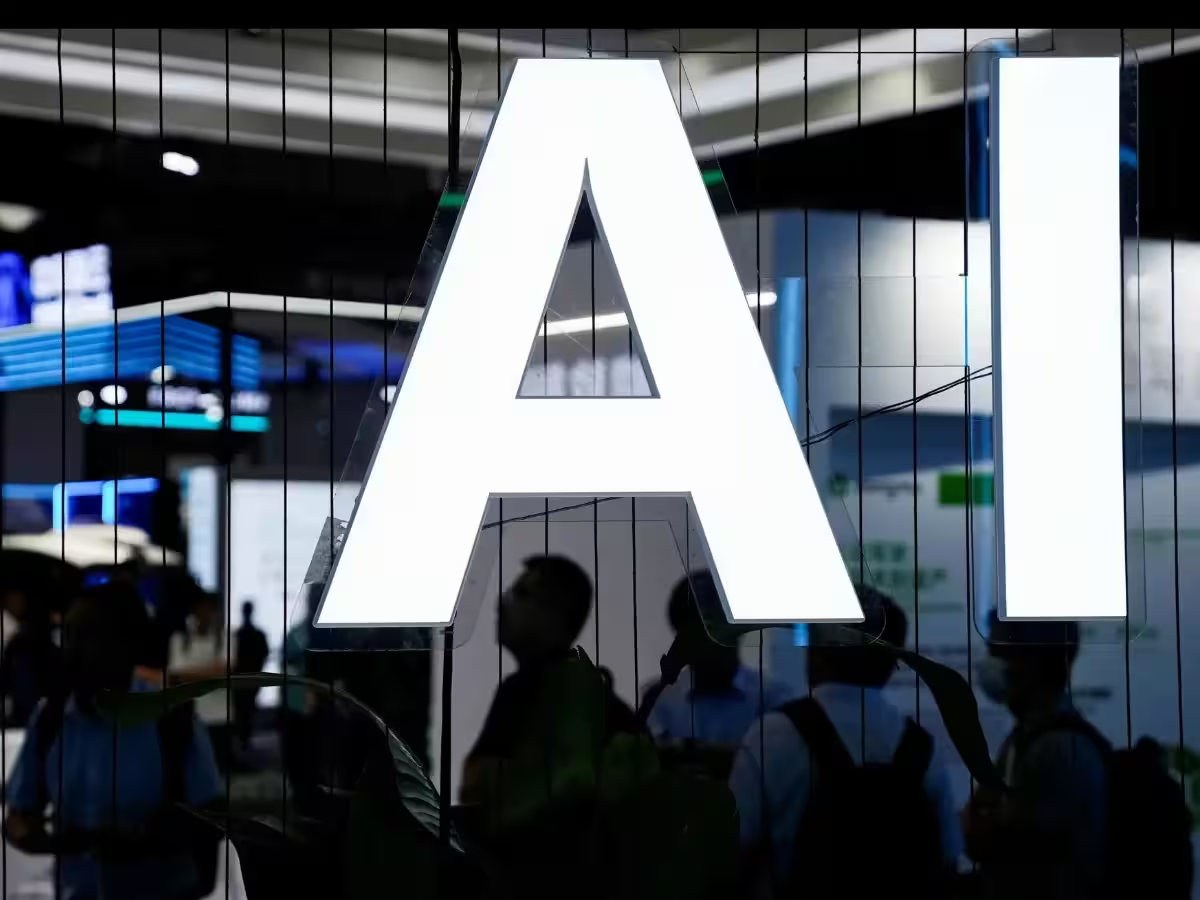
Artificial Intelligence (AI) is no longer merely a matter of technology policy. It has become a question of power that connects states’ mineral resources, energy capacity, access to semiconductors, and authority to make law within a single chain. The question of which rules will govern this chain received a new answer in Shanghai on July 16, 2026.
Twenty-nine states signed the founding agreement of the World Artificial Intelligence Cooperation Organization (WAICO). No G7 country or Western European government was among the founding members.
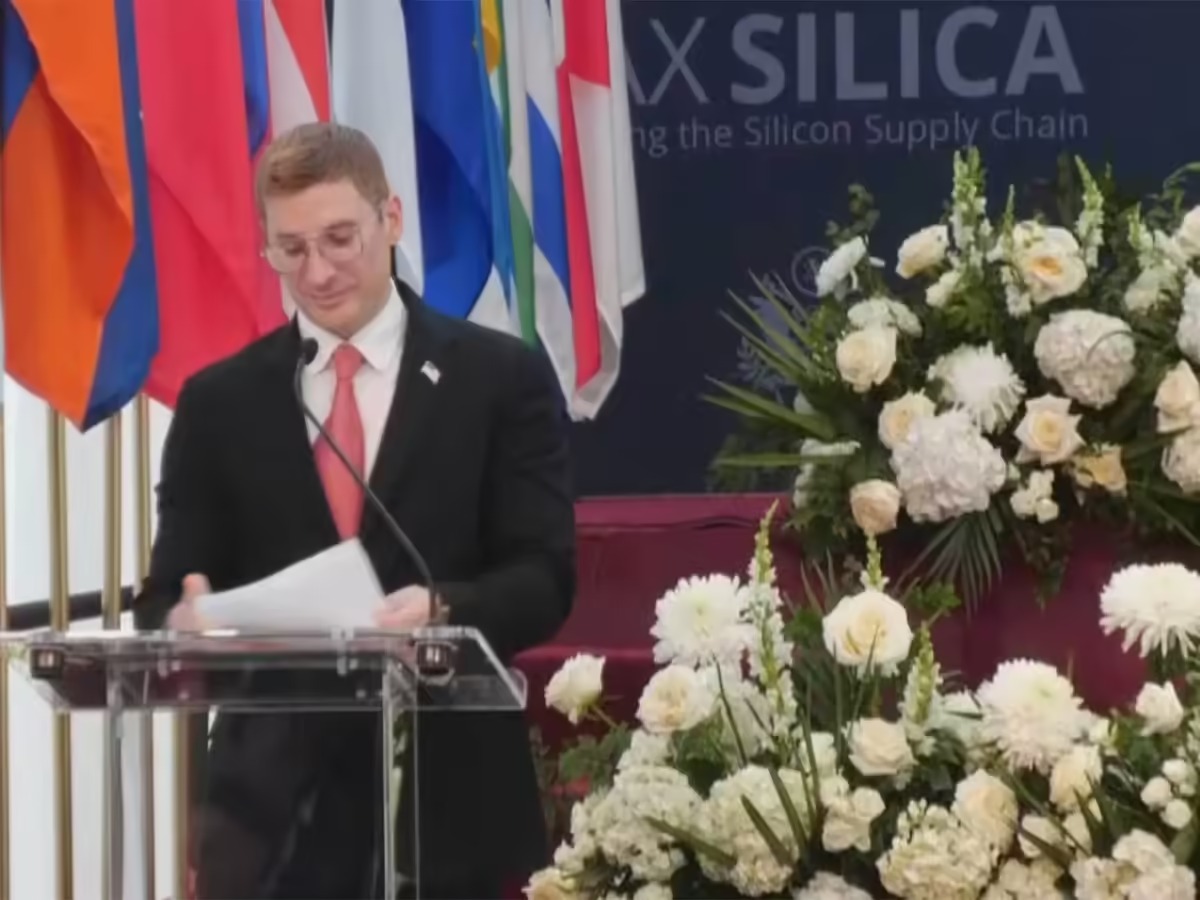
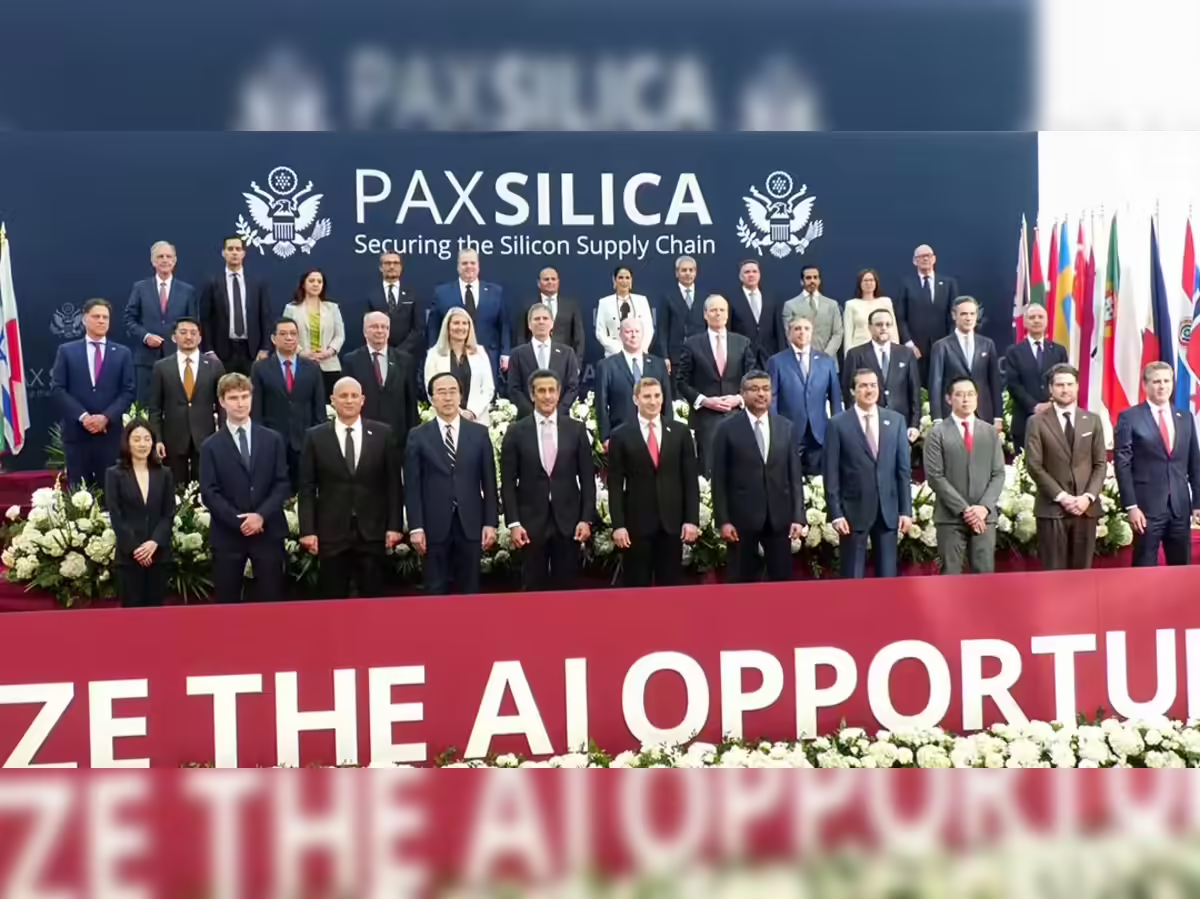
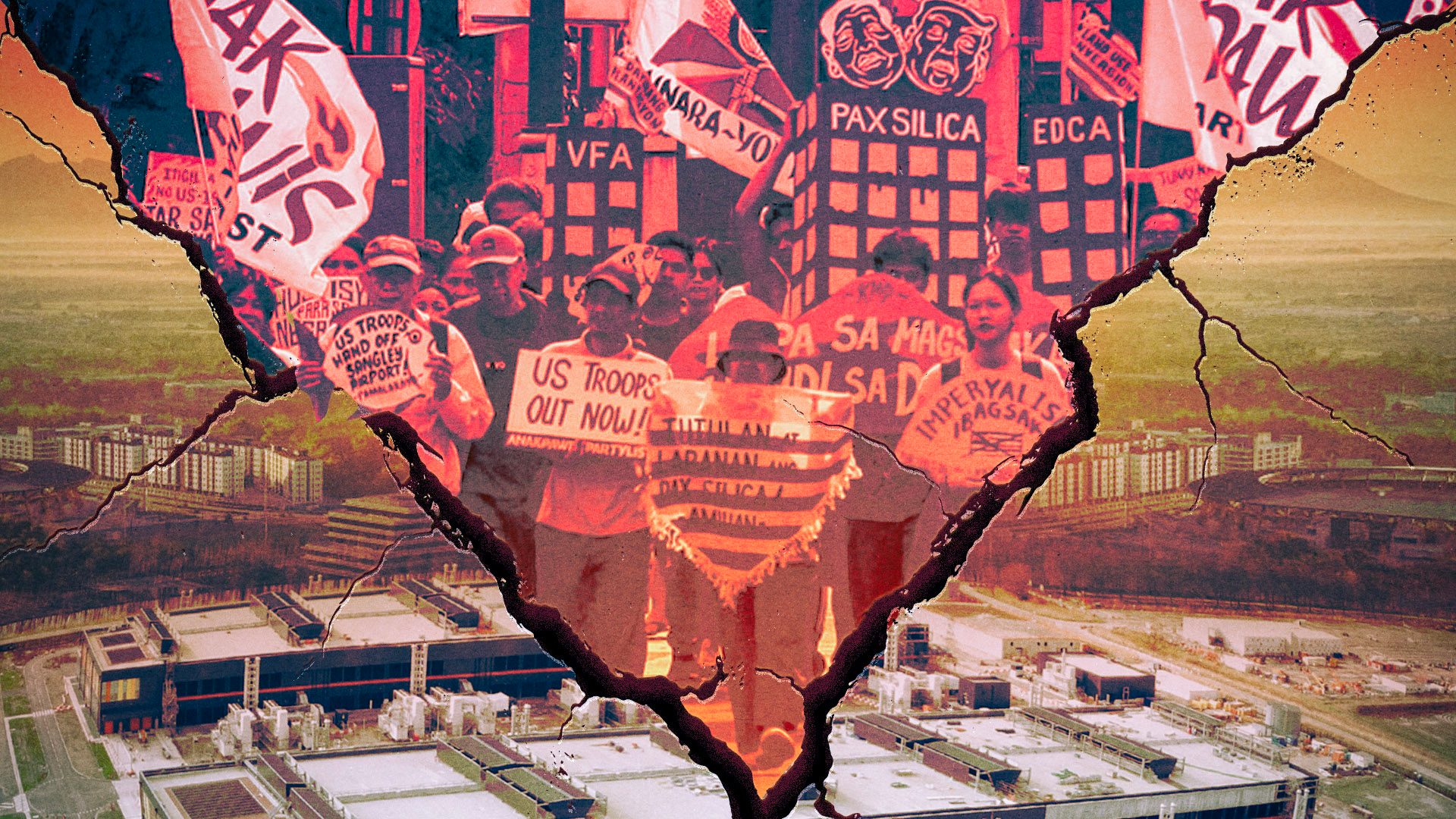
This placed a second institutional structure alongside the U.S.-led Pax Silica initiative, launched in December 2025. At first glance, the picture suggests that the emerging technopolar order has finally divided into two blocs. Yet these two institutions do not offer competing answers to the same question. One governs material resources, while the other governs norms. This asymmetry does not require states to choose between the two sides. On the contrary, it allows each state to align with different sides across different layers of the technology stack.
This is precisely what distinguishes AI from previous industrial revolutions. Steam power, electricity and computing also created their own supply chains. None of them, however, produced such an extended and divisible sequence of layers, stretching from mineral extraction and energy production to chip manufacturing, model training and ultimately legal regulation. In a structure where different actors control the bottleneck at each link in the chain, alignment is shaped not by a single decision but by a series of separate choices made layer by layer.