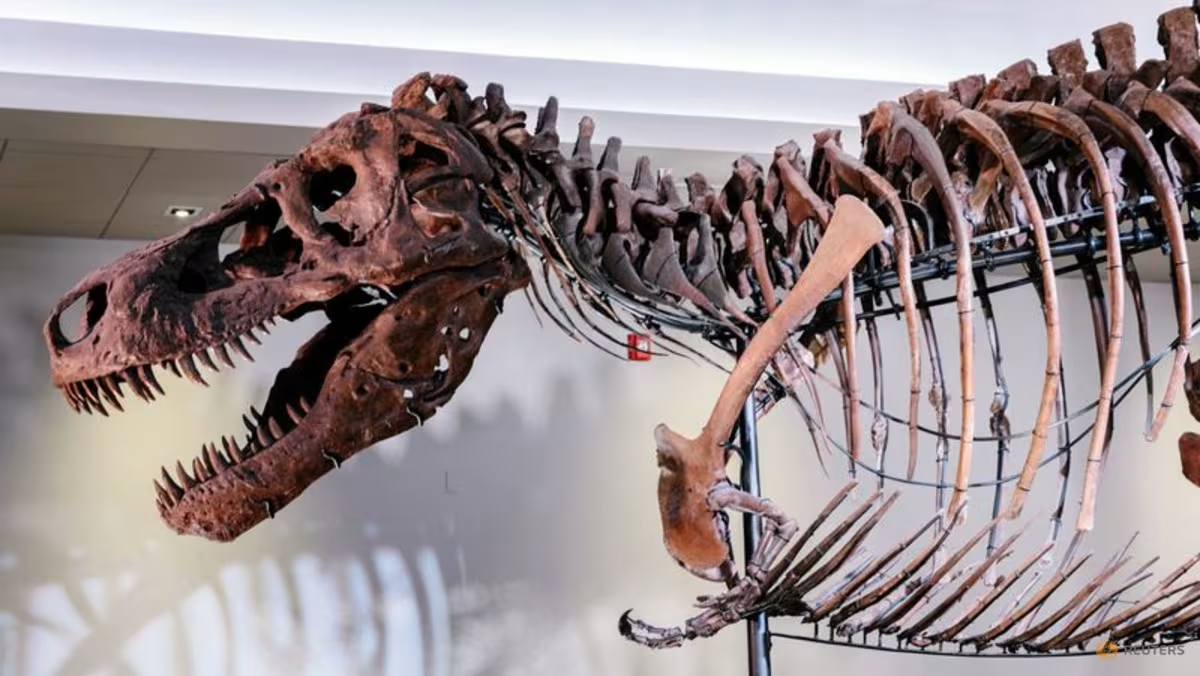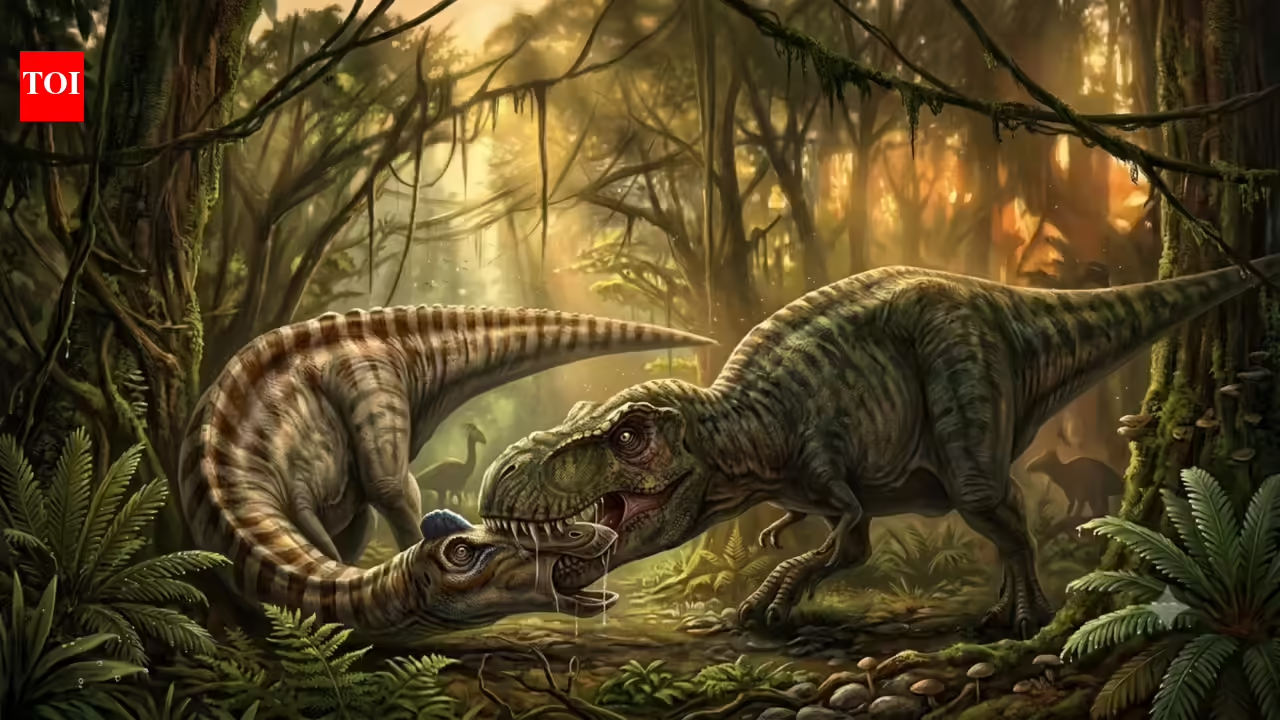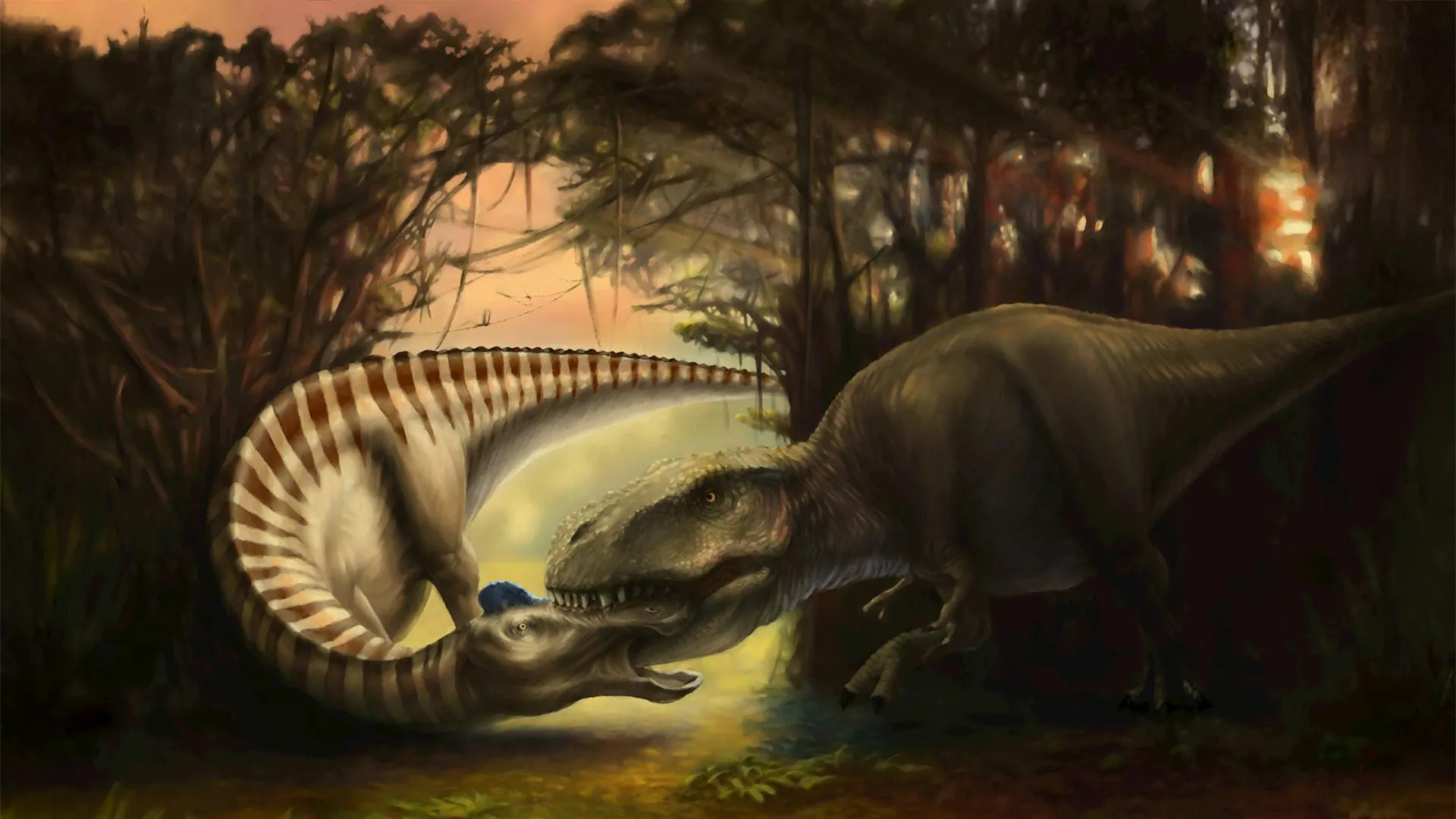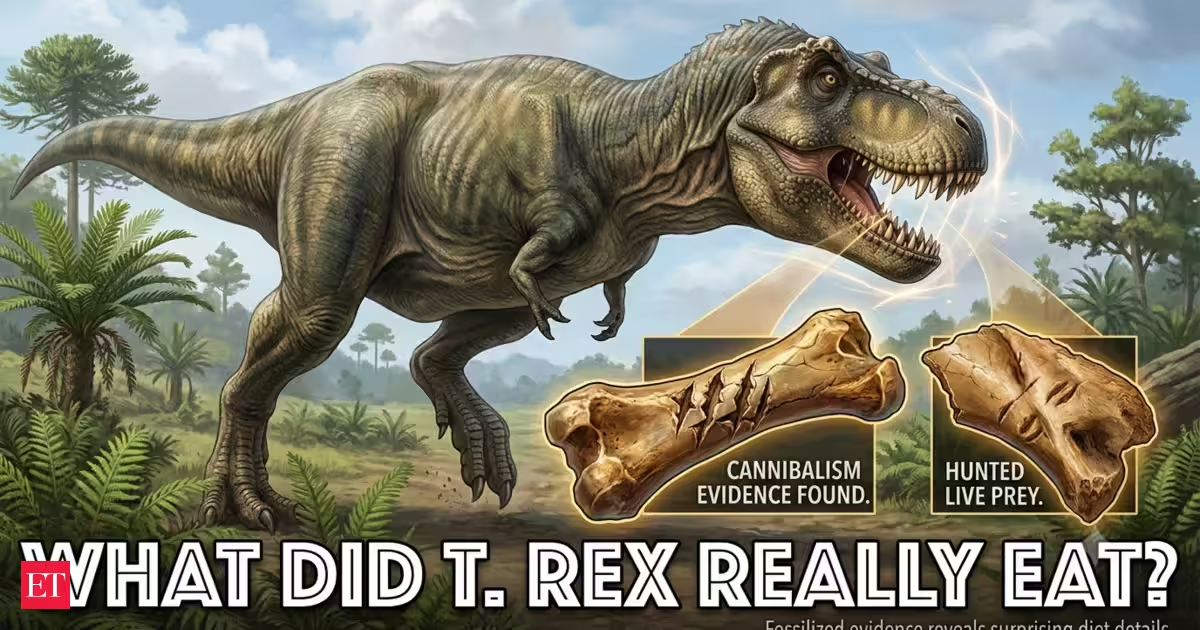
Tyrannosaurus rex ate other T. rexes: In 2010, researchers uncovered evidence that answered one of the biggest questions about what did the giant predator actually eat? The findings suggested that Tyrannosaurus rex sometimes fed on members of its own species, alongside other prey, as per a report.The discovery came from fossil bones bearing distinctive bite marks that researchers said could only have been made by another Tyrannosaurus rex.Fossil bones revealed evidence of cannibalismIn a 2010 study, paleontologist Nicholas Longrich and his colleagues documented four Tyrannosaurus rex bones with deep gouges and tooth marks, as per a National Geographic report.According to the researchers, the damage could only have been caused by another T. rex, providing evidence that Tyrannosaurus rex sometimes fed on members of its own species.Additional evidence later came from a 66-million-year-old Tyrannosaurus limb bone found in Wyoming. The fossil contained large scrapes made by serrated teeth, and study leader Matthew McLain said T. rex was the only carnivore living in the area at the time capable of making those marks, as per the National Geographic report.You Might Also Like:T. rex hunted live prey as wellFossil evidence also suggests Tyrannosaurus rex hunted live prey rather than relying only on scavenging.Several Edmontosaurus fossils contain healed bite marks along their backs, indicating the animals survived attacks by T. rex. One specimen even preserved the tip of a tyrannosaur tooth embedded in its body.Researchers said these healed injuries suggest the predator actively hunted live prey, even though some attacks were unsuccessful.One of the strongest bites ever measuredScientists have also used computer models and comparisons with modern carnivores to estimate how powerful the dinosaur's bite was.You Might Also Like:A 2012 study estimated that an adult Tyrannosaurus rex could bite with a force of about 57,000 newtons, or roughly 12,800 pounds. Researchers said that was powerful enough to take down large dinosaurs such as Edmontosaurus and Triceratops, as per the National Geographic report.T. rex stripped meat before swallowing it wholeResearch on Tarbosaurus, a close relative of Tyrannosaurus rex, suggested the giant predators carefully removed flesh from carcasses rather than simply crushing everything in their jaws.Because T. rex could not chew, it swallowed large chunks of meat and bone whole. Scientists believe it used powerful neck muscles to throw its head backward and move food to the back of its mouth, a feeding method known as inertial feeding that is also seen in modern birds and crocodiles, as per the National Geographic report.Fossilized droppings offered another cluePaleontologists have also learned about the dinosaur's diet from fossilized feces, known as coprolites.You Might Also Like:One coprolite attributed to Tyrannosaurus rex measured about 1.5 feet (45 centimeters) long, with roughly one-third of its mass made up of broken bone fragments.Researchers said the fossil suggested the dinosaur digested food relatively quickly. That conclusion was also supported by an older coprolite, likely left by another species of tyrannosaur, that contained bone fragments and bits of undigested muscle, according to the National Geographic report.
In 2010, researchers asked, 'what did Tyrannosaurus rex eat?' The answer included other T. rexes
Tyrannosaurus rex ate other T. rexes: Discover how Tyrannosaurus rex, known for its massive size and power, sometimes dined on its own kind while also preying on other dinosaurs. Learn about the fossil evidence, bite force estimates, and unique feeding methods that reveal the hunting behaviors of this iconic dinosaur.
492 words~2 min read