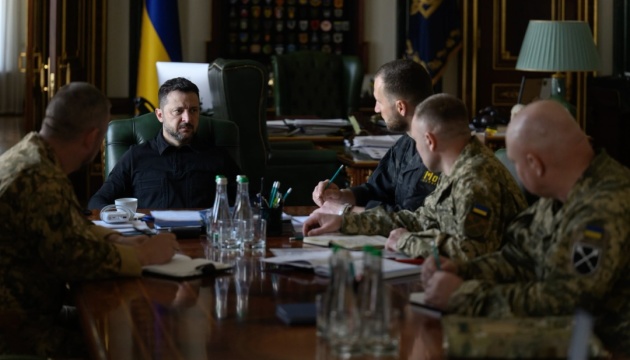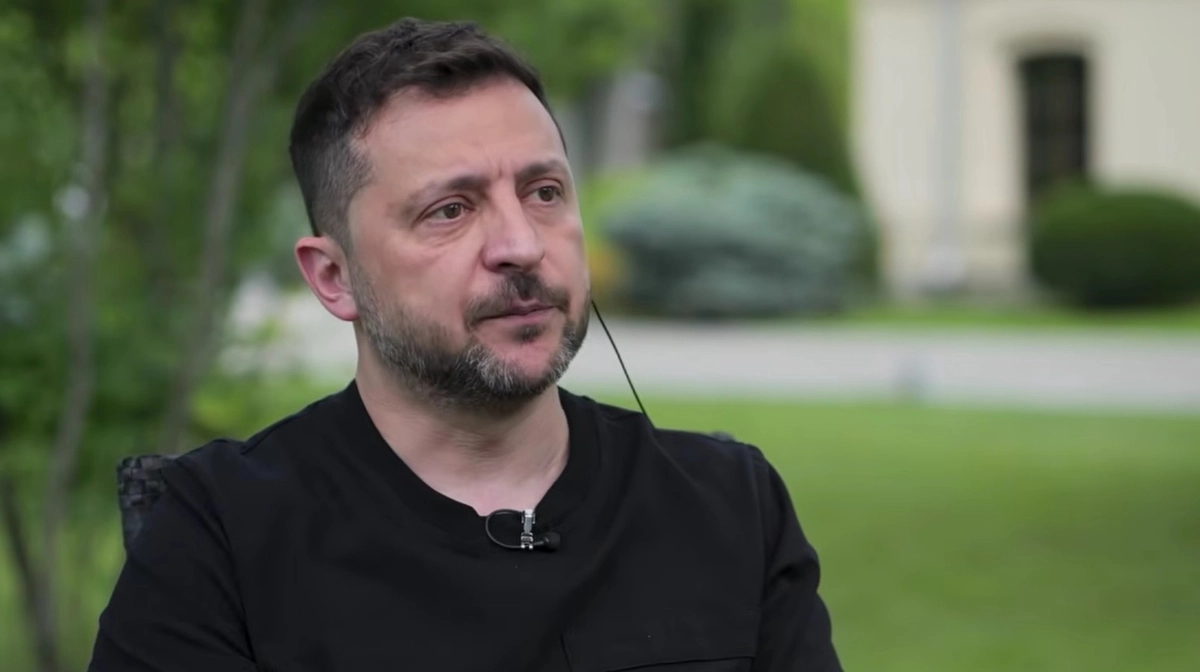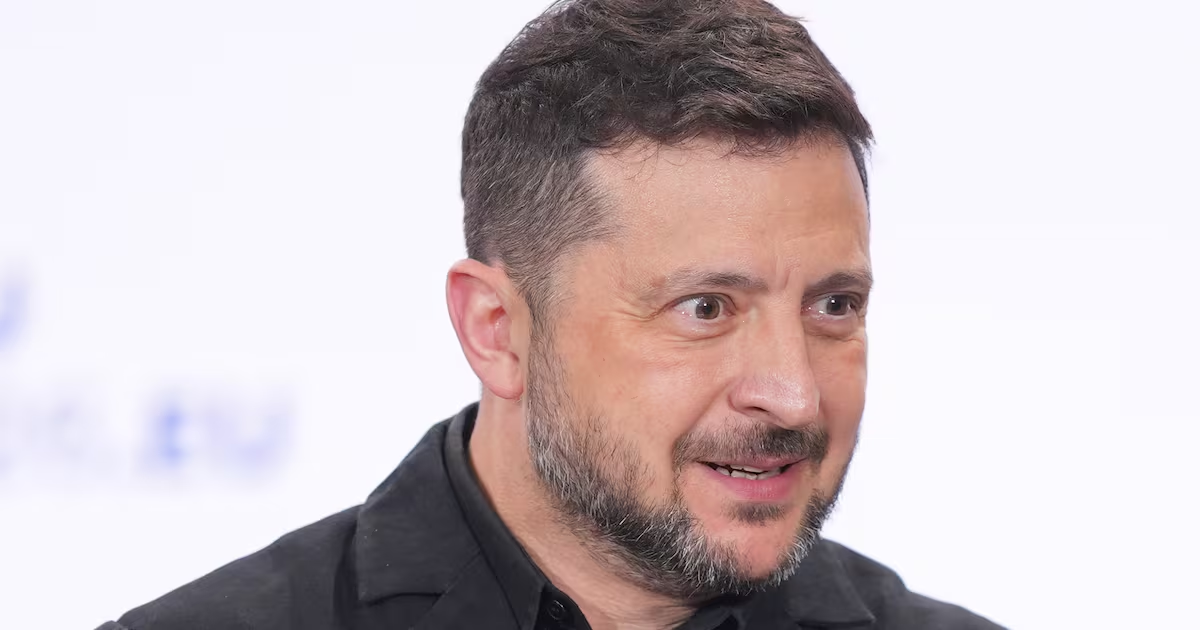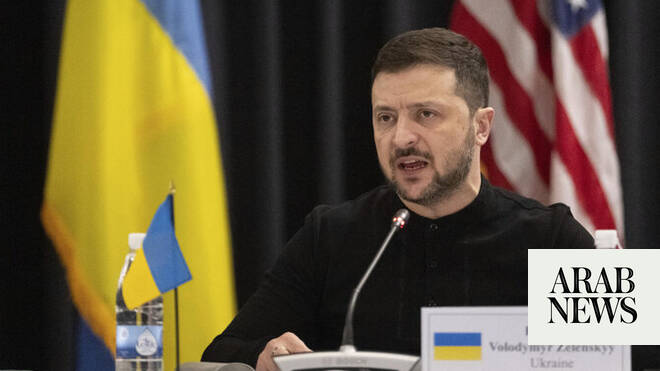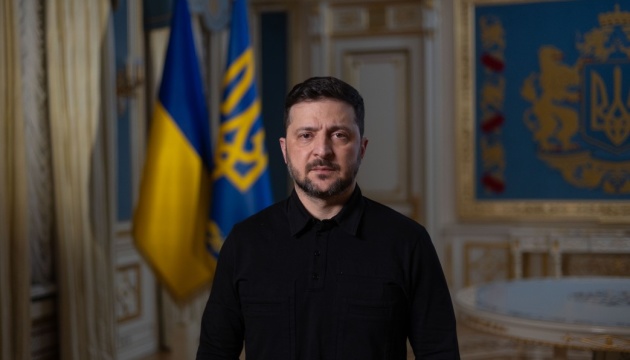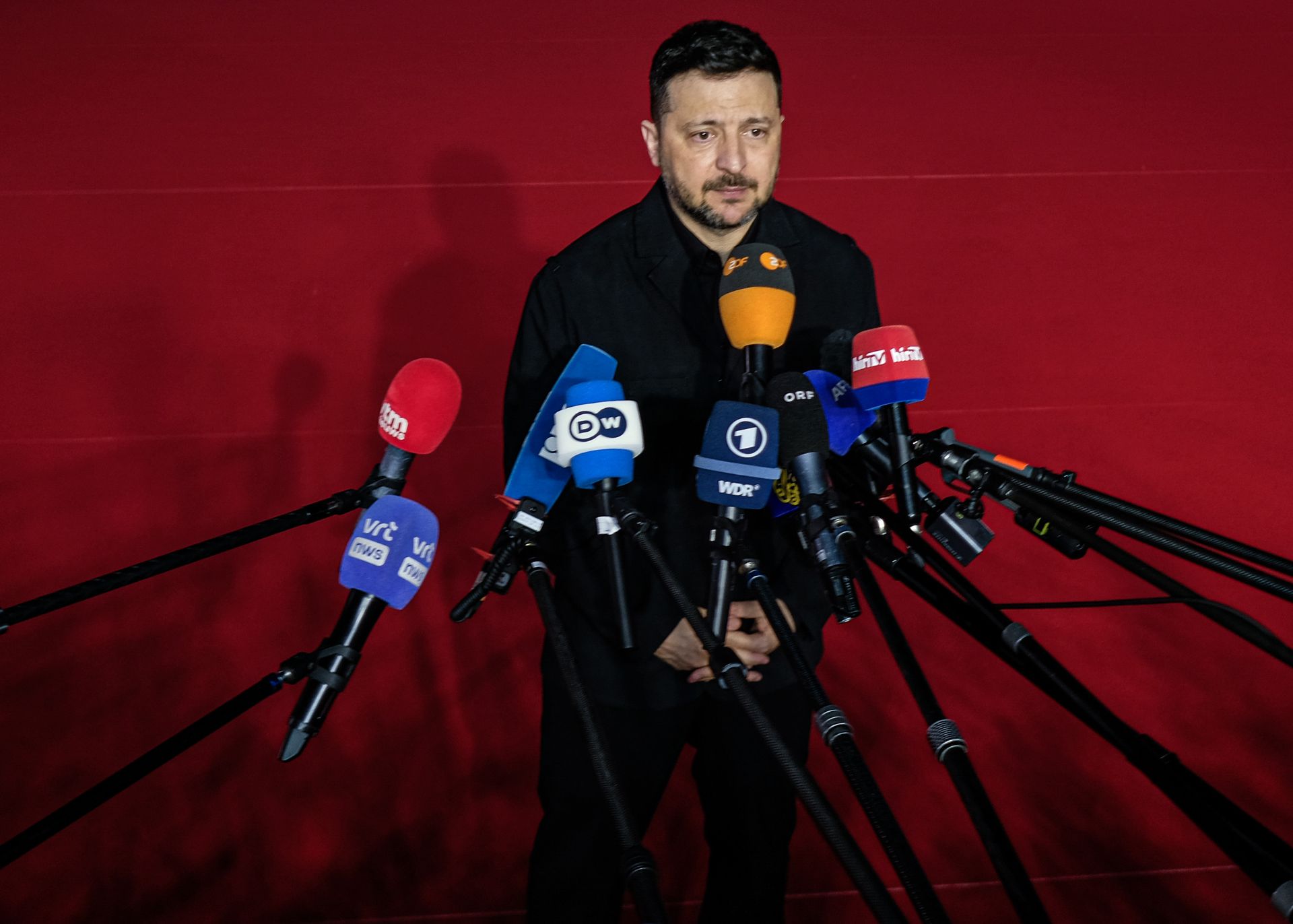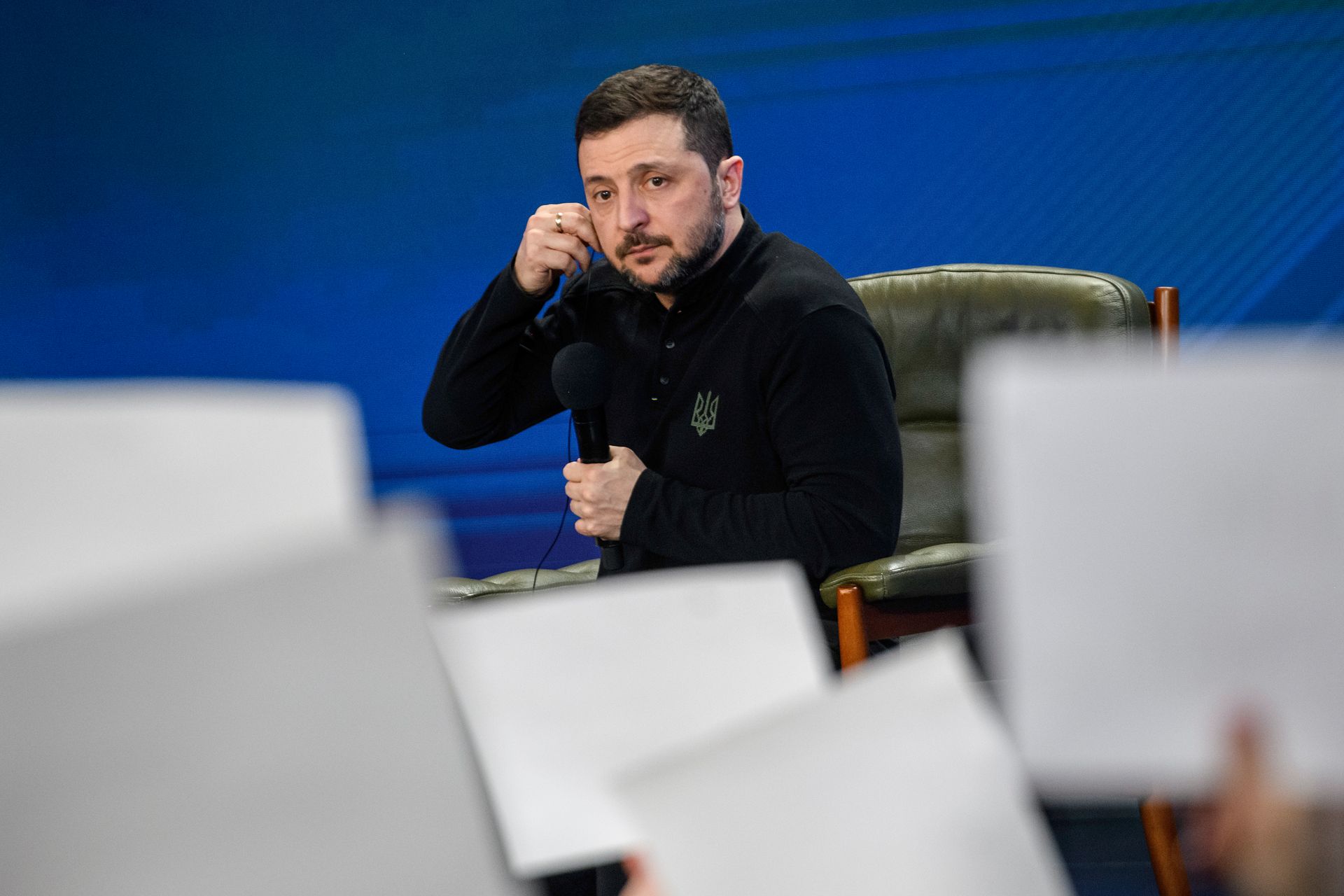
President Volodymyr Zelensky holds a press conference at the forum "Ukraine. Year 2025" in Kyiv, Ukraine, on Feb. 23, 2025. (Maxym Marusenko / NurPhoto / Getty Images)President Volodymyr Zelensky rarely misses a daily address. Nearly every evening, he sits behind the desk in his office, a wall of military chevrons behind him, and delivers a video monologue to the nation through his social media channels.What he rarely offers, however, is a dialogue with the Ukrainian people and answers to the most pressing questions.Zelensky has proved to be an effective communicator on the international stage, but domestic politics has long been his weak point. The president has consistently shied away from addressing politically costly yet urgent issues, including government reshuffles, corruption scandals, and difficult but necessary reforms.On many sensitive issues, he leaves others to shoulder the responsibility.Late last year, he shifted responsibility for addressing and dealing with the consequences of a major corruption scandal onto the newly appointed Prime Minister, Yuliia Svyrydenko. The scandal came to hunt Zelensky earlier this year when new revelations tied to his close allies became public.Zelensky has yet to publicly address the allegations.Mobilization, perhaps Zelensky's greatest political challenge, is another issue the president hasn't addressed. The president has commented on pay raises for soldiers, yet declined to talk about the politically contentious topic of military draft and rotation.He has avoided taking a public stance on attacks against draft officers, and after the recent confrontation in Lviv, offered only a WhatsApp voice message to journalists, calling it "a very bad situation."That reluctance to explain politically sensitive decisions is mirrored in Zelensky's approach to the press.President Volodymyr Zelensky gives a press conference during the forum "Ukraine. Year 2025" in Kyiv, Ukraine, on Feb. 23, 2025. (Yurii Stefanyak / Global Images Ukraine / Getty Images)Don't get me wrong. Zelensky regularly gives interviews to foreign media, bloggers, and prominent public figures. But over the past five years, he has given too few interviews to Ukraine's independent media — I remember a couple to a public broadcaster and one to a radio station.All this creates the impression of transparency and dialogue without actual substance. In a democracy, leaders are judged not by how often they speak, but by their willingness to answer uncomfortable questions. By that standard, President Zelensky has room for improvement.From the first days of Russia's full-scale invasion, Ukrainians accepted an unwritten bargain: domestic political disputes should wait until the war was over.The President's Office, however, appears to have mistaken that wartime consensus for a blank check.The result is a system in which major political decisions are announced rather than explained. Lawmakers, despite their constitutional role in proposing a candidate for the prime minister's job, learn of the president's choice for this role through social media.Officials find out they have been appointed or dismissed from a Telegram post.
President Zelensky needs to change the way he talks to Ukrainians
President Volodymyr Zelensky rarely misses a daily address. Nearly every evening, he sits behind the desk in his office, a wall of military chevrons behind him, and delivers a video monologue to the nation through his social media channels. What he rarely offers, however, is a dialogue with the Ukrainian people and answers to the most pressing questions. Zelensky has proved to be an effective communicator on the international stage, but domestic politics has long been his weak point. The presi
1,170 words~5 min read