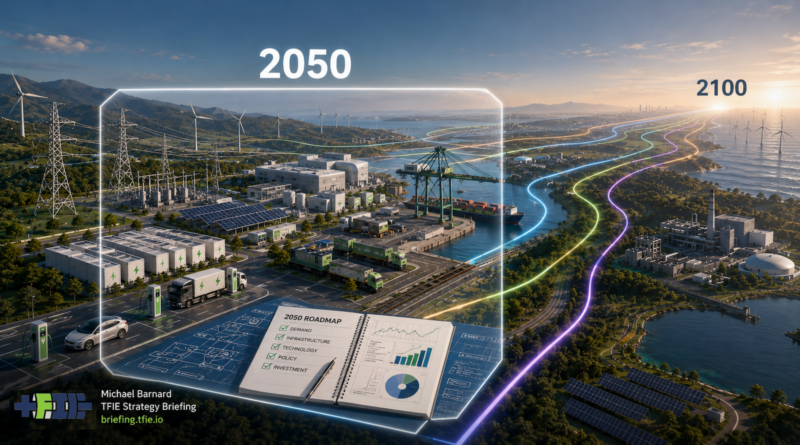
Long-range pathways through 2100 provide the outside view needed to turn 2050 targets into practical grid, port, energy-system and investment roadmaps.
Support CleanTechnica's work through a Substack subscription, on Patreon, or on Stripe. Help us produce all of the high-quality, original content we publish week after week despite the challenges of content-scraping AI, antisocial media, inflation, and other hurdles.
Most decarbonization scenarios stop at 2050 because policy targets do. Steel mills, aircraft fleets, ports, electricity grids and industrial supply chains do not. A pathway can reach net zero in a target-year spreadsheet while leaving behind an energy system that is expensive, physically implausible or dependent on technologies that never become commercially important.
My first TFIE projections through 2100 grew out of frustration with that boundary, not from client demand for longer forecasts. The questions concerned what happened after the familiar target year: which technologies were durable destinations, which were transitional bridges, how much demand would remain after structural change, and which clean supply options were solving genuine residual needs rather than preserving today’s fuel and material flows.