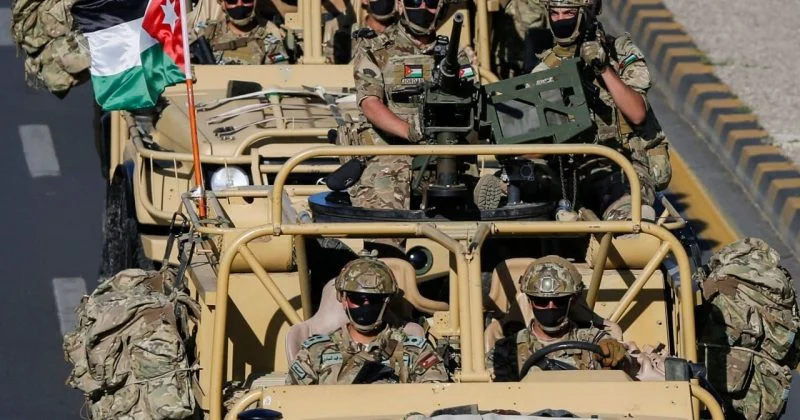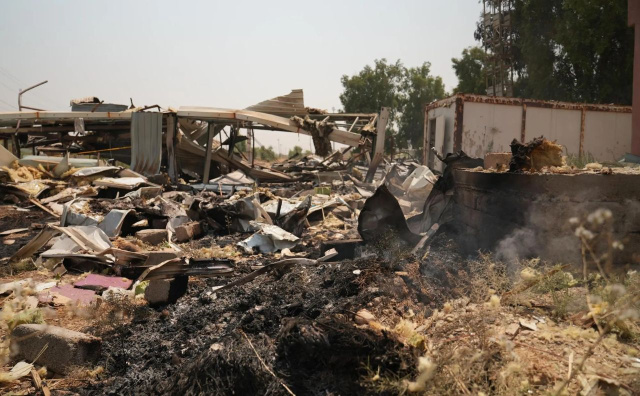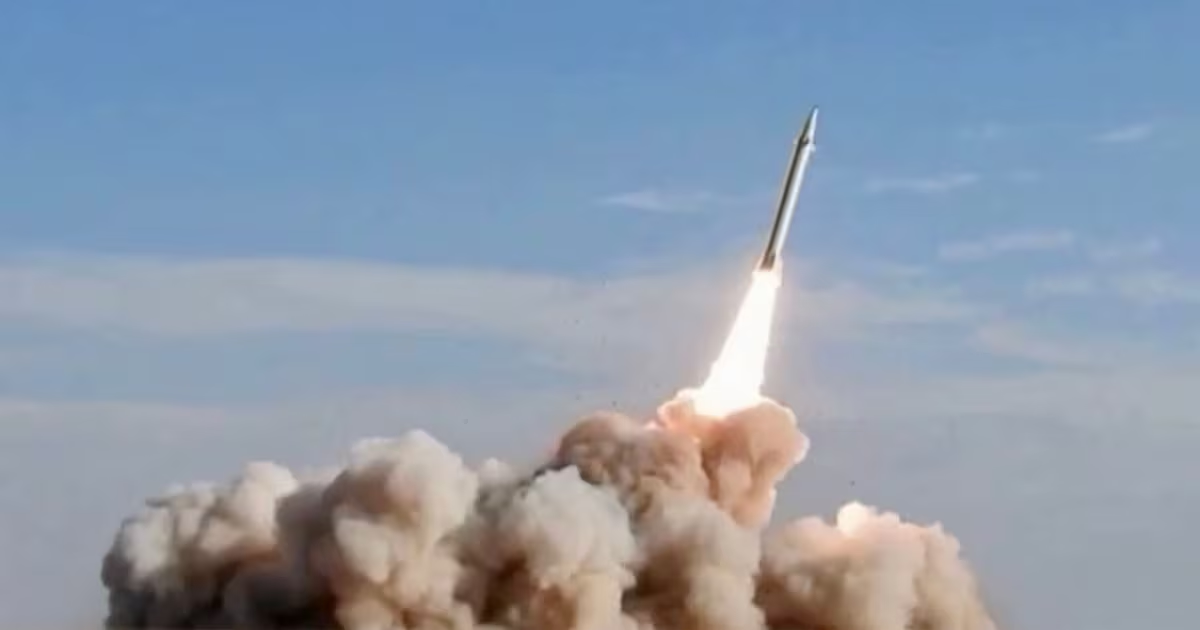
Iran fired ballistic missiles at American bases in Jordan late on July 28, in what appeared to be the first time Tehran initiated an attack on US targets since the war began in late February.The Islamic republic has claimed it is fighting a war of resistance and framed its actions as purely defensive. But the attack on Jordan, where three American soldiers were killed this month, could mark a shift in strategy, experts say.Iran’s leadership “wants to demonstrate strength, and these military actions can be understood in that context,” Meysam Badamchi, an Iran expert and senior researcher at Charles University in Prague, told RFE/RL’s Radio Farda.
US President Donald Trump angrily warned Iran that US forces will strike back.“We'll be hitting them hard. They're going to get a beating,” a Fox News correspondent quoted Trump as saying during a brief interview on July 29.Iran’s attack broke a lull in fighting since July 24. During the preceding two weeks, the United States had conducted daily air strikes on Iran, which retaliated by hitting American bases dotted across the Middle East. The renewed fighting effectively ended an interim peace deal signed in June.
The US military's Central Command said on July 28 that it intercepted multiple ballistic missiles launched by Iran toward US forces in the Middle East in what it said was “an attempted surprise attack.” Jordan said on July 29 that it intercepted and downed five Iranian missiles.Iran's Islamic Revolutionary Guards Corps (IRGC), the elite branch of its armed forces, said its forces “targeted a US airbase and the US Central Command Centre in Jordan with several ballistic missiles,” saying it was a response to “the aggressive actions” of the United States, without elaborating.' Warning To The US'Experts said the July 28 attack could signal a major change in Iran’s military strategy, with Tehran now appearing ready to carry out preemptive strikes to deter Washington.“The attack therefore appears to have been a warning to the United States not to join or initiate a new military campaign against Iran,” Hamidreza Azizi, a visiting fellow at the German Institute for International and Security Affairs, wrote on social media.The Iranian attack came just hours after Israeli Prime Minister Benjamin Netanyahu, who favors continuing the war against Tehran, visited Washington for talks with Trump. The visit came as the US president weighs his options on Iran.Trump told Axios on July 23 that he was seriously considering “a massive attack” on Iran. But he has since backed down from the threat, saying on July 27 that a new round of diplomacy with Iran could produce a breakthrough.Iran has denied that it is negotiating with US officials and gave no sign that it was ready to make new concessions over its effective closure of the Strait of Hormuz, a key artery for global oil supplies, and its contested nuclear program.