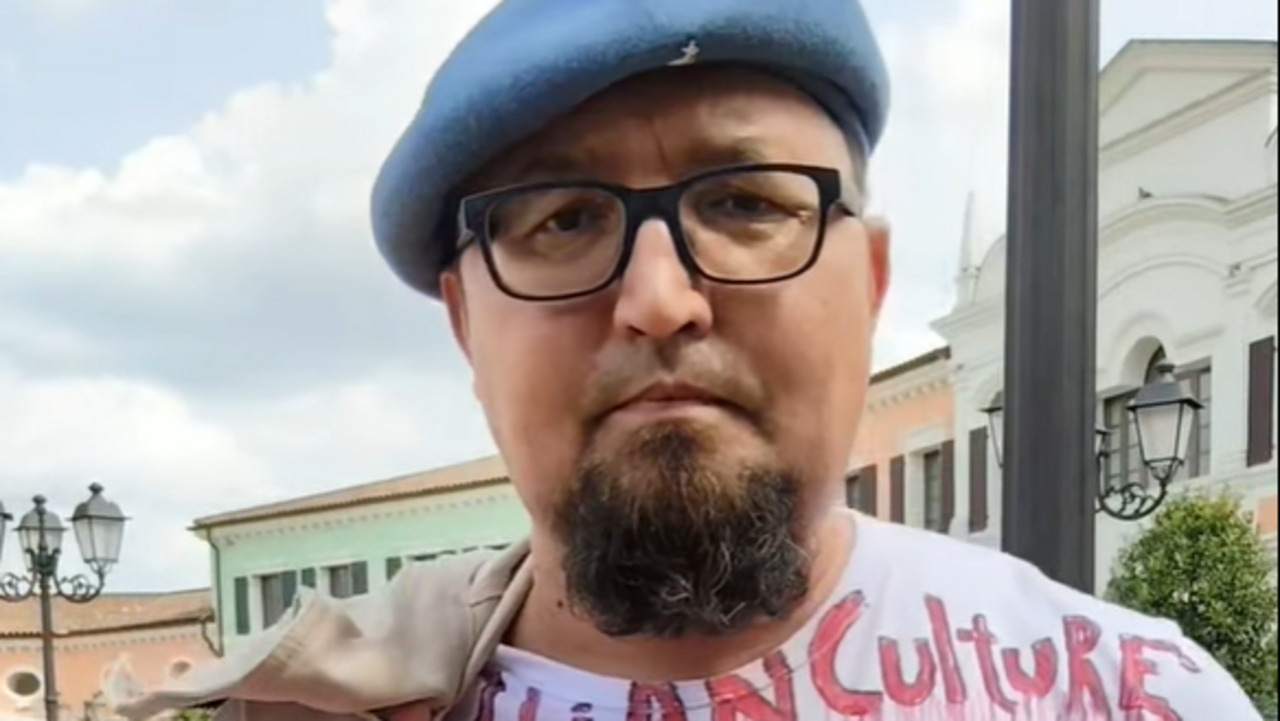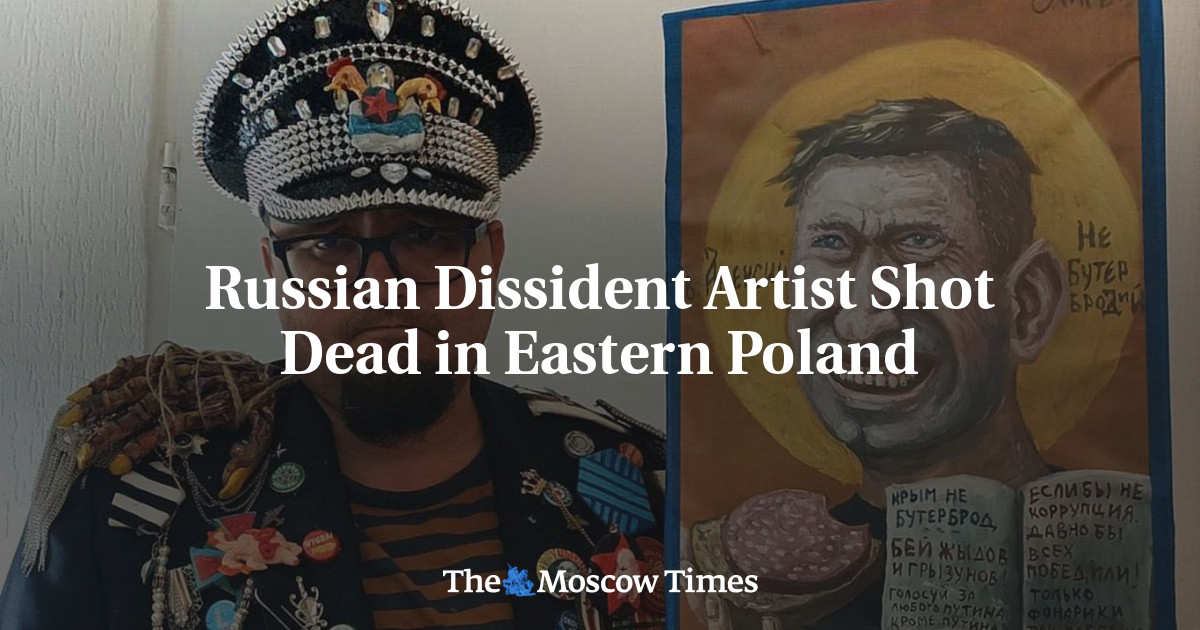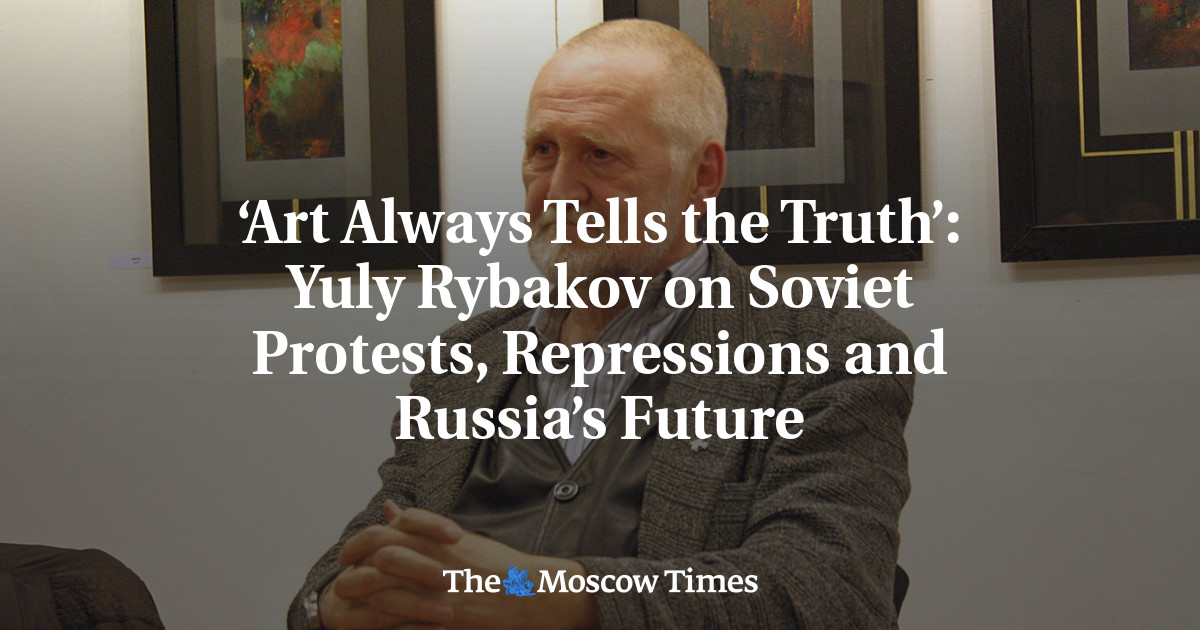
Yuly Rybakov is a Soviet-era dissident artist, human rights activist and former Russian lawmaker whose life has been shaped by his country’s history.
Born in 1946 in a labor camp settlement, Rybakov, 80, came from a family of St. Petersburg naval officers persecuted by the Soviet authorities. He studied art and became part of the nonconformist art movement, a community of artists who rejected official state-approved aesthetics.
Fifty years ago, Rybakov and his fellow dissident artist Oleg Volkov painted an inscription on the wall of the Peter and Paul Fortress that would become one of the most powerful symbols of resistance to Soviet rule: “You may crucify freedom, but the human soul knows no shackles.”
This artistic protest and their distribution of Soviet dissident Alexander Solzhenitsyn's books would see Rybakov and Volkov arrested and sentenced to six and seven years, respectively, in gulag labor camps. One of the KGB officers who carried out the search as part of the case was then-lieutenant Vladimir Putin.
Less than a decade after his release, Rybakov was elected to the Leningrad City Council in 1990 and established Russia’s first state human rights commission. He later served as a State Duma lawmaker for 10 years.