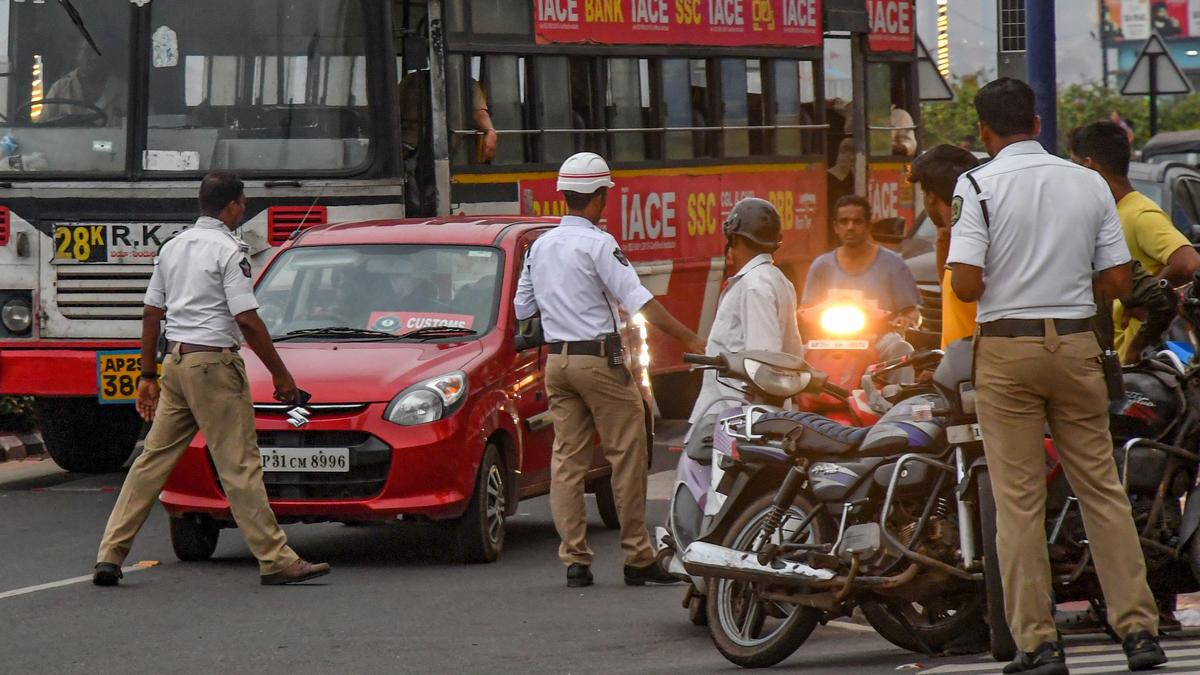
The draft clarifies that the restriction will not apply while a challan is pending before a court or adjudicating authority, allowing motorists to contest it before any restriction takes effect
| Photo Credit:
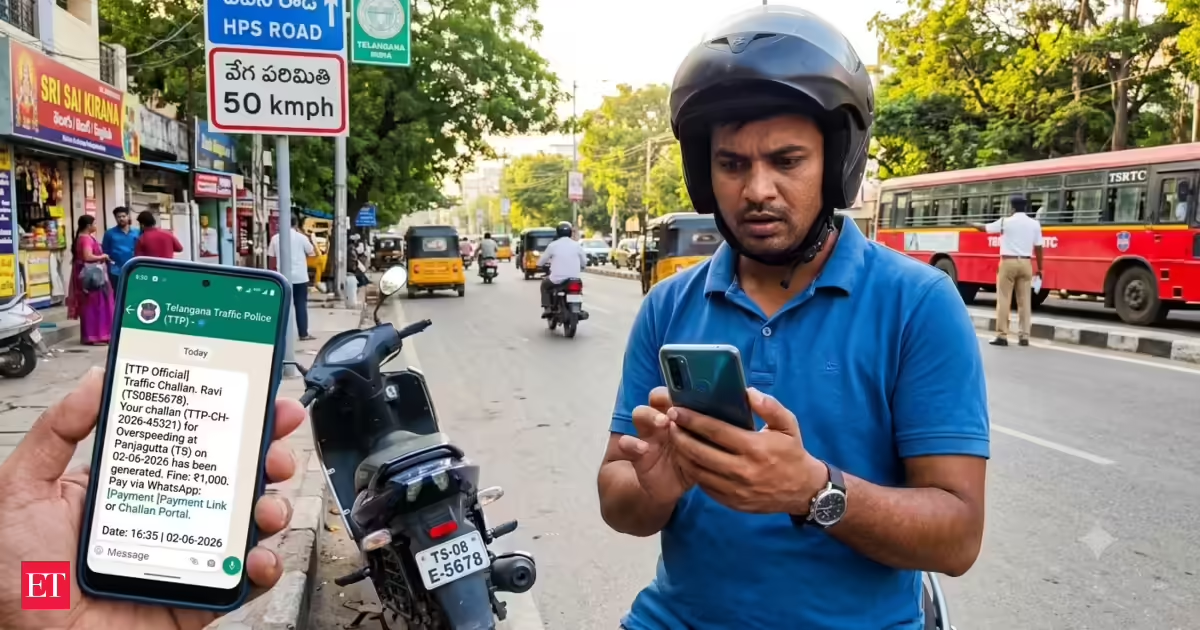
You jump a red light. A traffic challan arrives on your phone. You ignore it. Later, you also ignore the notice from a Lok Adalat or other adjudicating authority asking you to settle or contest the case. If the challan is eventually upheld and you still refuse to pay, your next application relating to your vehicle registration certificate (RC) or driving licence could get stuck.That is the change proposed by the Ministry of Road Transport and Highways in draft amendments to the Central Motor Vehicles Rules. The draft, issued through notification G.S.R. 643(E) on July 17, proposes a new “Not to be Transacted” status on the Vahan portal, under which applications for vehicle registration or the offender’s driving licence “shall not be processed” until the adjudicated traffic challan is paid.What it meansDespite the name, the proposal does not mean your vehicle has been seized, your registration cancelled, or your driving licence suspended. Instead, it is a temporary restriction on specified RC- and driving licence-related transactions through the Vahan portal until the outstanding challan is paid.When will it apply?The restriction will not apply simply because a challan has been issued. It comes into effect only after the challan has been decided by a court or adjudicating authority and the penalty remains unpaid. The draft also makes it clear that the restriction will not apply while the challan is pending before a court or adjudicating authority, allowing motorists to contest the case through the legal process before any restriction takes effect.What changes from today?The proposal builds on the existing electronic challan system rather than replacing it.Today, motorists can pay a challan online or challenge it through the prescribed process. The draft adds another layer by linking adjudicated but unpaid challans to future RC- and driving licence-related applications.It also replaces Rule 167(12) of the Central Motor Vehicles Rules and amends Rule 167(9) to allow motorists to approach an adjudicating authority proposed under Rule 167B, in addition to a court.Traffic warnings will also be recordedThe ministry has proposed that traffic warnings be issued, delivered and recorded electronically on the Vahan portal in the same manner as a challan.Under the draft, every recorded warning “shall constitute a previous violation” while determining the penalty for a repeat offence. In effect, even a warning issued without a monetary fine could become part of a motorist’s enforcement record if the same offence is committed again.More services to move onlineThe draft proposes district-level adjudicating authorities with electronic hearing facilities, allowing motorists to contest traffic offences online.An adjudicating authority would have to provide an opportunity for a hearing, including electronically, and ordinarily pronounce an order within 30 days. A person aggrieved by the order could file an appeal within 30 days before an appellate authority not below the rank of Additional District Magistrate or an equivalent officer, with appeals also ordinarily to be decided within 30 days.Authorities failing to adhere to these timelines could face penalties ranging from ₹5,000 to ₹10,000.Electronic cancellation of vehicle registrationsThe ministry has also proposed a fully electronic process for cancelling the registration of vehicles that have been destroyed, rendered permanently unusable, scrapped or exported.Vehicle owners would submit the information online through Form 37A, after which the registering authority would electronically notify both the owner and the insurer through Form 37B once the registration is cancelled.The draft also proposes extending the period for informing insurers about a change in vehicle ownership from 14 days to 30 days and keeping certain non-compoundable offences outside the ordinary challan settlement process.Published on July 29, 2026