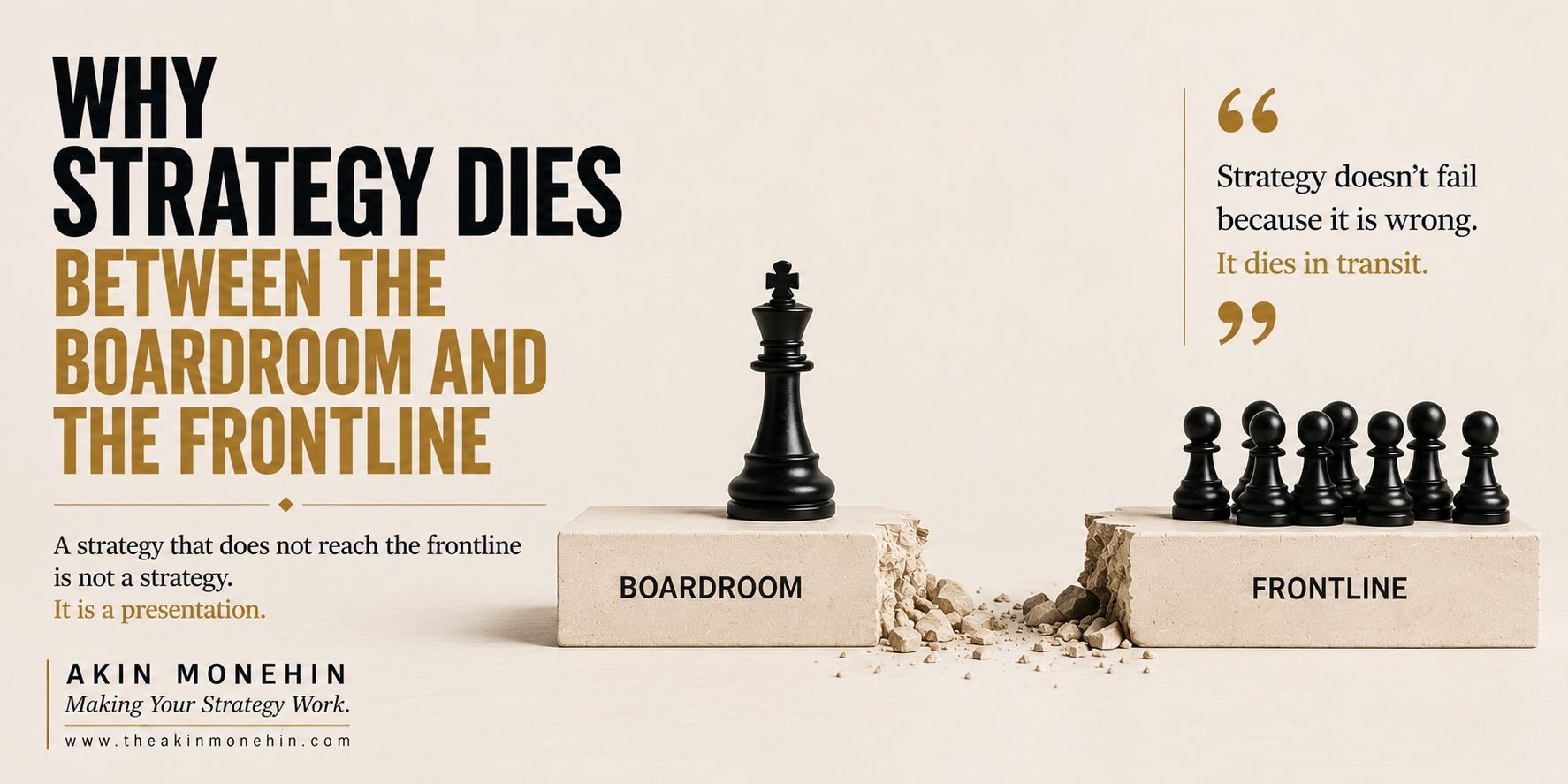
Most organisations are rich in strategy; they conduct retreats, engage consultants, produce detailed strategic plans, define ambitious targets, and communicate priorities. And yet, months later, leaders find themselves asking a familiar question: “If the strategy was so clear, why are we not seeing the results?”
The answer is often uncomfortable – many strategies do not fail because they are wrong but because they never successfully travel from leadership intent into operational reality. In other words, they die in transit. This is what I describe as an ‘execution disconnect’: a condition where leadership believes the strategy is clear, while the people responsible for delivering it experience something entirely different.
The challenge is rarely strategy quality but strategy translation. Most leadership teams spend considerable time discussing what the organisation should do, but far less time is spent ensuring that every level of the organisation understands what should happen differently because the strategy exists.
“Most strategies do not fail in the boardroom. They die in transit between leadership intent and operational reality.”
That distinction matters because a strategy only creates value when it changes decisions, behaviours, priorities and resource allocation throughout the organisation. Otherwise, it remains an aspiration.