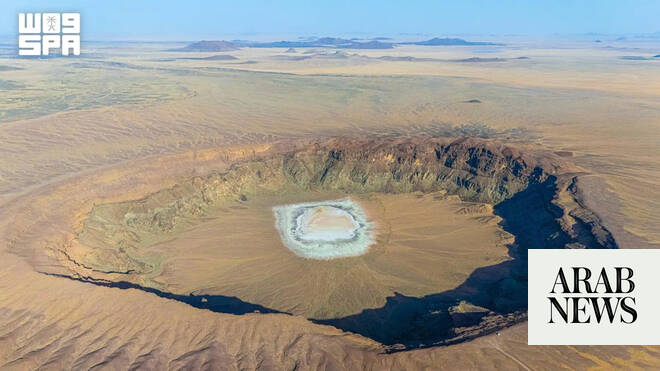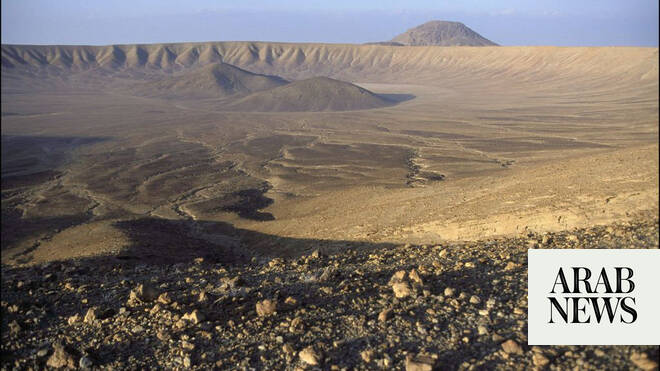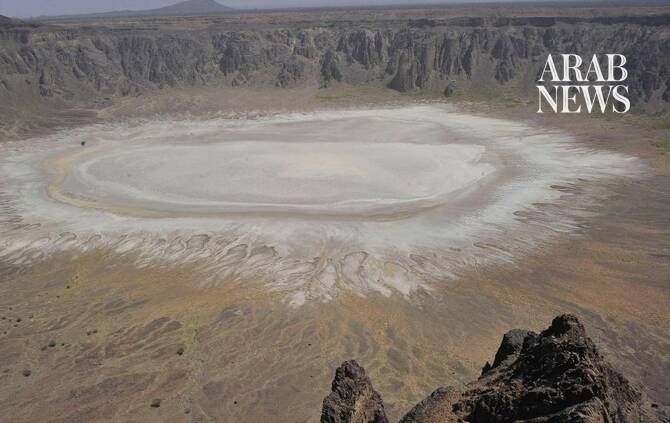
MAKKAH: Among Saudi Arabia’s volcanic landscapes, few are as striking as Al-Wahbah Crater, a vast natural formation whose dramatic cliffs and sweeping views preserve a geological history stretching back hundreds of thousands of years.
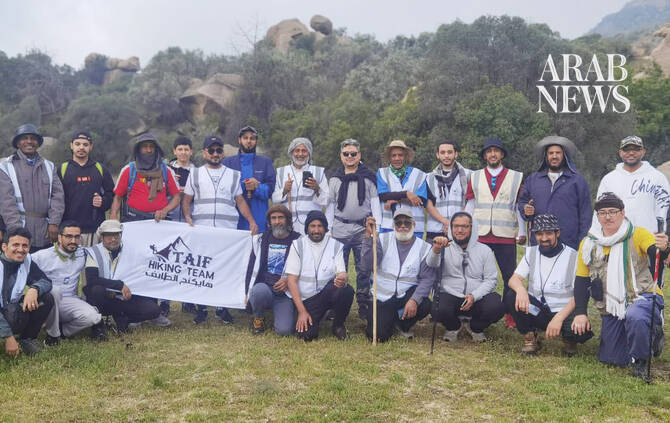
As nature tourism expands under Vision 2030, the crater has become a popular destination for hikers, photographers and adventure seekers, while serving as a valuable site for geological research.
Located about 250 km northeast of Taif, Al-Wahbah is the Kingdom’s largest mara crater, stretching about 2.5 km across and reaching a depth of around 380 meters. Its floor is covered with bright white salt deposits that contrast sharply with the surrounding volcanic rock.
Geologist Abdullah Al-Shahri described the site to Arab News as one of the Kingdom’s “most significant geological landmarks.” He said research indicates it was formed by ancient volcanic activity that caused the ground to collapse over a magma chamber.
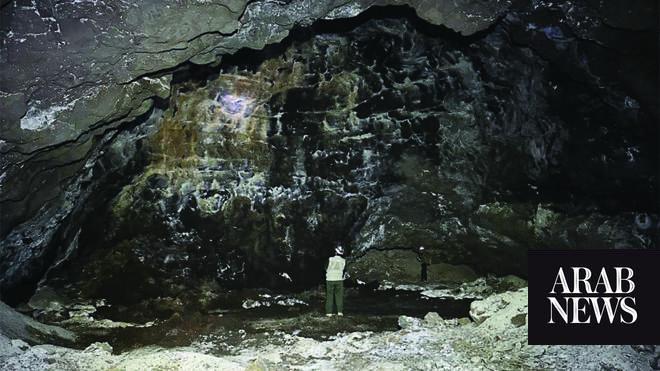
Al-Shahri described the site as an open-air laboratory where students, researchers and earth-science enthusiasts could study volcanic formations firsthand.