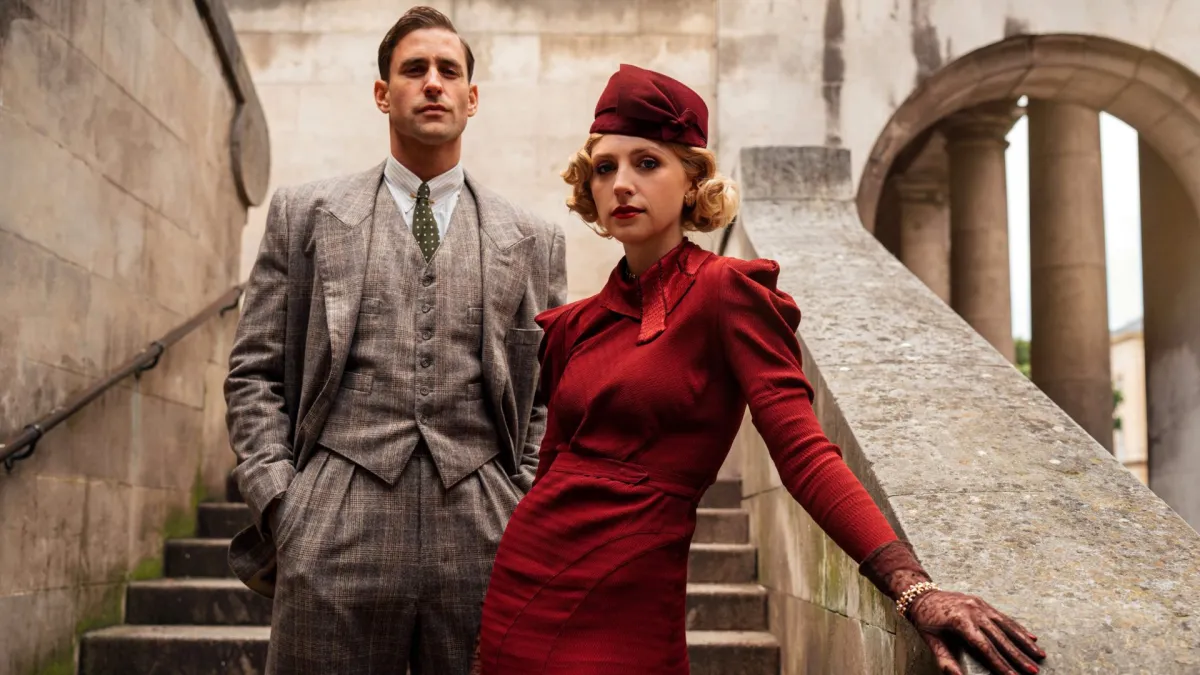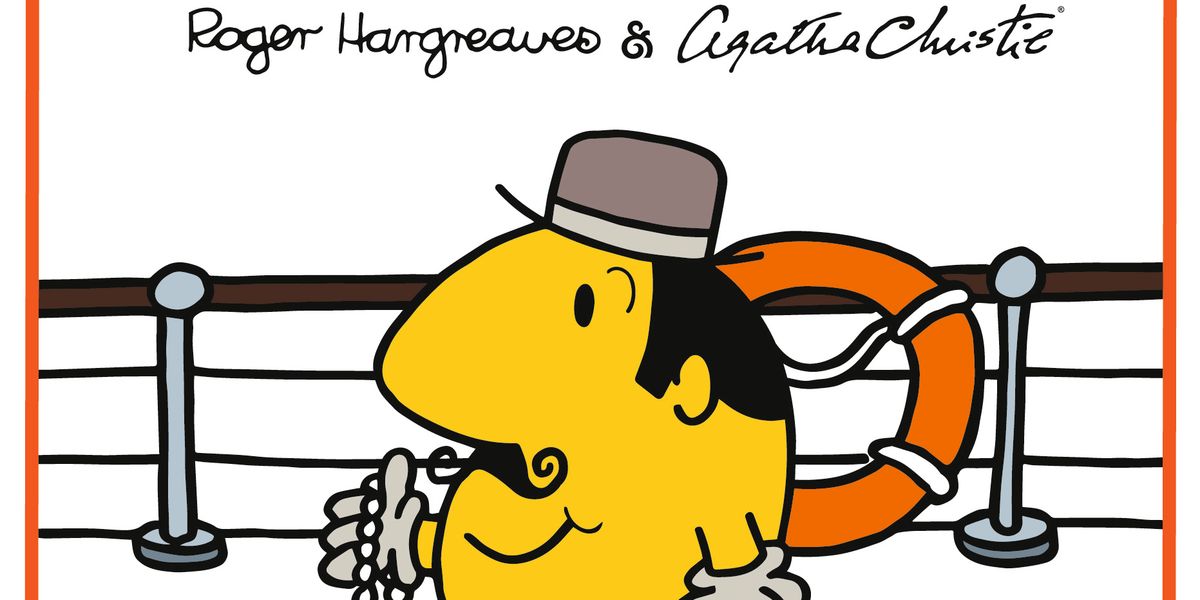
Tommy and Tuppence never became as famous as Hercule Poirot or Miss Marple. But across five novels, they do something none of Agatha Christie’s other detectives ever did: fall in love, grow old and solve mysteries together “Tommy, old thing!”Antonia Thomas and Josh Dylan in Tommy & Tuppence (Courtesy Britbox)“Tuppence, old bean!”A chance meeting on a London Tube platform sets the stage for one of Agatha Christie’s most enduring detective partnerships. Thomas Beresford and Prudence ‘Tuppence’ Cowley return to each other’s lives in The Secret Adversary (1922). World War I has just ended, jobs are scarce, and the future looks uncertain.They go on to do what any sensible young people wouldn’t: place an advertisement. “Two young adventurers for hire. Willing to do anything, go anywhere. Pay must be good. No unreasonable offer refused.”It’s one of Christie’s most irresistible beginnings. Before long, the pair are chasing missing government papers, evading spies, and stumbling into far more danger than they bargained for. The adventure, as they discover, comes free of charge.Thomas Beresford and Prudence ‘Tuppence’ Cowley return to each other’s lives in The Secret Adversary (1922)This September, Tommy and Tuppence return to television in a new six-part BritBox adaptation starring Anthonia Thomas and Josh Dylan, a year that also marks five decades since Christie’s death. It’s a fitting moment to relook at the detective pair who’ve spent most of the past century in the shadow of Hercule Poirot and Miss Marple.But that’s a pity. Because Tommy and Tuppence do something no other Christie detectives ever really get to do: grow up.Across five books, The Secret Adversary, Partners in Crime, N or M?, By the Pricking of My Thumbs and Postern of Fate, the unlikely duo fall in love, marry, raise three children, and grow old together. Their adventures move from post-war London to Cold War Britain, the mysteries change as the times do, and so do they.Christie herself admitted a particular affection for the pair. It’s easy to see why. They’re funny, occasionally reckless, often exasperating and completely believable. Unlike Poirot or Miss Marple, they don’t arrive fully formed. They make mistakes, argue, tease each other. Above all, they remain curious. That curiosity is what keeps pulling them into trouble.The detectives who refused to stand stillMost fictional detectives exist in suspended animation. Sherlock Holmes never really ages. Hercule Poirot remains impeccably turned out until the end. Miss Marple is permanently elderly.Tommy and Tuppence are different.When readers first meet them in The Secret Adversary, they’re young, broke, and trying to figure out what comes next after WWI. By the final novel, Postern of Fate (1973), they’re retired grandparents, poking around in old books, and uncovering one last mystery because they just can’t help themselves.In between comes an entire shared life.They marry at the end of The Secret Adversary. In Partners in Crime (1929), married life has begun to feel a little too comfortable for Tuppence, who is desperate for another adventure. The opportunity arrives when they’re asked to take over a detective agency while quietly keeping an eye out for a coded message hidden beneath a postage stamp. A series of mysteries, which allows Christie to gently parody some of the biggest detective writers of her day, follows.By the time N or M? appeared in 1941, Britain was at war again. Tommy and Tuppence, now older and feeling sidelined by age, find themselves drawn into wartime espionage. Nearly three decades later, By the Pricking of My Thumbs (1968) trades wartime intrigue for quieter and stranger things, beginning with a visit to Tommy’s elderly Aunt Ada before turning into one of Christie’s eeriest mysteries. Then comes Postern of Fate, in which retirement proves no match for curiosity after a cryptic message turns up inside an old children’s book.The mysteries matter. But they seem secondary to the pleasure of watching Tommy and Tuppence simply live.“They’re joyful without being twee,” says Jamie Bernthal-Hooker, author of Agatha Christie: A Companion to the Mystery Fiction. “I’ve never understood why they’re not better regarded.”Part of that, he believes, lies in how ordinary they are.“Still today, most detectives are solitary, troubled and unusually gifted people who stand outside the worlds they investigate,” he says. “Tommy and Tuppence, being a normal and happy couple, don’t fit the usual mould.”That ordinariness makes them interesting.In Partners in Crime (1929), married life has begun to feel a little too comfortable for Tuppence, who is desperate for another adventureThis motif repeats with Albert, who first appears as a star-struck lift boy in The Secret Adversary and never really leaves. He turns up again as their office boy in Partners in Crime, goes on to marry, is later widowed, and by Postern of Fate has settled into the role of the Beresfords’ butler.A heroine who was ahead of her timeIf Tommy provides the steady hand, Tuppence is the spark. She dives into situations headfirst and worries about the consequences later. She says exactly what she thinks, refuses to accept that excitement belongs only to men, and has very little patience when told to stay out of danger.Early in The Secret Adversary, when Tommy gallantly assures someone, “I’ll look after her, sir,” Tuppence shoots back instantly: “And I’ll look after you.”The small exchange reveals almost everything about her.Bernthal-Hooker describes Tuppence as one of Christie’s finest creations. “She is one of many ‘new woman’ heroines created in the 1920s,” he says. “What distinguishes her is her utter normality. She’s just a confident, likeable person who says what she thinks, makes mistakes and never needs to be rescued. More often than not, she’s rescuing Tommy.”Their relationship never slips into the familiar detective fiction pattern of genius and sidekick. Tommy has patience and caution; Tuppence thrives on instinct, nerve, and momentum. Neither outshines the other.“They’re truly equal,” Bernthal-Hooker says. “Each brings their own unique flavour to investigations; they complement each other perfectly. That is rare in detective partnerships, and still unusual in fictional couples.”Christie clearly enjoyed writing that dynamic. Their conversations crackle with teasing rather than deduction.“Shall I neglect you a little?” Tommy asks in Partners in Crime. “Take other women about to night clubs.”“Useless,” Tuppence fires back. “You would only meet me there with other men.”Why they’ve never quite had their momentFor characters who appeared in five novels, inspired Christie’s very first screen adaptation and remained with her for more than half a century, Tommy and Tuppence have had a surprisingly uneven afterlife.The “young adventurers” reached the screen before Poirot or Miss Marple.The Secret Adversary became Christie’s first film adaptation in 1928, when Germany’s Fox Film Corporation turned it into the silent feature Die Abenteuer G.m.b.H. (Adventures Inc.). Twenty-five years later, they appeared on BBC Radio, voiced by Richard Attenborough and his wife Sheila Sim, fresh from their success in The Mousetrap.More adaptations followed. London Weekend Television cast James Warwick and Francesca Annis in the stylish 1984 series Partners in Crime, before reuniting them for The Secret Adversary a year later. France reinvented the pair in two films directed by Pascal Thomas. The year 2015 brought Partners in Crime, starring David Walliams and Jessica Raine.Now, the indefatigable duo is back again. In September, BritBox will premiere a six-part contemporary reimagining starring Anthonia Thomas and Josh Dylan, with Imelda Staunton joining the cast. Written by Phoebe Éclair-Powell and produced by Lookout Point in association with Agatha Christie Limited, the series shifts Tommy and Tuppence into the present day in Hampstead, a leafy and affluent corner of north London, and taps into the cosy crime phenomenon.But despite all the adaptations, Tommy and Tuppence never escaped the long shadow cast by Poirot and Miss Marple.Bernthal-Hooker thinks part of the problem is that filmmakers often misunderstand what makes them work.“On screen, they usually end up more conventional,” he says. “A brilliant older man and a clumsy young and beautiful woman. Their awkwardness, their normality and their equality are what makes them special.”Tommy and Tuppence aren’t larger-than-life detectives with extraordinary gifts. They’re ordinary people who happen to be curious enough to keep opening doors they probably shouldn’t.A marriage built on mysteryChristie’s detectives are often solitary figures. Poirot has Hastings. Miss Marple has a changing cast of friends and acquaintances. But both remain lone observers, stepping into other lives, solving the mystery, and stepping away again.Tommy and Tuppence don’t. They solve crimes between the routines of everyday life. They argue over domesticity. They tease each other over breakfast. They worry about children, ageing parents, and growing older themselves. Their relationship evolves as naturally as the decades through which they live.Tomy & tuppence star Antonia Thomas, Imelda Staunton, and Josh Dylan. (Cousrtesy Britbox)That perhaps keeps the books unexpectedly modern. Readers aren’t following a detective series; they’re following a marriage.It’s one of the reasons Christie herself returned to the pair again and again over more than 50 years. By the time Postern of Fate appeared in 1973, just three years before her death, Tommy and Tuppence had grown old alongside their creator. Their final mystery begins not with a murder, but with a retirement move and a curious message scribbled inside an old children’s book.The instinct that first drew them together, however, never really changes.“I never know what you’re up to, Tuppence,” an exasperated Tommy says at one point. “But I know the look in your eye when you are up to something.”After half a century of adventures, he knows exactly what’s coming. So do the readers.Teja Lele is an independent editor and writes on books, travel and lifestyle.Agatha ChristieExplore the latest Books News, author interviews, book reviews, literary events and new releases. Discover recommendations, reading lists and updates from the world of literature on Hindustan Times.See Less
Agatha Christie’s most overlooked detectives
Tommy and Tuppence never became as famous as Hercule Poirot or Miss Marple. But across five novels, they do something none of Agatha Christie’s other detectives ever did: fall in love, grow old and solve mysteries together
1,601 words~7 min read