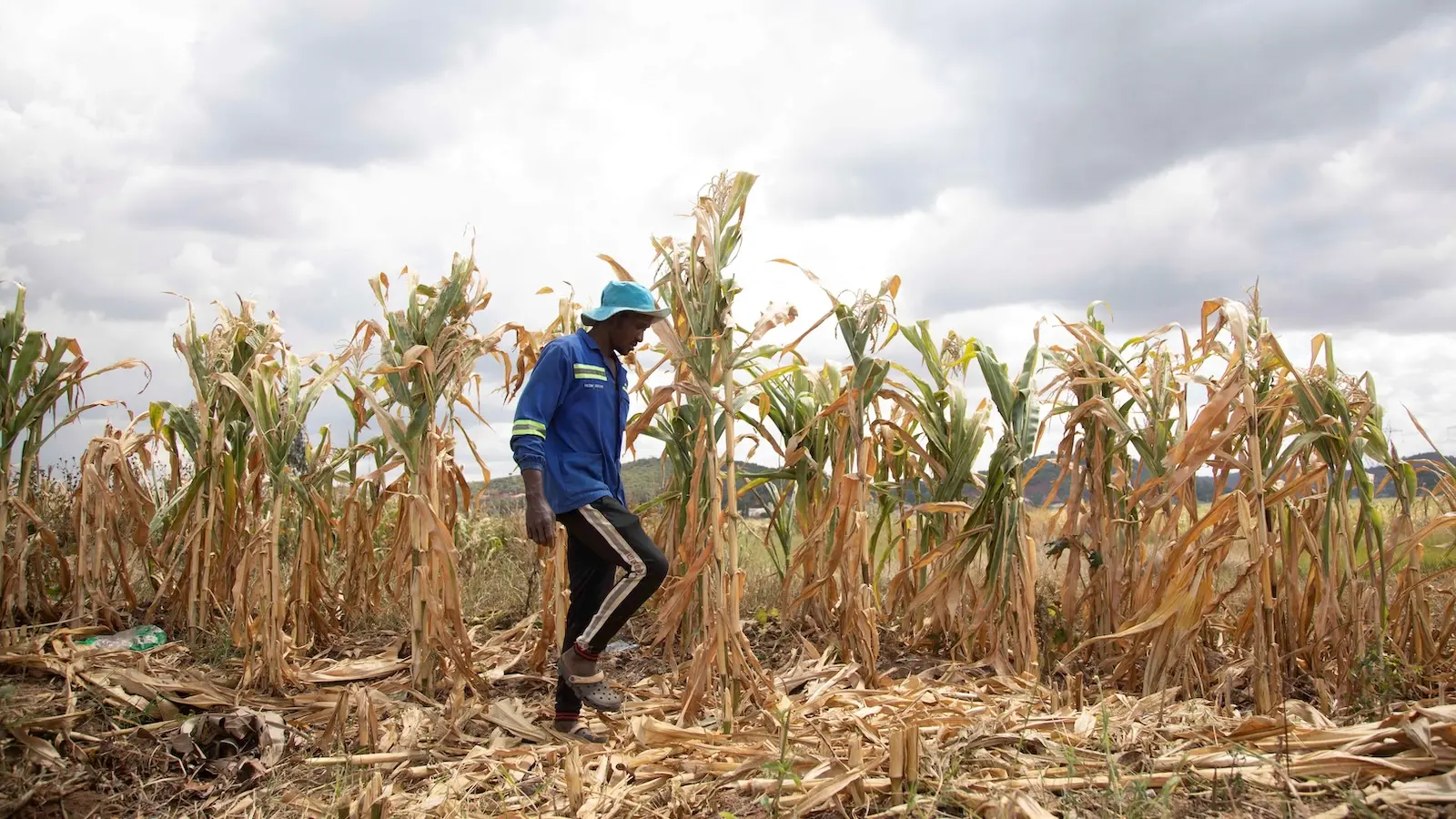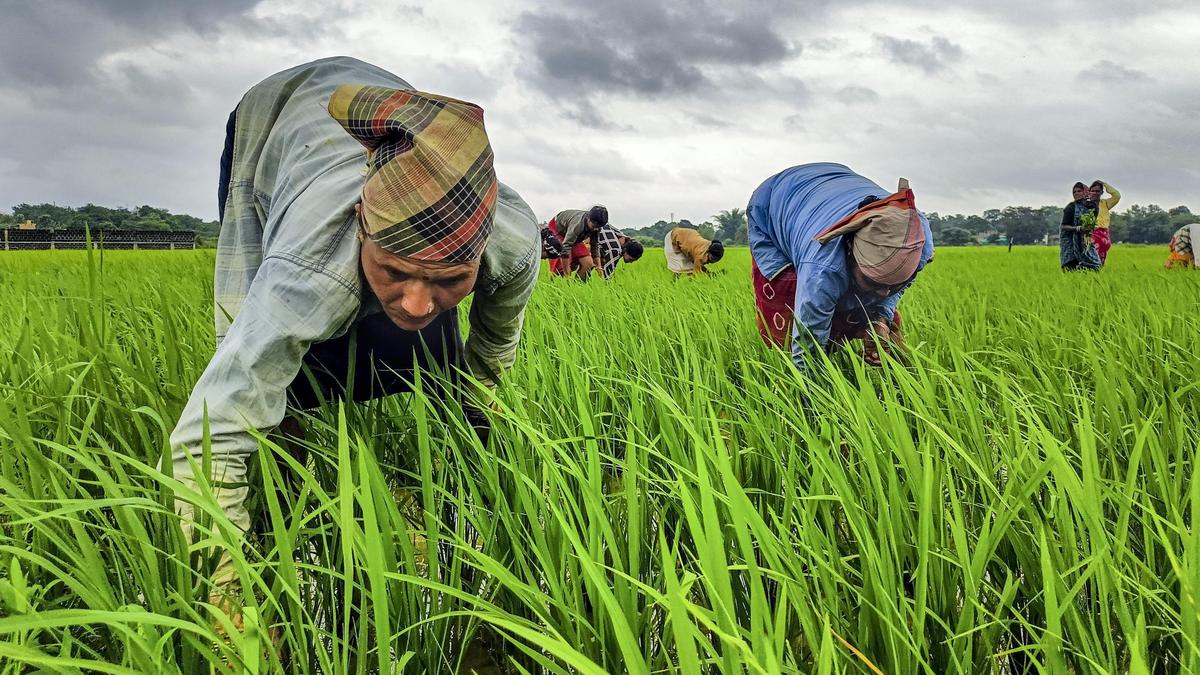
El Niño is the warm phase of a natural climate cycle called the El Niño Southern Oscillation, or ENSO. It occurs when sea surface temperatures in the central and eastern equatorial Pacific Ocean rise well above normal for an extended period. This warming weakens the trade winds that normally blow from east to west across the Pacific, disrupting the Walker Circulation, the giant loop of rising and sinking air that governs rainfall patterns across the tropics.For India, the consequence is straightforward but painful i.e., the same atmospheric shift that warms the Pacific tends to starve the Indian subcontinent of the moisture-laden winds that power the south-west monsoon. 2026 is shaping up to be a textbook case. Climate agencies including the US National Oceanic and Atmospheric Administration (NOAA), the World Meteorological Organization (WMO) and the India Meteorological Department (IMD) have converged on a strong to potentially “super” El Niño developing through the second half of the year, with sea surface temperature anomalies expected to climb sharply by the end of 2026.The IMD has forecast below normal monsoon rainfall for the season, and June opened with a steep rainfall deficit across central, eastern and northeastern India, driven by the strengthening El Niño alongside an unfavourable Madden-Julian Oscillation and a scarcity of low-pressure systems over the Bay of Bengal.Why this matters for IndiaRoughly 70 per cent of India’s annual rainfall arrives during the four-month south-west monsoon, and nearly half the country’s net sown area still depends directly on that rain rather than irrigation. Agriculture itself now contributes a smaller share of GDP than it once did, somewhere in the 14-20 per cent range depending on the estimate, but it remains the primary source of income for close to half the population.A weak monsoon does not stay confined to farms. It ripples outward through four main channels.The first is farm income. Kharif crops such as rice, pulses, oilseeds, cotton and sugarcane are sown at the start of the monsoon and are highly sensitive to its timing and spread. A shortfall lowers yields in rain-fed belts, particularly in Maharashtra, Uttar Pradesh and parts of central India.The second is inflation. Food carries a substantial weight in India’s Consumer Price Index, so any squeeze on the supply of vegetables, pulses and cereals feeds fairly quickly into headline inflation numbers. This is precisely the channel that most worries the Reserve Bank of India, since persistent food inflation limits its room to cut interest rates even when growth is softening.The third is rural demand. When farm incomes fall, spending on tractors, two-wheelers, fertiliser, and mass-market consumer goods slows in tandem. Companies in the FMCG, auto and agrochemical space typically flag this risk in earnings commentary during a poor monsoon year, since a large share of their volumes comes from rural and semi-urban markets.The fourth is fiscal and trade policy. Governments facing tight domestic supply often respond by restricting grain exports, releasing buffer stocks, or adjusting import duties on edible oils and pulses, as India has done in past El Niño years. India already imports a large share of its edible oil needs, so weaker domestic oilseed output tends to widen that import bill further.Taken together, economists estimate that a moderate El Niño combined with drought conditions could shave a modest but real amount off GDP growth, while a severe event could do considerably more damage. For financial markets, the effect shows up less as a single crash and more as a persistent overhang i.e., investors would watch rainfall data, reservoir levels and food price trends closely, and sectors tied to rural consumption tend to underperform when the monsoon disappoints, even as the broader market can still be driven by other global factors.The Indian Ocean Dipole: The monsoon’s other leverThe Indian Ocean Dipole, or IOD, is a separate but closely related phenomenon involving temperature differences across the Indian Ocean itself. In its positive phase, the western Indian Ocean, near the coast of Africa, warms relative to the eastern Indian Ocean near Indonesia.This temperature gradient enhances moisture flow toward the Indian subcontinent and generally supports good monsoon rainfall. In its negative phase, the pattern reverses, and the eastern Indian Ocean grows relatively warmer, which tends to suppress rainfall over India. Crucially, the IOD interacts with El Niño rather than acting independently.A positive IOD can partially offset a weak monsoon caused by El Niño, which is one reason forecasters distinguish between a “below normal” and a “deficient” season. Conversely, when a negative or neutral IOD coincides with El Niño, the drought risk compounds. This is exactly the combination India faces in 2026.IMD’s outlook points to largely neutral IOD conditions, offering little cushion against a strengthening El Niño, which is a key reason the current monsoon forecast leans toward below normal rainfall for both the south-west and north-east monsoon seasons.El Niño and the Indian Ocean Dipole are no longer treated as purely meteorological curiosities in India. They function as macroeconomic variables that finance ministries, the RBI, and equity analysts track alongside inflation prints and GDP data. With a strong El Niño developing against a neutral IOD, 2026 is likely to test how well India’s food stocks, rural safety nets and monetary policy can absorb a genuinely difficult monsoon year.Williams is the Head of India at Sernova Financial; Nivetha is Assistant Professor at Sathyabama Institute of Science and Technology, ChennaiPublished on July 29, 2026
El Niño, the Indian Ocean Dipole, and the Indian Economy: A 2026 reality check
This meteorological event will severely test the government’s ability to deal with food stock and rural safety nets in the coming months
890 words~4 min read