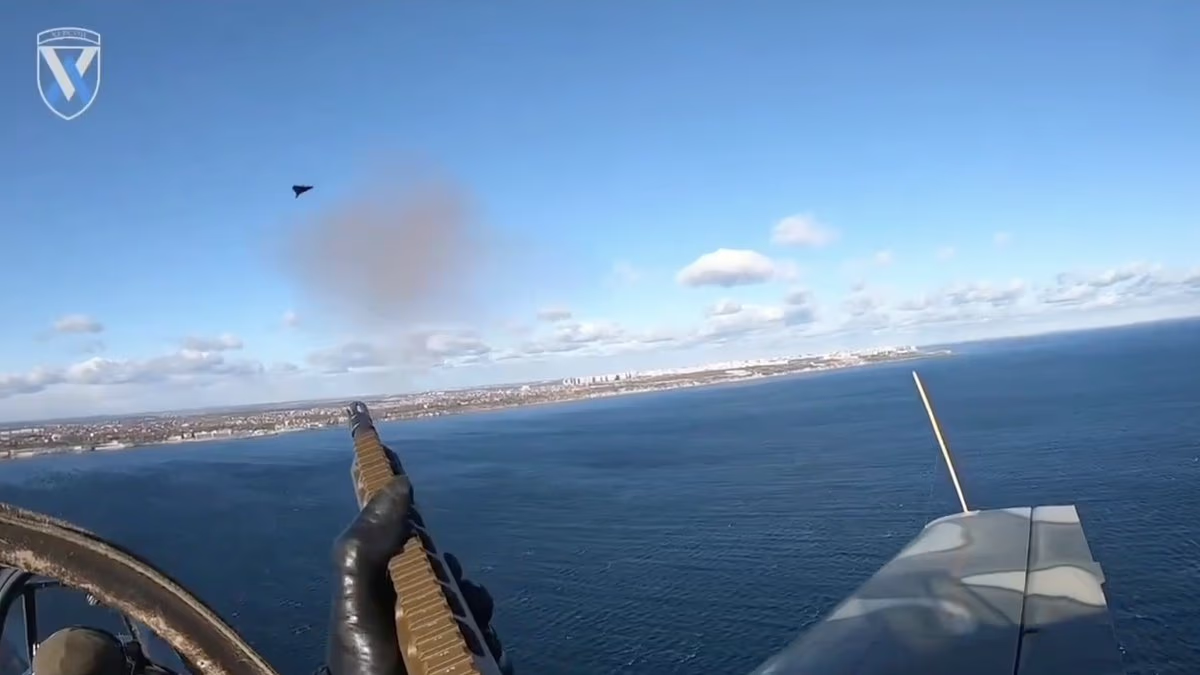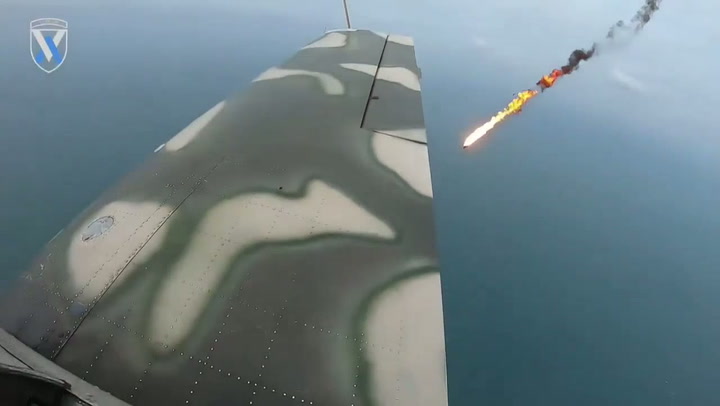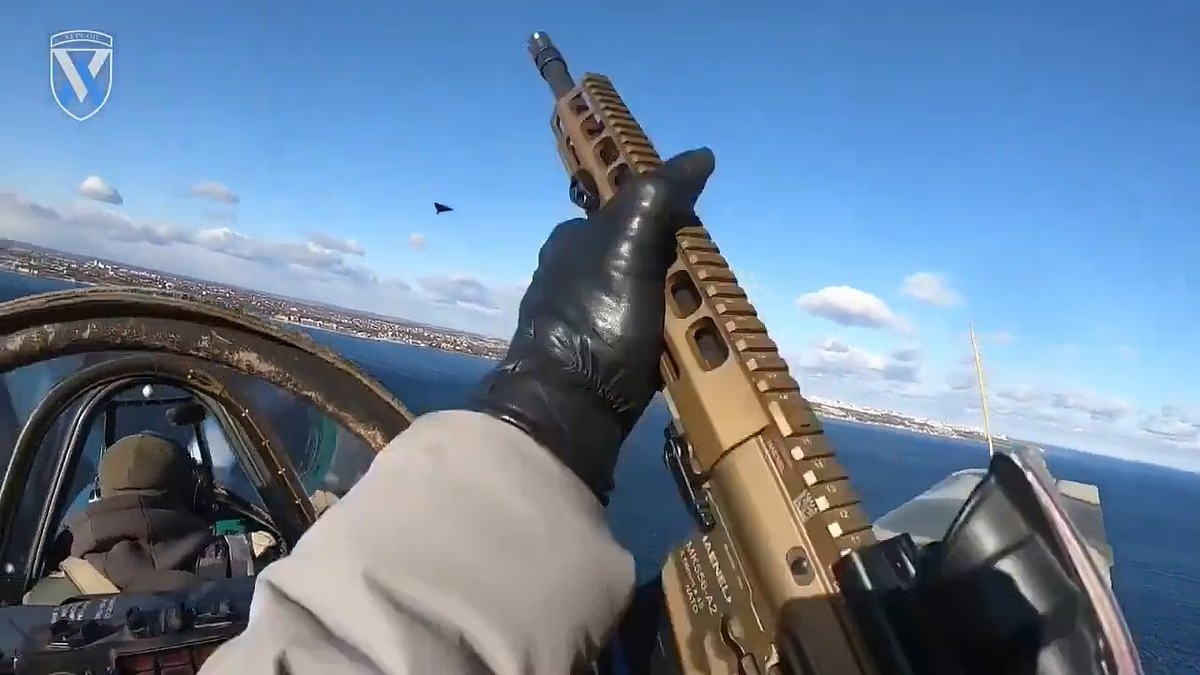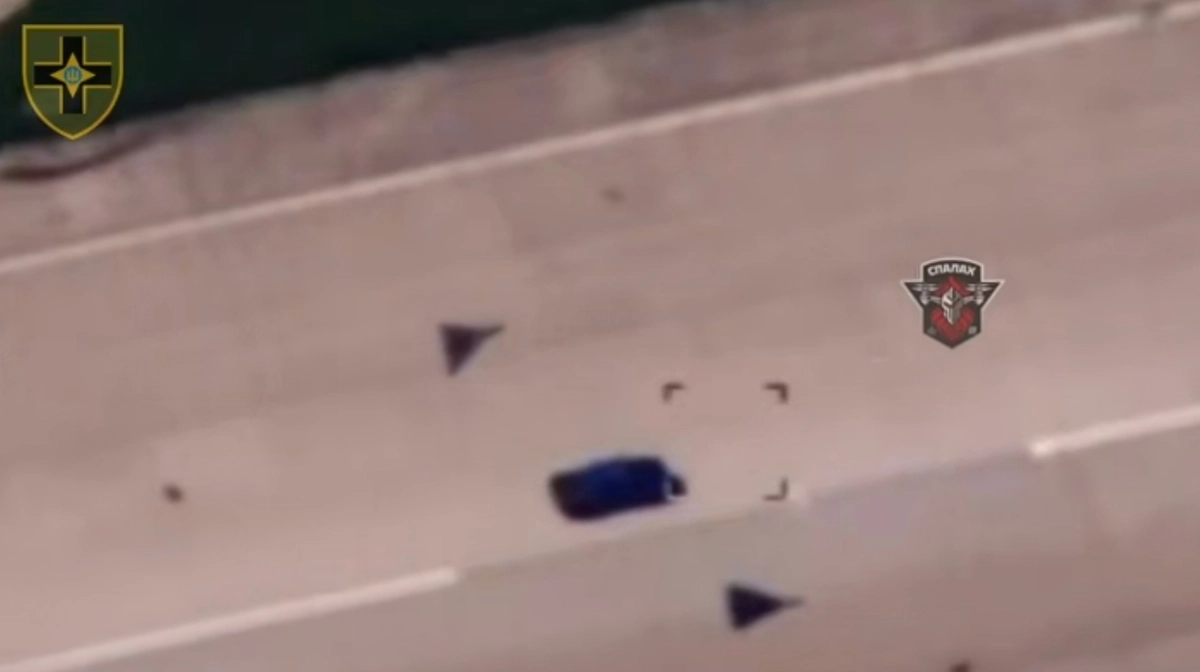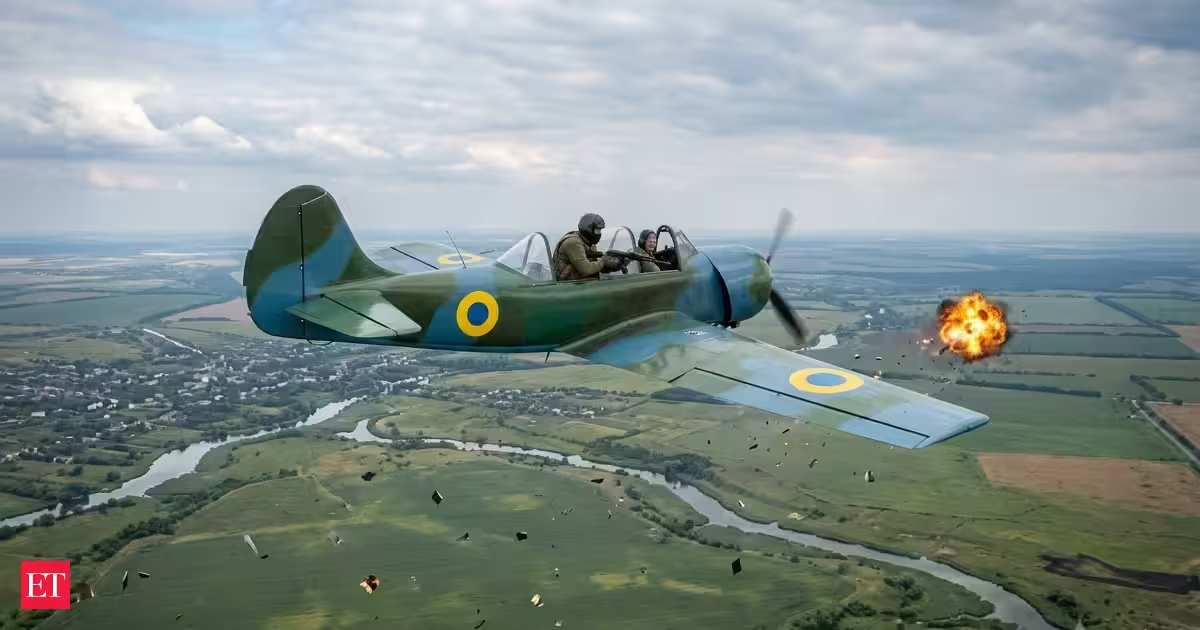
A newly released video from Ukraine has highlighted one of the most unusual adaptations of the Russia-Ukraine war: a Soviet-era training aircraft being used to intercept Russian Shahed attack drones.The footage, released by Ukraine’s 11th Separate Army Aviation Brigade “Kherson”, shows a gunner firing small arms from the open rear cockpit of a Yak-52 aircraft while targeting low-flying Russian drones reportedly over the Odesa region. The video showcases first-person POV footage filmed from inside the trainer aircraft during anti-drone missions. A gunner positioned in the open rear cockpit holds a rifle, aiming and firing small arms directly at low-flying Russian Shahed attack drones maneuvering through the sky. — bayraktar_1love (@bayraktar_1love) The footage captures multiple engagements across varying weather conditions, showing the plane maneuvering alongside targeted drones. The video culminates with successful strikes, including a drone exploding into flames in mid-air and another crashing into a body of water upon impact. The unusual tactic reflects how modern warfare has forced countries to rethink air defence. As Russia has increased its use of Shahed-131 and Shahed-136 one-way attack drones, Ukraine has increasingly turned to cheaper and more flexible methods to counter them.How a Soviet trainer aircraft became a drone interceptorThe aircraft involved is the Yakovlev Yak-52, a two-seat piston-powered aircraft developed in the Soviet Union in the 1970s for pilot training and aerobatics.The Yak-52 was never designed for combat. It lacks radar, advanced targeting systems and the protection of modern military aircraft. However, its low operating cost, manoeuvrability and ability to fly at low speeds have made it useful for a new role: hunting drones.The aircraft carries a pilot in the front cockpit, while a second crew member in the exposed rear cockpit engages drones using small arms. Although unconventional, the method takes advantage of a key weakness of Shahed drones, their relatively slow speed and predictable flight paths.Why Shahed drones are a major challenge for UkraineRussia has relied heavily on Shahed drones as part of its long-range strike campaign against Ukraine. The Iranian-designed Shahed-136, known in Russia as the Geran-2, is a long-range loitering munition capable of carrying an explosive warhead over hundreds of kilometres.Their biggest advantage is quantity. Shahed drones are far cheaper than traditional missiles and can be launched in large waves, forcing defenders to make difficult decisions about which weapons to use.Ukraine has responded with a layered air defence strategy involving Western systems such as NASAMS and IRIS-T, Soviet-era missile systems, electronic warfare tools, mobile gun units and aircraft-based interceptions.The Yak-52 adaptation is part of this broader effort to avoid using expensive missiles against every low-cost drone.A risky mission for Ukrainian crewsUsing a Yak-52 in combat comes with major risks. The aircraft has no armour protection, limited defensive equipment and was not built to operate in hostile airspace.A gunner firing from an open cockpit faces exposure to high-speed airflow, debris and potential enemy fire. The aircraft is also vulnerable if targeted by more advanced weapons. However, against slow-moving drones flying at low altitude, the tactic can provide a practical additional layer of defence.Ukraine’s wider effort to counter dronesThe Yak-52 is not the first unusual platform Ukraine has adapted for drone hunting. In 2024, footage showed Ukrainian forces using Mil Mi-8 helicopters fitted with machine guns to engage Shahed drones.These adaptations highlight a major feature of the Ukraine war: the growing importance of affordable counter-drone technology. Both Russia and Ukraine have relied heavily on drones for surveillance, attacks and battlefield coordination, turning the conflict into one of the largest drone wars in modern history.
Viral video shows Ukrainian gunner shooting down Russian Shahed drone from open-cockpit Yak-52
Ukraine is using Soviet-era Yak-52 trainer aircraft to intercept Russian Shahed drones. A gunner fires small arms from the open rear cockpit of the aircraft. This tactic counters the slow speed and predictable flight paths of the drones. The adaptation reflects modern warfare's need for affordable counter-drone technology. This unusual method adds another layer to Ukraine's air defense strategy.
585 words~3 min read