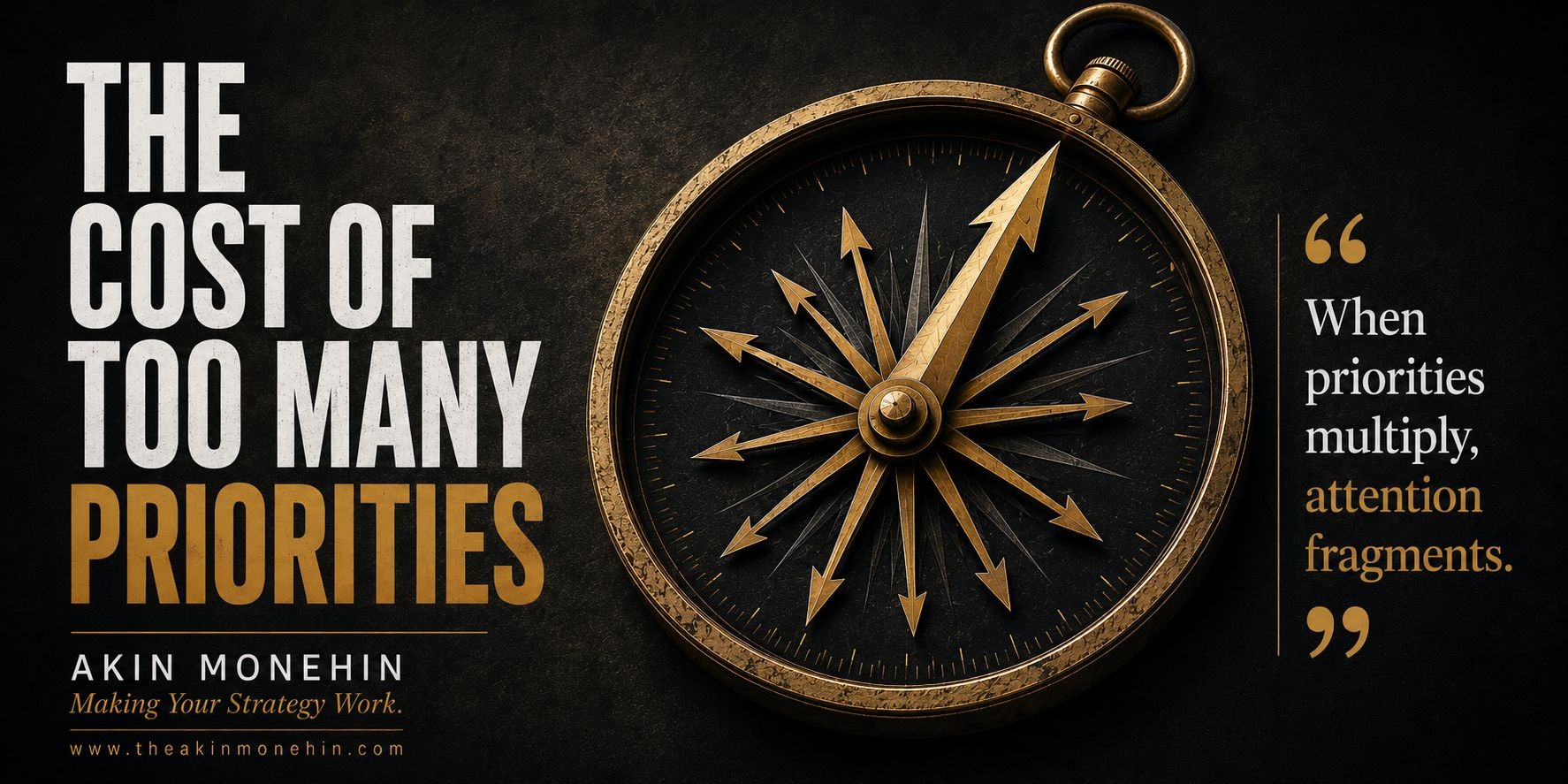
A few years ago, I sat in a leadership meeting where the executive team was reviewing its strategic priorities for the year; the list contained seventeen priorities.
Seventeen.
Growth was a priority. Cost reduction was a priority. Digital transformation was a priority. Customer experience was a priority. Talent development was a priority. Operational excellence was a priority. Safety was a priority. Innovation was a priority. Sustainability was a priority. Commercial excellence was a priority… The list went on.
As the discussion continued, a simple question occurred to me: if everything is a priority, what exactly is not? That question often sits at the heart of many execution challenges, since most organisations do not struggle because they have too few priorities, since most organisations do not struggle because they have too few priorities but because they have too many.
Every priority consumes attention, and attention is one of the scarcest resources in any organisation. Leaders rarely intend to create confusion. In fact, the opposite is usually true. They are trying to respond to market realities, stakeholder expectations, competitive pressures, operational demands, and emerging opportunities.