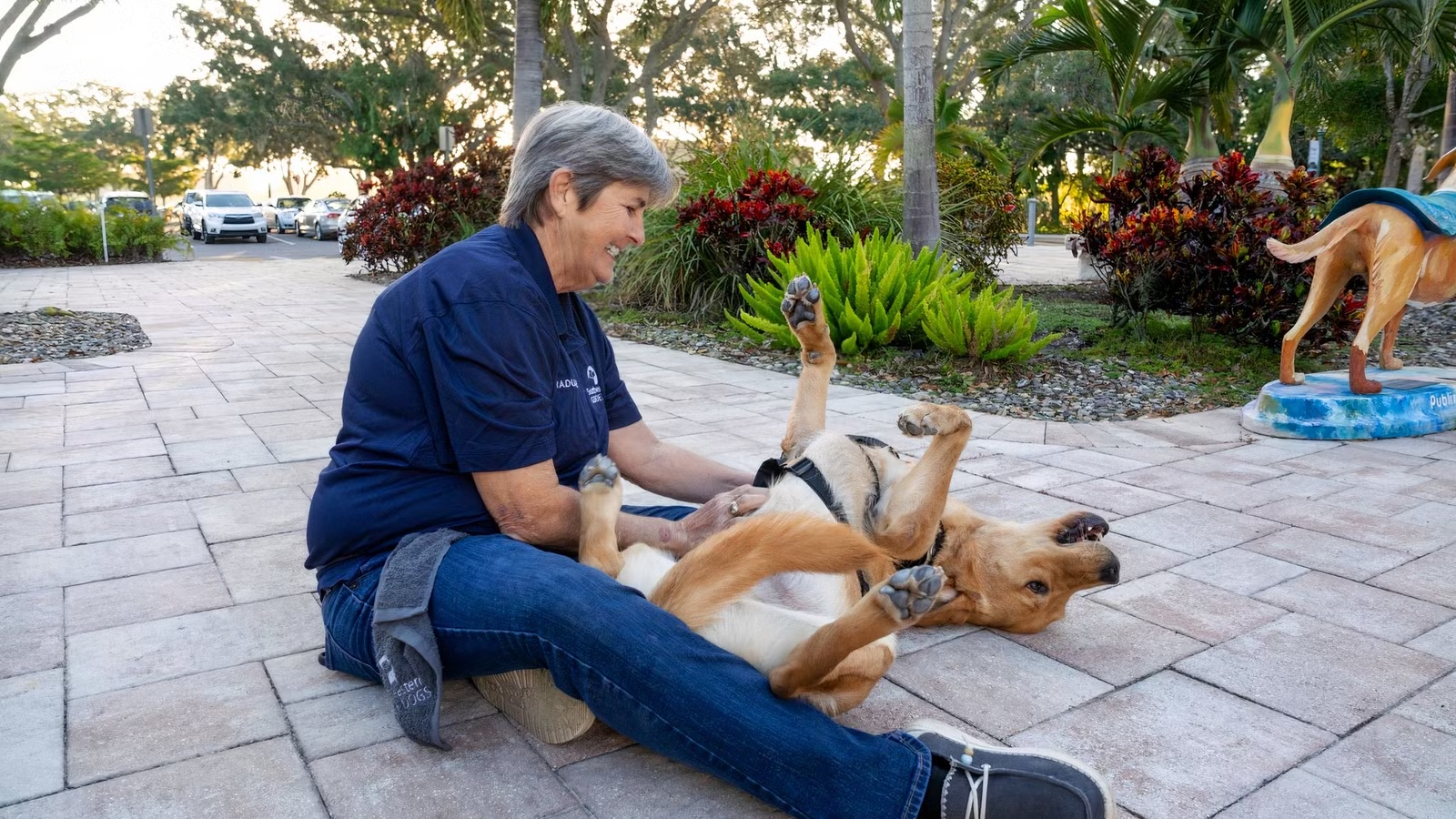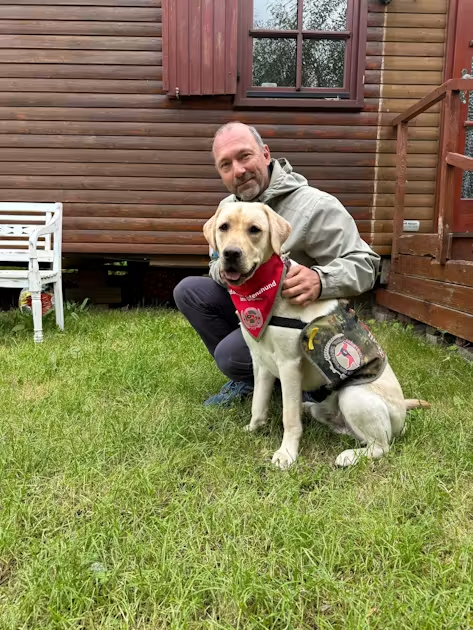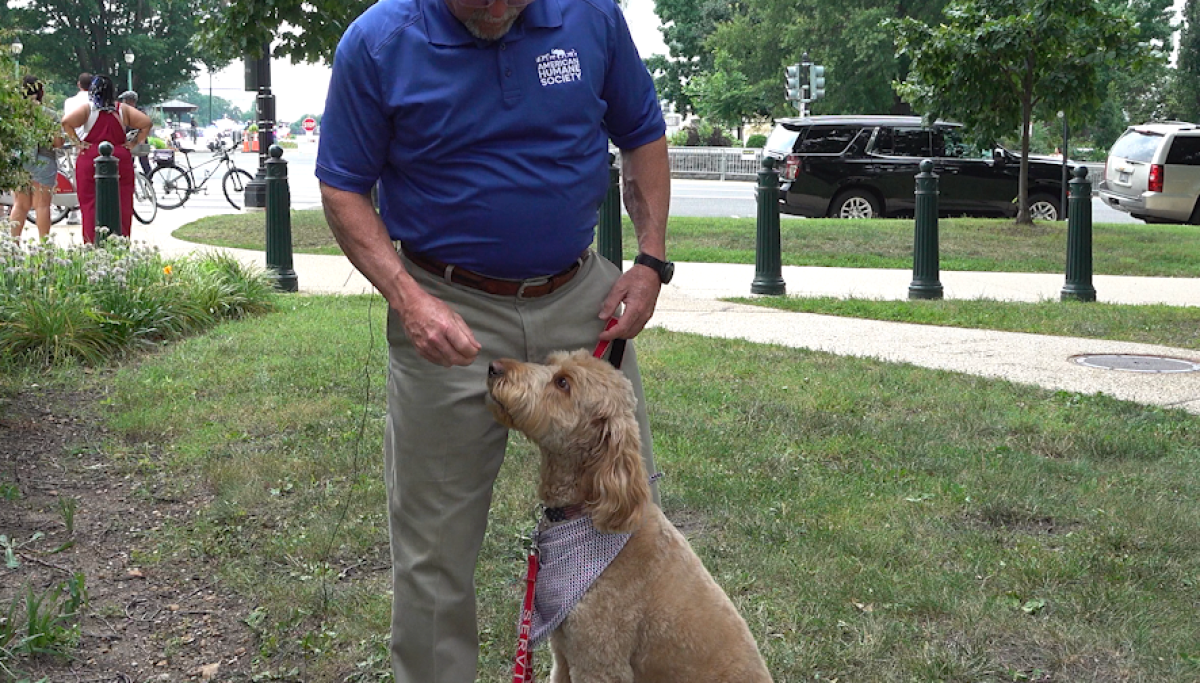
For army veteran Scott Edgell, healing didn’t come from a prescription: It came on four legs with a wagging tail. Mars, a specially trained goldendoodle, helps Edgell manage the lasting effects of his traumatic brain injury. Mars performs tasks designed to meet his specific needs.Edgell and Mars have come to Washington to demonstrate just how much of a difference a service dog can make to a veteran.
U.S. Army Veteran, Scott Edgell speaks with Washington Examiner across from the Capitol on Tuesday, July 28, 2026. (Amy DeLaura/Washington Examiner)
“One of the biggest problems I have is I don’t recognize my triggers,” Edgell told the Washington Examiner. “I don’t recognize what’s setting my brain off. So by the time I realize that it’s too late, Mars is right there at the beginning of it, and he’ll either nudge me, rub against my leg, anything to distract me, to get me to focus on him.”Before Edgell had Mars’s assistance, he said he would struggle to go to public places and perform daily tasks, even tasks as simple as grocery shopping. With Mars’s help, he can now navigate these stressful situations.“A trip like this I would have never been able to take,” Edgell said. “I would have never been able to do it. It’s opened up my life quite a bit.”Edgell received Mars through American Humane Society‘s Pups4Patriots program, which provides trained service dogs to eligible veterans at no cost.Vice President of Program Development at American Humane Society, Amy Hrin, said training a service dog is a lengthy and pricey process, which limits how many veterans these kinds of nonprofit groups can help.“The cost can range from $15,000 to $50,000, depending on the level of training,” Hrin told Washington Examiner.