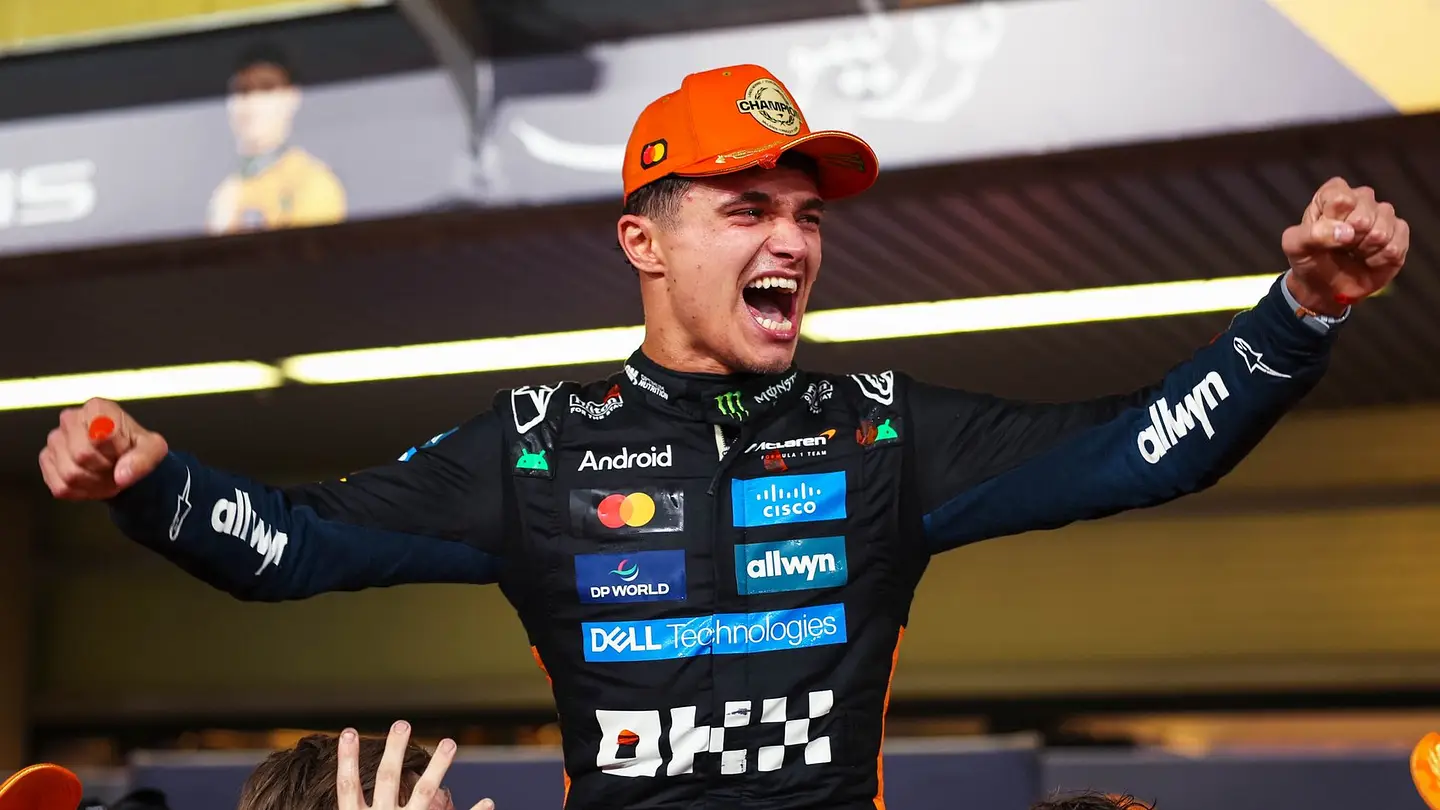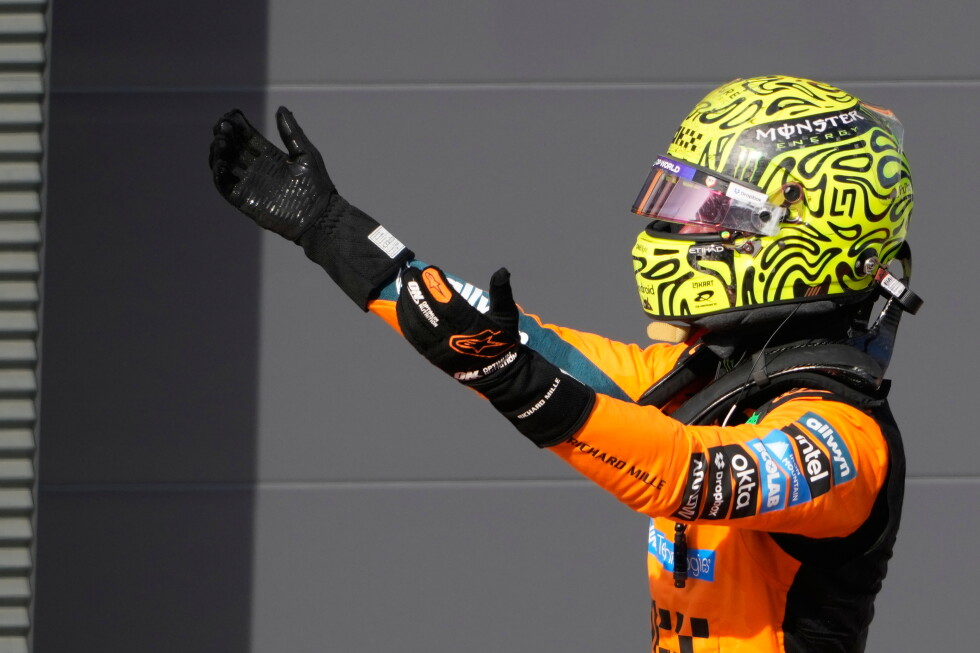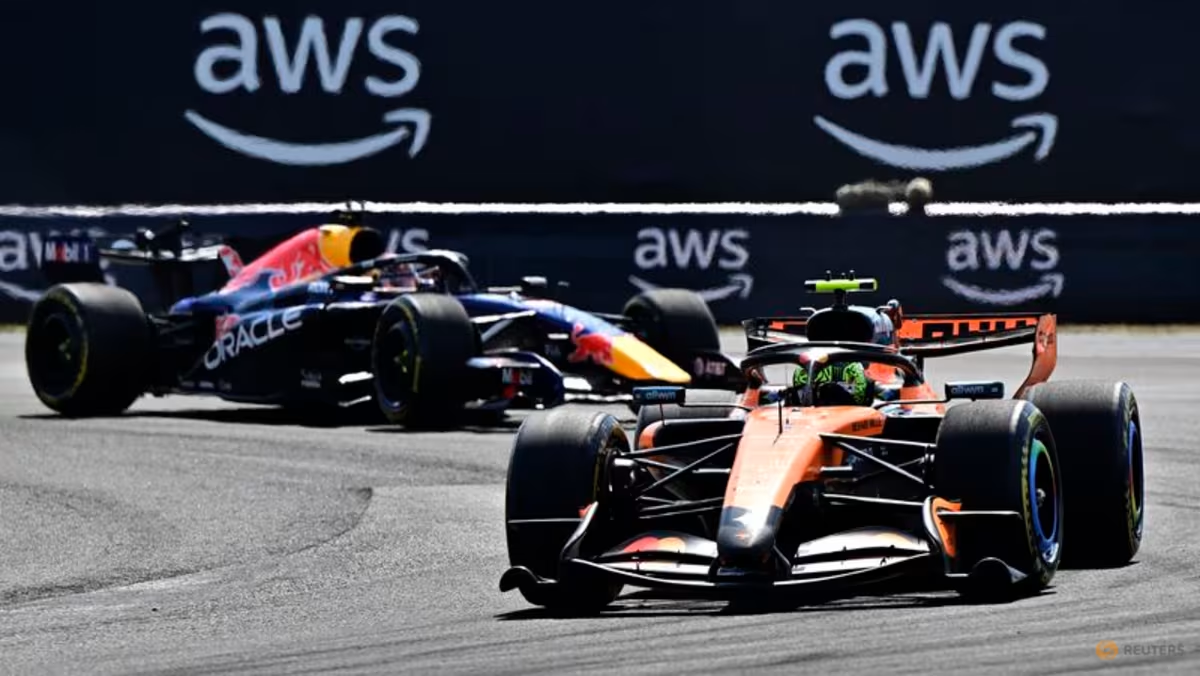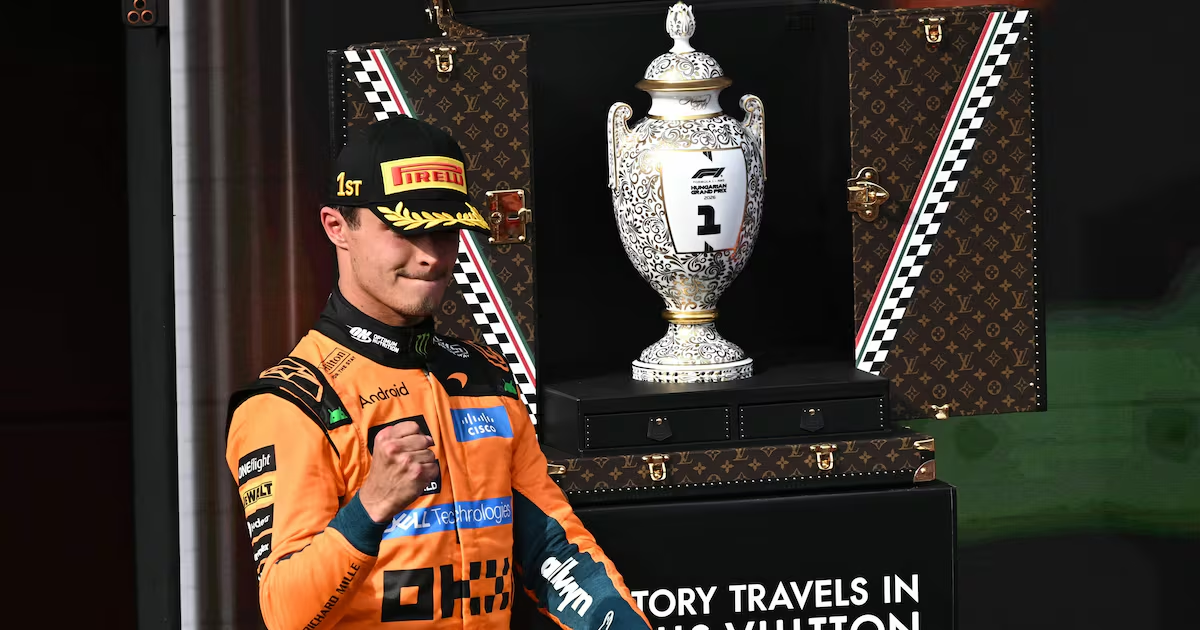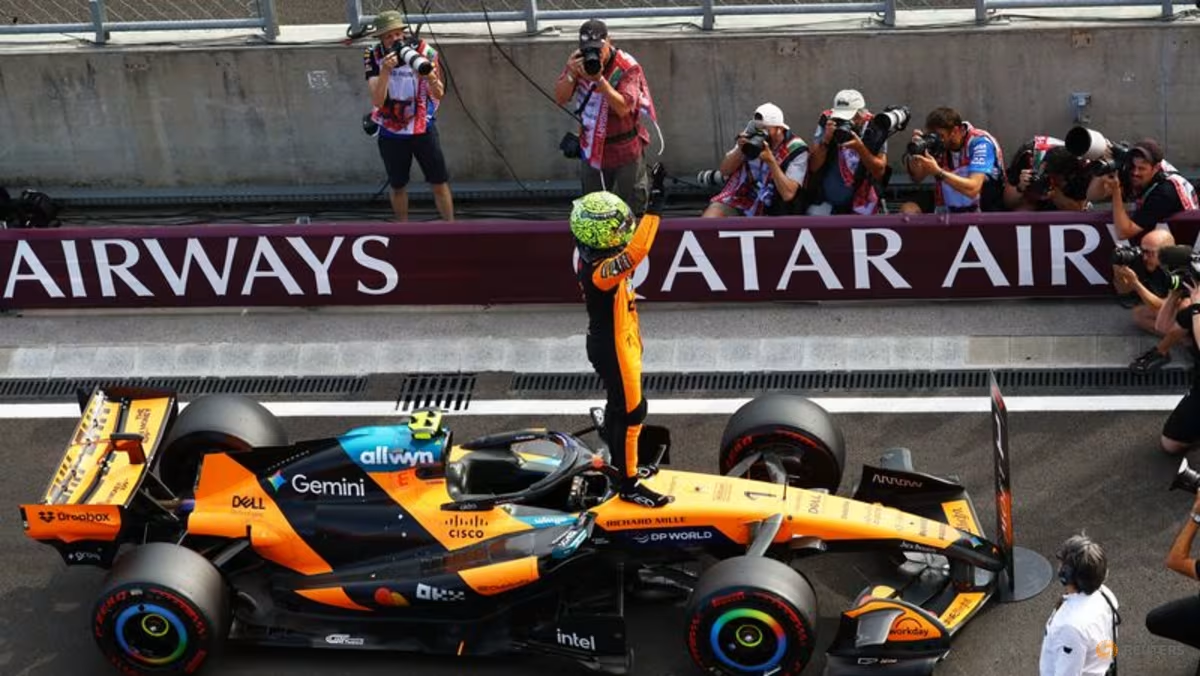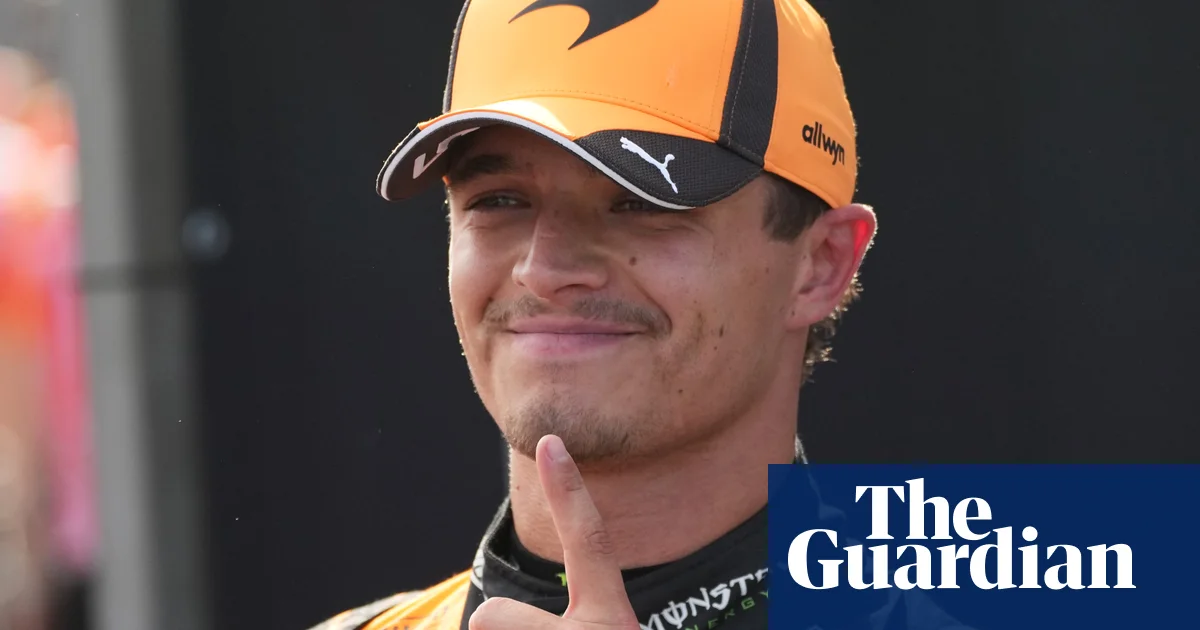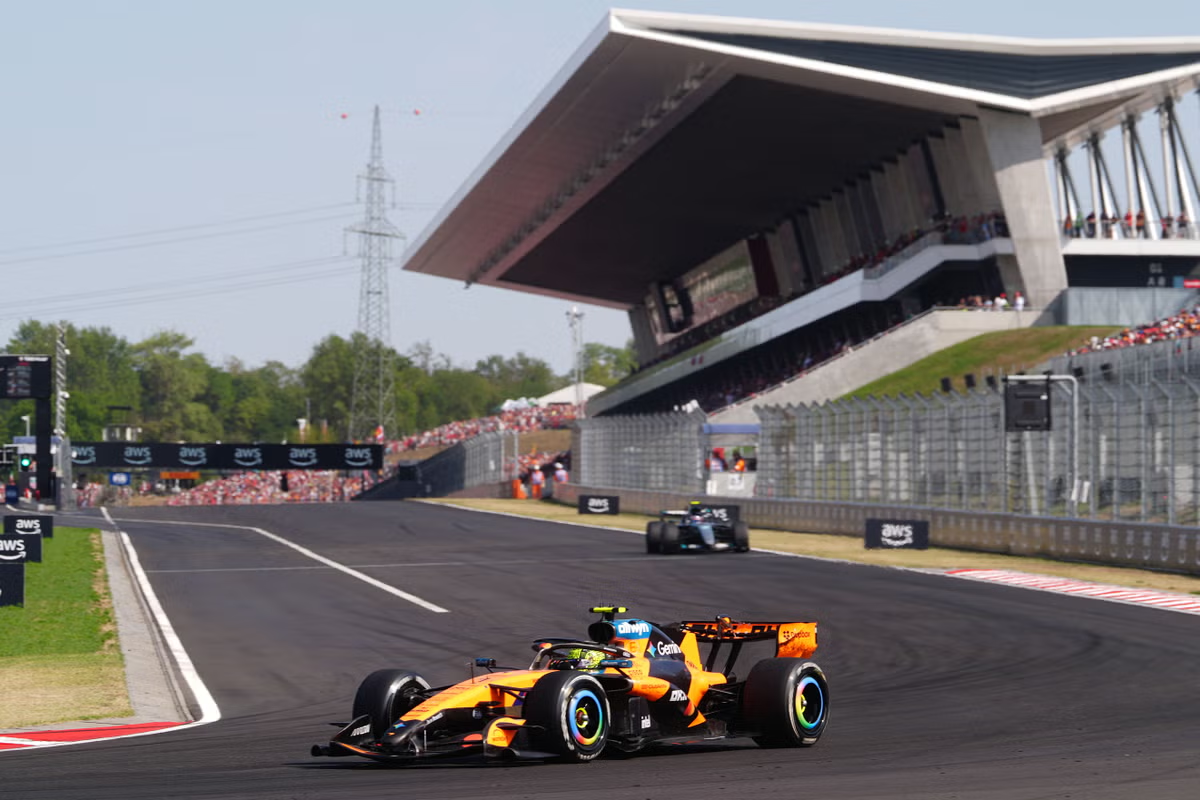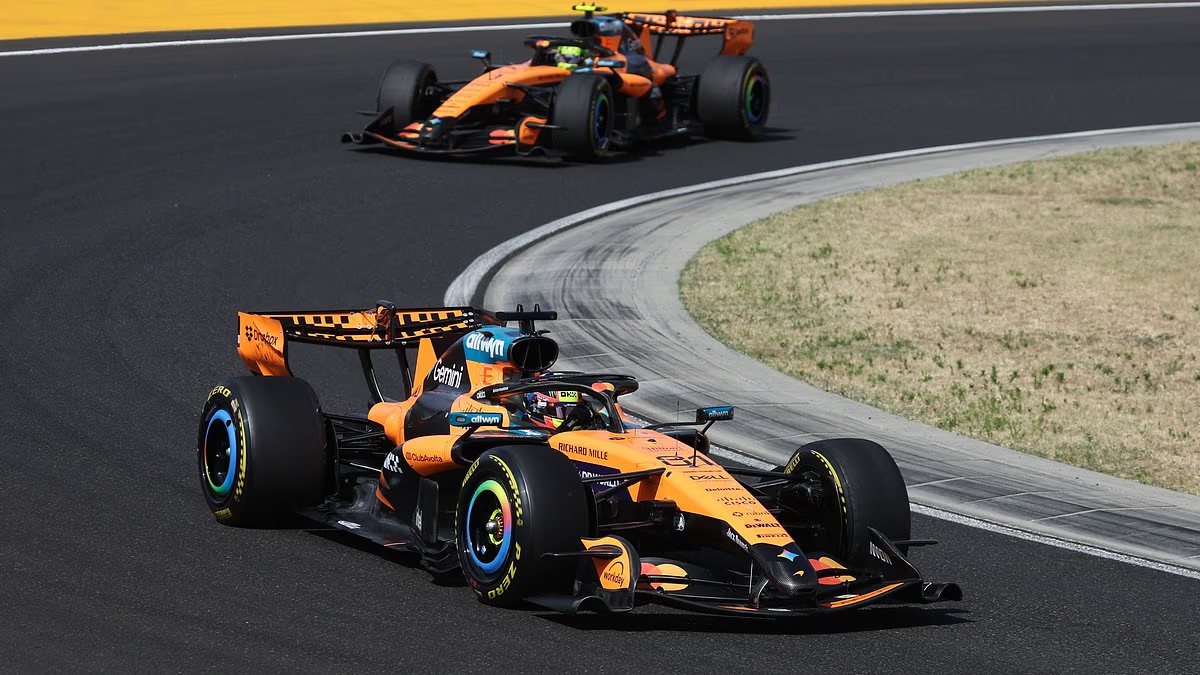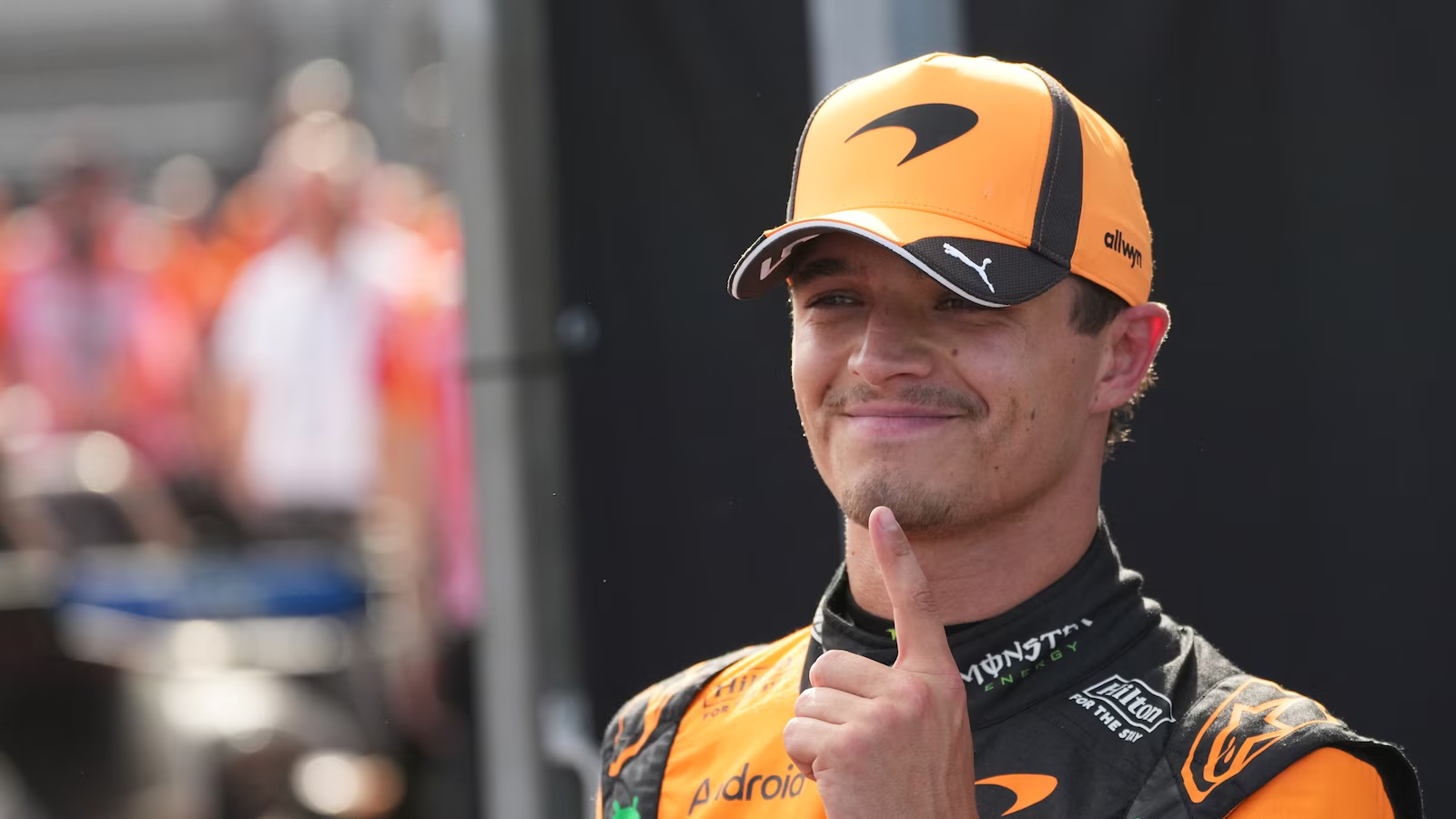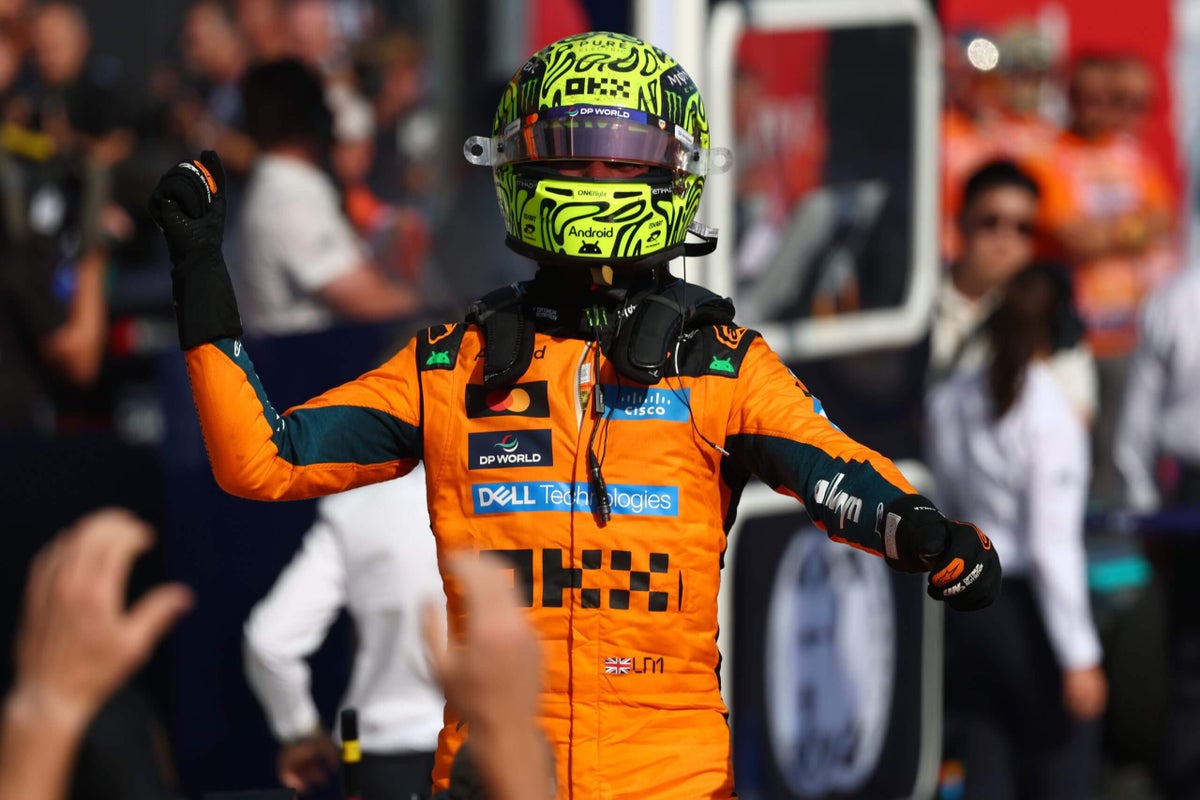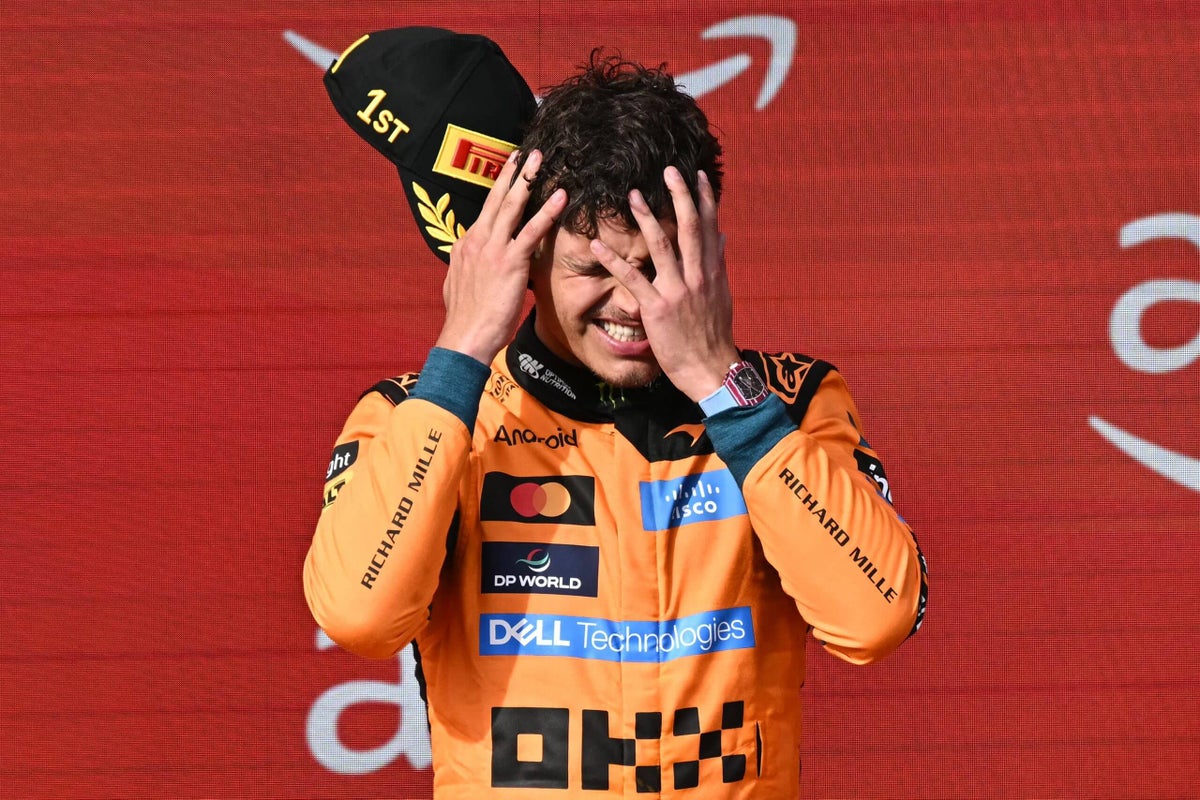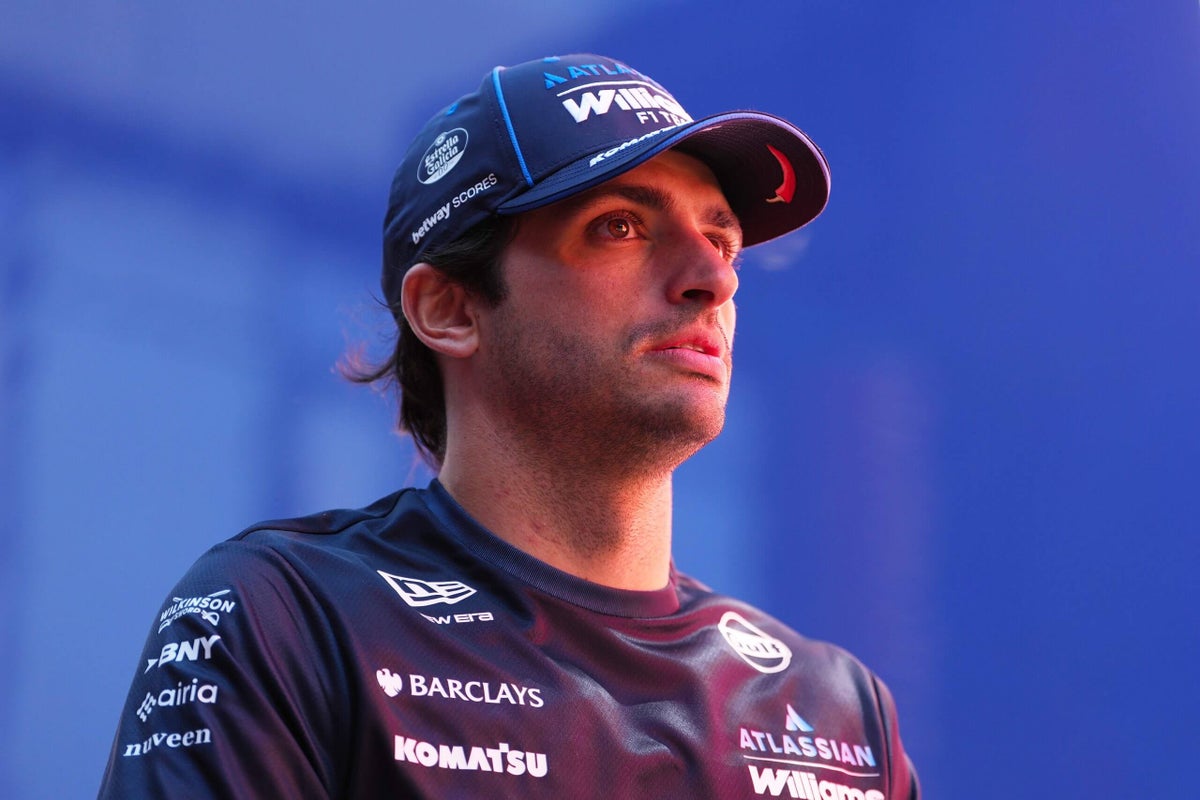
Formula 1 sailed into its summer break with a surprisingly eventful Hungarian Grand Prix that ended in Lando Norris scoring his first victory of the season.The reigning world champion looked unbeatable throughout the Budapest weekend, but he did get a little help after a collision between early race leader Oscar Piastri and Carlos Sainz. Piastri was trying to lap Sainz but the Williams driver did not see the McLaren and was subsequently given a five-second time penalty, one that raised a few eyebrows.George Russell endured another miserable race after start-line trouble, serving another dent to his title hopes as Mercedes teammate Kimi Antonelli extended his points lead over him in the drivers’ standings to 59 points with a smartly-taken podium finish.Following your questions, here is our latest F1 mailbag after the Hungarian GP.Editor’s note: Questions have been lightly edited for brevity and clarity.I cannot wrap my head around the Sainz penalty being only five seconds. Ollie Bearman gets five seconds for blue flag infringements. Lewis Hamilton gets five seconds for being 0.1 km/h over the pitlane speed. Yet Sainz caused a collision, ignored blue flags and got a typical 10-second penalty reduced to five seconds because of “mitigating circumstances” that he couldn’t see Piastri from his track position.I know Bearman and Hamilton deserved the penalties, but how could Sainz be given the same punishment for a much more egregious incident? — Nikki V.The typical penalty applied to drivers for causing a collision is 10 seconds. But when there are “mitigating circumstances,” in the eyes of the stewards, then that can be reduced.We recently saw that happen at Spa when Hamilton only received a five-second penalty for the first-lap clash with George Russell, the mitigating circumstances being his attempt to leave room, the loss of downforce from the dirty air of a car in front, and that it occurred on the opening lap.For Sainz, the stewards stated that the “limited visibility reduced the degree of culpability” in what happened with Piastri. Combine that with the fact the blue flag system wasn’t working properly, and there is at least a bit of an explanation for Sainz’s part in the clash.But it’s a pretty flimsy argument. Even if Sainz had limited visibility of Piastri in his blind spot because of the car’s position on the outside of Turn 2 — which is down to Sainz alone, surely? — he was being lapped.It is absolutely the responsibility of the driver and his team to be aware of the lead traffic coming through, and to respond accordingly. Per the stewards’ document, Sainz had been informed by his team of the blue flags, so there was really no excuse not to have adhered to them earlier or, at a minimum, to be aware a leader may be coming through.And what if Piastri and Sainz had been fighting for position? There is no way that the “limited visibility” argument would have held up, and it surely would have been a 10-second penalty. A very strange ruling.Luke SmithWhat happened exactly with Russell’s start? — Paul J.We knew before the opening lap was over that Russell experienced anti-stall, as the Briton was told over the radio after he asked what had happened. But the team said in its post-race debrief that it needed to investigate what caused the issue.Russell said after the race that he “was on the throttle holding the revs,” which means maintaining a steady engine speed while stationary before the race begins.“All of a sudden, about four seconds before the lights went out, the engine just started revving all over the place,” he continued. “I was reacting with my throttle, and it was doing nothing. The engine wasn’t reacting to the throttle.”George Russell is third in the drivers’ standings. (Sona Maleterova / Getty Images)While Russell did have a new engine, it wasn’t something he’d seen since preseason. Mercedes team boss Toto Wolff said Sunday: “It seems another problem happened to George. It looks like that he gave about 10 percent throttle, and the whole thing revved maximum. He went off the throttle, and it bogged down. So I’m really not happy about too many mistakes that happen.”This was just the latest issue Russell has faced this season, like the drive-through penalty in Monaco for speeding in pit lane (a controversial topic after the Alpine appeal), engine failure in Canada and the speed deficit to teammate Antonelli in Belgium (a race where he DNFed due to a collision with Hamilton).“The race was totally ruined,” Russell said about Hungary. “I did my procedure right at the start. Pace was fine. The result was s–t, but the things that I could have controlled, they were just okay.“I usually don’t feel like I need a break. This year, I definitely feel like I need one.”Madeline ColemanWhat’s next for Williams? James Vowles has once again over promised and under delivered. Alex (Albon) stated their Baku upgrade is nowhere near as effective as Aston Martin’s. — Adam M.Hungary was always expected to be a tricky track for Williams, given how the car is wind sensitive. During practice, Sainz and Alex Albon struggled with high-speed corner stability, said Richard Frith, Williams’ head of performance systems, after Friday’s sessions, and other typical Hungary problems arose.But with Aston Martin taking a step forward after bringing its major chassis upgrade, it’s only highlighted just how far off the mark Williams is.Winter production delays put Williams on the backfoot. The team has been able to shed quite a bit of weight off of the car, but Baku has been circled as a big moment for them as they prepare a notable upgrade package that’s essentially a B-spec car. However, there’s doubt that even those updates can remedy the issues.Alex Albon speaks to Carlos Sainz during qualifying during the Hungarian Grand Prix. (Peter Fox / Getty Images)“We know the weaknesses of the car,” Albon said after the Hungarian GP. “This year, the work that’s been done at the factory, it’s the biggest effort I’ve seen in the team… I think we’re doing exactly the right things to get back on track. It’s a shame that we’re here in the first place, but I do believe we’re doing the right thing.“If it’s cured by Baku, I doubt it.”Albon went on to explain how the Baku package has been planned for some time. The rest of the grid has steadily upgraded across the first 11 race weekends of the year, some opting for smaller updates across multiple weekends and others (like Aston) for bigger packages at once. The gap that Williams needs to close has increased.“Unfortunately, it feels like Aston is going to be faster for the rest of the year now,” said Albon. “We’re going to be helped out by some circuits down the straights. But, otherwise, if it’s a corner-focused circuit, we’re going to be on the backfoot.”So, to answer what’s next for Williams. It likely needs to be shifting most of the focus to developing the 2027 car soon, even with this much of the season left, to address the gremlins.Madeline ColemanI’m new following F1. Please be gentle. The Cadillac team appears to me to be getting worse not better. Are the metrics backing this view up or not? — Stephen W.Firstly, Stephen, welcome! I hope you are enjoying our wonderful sport.Cadillac’s first season was always going to be difficult to treat with any firm performance expectations. The team is a start-up and has been, to quote team principal Graeme Lowdon, “building the plane while flying it” over the last couple of years. Bear in mind it only got full approval to race this year in March 2025!Being anything but last was also going to be unlikely, given the experience and history of the other 10 teams who had all been on the grid for at least a decade. Aston Martin has been Cadillac’s primary competition, but Aston should never have been there in the first place.The most concerning recent issue for Cadillac has surrounded its reliability, chiefly due to issues with brake cooling. Valtteri Bottas retired due to brake overheating in Hungary, and only a couple of days before, Lowdon had told reporters that it was still an issue Cadillac was working to resolve.“That is a really, really, really difficult area of a Formula 1 car to develop,” Lowdon said. “It’s an area where know-how and intangible IP is really important. We’re not allowed to get that from anywhere else, we can’t take someone else’s brake duct design. You have to do that learning and you have to do it in public as well with a few hundred million people watching.”
Hungary F1 mailbag: Why did Sainz not receive a longer penalty? Are Cadillac getting worse?
After Lando Norris wins in Hungary for his first victory of the season, our experts answer your questions.
1,636 words~7 min read