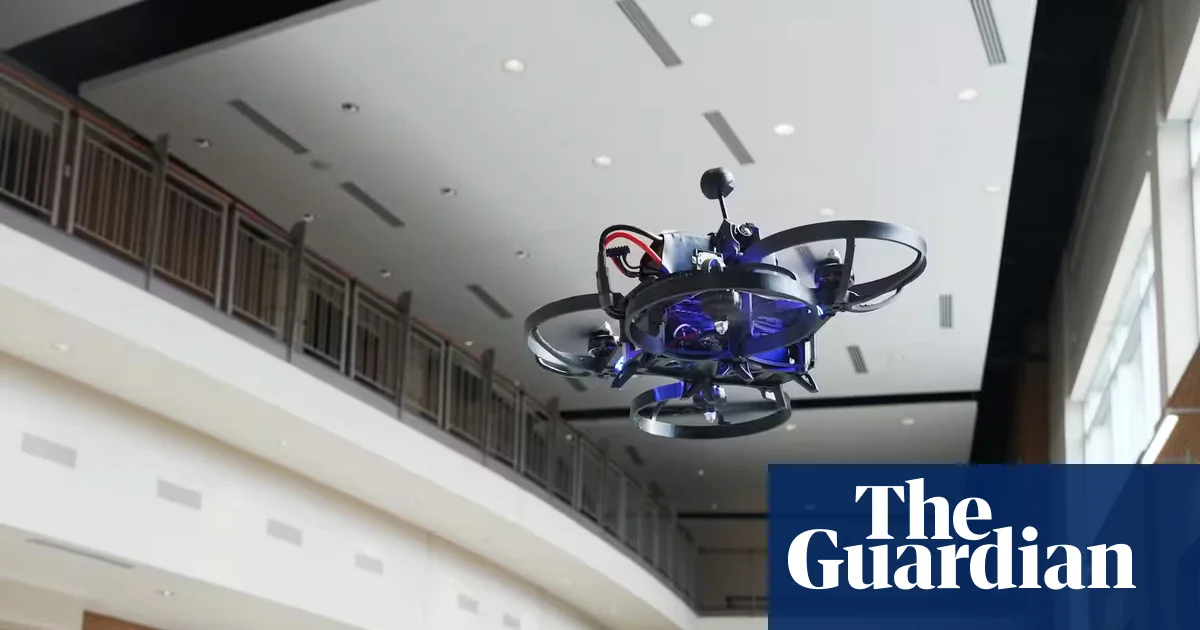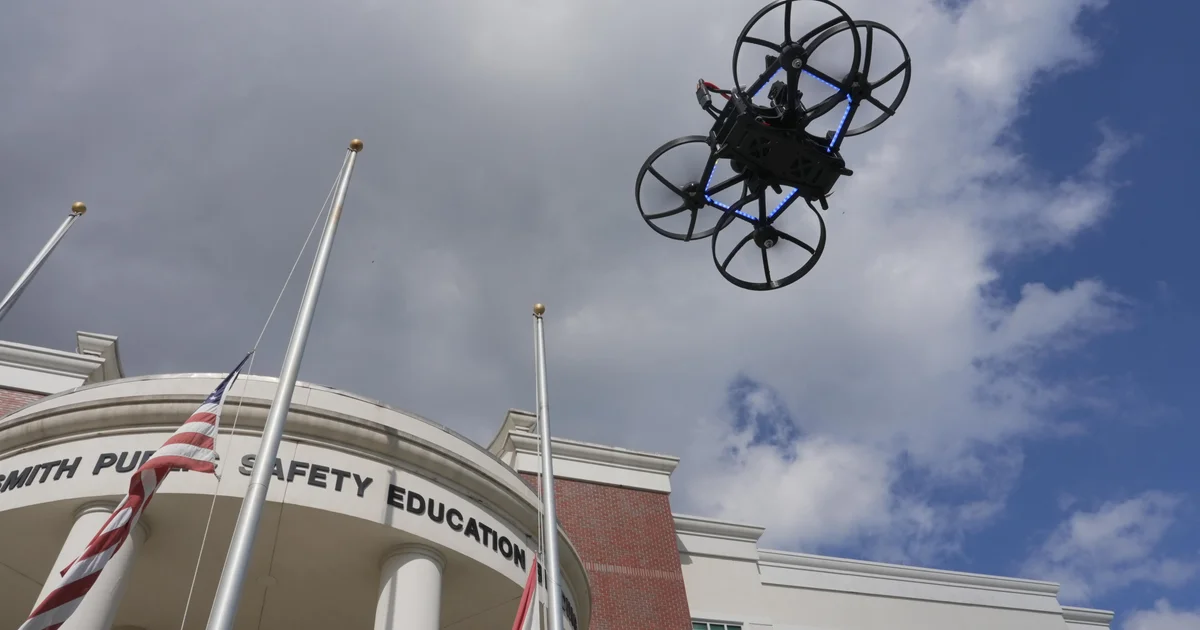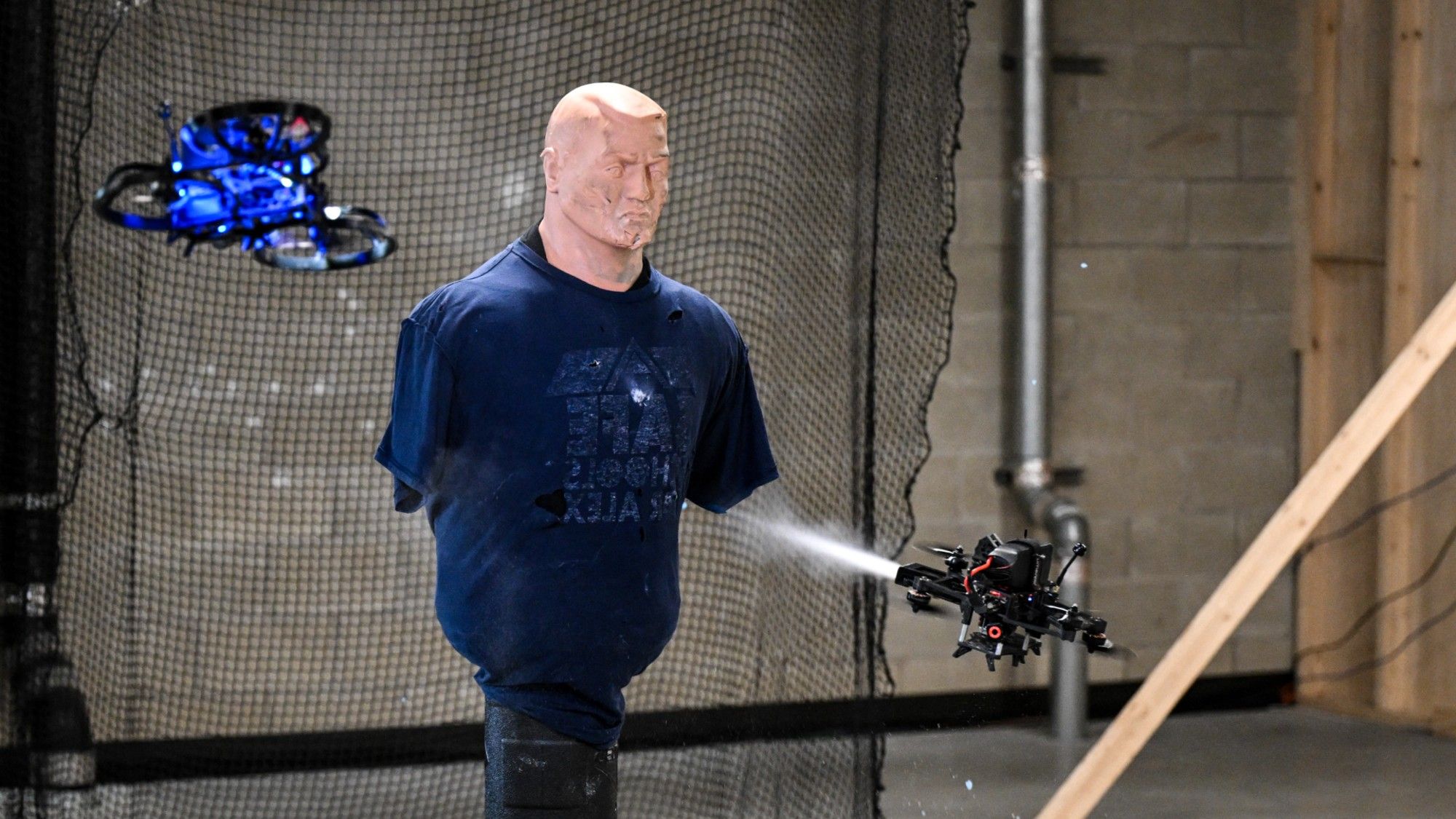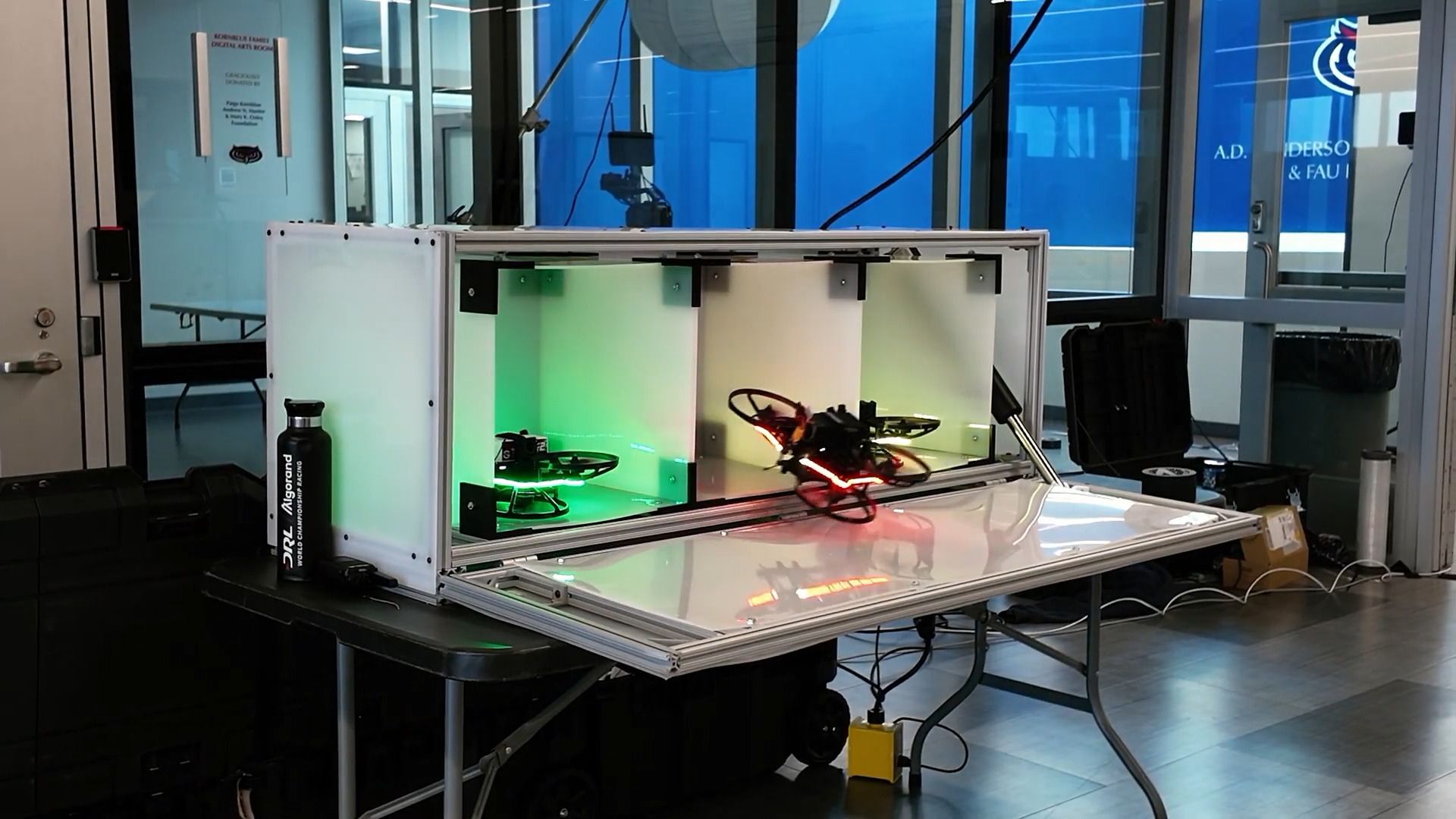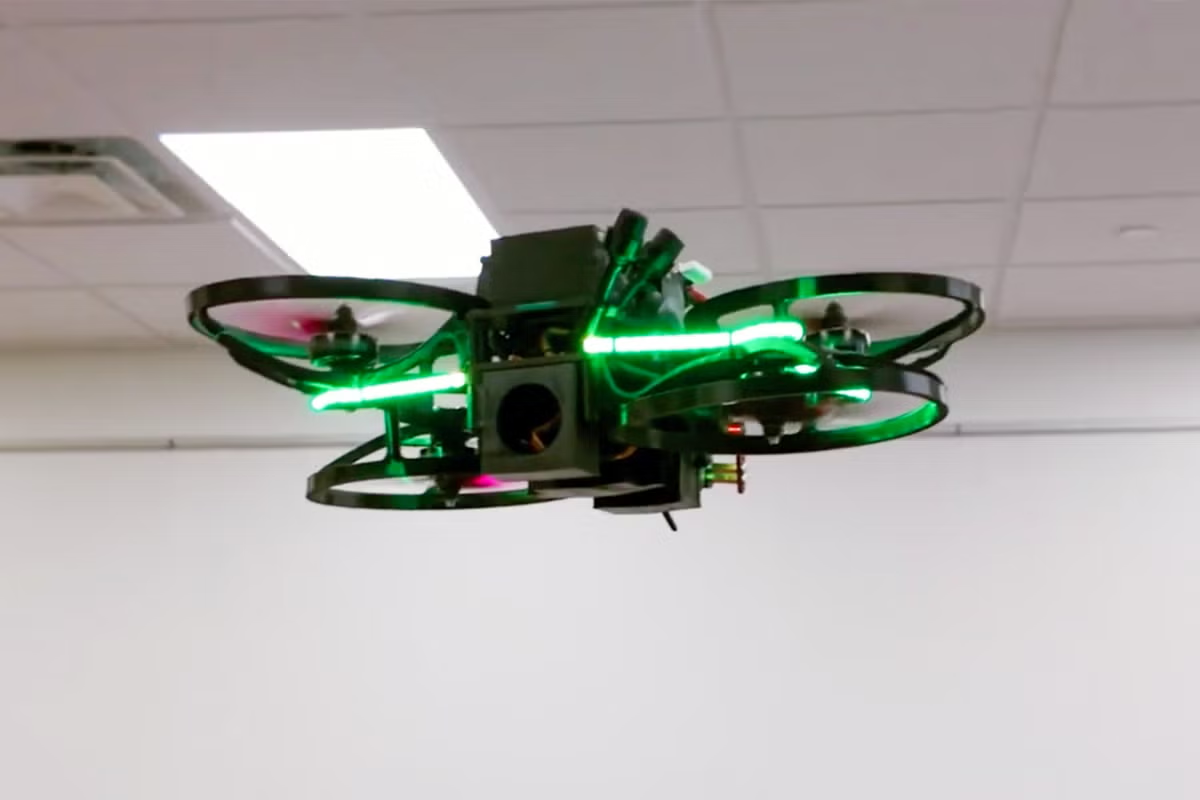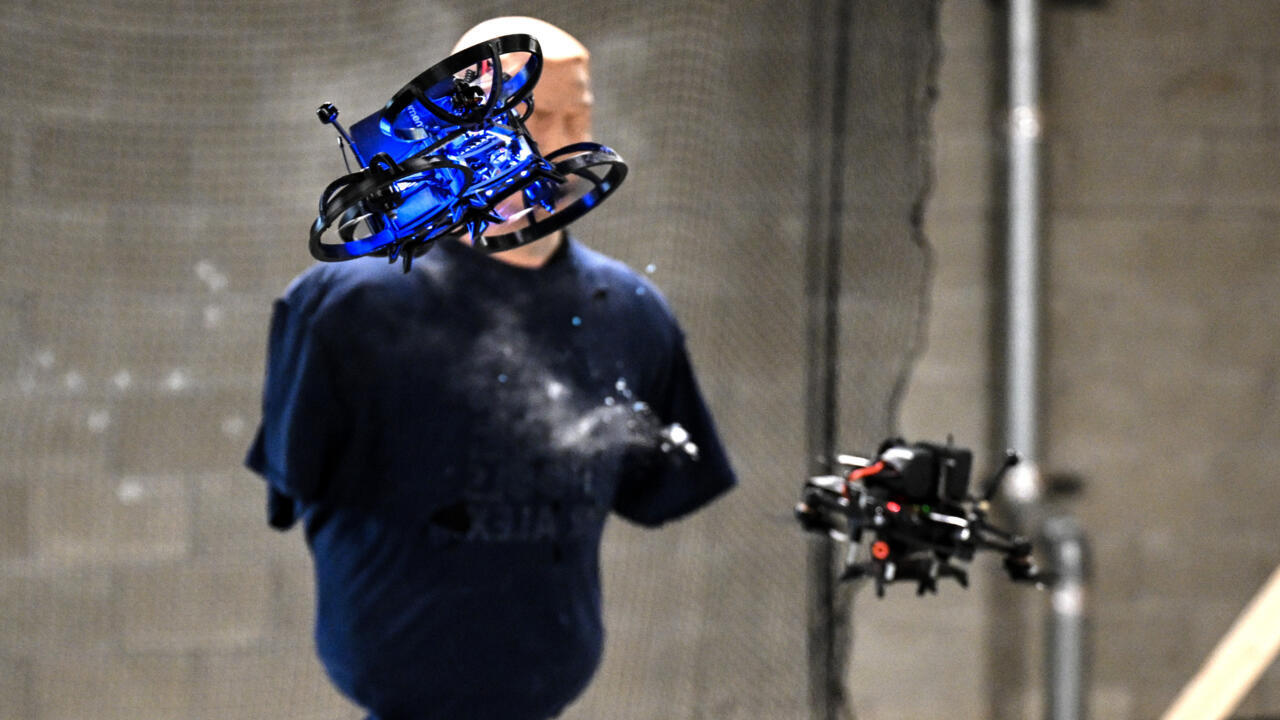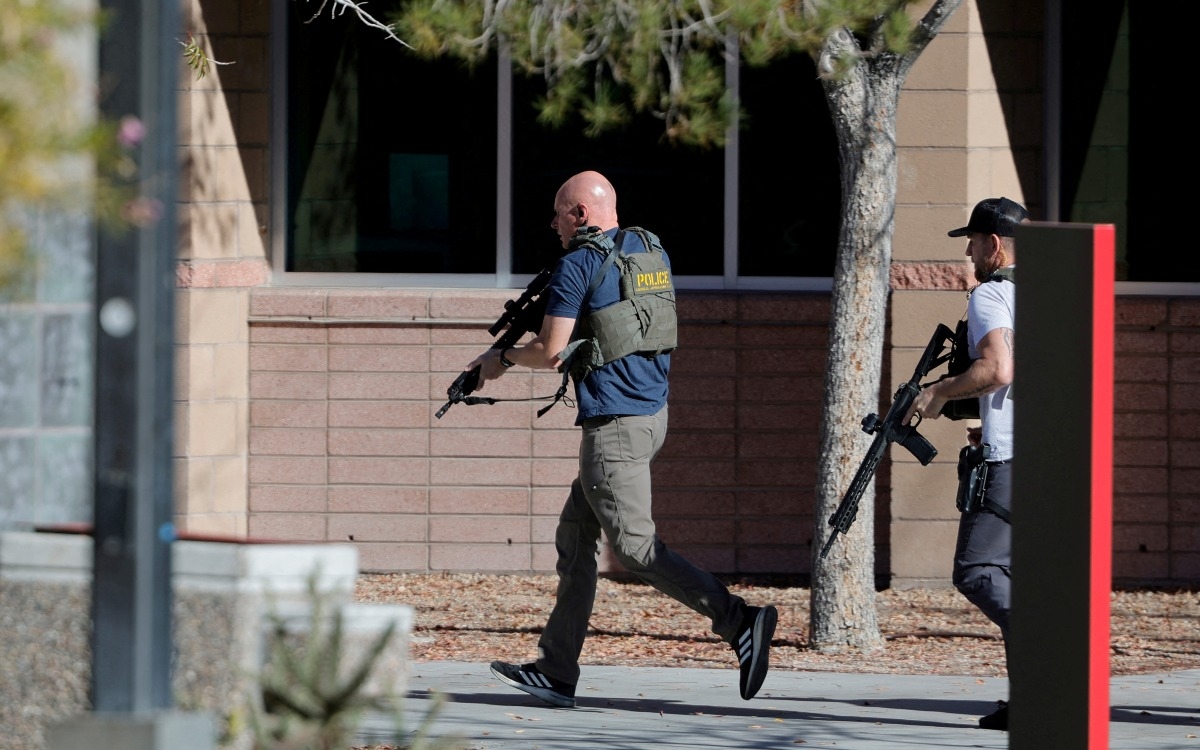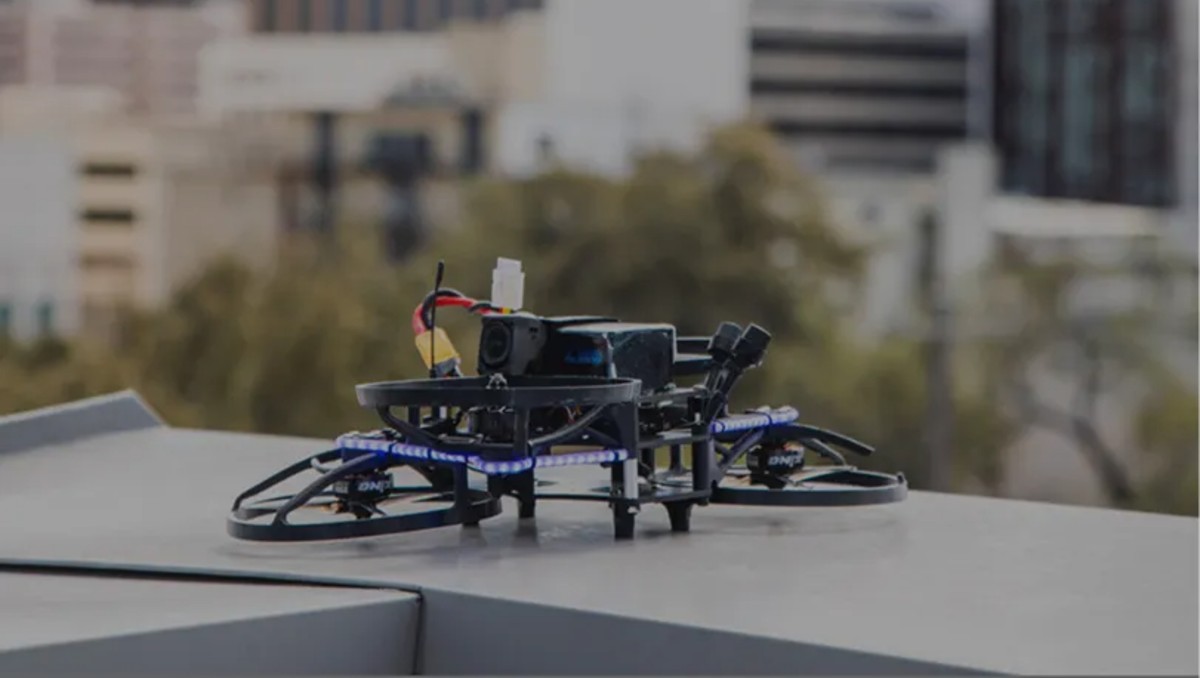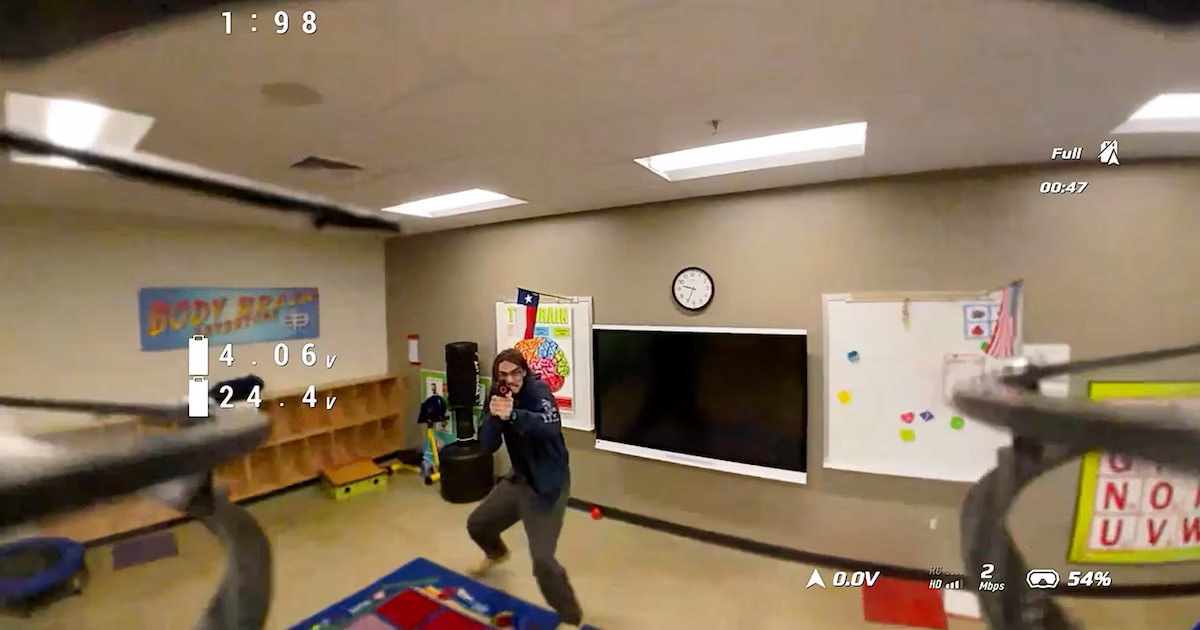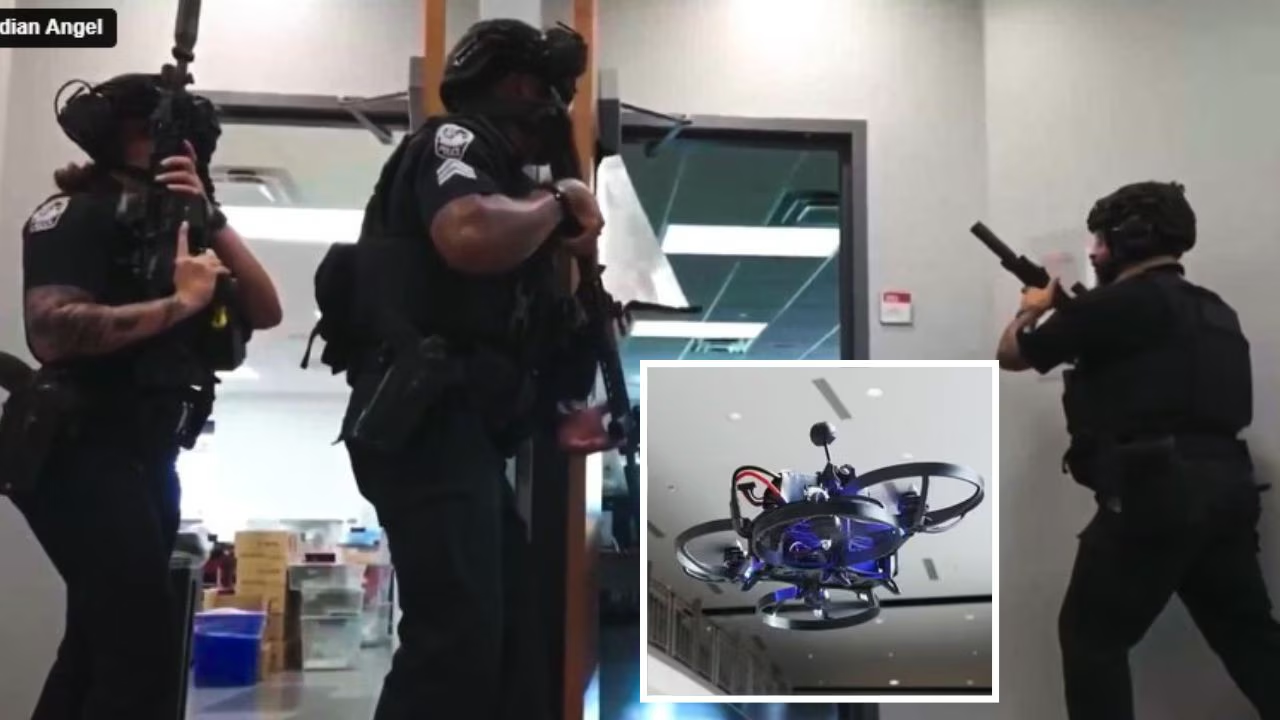
They weren’t allowed to have tasers. So they went for pepper spray instead.United States school students are the guinea pigs in a new hi-tech trial.They’ve been the target of heavily armed rogues intent on massacre for decades.They’ve tried armoured doors, surveillance cameras and protective backpacks.Now, flights of fast, smart drones will swarm out of hiding to save the day.So says the marketing pitch.Florida Governor Ron DeSantis hired Texas contractors last year to test their rapid-response system in three of his state’s schools. Georgia and Colorado soon followed suit.The problem, they believe, isn’t easy public access to assault rifles.It’s slow police and security response times.Research shows most fatalities happen in the opening minutes of a school shooting. That’s when students, staff and police are struggling to come to grips with what’s going on.Texas-based start-up Mithril Defense, named after the magic metal armour of Lord of the Rings, says its Guardian Angels will solve that problem.They’re now going to be deployed to eight schools.There they will sit in ceiling-mounted, armoured, self-contained canisters. They’re connected to the internet. They’re just waiting for a shooter so they can pop their lids and save the day.“We can take every corner, we’ll swing every door first, because we don’t care if we get shot, we’re metal and plastic,” Mithril chief drone pilot Christian Van Sloun told the Wall Street Journal. “It’s kind of like cheating in a video game after you die,” he said.‘Break glass in case of emergency’All a teacher needs to do is press an emergency button.An alarm blares in Austin, Texas.Their drone pilots man their computers, eject the drones, access the school’s surveillance network, inject it into a 3D rendered map and launch their drones.They say they can do all this within 15 seconds.The drones themselves are made of plastic. They have shock-absorbing rotor guards.Mithril doesn’t want students to get hurt.That comes after being denied permission to fit their schoolyard drones with tasers and pellet guns. But they can reputedly race through school halls at up to 95km/h, blaring a screeching alarm and flashing strobe lights. At the business end is a battering ram, and a pepper-spray gel punch.At a pinch, they can be turned into guided missiles tasked with knocking suspects to the ground. “Quite frankly, this is the future,” Florida Volusia County Sheriff Mike Chitwood said during a recent demonstration.Florida has spent $A800,000 on a demonstration project at Deltona High School in Volusia County, Florida. It’s just approved an additional $A810,000 to extend this to Fort Lauderdale and Tallahassee.Georgia has followed suit. It’s giving the Austin-based start-up $720,000 for a similar pilot program over five schools. And John Adams Academy in Sterling Ranch, Colorado, has signed up to protect its own students.Fearful Texas parents are pitching in themselves.They’ve raised $A285,000 to bring Guardian Angels to their Houston high school.From there, Mithril charges a A72c per foot (0.9sq/m) of school size flat annual fee. Their marketing says this generally works out to about $11.5 per student per month.Live. Die. RepeatMithril promises big.It says it wants drones in every US school to “eradicate mass shootings”.There’s no doubt the rehearsed, controlled demonstrations are impressive.“It’s revolutionary,” Florida’s Volusia County Sheriff’s school response officer Captain Todd Smith told the WSJ. “This is the future”.The drones carry heavy metal “lances” that can smash glass windows. If they’re not shatter-proof.They can fly up stairs. But someone has to open the doors for them. And standard procedure is to shut and lock every door during an emergency lockdown. Battery life is said to be 10 to 15 minutes.Will drones be the quick fix everyone is looking for?Not everybody is convinced.“It’s a really impractical approach that’s based on assumptions about how these events actually go down that doesn’t match reality,” school safety consultant Michael Dorn told US Education Weekly. “My first question is going to be, ‘Have you done all of the other things that are far more likely to prevent deaths?’”Like lock doors. Armour glass. And control gun availability.Fearsome economics“We have a real mental health crisis in schools, and we could be using the money to deal with that,” New York University Professor Barry Friedman told the WSJ.Add that to the US gun violence epidemic, and schools are an easy target.As are street parties and warehouse workers.Last year, there were some 233 incidents involving firearms in US schools. One of the worst took place in 2022. Police took 77 minutes to respond to a Uvalde, Texas, shooting. Robb Elementary School lost 19 students and two teachers that day.School shootings have become big business.Dozens of companies are selling armoured whiteboards, personal alarms, surveillance AI, nonlethal weapons and old-fashioned security guards in new-fashion combat gear.Don’t forget the gunshot trauma kits.Market research firm Omdia reports it’s now a $A5.8 billion industry.And growing.The greatest group of offenders is mentally ill, and angry, former students.Hamline University Violence Prevention Project Research Centre analyst Jillian Peterson interviews those who have planned a school shooting, but were deterred.They gave up the idea of going out in a suicidal blaze of glory when they couldn’t get a gun. Or when they found emotional support.First-responder drones, however, remain an unknown quantity.“I think it preys on people’s worst fears,” Ms Peterson says. “How do you say no to something if you’re telling me it might save my kid’s life? Of course I want that thing.”Jamie Seidel is a freelance writer
America’s wild plan to stop school shootings
They weren’t allowed to have tasers. So they went for pepper spray instead.
890 words~4 min read