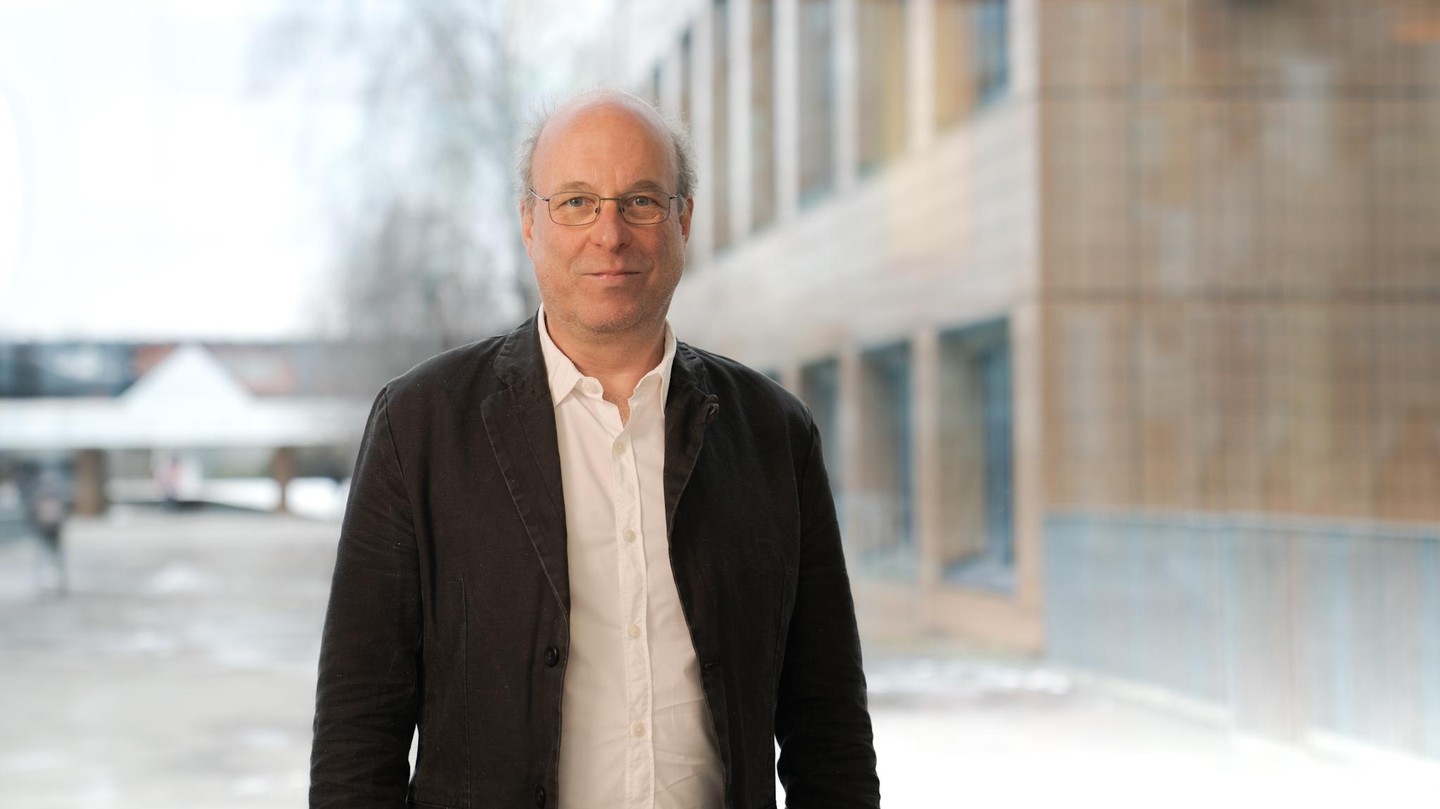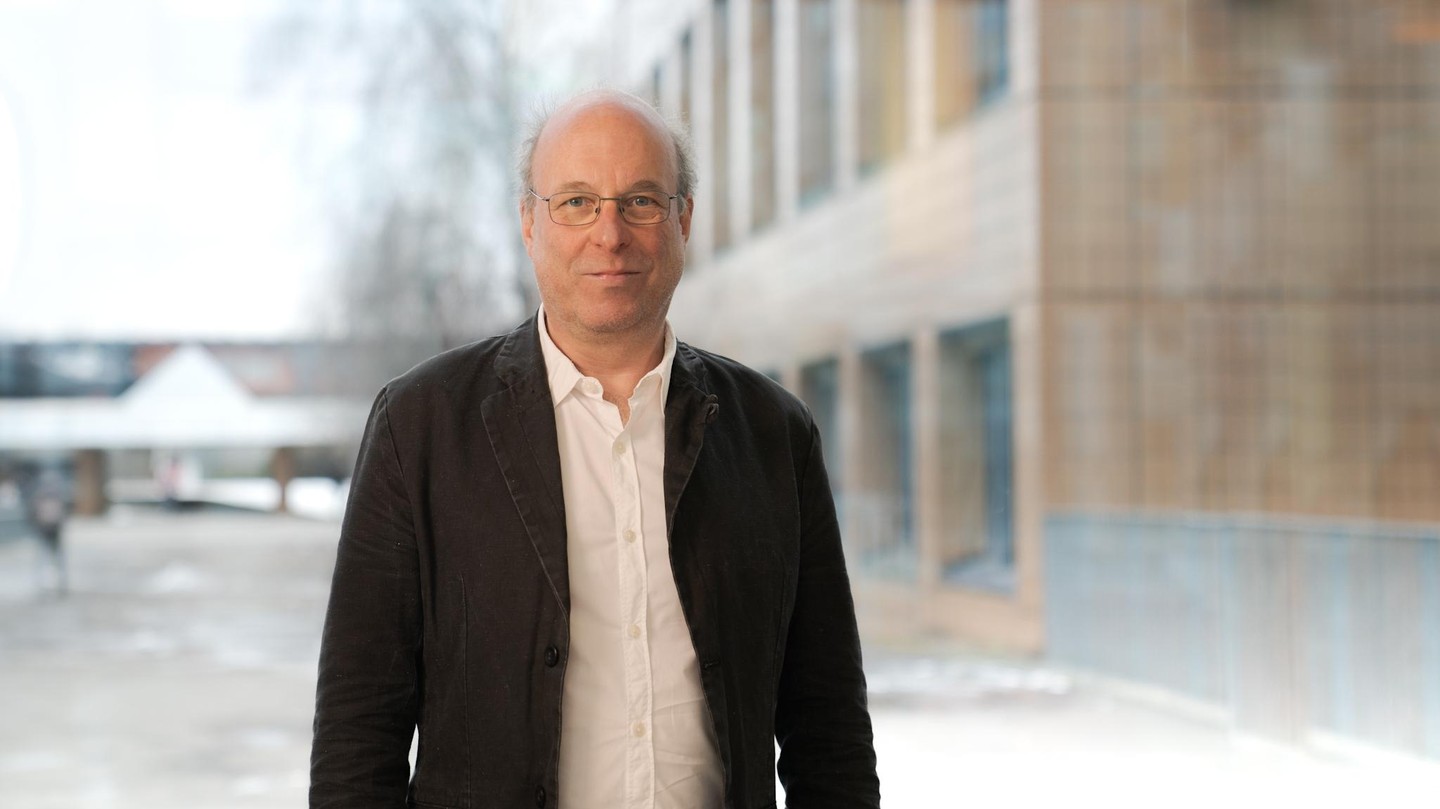
EPFL professor Michael Herzog, head of the Psychophysics Laboratory, discusses why consciousness remains such an elusive subject and what its study means for neuroscience, medicine and artificial intelligence.Consciousness is one of science's oldest and most stubborn puzzles. For a century, researchers study how the brain processes information, forms perceptions and generates awareness, yet there is still no consensus on what consciousness is or how it arises.We spoke with Michael Herzog, head of the Psychophysics Laboratory at EPFL and coauthor of Scientific Theories of Consciousness (see box), about why consciousness research has produced hundreds of competing theories, why he believes the field needs clearer criteria, and why understanding consciousness matters far beyond philosophy, from medicine and animal welfare to the future of artificial intelligence.How do you define consciousness?My position is quite straightforward: I don't think consciousness needs a theoretical definition because we already know what it is. Every morning you wake up and move from an unconscious state to a conscious one. Under anesthesia you become unconscious, and when the anesthetic wears off, you become conscious again.Good science starts with good observations, and we already have plenty. In the lab, for example, we can make a visual stimulus disappear from conscious awareness while showing that the brain still processes it. Our starting point is entirely empirical.But consciousness research now involves about 200 theories. Why?Because there are no real criteria. Consciousness is a hot topic, and researchers from many different fields have entered it with their own perspectives.But consciousness is also more elusive than most scientific problems because we don't know what it is for. In most fields, you already understand the function of what you're studying. Here, everyone can come along and say, "It's this," and it's very hard to prove they're wrong, but it's also very hard to prove they're right. That's why the field is a little bit in limbo.That's also why it's so important to distinguish conscious from unconscious processing. Like in any other science, you have to manipulate what you're studying. If you're interested in pressure, you change pressure. If you're interested in oxidation, you change oxidation.With consciousness, you need to study the transition between conscious and unconscious states, for example during anesthesia or in visual experiments where a stimulus disappears from awareness but is still processed by the brain. Otherwise, you never know whether you're studying consciousness itself or simply something associated with it.Which criteria do you use to evaluate the different theories?We mainly use four or five criteria. The first is that a theory must distinguish between conscious and unconscious processing. Surprisingly, many theories don't. They study something like planning because planning is conscious, but then they're really studying planning, not consciousness.The second is what we call the small network argument. Many theories identify one feature, such as recurrent processing or integrated information, and claim it is sufficient for consciousness. The problem is that these features can also exist in very simple systems, so the theories end up applying far too broadly. In some cases, they drift toward panpsychism.Another criterion is the unfolding argument. Some theories claim that consciousness depends on a particular brain architecture, for example recurrent rather than feedforward connections. But mathematically, you can often transform one type of network into the other without changing what it computes. So we argue that a theory should not depend on one specific implementation.Finally, many theories explain consciousness only in humans or animals with particular brain structures, such as the thalamus. Those studies are experimentally very strong, but the theories then struggle to explain whether a robot or even a honeybee could be conscious. A good theory should apply more generally and not depend on one specific biological design.You argue that researchers may be looking too hard for a single explanation of consciousness. What is a better way forward?Let me put it this way: Where in biology have you ever seen a single-factor theory? I would say nowhere. In physics, you can relate temperature to pressure, but biology doesn't work like that. Why should consciousness?Biological systems are complex. To be alive, you need a reproductive system, a sensory system and a metabolic system, among other things. There isn't one feature that explains life. We think consciousness is probably similar.The other point is that consciousness may be realized in many different ways. If animals, robots and other systems can all be conscious, we first need to understand what they have in common. That's more important than looking for one mechanism.The key question is not only how consciousness works, but what it is for. In biology, you cannot understand something unless you understand its function. Feathers only make sense once you know they are for flying.We think consciousness is the solution to a problem we don't yet know. That's a little bit like The Hitchhiker's Guide to the Galaxy: we know consciousness exists because we experience it every day. The challenge is to discover what function evolution produced it for. Once we understand that, I think the rest will become much clearer.Where do you see the biggest real-world stakes of consciousness research?I think there are many. Consciousness research touches almost everything. Some people believe that if we truly understand consciousness, we'll live in a completely different world. Maybe they're right, maybe not. I don't know.There are huge ethical questions. Abortion, animal rights, artificial intelligence. All of these depend, in some way, on understanding when something is conscious.Then there are practical questions. How do we help someone regain consciousness after a coma? What exactly are we doing during anesthesia? As far as I know, we still don't really understand that.So the field ranges from the biggest philosophical and even religious questions to very practical applications in medicine. But for any of this to move forward, we need clear-cut criteria that a theory of consciousness must meet. At the moment, we don't have them. That's why I think this research is so important.In Scientific Theories of Consciousness(Cambridge University Press), Michael Herzog joins Aaron Schurger of Chapman University and Adrien Doerig of Freie Universität Berlin to survey the major empirical theories of consciousness. The authors take a critical look at the leading scientific explanations of consciousness, arguing that the field needs clearer criteria, not more theories. They review the evidence behind competing approaches, examine their strengths and weaknesses, and propose a framework for evaluating them
“Consciousness is the solution to a problem we don't yet know”
EPFL professor Michael Herzog, head of the Psychophysics Laboratory, discusses why consciousness remains such an elusive subject and what its study means for neuroscience, medicine and artificial intelligence.
1,054 words~5 min read