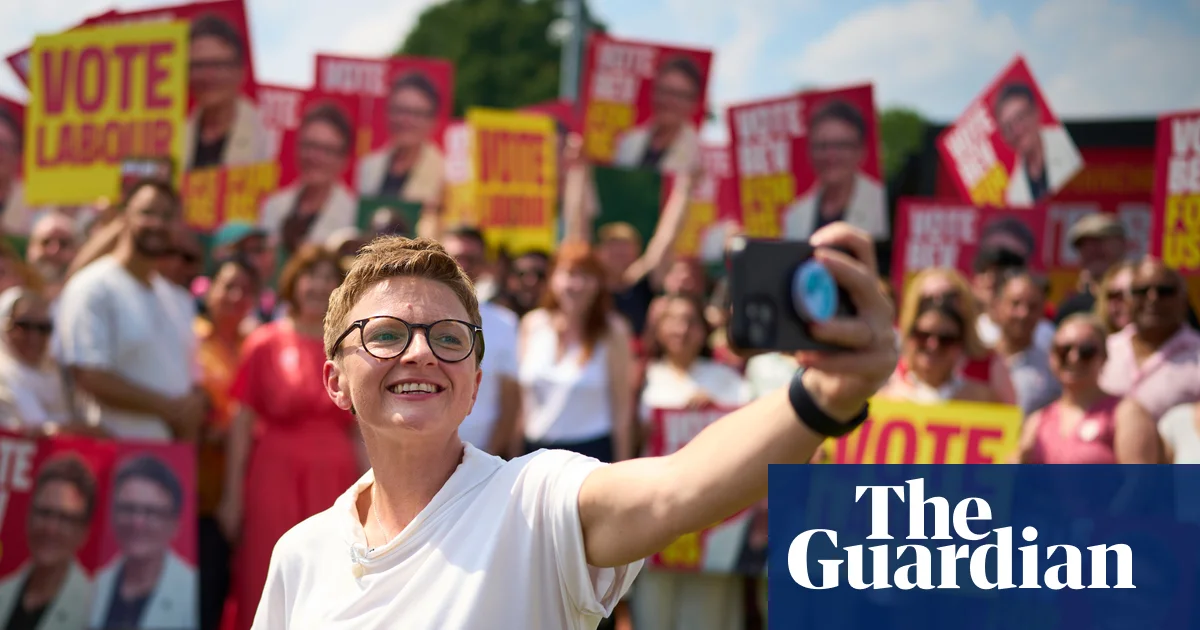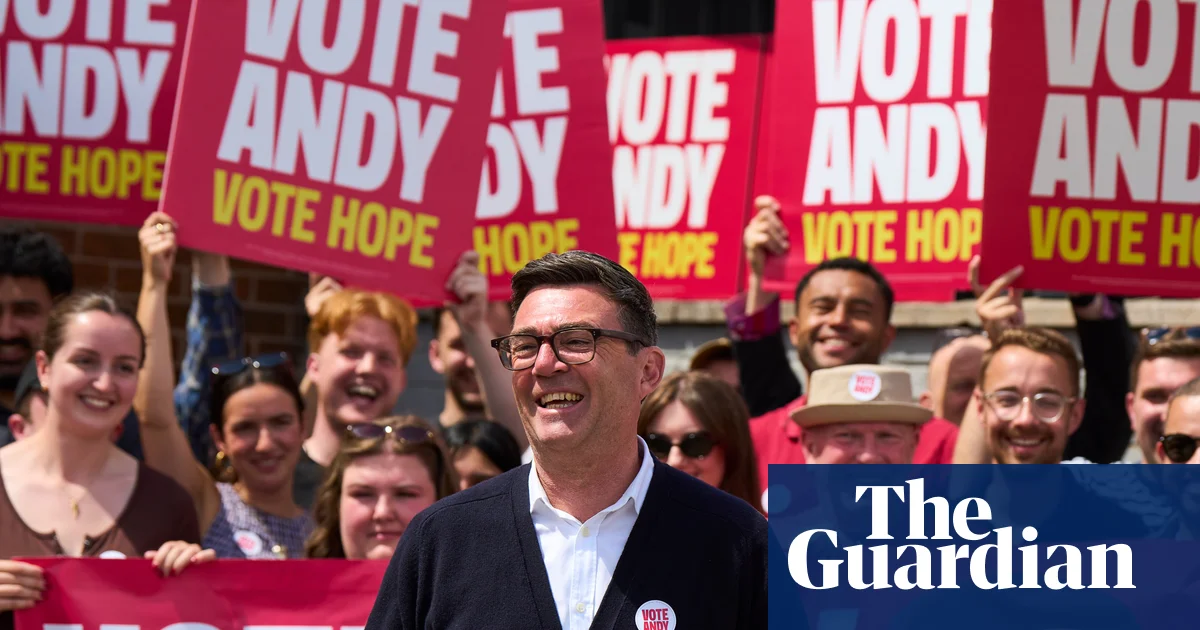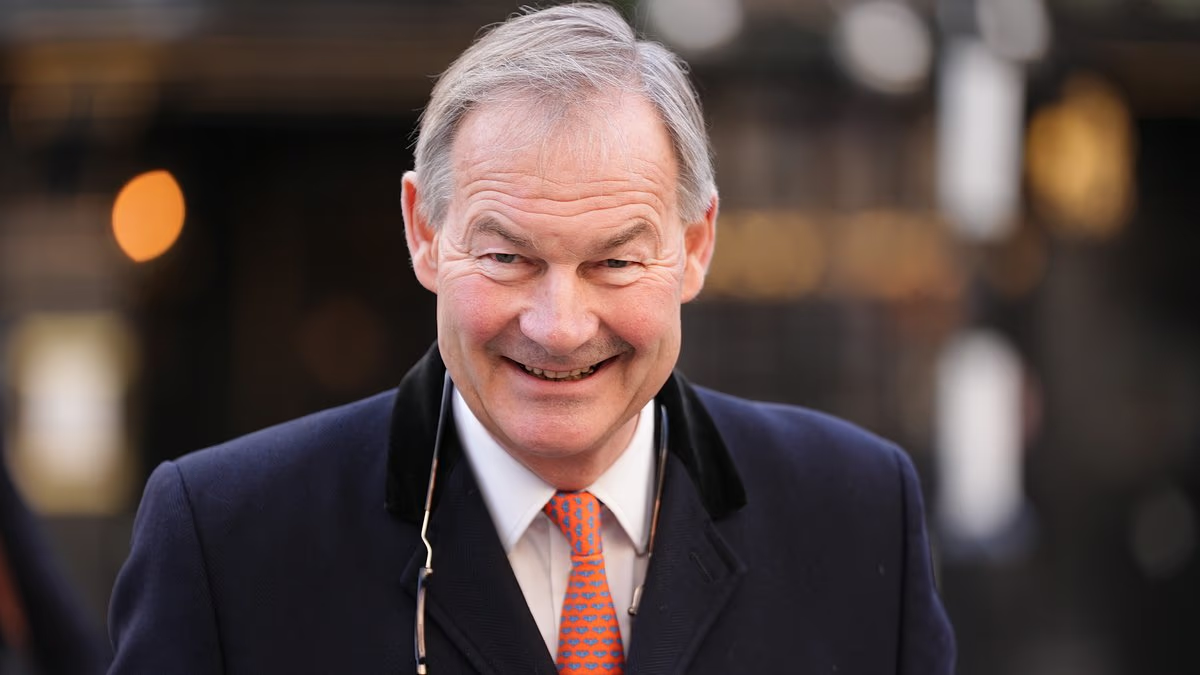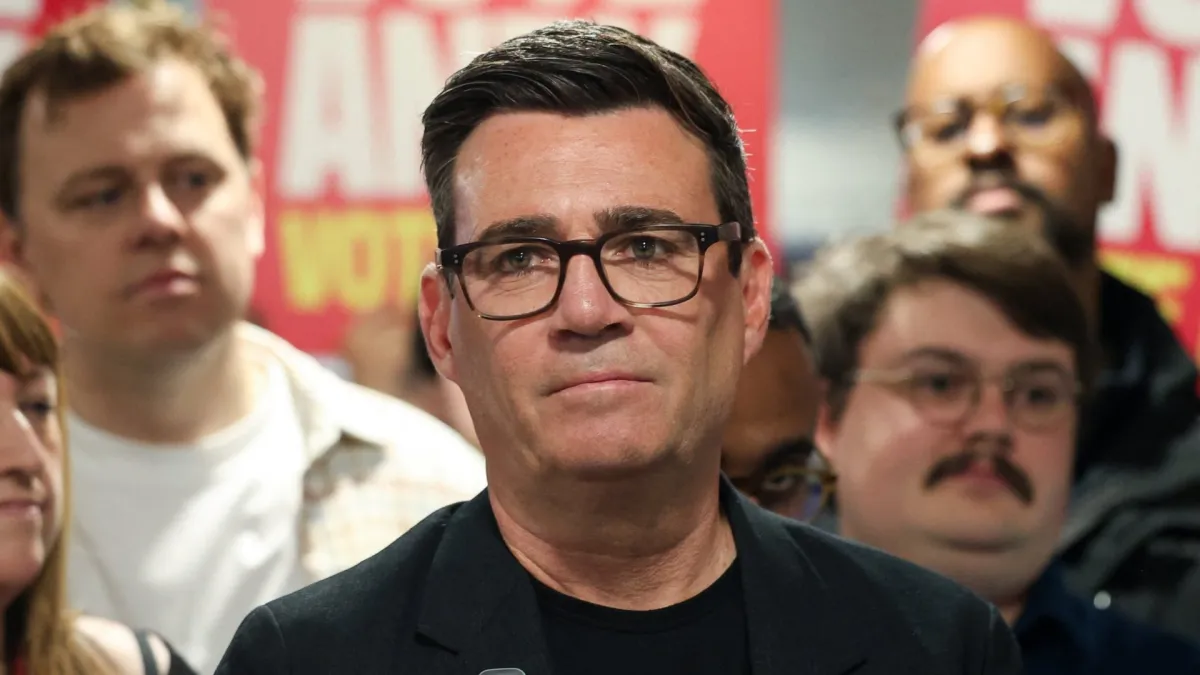
I’m going to ban applause in between answers,” threatened the mildly irritated moderator as he attempted to keep proceedings running to schedule. The hitherto scrupulously well-behaved crowd gathered at the Friends’ Meeting House for “The Mill’s Greater Manchester Mayoral Hustings” immediately greeted the rebuke with another round of applause. From behind the lectern on stage, moderator Joshi Herrmann (founder and editor of The Manchester Mill digital newspaper and occasional thorn in Burnham’s side) raised his eyes to the ceiling and allowed himself a smile. Originally from Sussex, he may only have arrived in Manchester six years ago, but that has been long enough to understand he now lives in a city that has been instinctively refusing to be told what to do since the Peterloo Massacre in 1819. Other plaques and monuments bearing testament to the contrarian nature of Manchester include those commemorating its pivotal role in the foundation of the Trades Union movement, statues of both an agitated Emmeline Pankhurst and a stony-faced Friedrich Engels, co-author of The Communist Manifesto and former Manchester mill owner. The latter was rescued in 2017 from a graveyard of Soviet iconography in Ukraine and now stands in Tony Wilson Place, named in honour of the music mogul responsible for such truculent and uncompromising artists as Joy Division and New Order.Sian Astley, Reform’s candidate, is seen as the only competition against the ‘Burnham bounce’ that looks set to hand the mayoral seat to Labour once again (Reform UK)By way of happy coincidence, these are the two favourite bands of former Manchester mayor and new prime minister Andy Burnham who announced the opening of No 10 North, the Manchester-based branch of Downing Street, on his first day in the top job. The hustings for his old job as metro mayor of Greater Manchester were one of a series of events designed to introduce the public to the candidates standing for election this Thursday. Most of the candidates, that is. Marlon Scott West from Restore had a prior commitment and Reform’s Sian Astley turned up at the event but then left in high dudgeon as, she maintains, a gesture of support for independent candidate Marcus Farmer who was not invited to appear, but turned up anyway and was refused entry. The Mill insists he was not on the ballot when the event was organised and his request to attend was only emailed that morning.Astley’s decision to withdraw denied those of us assembled a chance to see a head-to-head between Bev Craig, the Labour leader of Manchester City Council, and her only realistic challenger. Barring an electoral earthquake of unusual proportions, Craig will succeed Burnham, with Reform projected to finish second.Bev Craig, Labour’s candidate to succeed Andy Burnham, at the launch of her manifesto (PA)With the “Burnham bounce” lifting Labour’s spirits, it was the one political scrap many had paid to see. One woman who had travelled from Astley’s ward in Wythenshawe to hear her speak was furious. “Silly cow,” she said. “She can pay for my petrol.” The 350-seat venue was sold out, and a lively debate was replaced by a good-natured exchange by candidates straight from central casting. Reform’s Sian Astley was represented by an empty seat. And Bev Craig was as calm and relaxed as you might expect of a continuity candidate with the endorsementPhil Eckersley (Conservative) was all suit, pro-business and could send a glass eye to sleep. Richard Kilpatrick (Liberal Democrats) was enthusiastic, had a couple of good lines and stands no chance. Geraldine Coggins (Green) brought head girl energy, but was slightly too pleased with herself (“Could you move the microphone away from your mouth about a quarter of an inch please Geraldine?” asked one member of the audience during the Q&A. “Make that a quarter of a mile,” whispered someone behind). Reform’s Sian Astley was represented by an empty seat. And Bev Craig was as calm and relaxed as you might expect of a continuity candidate with the endorsement – the former mayor DJ’d at her 40th birthday party in 2025 – of the man generally held to have transformed the city in recent years.Manchester without the ManI first met Andy Burnham in June 2019. Manchester had just been awarded the inaugural “Best UK City for Business” award by Management Today magazine, and I was sent “up there” to interview him all about it. Anybody who has ever had to leave the North of England and move to London for the benefit of their career will appreciate why the words “up there” never sit well. It had beaten 20 other cities (not including the capital) thanks to its location, the 7.2 million people within a one-hour commute and a student body of 100,000. Beyond the top-line data, the city’s existing connectivity (the airport reaches more than 200 destinations worldwide) and operating costs up to 40 per cent cheaper than London also scored heavily.Huge international organisations such as Amazon, Jaguar Land Rover, Siemens, GCHQ and Microsoft already used it as a base at that point but the most visible indication of a transformation was the skyline. Frequent returns to watch Manchester City – who, it must be said, were also in the midst of an incredible reinvention at the time – brought me a stop-motion animation sense that, as Burnham put it: “Things are really happening here. In 2011 there was one crane on the skyline, now there are 78, more than in any US city… in what can appear to be a period of national gloom or national uncertainty, I think Greater Manchester does have a sense of it powering on despite it all.” If Bev Craig wins on Thursday as expected, she inherits this legacy – good and badSince then, his Bee Network – a publicly controlled, integrated transport system that has attempted to clean up the mess left behind by deregulation – was launched to generally positive acclaim.Burnham had only been metro mayor for two years when we sat down to talk. He accepted that credit for the transformation was not his alone and acknowledged the work of Sir Richard Leese (leader of Manchester City Council from 1996 to 2021) and Sir Howard Bernstein (council chief executive from 1998 to 2017) following the IRA bomb in 1996. He was also effusive in his praise for former Tory chancellor George Osborne, who, he insisted, pushed through the “most advanced devolution deal of anywhere in the country so we have more power to do more for ourselves”. He also went out of his way to explain, “This is a pragmatic city, it has got principles in terms of what the place believes in but will sit down with any government in order to further the cause of the people here.” Just over a year later, he went to war with the Johnson government over Tier 3 lockdown restrictions and became a household name across the rest of the country. He was, the papers said, the “King of the North”, who later became Starmer’s “Prince across the water”. But those waters were not always calm. As three of the candidates to be his replacement were at pains to point out last night, even now there are still major issues with the outlying boroughs of Greater Manchester, concerns about the safety of key city centre areas and the activities of big money property developers.Burnham went to war with the Tory government over lockdowns in 2020, which won him a great deal of respect (AFP/Getty)If Bev Craig wins on Thursday as expected, she inherits this legacy – good and bad. Across Albert Square from her office in the Town Hall extension, she will be able to see Heron House, the temporary home of No 10 North. Burnham has said that this is where “Whitehall meets the rest of the country” but, more tellingly, told staff after he arrived there for the first time in his capacity as PM, “I think this might be the best day of my life. I’m not joking.” I know exactly what he meant and how he was feeling. “I’m like you,” he volunteered off the record during our chat about Manchester’s business credentials. “I wanted to be a journalist… I wrote thousands of CVs to practically every media outlet I could find in the North West and didn’t get anything and ended up giving up and going to London. The idea is that the next generation doesn’t have to leave their family and friends behind just because this country is so unbalanced.” Manchester-born and bred, I also had to move to London in the Nineties for work, and landed a life-changing job on Loaded magazine at its peak. I moved back to Manchester two years ago after almost 30 years. Don’t get me wrong, London grew on me and there are still things about it I miss, but getting that single ticket from Euston was one of the best days of my life too.It’s good to see Andy Burnham working hard to ensure another generation doesn’t have to leave their family and friends behind for work. He may not be mayor, but he’s still very much here – just across Albert Square from the new Manchester mayor and working from No 10 North should he or she need a quick word. And with news that Labour has just overtaken Reform UK in the polls for the first time in 12 months, it feels like the spirit of Manchester is alive and kicking in London too
Reform’s empty ‘mayor’ chair in Manchester shows they’re running scared from Burnham
At monday night’s mayoral hustings for Andy Burnham’s old job in Manchester, Farage’s party were nowhere to be seen, nor were Restore. It is proof of how real the ‘Burnham bounce’ is and why, despite some grumbles, we’re all the better for it, writes Bill Borrows
1,577 words~7 min read