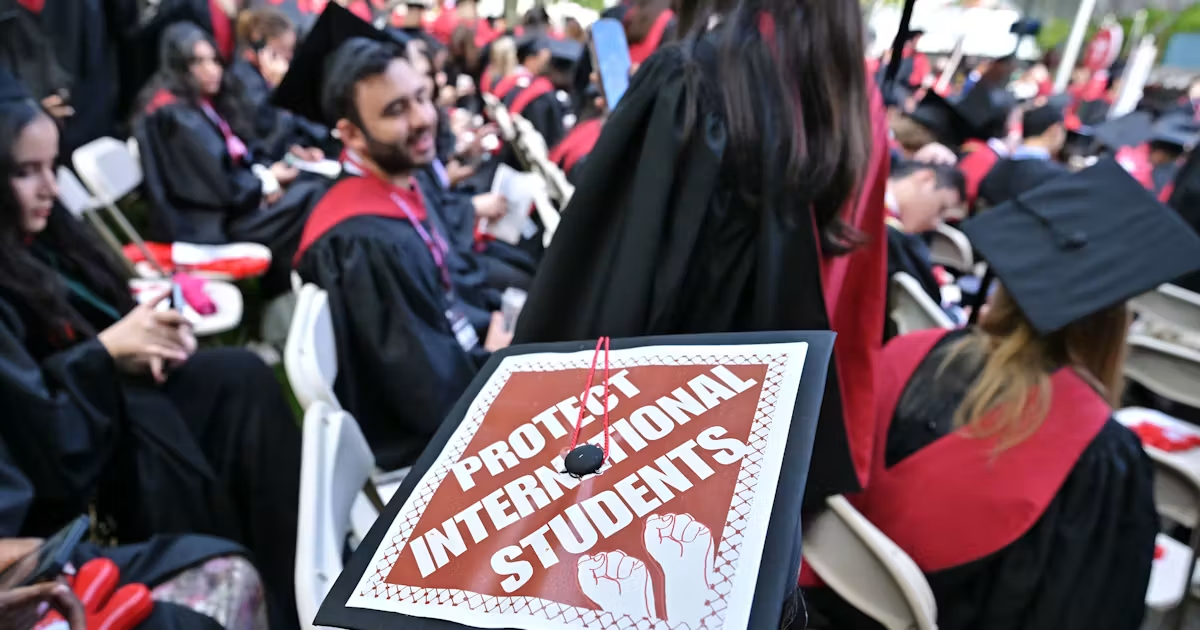
A new Trump administration rule capping how long international students may remain in the United States has drawn sharp criticism from higher education leaders and advocates, who warn that it could damage the country's economy and weaken its capacity to innovate.
The rule, issued in July and due to take effect on Sept 15, overturns the long-standing policy known as "duration of status", under which student visas remained valid until students completed their course of study, including a short period of employment after graduation.
Under the new framework, most international students will be admitted for a fixed period of up to four years. Those who need more time to finish their degrees, or who wish to stay for post-graduation work, will have to apply for an extension.
Richard Dasher, director of the US-Asia Technology Management Center at Stanford University, said the shift has added to an atmosphere of uncertainty on campuses that were already dealing with tighter visa processing.
"It's difficult for students now, and it's harder to get a visa," Dasher told China Daily. "I talk to students a lot, and of course they're worried. It's more uncertain than it used to be, and I think that it's an unfortunate situation, especially at the university level, where universities should be open."