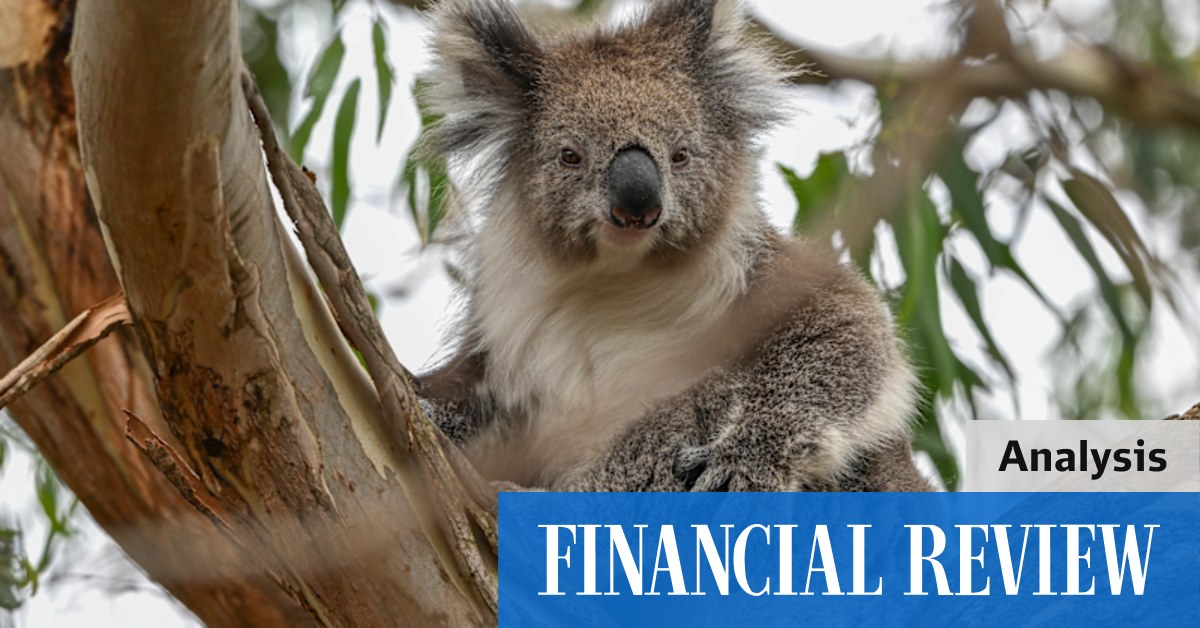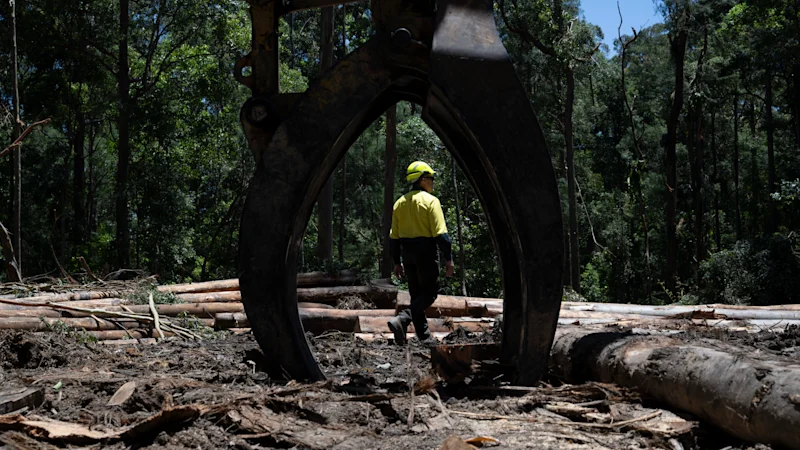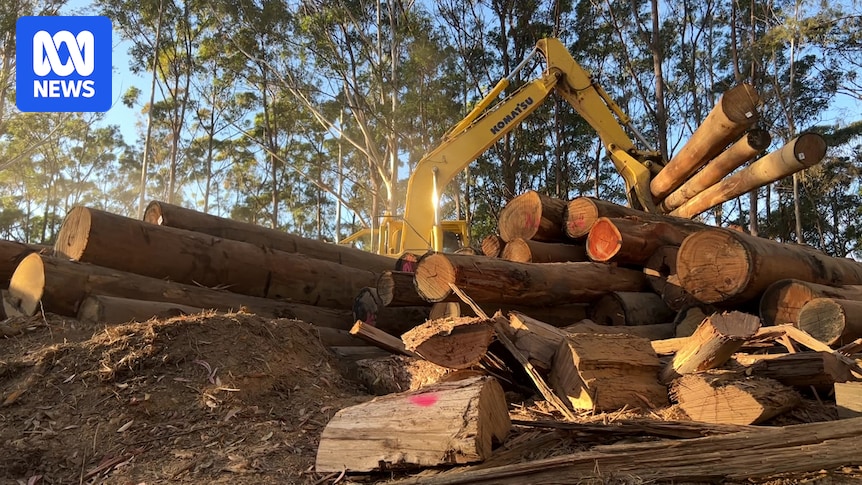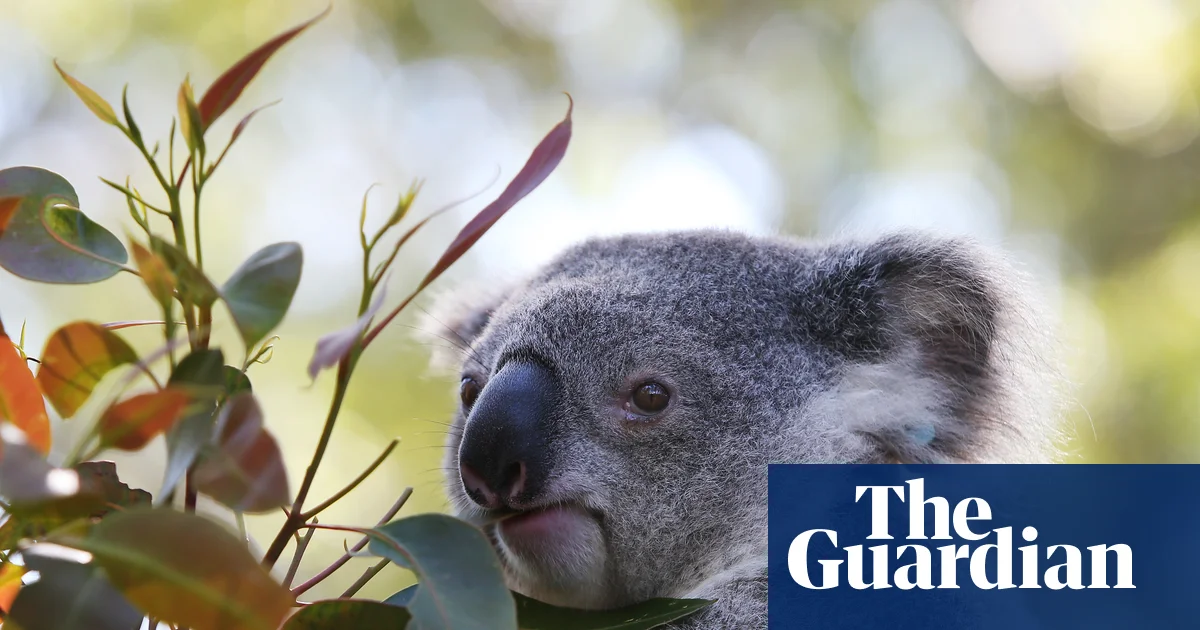
Carbon credits generated by the Great Koala National Park will be used for targeted manufacturing industries in NSW – and not coal and gas projects – amid outrage from workers over an end to native forest logging in the 476,000ha nature reserve. About 300 employees across six timber mills on the NSW Mid-North Coast were thrown into chaos late last year when the NSW government announced the long-awaited boundaries of the park and an immediate moratorium on native forest logging there. A further 32 jobs are expected to be cut at the Coffs Harbour office of Forestry NSW – which manages state-owned forests – while union and industry groups warn the impact on workers across the wider hardwood supply chain could be much higher. In a statement, NSW Environment Minister Penny Sharpe said Australian Carbon Credit Units (ACCUs) – an emissions offset generated by governments, including by ending native forest logging – from the park would “not be able to be sold to coal and gas projects”.“If the Great Koala National Park Project is approved by the Clean Energy Regulator, the NSW government will prioritise these ACCUs for targeted manufacturing industries in NSW,” Ms Sharpe said in a statement.“This will help to support crucial NSW industries to transition into the future and maintain vital jobs.”Revenue from the park’s carbon credits will also help fund ongoing land management, the government said. Australian Climate and Biodiversity Foundation and former Treasury secretary Ken Henry welcomed the move.“Repairing and protecting the magnificent nature of the Great Koala National Park is a tremendous legacy to leave to our children and grandchildren. Doing it in a financially sustainable manner is even more powerful,” he said.“Premier Minns and Minister Sharpe are helping to end the false dichotomy that pits nature and the economy against one another. “This is well crafted policy that resources the protection and repair of nature while also encouraging carbon abatement.”Once complete, the park will use 176,000ha of state forest to create a 476,000ha reserve, one of the largest in NSW. While the final borders had been the subject of years of advocacy by activists, the park’s delivery had also hinged on factors including a decision by the independent Emissions Assurance Reduction Committee to approve the “Improved National Forest Management” method for ACCUs.Under the framework, state and territory governments can generate carbon credits by reducing or permanently halting commercial timber harvesting in native forest logging. Nature Conservation Council of NSW senior forest campaigner Clancy Barnard said the group had “initially opposed the INFM method because of serious concerns it would enable ongoing logging”.“After sustained advocacy, the method has been improved substantially,” he said. “Deferred harvesting was removed, safeguards were added to stop logging simply shifting elsewhere or occurring under other guises, and the NSW government has now committed that credits from the Great Koala National Park will not be sold to coal and gas companies.”Mr Barnard said there was a chance to use the method to end native forest logging altogether.“That would be a huge win for nature, protecting koalas, greater gliders, wombats, ancient trees and the water catchments communities rely on,” he said.“It would also deliver a real reduction in climate pollution. Logging releases carbon into the atmosphere, and ending it allows forests to sequester more carbon out of harm’s way in their wood and soils. “Under this method, about one-quarter of the carbon saved during the first 15 years would be sold as credits, with the remaining three-quarters being real emissions reductions. We remain opposed to policies that allow companies to buy offsets instead of reducing their own pollution, but the use of credits by genuinely hard-to-abate industries is a different proposition from selling them to coal and gas companies to support further fossil fuel expansion.”On Wednesday, the NSW government announced it had submitted the park to the Clean Energy Regulator.The federal government body must approve the park before it can be legislated in NSW parliament, where Labor has a majority in the lower house.If successful, the park’s registration will trigger a permanent cessation of native forest logging in the park area. However, the project has faced pushback from workers. Timber, Furnishing, and Textiles Union NSW secretary Alison Rubman said the government’s pledge was “of little comfort to timber workers, their families and communities”.“The NSW government’s Great Koala National Park carbon method is a lemon that is unlikely to produce any meaningful money,” she said.“Scientists and carbon accounting experts have already raised significant concerns that there are fundamental flaws in the scheme.“The government should withdraw this dud and stop promising money that is unlikely to be there.“The principle of the announcement is right, but towns like Herons Creek deserve real support, not promises built on Monopoly money.”
Biggest losers from koala park pledge
Carbon credits generated by the Great Koala National Park will be used for targeted manufacturing industries in NSW – and not coal and gas projects – amid outrage from workers over an end to native forest logging in the 476,000ha nature reserve.
785 words~4 min read