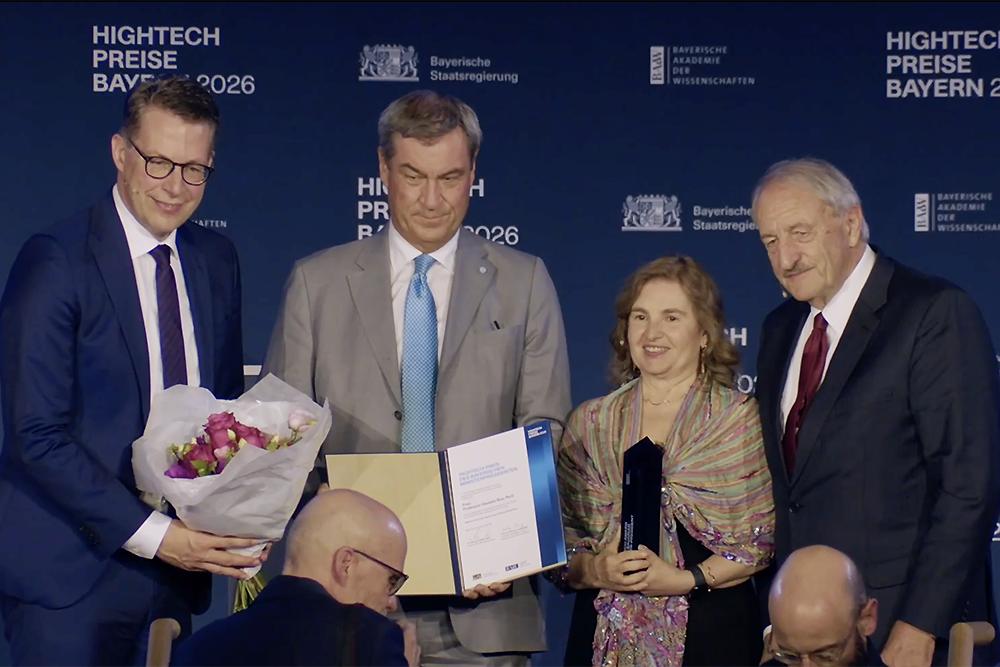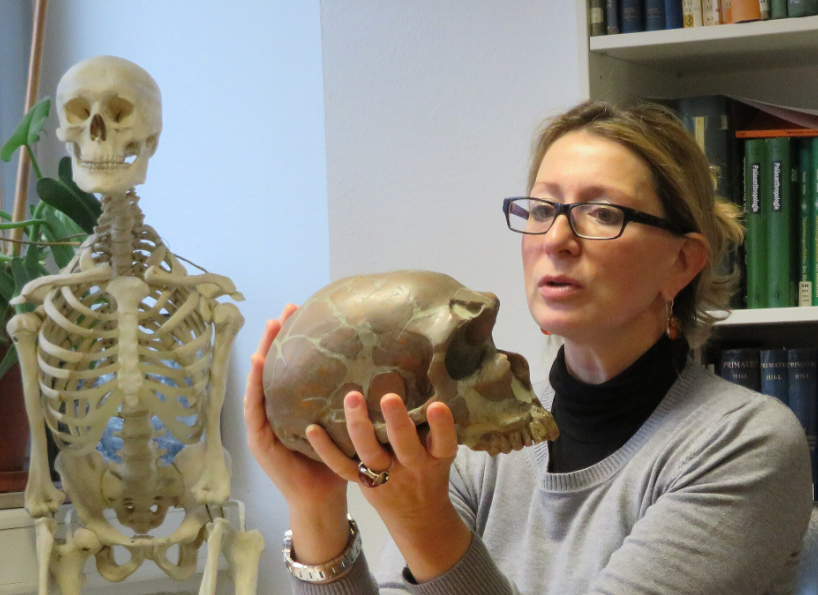
Katerina Harvati, one of the world’s leading paleoanthropologists, will receive this year’s Albert Einstein World Award of Science from the World Cultural Council in recognition of her groundbreaking research into human origins.
Harvati, professor of Paleoanthropology and director of the Senckenberg Center for Human Evolution and Paleoenvironment at the University of Tübingen in Germany, is internationally recognized for transforming the study of human evolution through innovative methods, including virtual anthropology and three-dimensional geometric morphometrics. These techniques allow scientists to compare biological forms and reconstruct fossil remains with unprecedented precision.
Her research has reshaped understanding of early humans, demonstrating that Neanderthals represented a distinct human species from Homo sapiens, supporting the African origin of modern humans, and helping trace ancient migration routes.
Harvati has also made major contributions to the study of Greece’s prehistoric past. Her work on the “Apidima 1” fossil, discovered in Mani, the Peloponnese, revealed the oldest known Homo sapiens remains outside Africa, showing that modern humans reached Europe around 150,000 years earlier than previously believed.