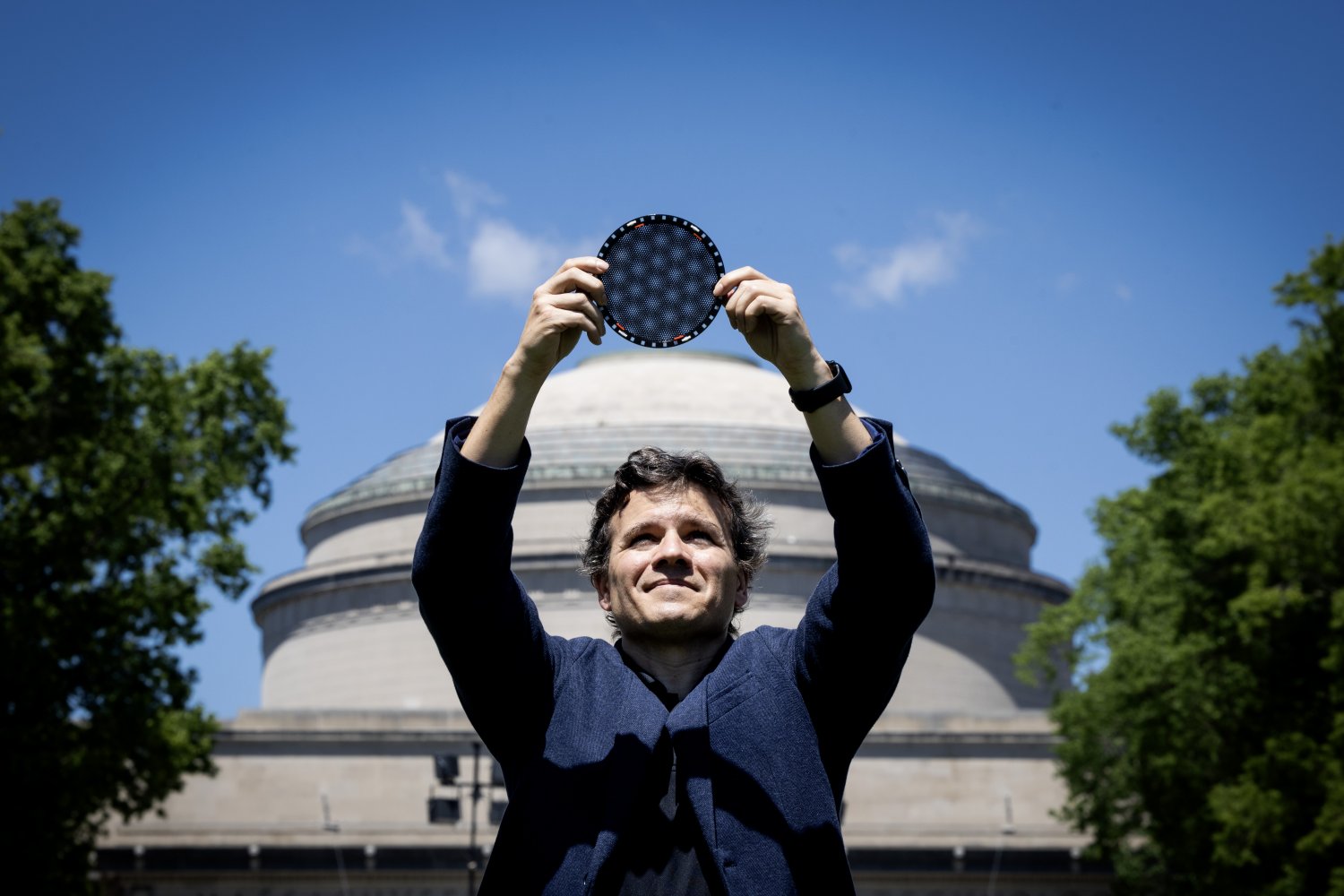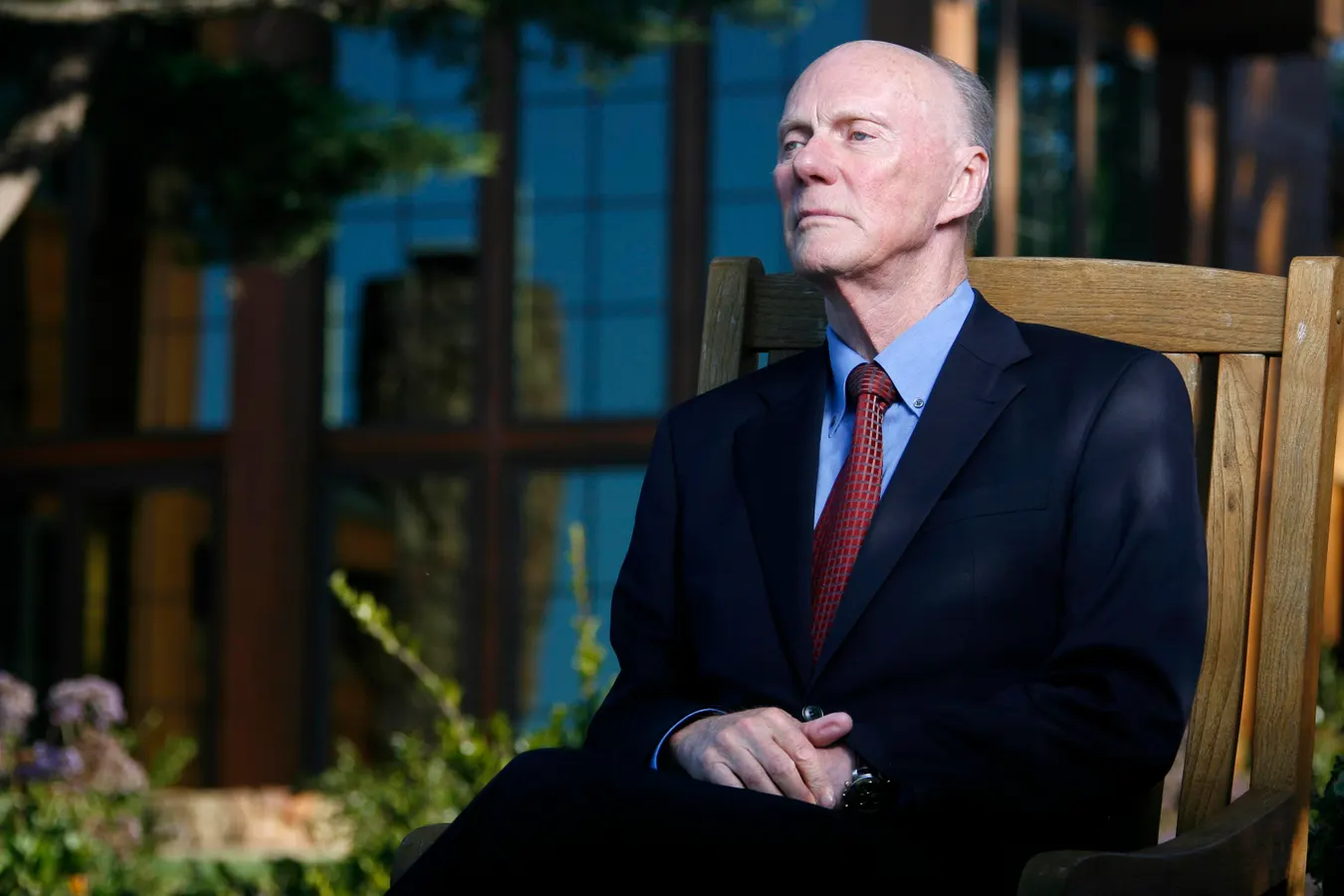
The late Fred Kavli, founder of the Kavli Foundation, which funds the biennial Kavli Prize for outstanding research in astrophysics, nanoscience and neuroscience. (AP Photo/Michael A. Mariant, File)AP2006The Norwegian Academy of Science and Letters has announced the 2026 Kavli Prize Laureates in the fields of astrophysics, nanoscience and neuroscience. The awards are considered to be among the world’s most prestigious recognitions for scientific work in these disciplines.This year, five Americans are included among the ten scientists selected to receive the Kavli Prize. The laureates in each field will share a $1 million prize, which will be awarded in Oslo this September.First awarded in 2008, the Kavli Prize is a partnership among the Kavli Foundation, the Norwegian Academy of Science and Letters, and the Norwegian Ministry of Education and Research. Its funding comes from The Kavli Foundation, which was established in 2000 by Fred Kavli (1927-2013), a Norwegian-American entrepreneur and philanthropist. In 1958, Kavli founded the Kavlico Corporation in Los Angeles, and under his leadership, the company grew to become one of the world's largest suppliers of sensors for aeronautical, automotive, and industrial applications.One-million-dollar prizes are awarded every other year in each of the three fields, which Kavli liked to refer to as “the big, the small and the complex.” The laureates are selected based on recommendations from three independent selection committees whose members are nominated by the Chinese Academy of Sciences, the French Academy of Sciences, the Max Planck Society of Germany, the U.S. National Academy of Sciences, and the Royal Society, UK."Honoring these excellent scientists is not only a recognition of achievements, it is an investment in our shared future, affirming the curiosity, rigor, and courage that drive human progress, said Annelin Eriksen, President of the Norwegian Academy of Science and Letters, in a press release.MORE FOR YOU“The recipients of the Kavli Prize represent what is best in the scientific enterprise. Their work builds on one another, deepens our understanding of ourselves and the world we live in, and creates new opportunities for the next generation of theoreticians, investigators and inventors,” Erikesen added. “The science honored today is already helping to lay the groundwork for a world of new opportunities in medicine, technology and our understanding of the universe.”As with prior recipients, this year’s laureates were often recognized based on a research record they’ve built over many years, illustrating the cumulative impact of scientific discovery. Kavli Prize in AstrophysicsThe three Kavli Prize laureates in astrophysics are Vasili Belakurov, University of Cambridge; Amina Helmi, University of Groningen; and Rodrigo Ibata, University of Strasbourg. They were recognized for advancing our understanding of how the Milky Way galaxy was formed, shifting it from a view of a slow, steady evolution to a more dynamic story of huge, billion-year-old cosmic collisions, a form of “galactic cannibalism" where our galaxy ate up or merged with other galaxies. Their discoveries have “fundamentally altered how we conceive of the universe: galaxies are not just collections of stars; they are living historical objects, constantly being born, damaged, and rebuilt by the gravitational dance of massive cosmic mergers.” according to the announcement.Kavli Prize in NanoscienceThe 2026 Kavli Prize in Nanoscience was awarded to three American researchers: Eva Y. Andrei, Distinguished Professor and Board of Governors Professor at Rutgers University; Pablo Jarillo-Herrero, the Cecil and Ida Green Professor of Physics at the Massachusetts Institute of Technology; and Allan H. MacDonald, the Sid W. Richardson Foundation Regents Chair in Physics at the University of Texas at Austin for their “foundational work that established the field of Twistronics.”Twistronics involves a new method for combining and then rotating two or more atomically layers of the nanomaterial graphene at exactly the right angle in order to give materials unconventional, but useful, properties; one example is superconductivity. Using this technique, scientists can induce new properties in materials without changing their basic composition.Kavli Prize in NeuroscienceFour individuals will share this award — Christine Holt at the University of Cambridge; Kelsey Martin, previously at UCLA and now with the Simons Foundation in the U.S.; Erin Schuman, at the Max Planck Institute for Brain Research in Germany; and Oswald Steward, the Reeve-Irvine Professor of Anatomy and Neurobiology at the University of California, Irvine.They were cited for their combined years of work leading to the discovery and explication of local protein translation, which is the process by which cells can assemble proteins directly at synapses, instead of making them within the cell body. Their research helps explain how the brain is able to operate at the speeds necessary to process ongoing experience. Their findings have implications for a better understanding of various neurological and psychiatric conditions and the development of new treatments for those illnesses.Have you ever wondered how recipients react when they learn they’ve won something as illustrious as the Kavli Prize? See for yourself. Here are the reaction videos for this year’s Astrophysics and Neuroscience laureates.
Five Americans Are Among The Ten Scientists Awarded Kavli Prizes For 2026
The Norwegian Academy of Science and Letters has announced the 10 recipients of the 2026 Kavli Prize in the fields of astrophysics, nanoscience, and neuroscience.
810 words~4 min read