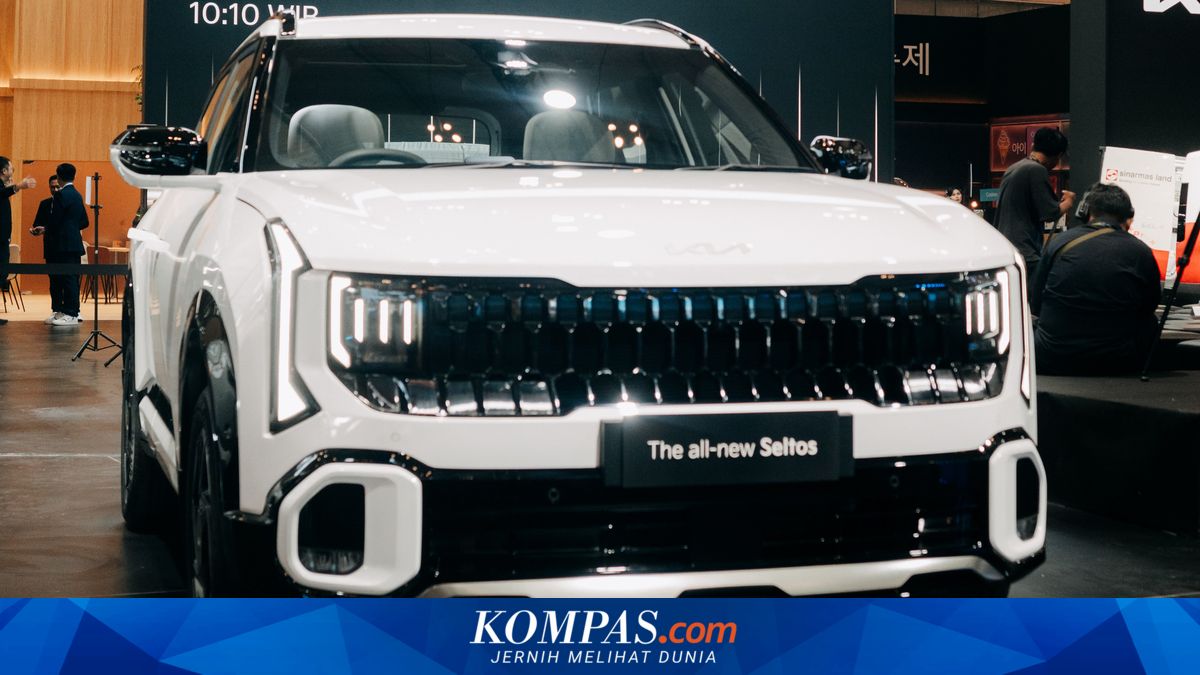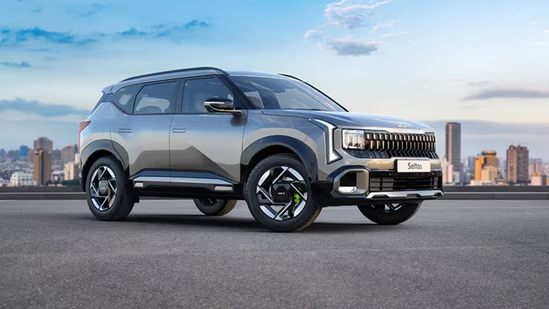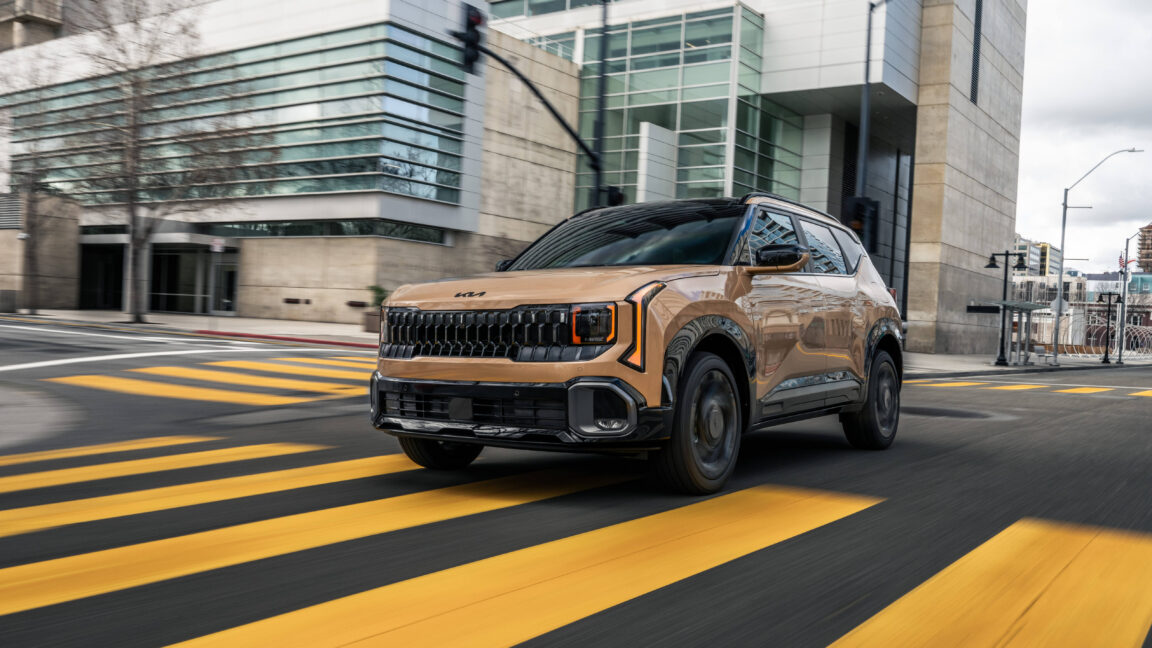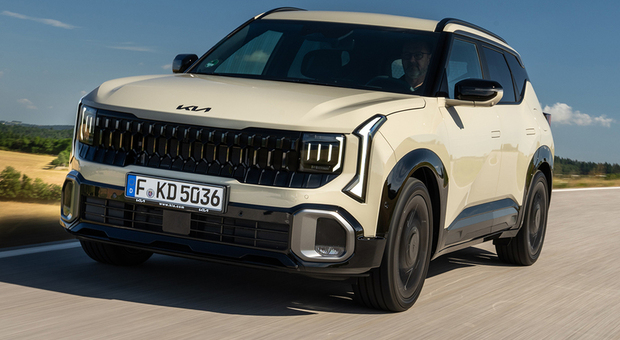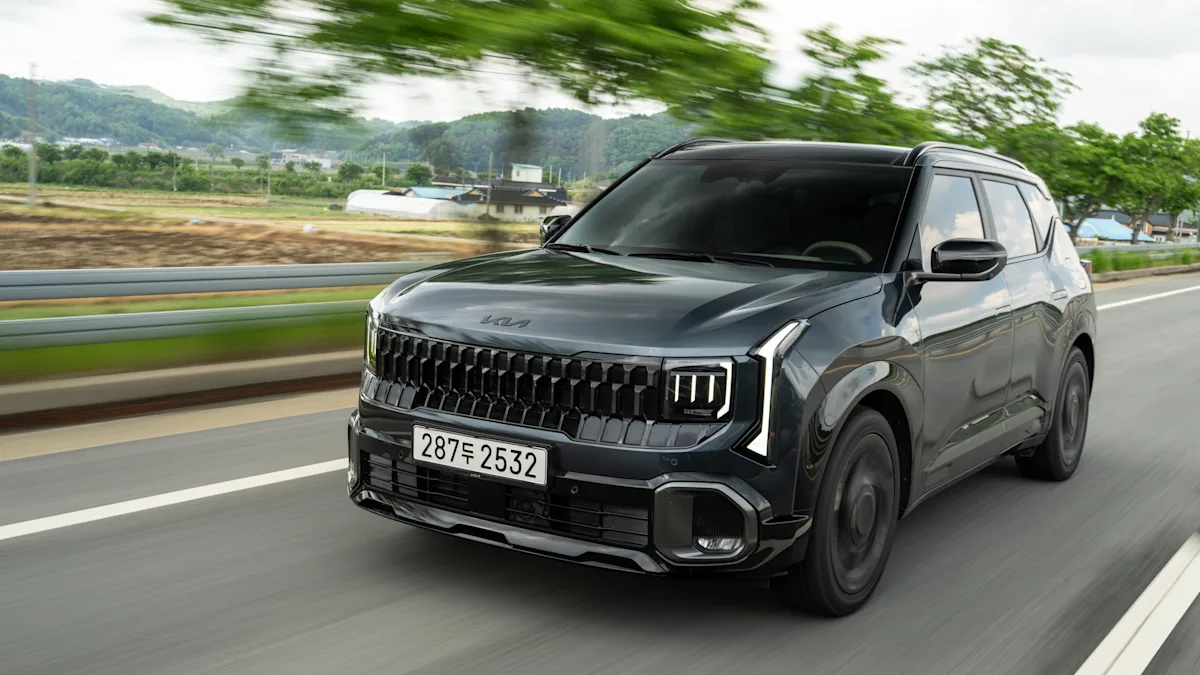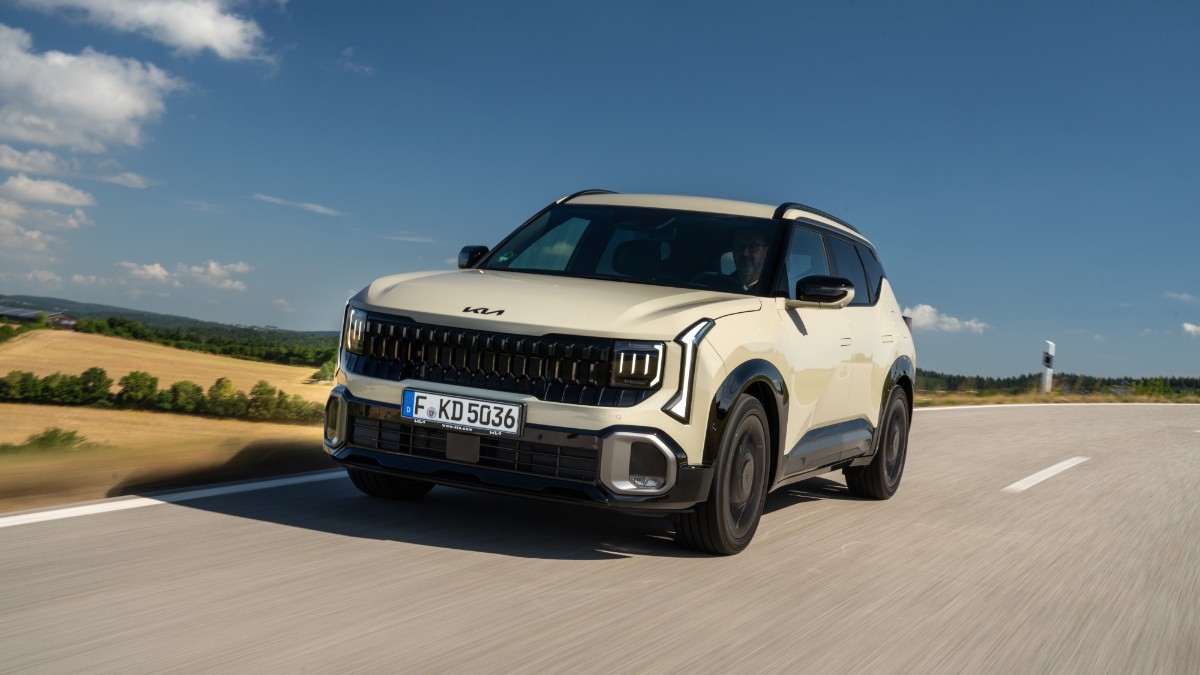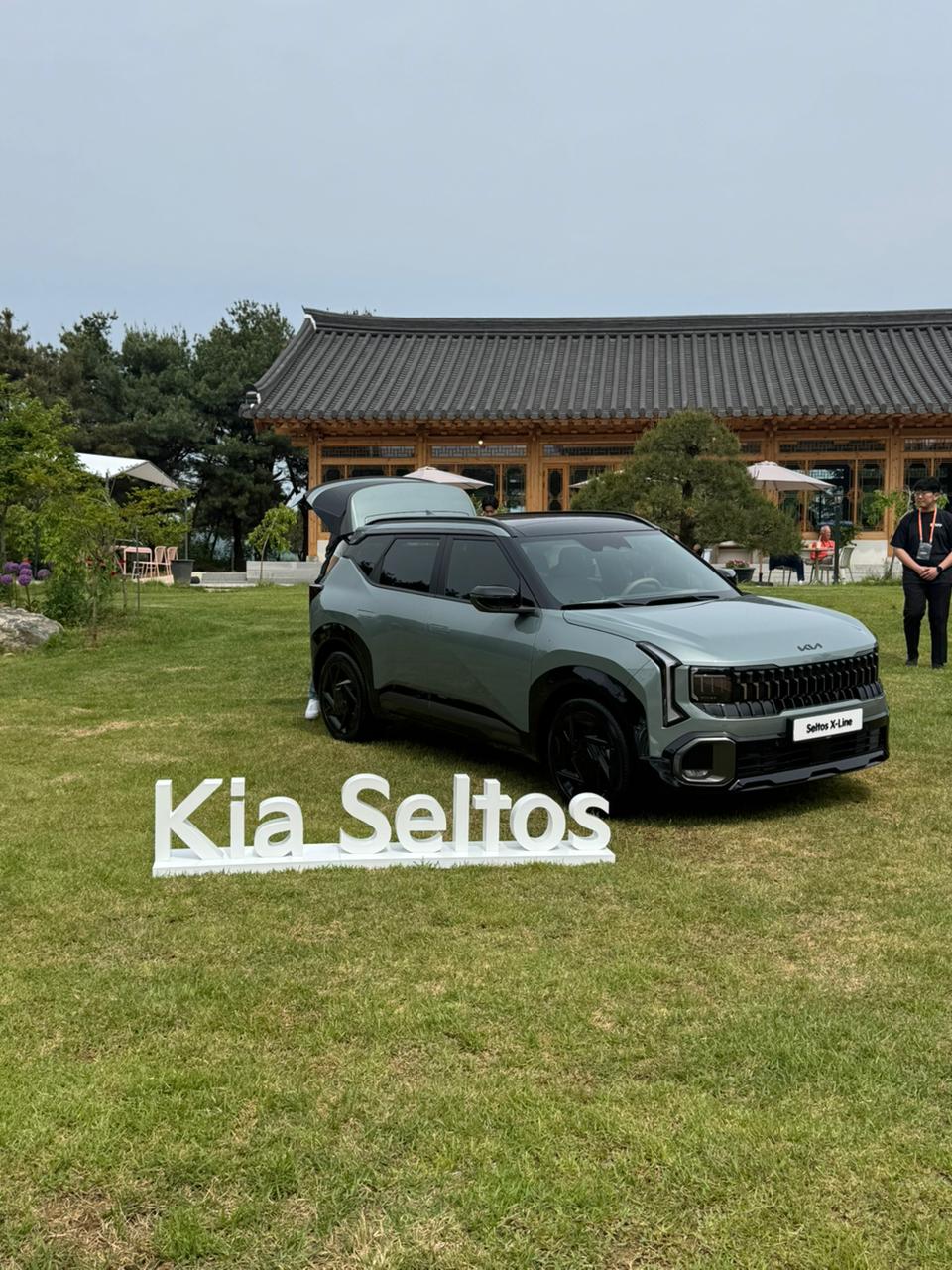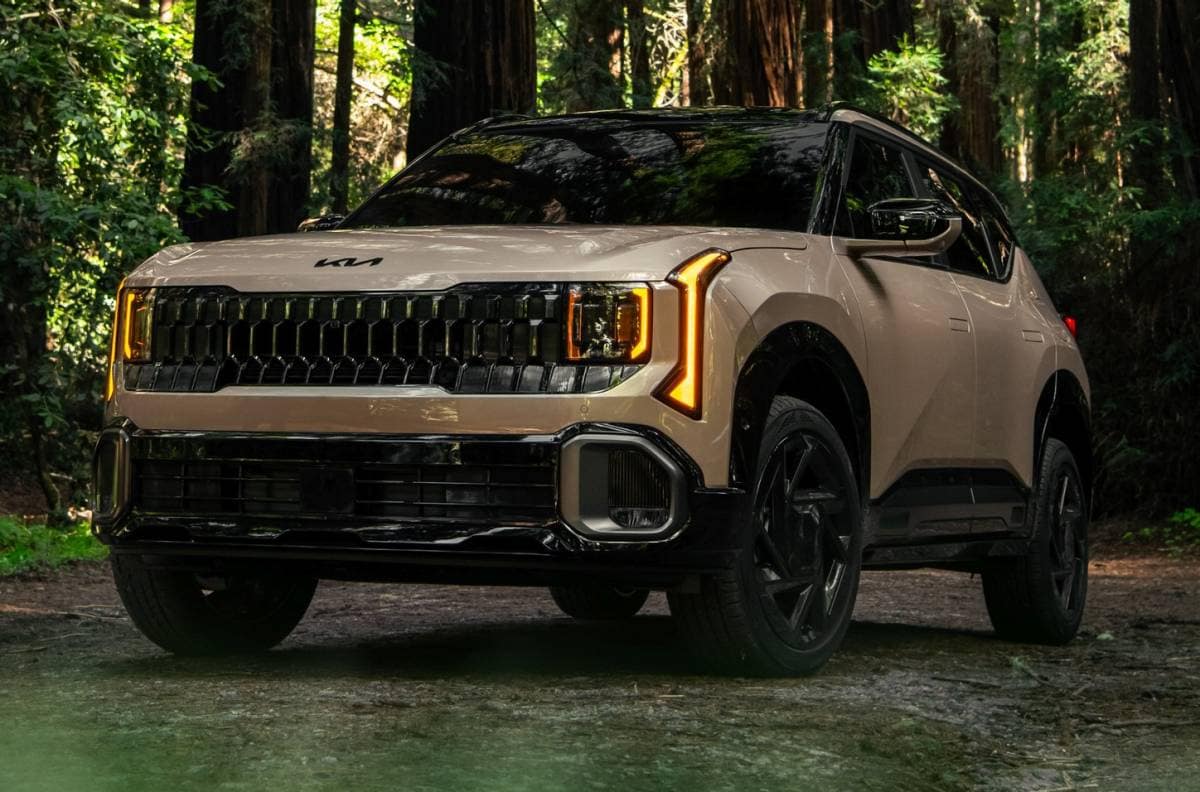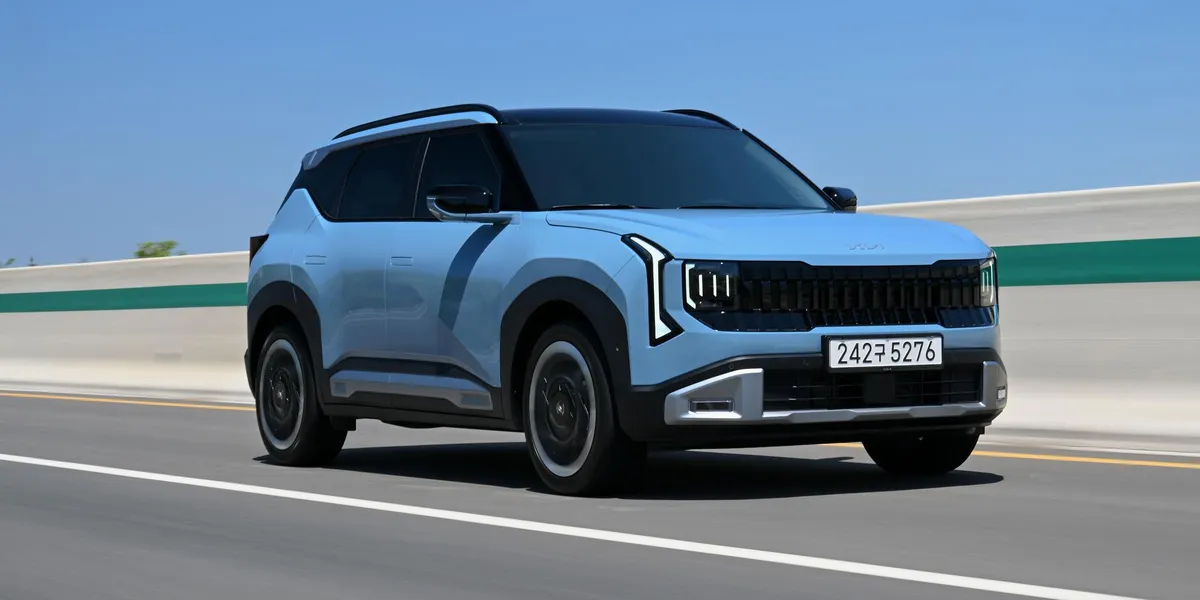
Driving the 2027 Kia Seltos Hybrid through a Korean mountain landscape whose lushness evokes Hawaii, a light touch with my right foot helps me eke out a decidedly green 51 mpg (4.6 liters/100 km). Back in the States, that kind of mileage will beat anything in the Seltos’ subcompact SUV class. Kia’s timing seems uncanny. When the Seltos arrives in the U.S. in the fourth quarter this year, it will be greeted by consumers weary of paying US $4 or $5 for gasoline to fill their lumbering SUVs and pickups. And yet the Seltos actually sprang from decisions made a decade ago. Hyundai Motors, Kia’s corporate parent, hedged its bets by developing a three-headed monster of EV, hybrid and internal-combustion models. Now they’re reaping the benefits. In North America, among other places, automakers who kept the faith with hybrids are outpacing rivals, notably General Motors, Stellantis, and Ford, that moved away from them. Kia’s hybrid sales rose a remarkable 152 percent in the second quarter of 2026, driving the brand to a record 430,727 U.S. sales in the first half of the year.That hybrid renaissance extends beyond Kia. The Hyundai brand, for example, booked a 71-percent hybrid jump in the second quarter of this year, helping it achieve its own record-breaking first half of nearly 451,000 U.S. sales. And with automakers now racing to add hybrids to their lineups—including an intriguing new class of extended-range models—the momentum seems likely to persist for years. Toyota helped pioneer hybrid tech with its Prius. Once hailed as an environmental leader, Toyota was suddenly cast as a villain for dragging its feet on EVs, and lobbying against pro-EV policies.Toyota made what seemed a risky decision to begin offering several models exclusively in hybrid form, including such stars as the Camry and RAV4 — merely the best-selling sedan and SUV in America. Now, nearly half of Toyota’s U.S. sales are hybrids.General Motors, for its part, has only two hybrids at the moment, both of them electrified, mega-power versions of the Chevrolet Corvette. Toyota’s hybrid advantage, Cox Automotive analysts say, is helping to narrow their sales gap with GM, which has ruled U.S. sales charts for nearly a century. The shift isn’t limited to SUV-and-pickup loving Americans. In Korea, Kia executives confirm they’re seeing a global shift to hybrids in Europe and Asian markets. Analysts say many international buyers are choosing hybrids over EVs that still demand sacrifices in upfront costs, driving range or charging hassles. In Europe, where surging fuel prices are also driving record EV sales, a hybrid boom still leaves them with 38.6 percent of the market, more than double EV’s share. Even in China, sales of popular plug-in hybrids are growing faster than EVs’, up 76 percent versus a 23-percent gain for EVs.GM, Ford and Honda Paying a Brutal Price for Big Bet on EVs Hyundai, Kia and its Genesis luxury brand certainly haven’t retreated from EVs. Those include the sleek EV5s I watch emerge from the Kia Autoland Gwangju factory, which turns out one completed EV roughly every minute. But GM, Honda and other brands that went all-in on EVs to the exclusion of hybrids are paying a brutal price for what appeared to be enlightened foresight. Globally, automakers have written off more than $70 billion due to misplaced bets on EVs. General Motors, Ford and Stellantis alone lost nearly $52 billion, and cancelled several future EVs, after consumers around the world began shying away from them in droves. Following a $15.7 billion EV-related hit, Honda faces its first annual financial loss since 1957.The Kia Seltos will be unleashed into a competitive U.S. segment featuring more than a dozen subcompact SUVs—, but just two hybrids, the Subaru Crosstrek and Toyota Corolla Cross. EPA fuel-economy figures aren’t finalized. But based on my experience during a test drive, this Seltos will return close to 50 -mpg in combined city/ highway driving (4.7 l/100 km), versus the Subaru’s 36 mpg, or the Toyota’s 43. The Seltos’s hybrid power train combines an inline, 4-cylinder, 1.6-liter gasoline engine with a 32-kilowatt electric motor.KiaIn the Seltos, a single-motor hybrid system will make a respectable 155 horsepower (116 kilowatts) when the Hybrid version goes on sale in the U.S. this fall. An optional “e-AWD” system will save energy by eliminating any physical synchronization between front and rear wheels: When sensors detect wheel slippage up front, an independent permanent-magnet AC motor bumps up the torque for the rear wheels to boost traction. With this e-AWD, overall power increases to 179 horsepower, or 133 kilowatts. The Kia’s 1.6-liter gasoline engine runs the Atkinson cycle, a method of valve timing that trades off power for increased efficiency.Getting Americans to love a pint-sized SUV will, of course, take more than improved efficiency. The Seltos integrates impressive levels of design and tech for an SUV that should start at around $28,000, and top out at roughly $35,000 (Kia has not revealed final pricing). For example, a dual-clutch automated gearbox, standard on the Seltos, is typically found only on luxury or performance models including Ferraris. Just over half of Korea’s entire population lives in the Seoul metro area, some 23 million people. As I negotiate Seoul’s congested roads, an augmented reality navigation system — akin to those found on higher-end Mercedes models—overlays animated arrows and other directional helpers over a real-time camera display. The system stripes lanes in the same helpful guide colors, including pink and green, that are painted on Korea’s roads and multi-lane exits.The Seltos adopts an AI voice assistant, 360-degree cameras, over-the-air software updates, and onboard WiFi with video streaming services. Vehicle to Load (V2L) capability allows charging external devices from a tiny, and therefore low-cost hybrid battery that stores 1.4 kilowatt-hours.A suite of Advanced Driver Assistant Systems (ADAS) includes adaptive cruise control with a driver-monitoring camera. A capacitive sensor picks up a brush of a finger on the steering wheel, allowing automated steering and lane keeping on highways without having to grip with two hands. Drivers can remotely guide the Seltos into tight parking slots, and back out again, via a smartphone Digital Key, eliminating the need to carry a fob. A well-tuned regenerative braking system offers four driver-adjustable levels. An adaptive setting varies energy recuperation based on parameters such as surrounding traffic, nav data, road gradients, and approaching intersections or roundabouts. The Seltos’ future-forward shape achieves a drag coefficient of 0.31, not bad for an SUV. Kia will produce the Seltos at full crank from three flexible factories in Korea, China and India. That makes the Seltos the brand’s first truly global hybrid, bound for sale in up to 189 countries. Extended Range EVs Are Set to Revive the Serial Hybrid CategoryEspecially for an automaker like Toyota, decades of engineering and refinement have led to hybrid systems that deliver robust mileage at much lower cost than EVs. That amortization of R&D and manufacturing is why Toyota can now sell Camrys or RAV4’s exclusively as hybrids, with the technology cost baked into the starting price. That said, hybrid tech is not standing still. MG, owned by China’s SAIC, says its next-generation PHEVs will adopt semi-solid-state batteries, with about 95 percent solid electrolyte. MG is among companies investigating hybrid motor decoupling: Physically disconnecting a generator that typically spins idly during pure EV operation, to reduce parasitic drag and save energy. Meanwhile, the next stage in the hybrid ascendancy is coming into view. Multiple brands, including China’s BYD and Leapmotor, and Stellantis and Volkswagen in the West, are working on Extended Range Electric Vehicles, or EREVs. These EREVs are an evolution of traditional plug-in hybrids (PHEVs), but with much larger batteries to travel further on electricity alone, and downsized gasoline engines. These engines are typically used as onboard generators that charge the batteries, rather than directly propelling wheels. That engine can work more efficiently by running at a steady rpm to generate electricity, rather than constantly speeding up and slowing down to propel a car. That makes them “series hybrids,” versus “parallel hybrids,” including the Seltos, the Prius, and most other hybrids on the market now. In these hybrids, an electric motor and gas engine can mechanically power wheels, together or separately. The point of EREVs is to banish range anxiety, but still get a meaningful percentage of miles from cleaner electricity. Stellantis’ Ramcharger pickup, another EREV, has been delayed in the wake of the electric slowdown. But the truck is expected to squeeze 233 - kilometers (145 miles) of all-electric range from its 92-kWh battery, nearly three times that of a plug-in Toyota Prius Prime. A 3.6-liter gasoline engine then generates 133 kilowatts, extending range to a total 1,110 kilometers (690 miles). Another EREV is in the works at Scout Motors, the revival of International Harvester (whose beloved Scouts and Travelalls were rugged precursors to the modern SUV). The electric brand, now owned by Volkswagen, has generated enormous consumer interest in plug-in “Harvester” powertrains for its forthcoming 2028 Terra pickup and Traveler SUV. Those models are expected to get roughly 241 kilometers (150 miles) on stored battery power alone. A four-cylinder gasoline engine will kick in to generate electricity, boosting total range beyond 805 kilometers (500 miles). As it turns out, consumers did want more choices in fuel-efficient models—just not EVs alone. Of the 160,000 reservations Scout has received, 87 percent are now for the EREV versions, rather than its all-electric models, the company reports.
Hybrid Comeback: How Kia’s Seltos Hits 50 Mpg and Packs Luxury Tech
The smartly engineered Kia Seltos leads a hybrid renaissance
1,564 words~7 min read