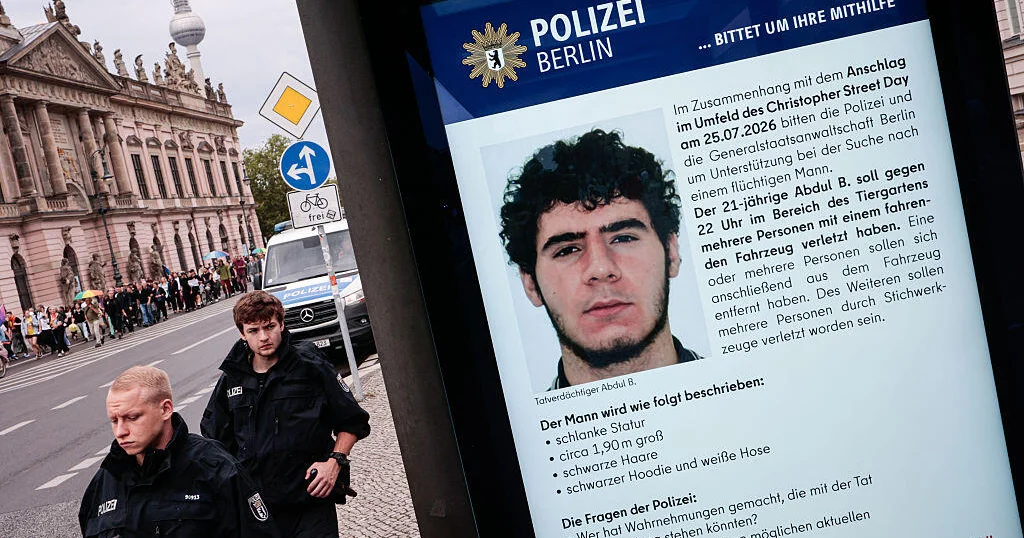
A deadly attack at Berlin's Pride parade has renewed scrutiny of how EU member states share intelligence on suspected extremists and monitor their movements across borders.
The suspect, 21-year-old Abdul Ballout, had travelled outside the Schengen Area before returning to the EU, yet was not detained despite his known links to Islamist extremism.
A German citizen of Lebanese descent, Ballout had been known to German police and intelligence services for several years because of his involvement in Islamist extremist activities. He had travelled to Turkey looking to enter Syria.
The case has reignited questions over whether Europe's intelligence-sharing and cross-border security systems are capable of identifying and stopping individuals who may go on to carry out terrorist attacks.
Best known as the database underpinning the Schengen Area's passport-free travel zone, the Schengen Information System (SIS) also enables police, border guards and customs officers in 31 European countries to access real-time alerts on wanted criminals, missing persons and individuals linked to terrorism and other serious crimes.