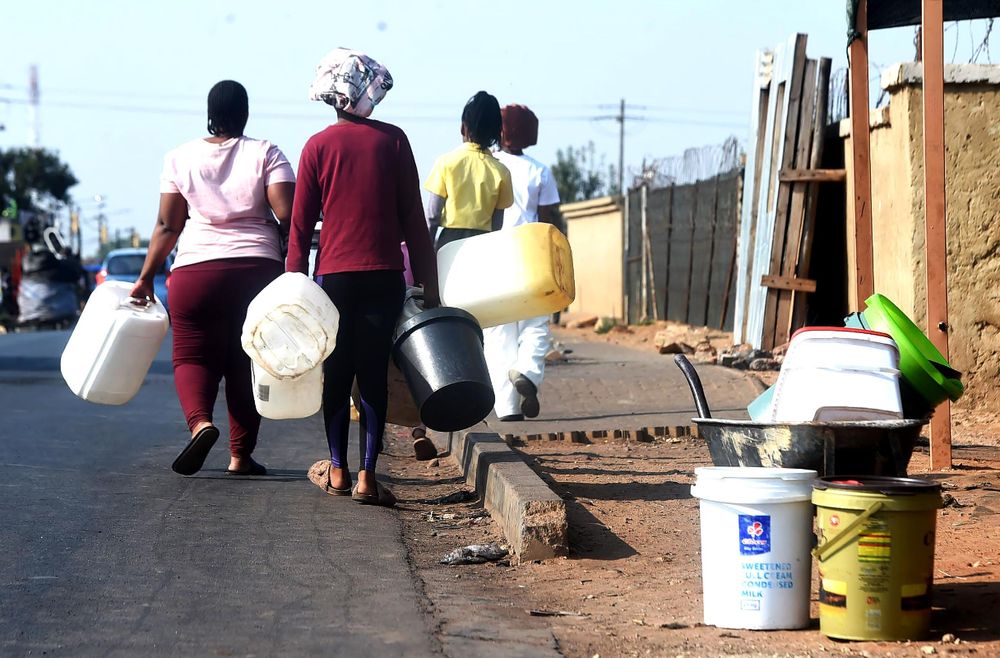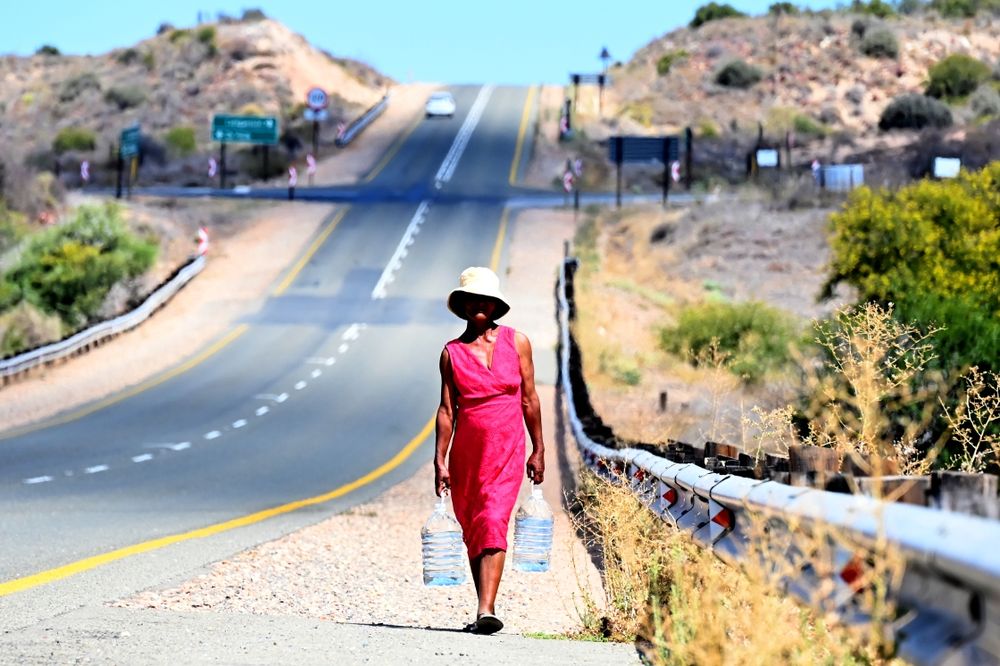
Sarah Frans walks long distances to fetch water as the Kannaland Local Municipality. The challenges facing rural water supply systems in South Africa are immense, but by integrating scientific research with community knowledge sustainable and equitable solutions can be found.
Across rural South Africa, water supply systems continue to underperform — not simply because of a lack of infrastructure, but because of limited understanding of the water resources and systems that underpin them. Despite significant investment in the sector, only 64% of South African households have access to a reliable water supply service (Department of Water and Sanitation, 2019).
In many communities, natural springs and boreholes are relied on as alternative water sources where municipal supply is unreliable. However, these sources are often developed without a holistic assessment of the social, environmental, and technical systems in which they are embedded. The result is water systems that are inconsistent, unsafe, and ultimately unsustainable.
Through a series of ongoing studies, the Council for Scientific and Industrial Research (CSIR) is working to better understand how locally available groundwater resources can support communities through the design of viable, safe, and sustainable rural water systems. This work integrates hydrological, geohydrological, engineering, and social science research to address the interconnected technical, social, and governance factors that shape how water systems function in practice.