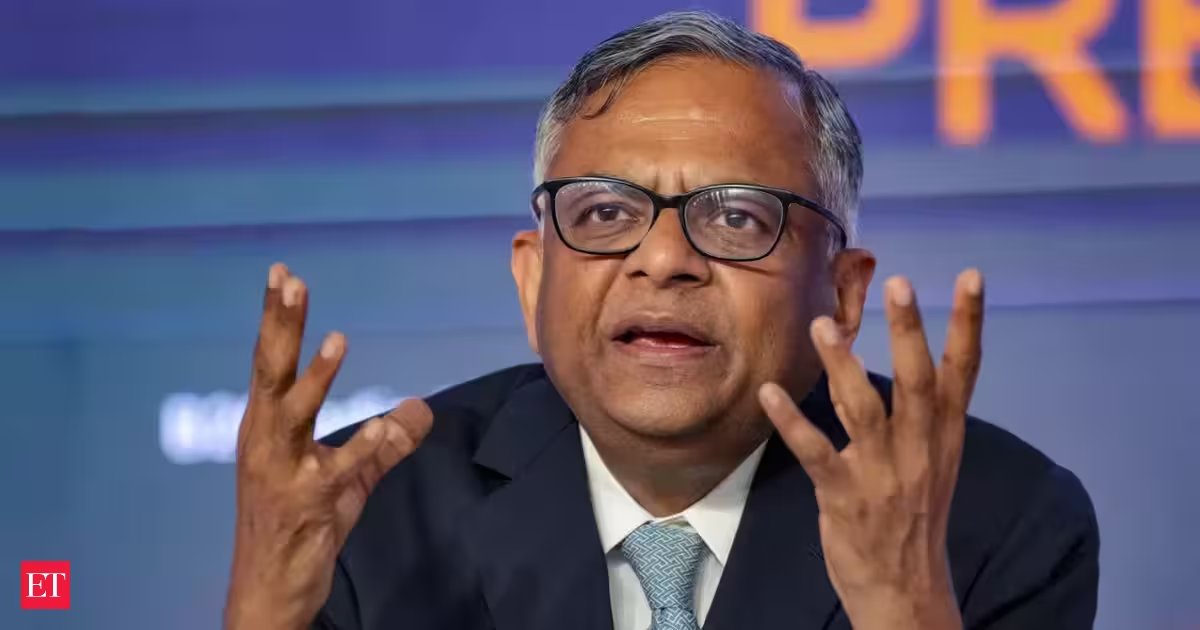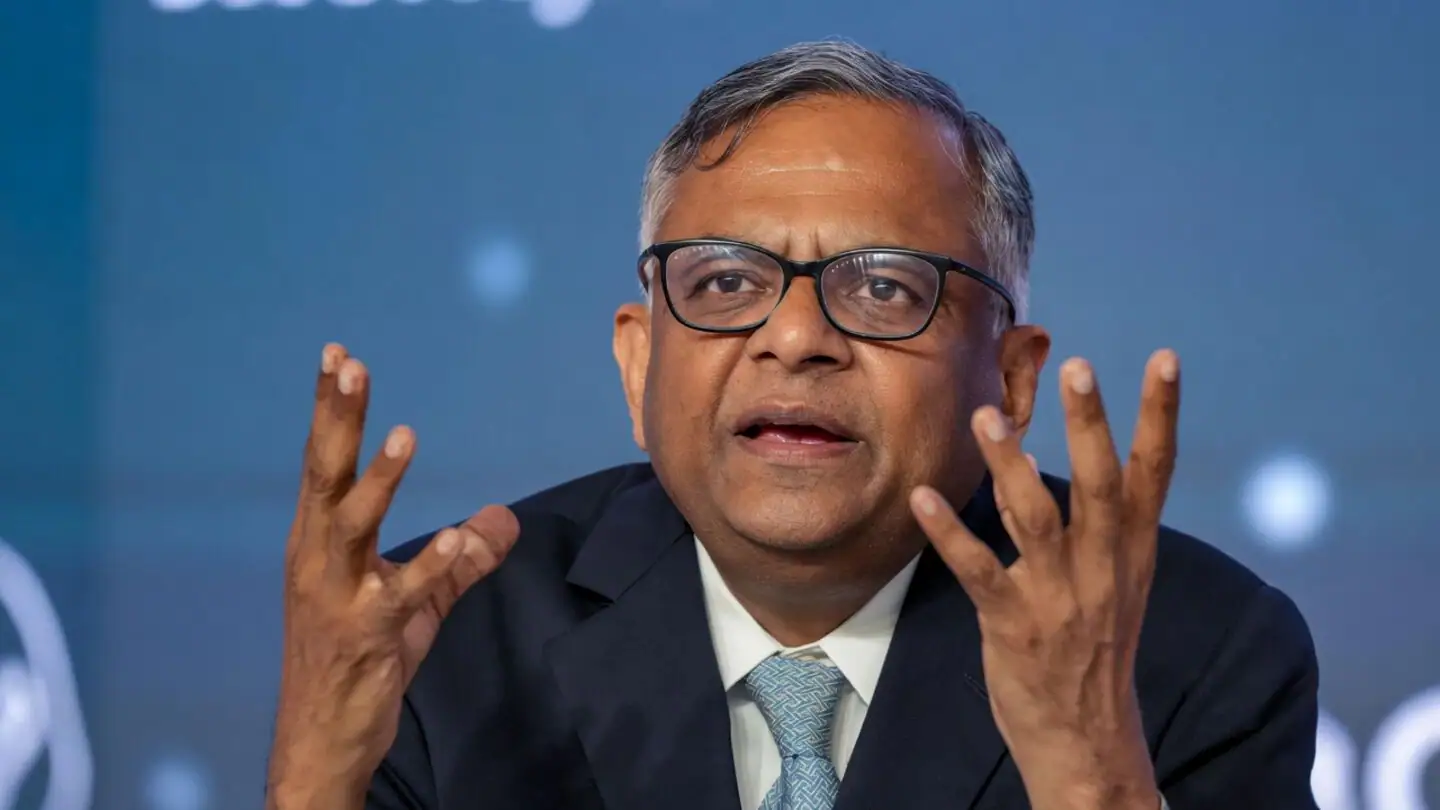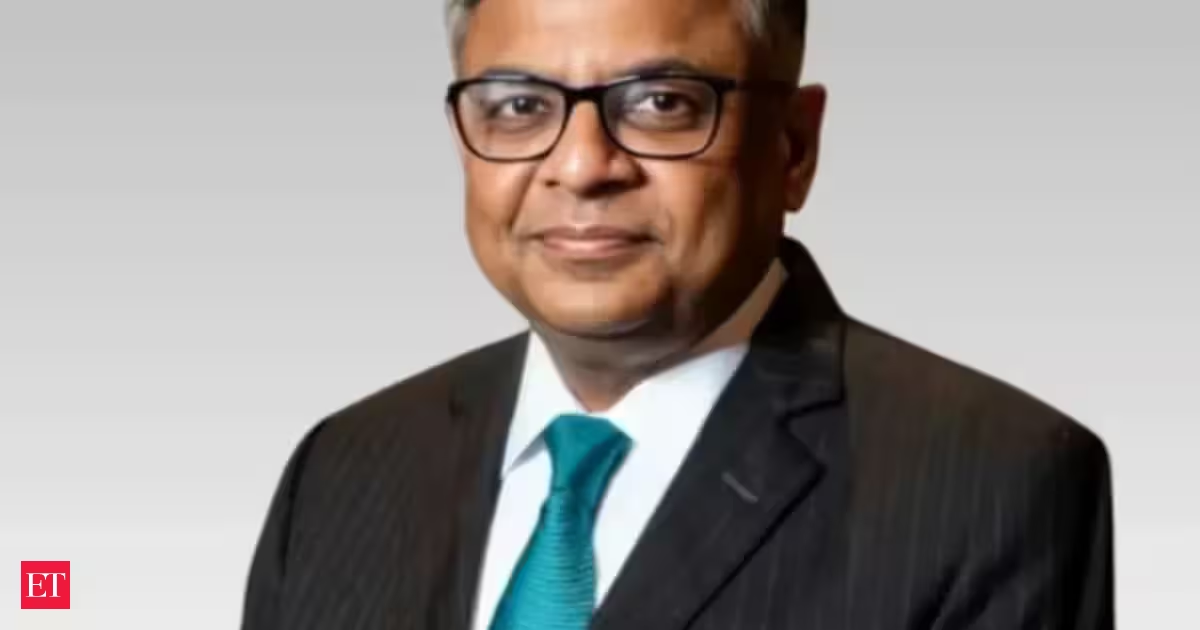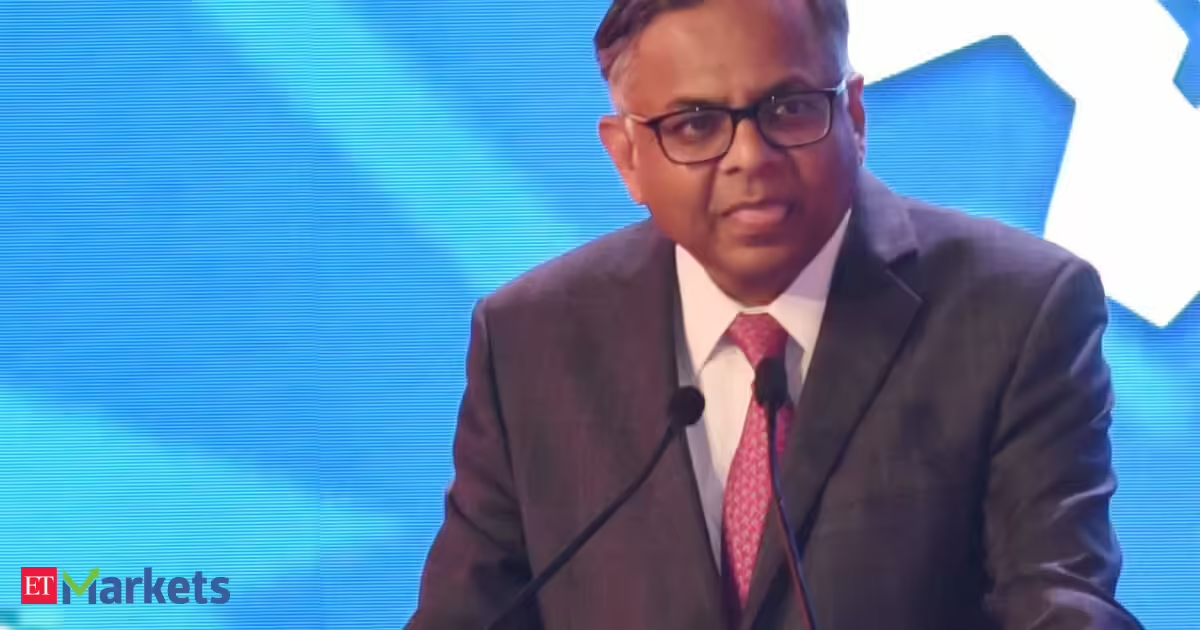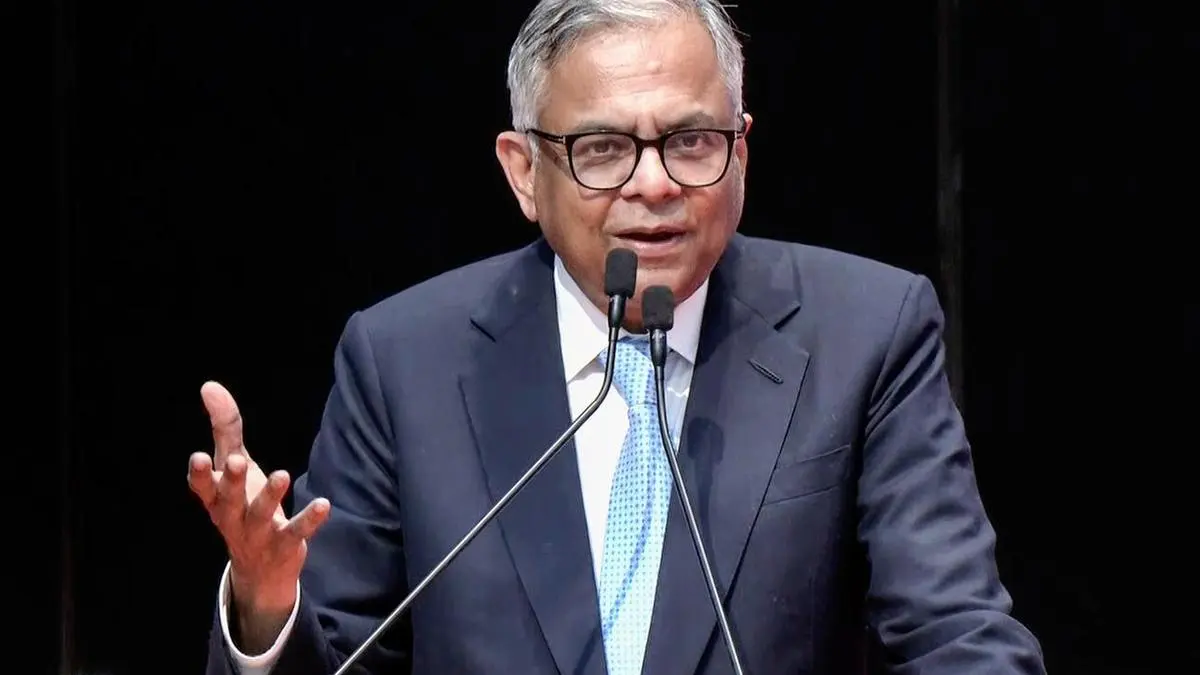
Chairman of Tata Sons N Chandrasekaran
Flagging chips as the new steel, Tata Sons Chairman N Chandrasekaran hailed Tata Electronics’ role in India’s technology sovereignty despite the steep loss reported in the larger company’s annual report.Tata Electronics loss after tax widened over 20 times in the Tata Sons annual report, going from a loss of ₹70 crore in FY25 to ₹1,611 crore in FY26. In his remarks, Chandrasekaran has instead focused on the gross or operating profits of the company before tax, stating that Tata Electronics has “already achieved break even.”“Tata Electronics is on track to become the first integrated player across the electronics value chain. In four years, it has become the fourth-largest Tata Group company by revenue of ₹1,31,082 crore and nearly two-thirds of its workforce of 86,466 consists of women,” he said. The top three high-revenue companies in the group are Tata Motors, Tata Consultancy Services and Tata Steel.In terms of revenue, the company grew 97 per cent on an annual basis. Further, it manufactured 12 per cent of the total volume of phones made by the global leader in 2025. The holding company also invested an additional ₹3,000 crore in Tata Electronics between FY25 and FY26, bringing the total investment to ₹9,961 crore.High-volume fabTata’s manufacturing company is currently constructing India’s first high-volume fab in Gujarat, and packaged India’s first indigenous microprocessor. Further plans involve developing advanced packaging, indigenous electronics and semiconductor solutions, capabilities in semiconductor materials, and working with advanced lithography tools in Dholera.“Every phone, car, aircraft, hospital, power grid, and AI system runs on [chips]. A nation that cannot make its own semiconductors will always depend on others for the most fundamental input of the modern economy,” said the Chairman in the report.He stressed the need for patient capital, global partnerships, thousands of highly-trained engineers, and years of disciplined execution since such execution “are among the most complex manufacturing endeavours humanity has attempted”. The creation of chip-manufacturing plants would create an ecosystem of suppliers, talent pipelines and research linkages.“When the first “Made in India” chips flow at scale, they will do exactly what is needed for India’s technology sovereignty,” said Chandrasekaran.Published on July 28, 2026