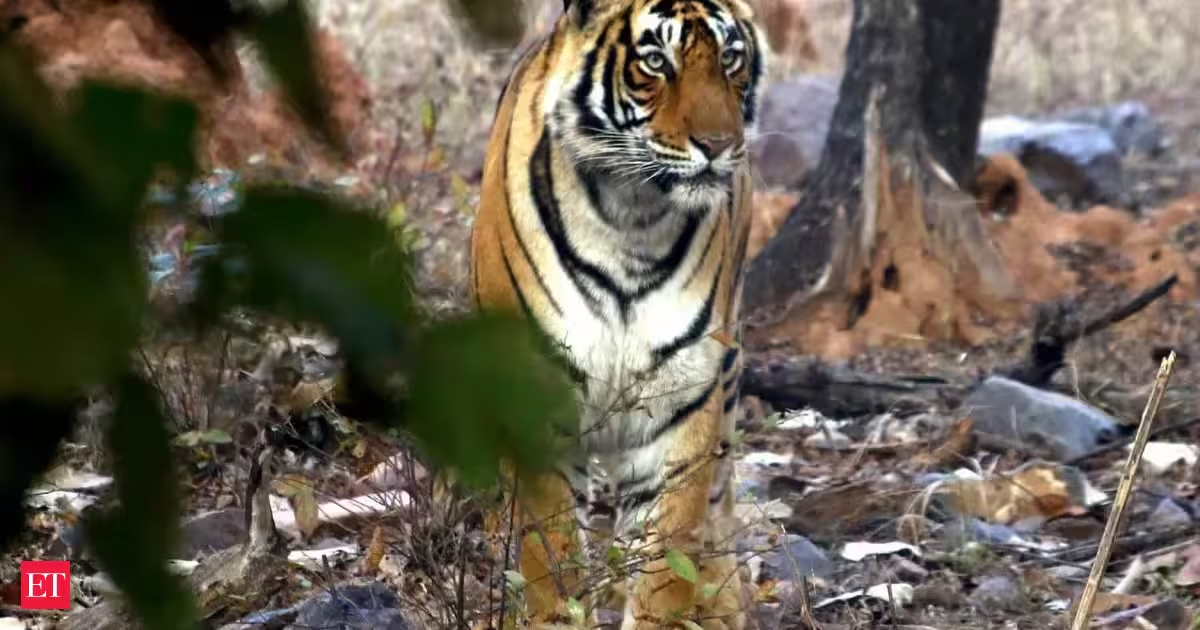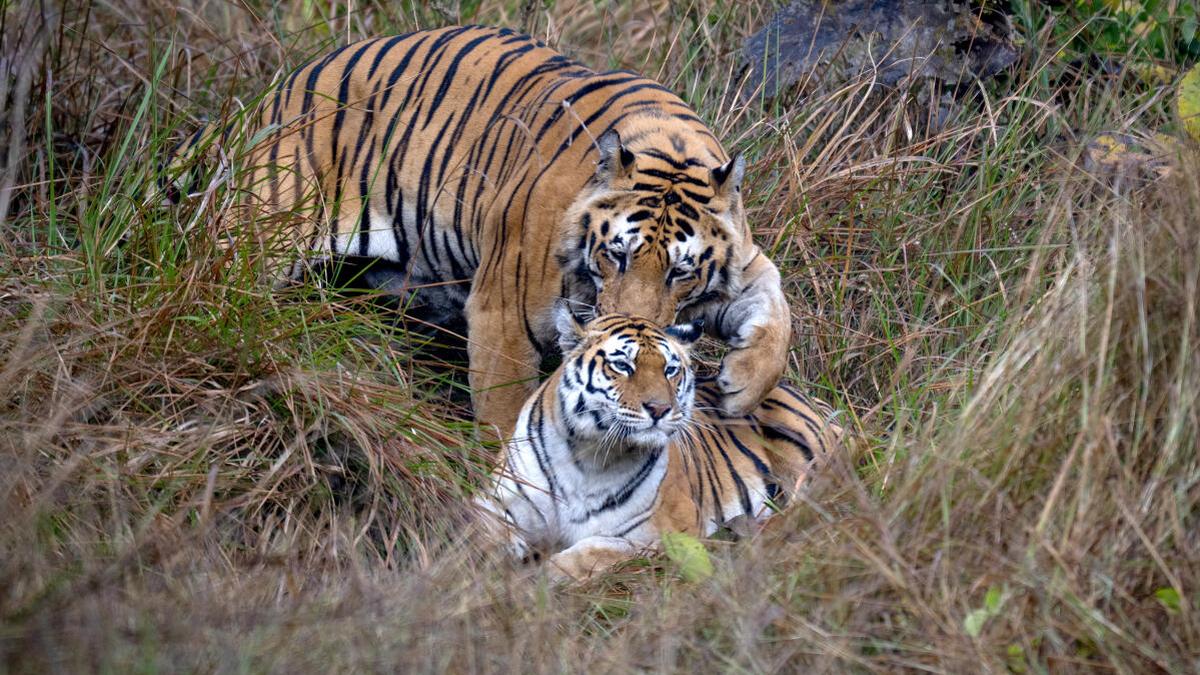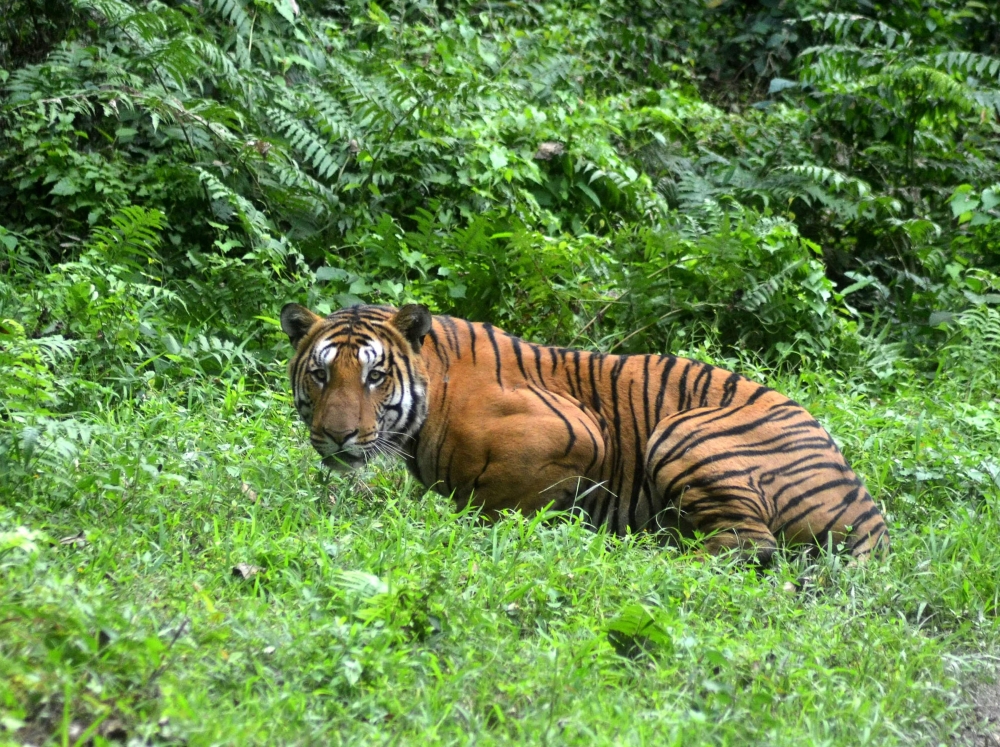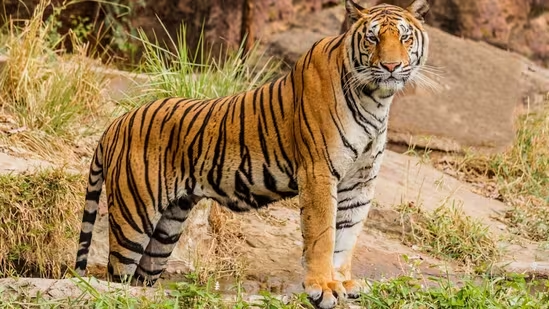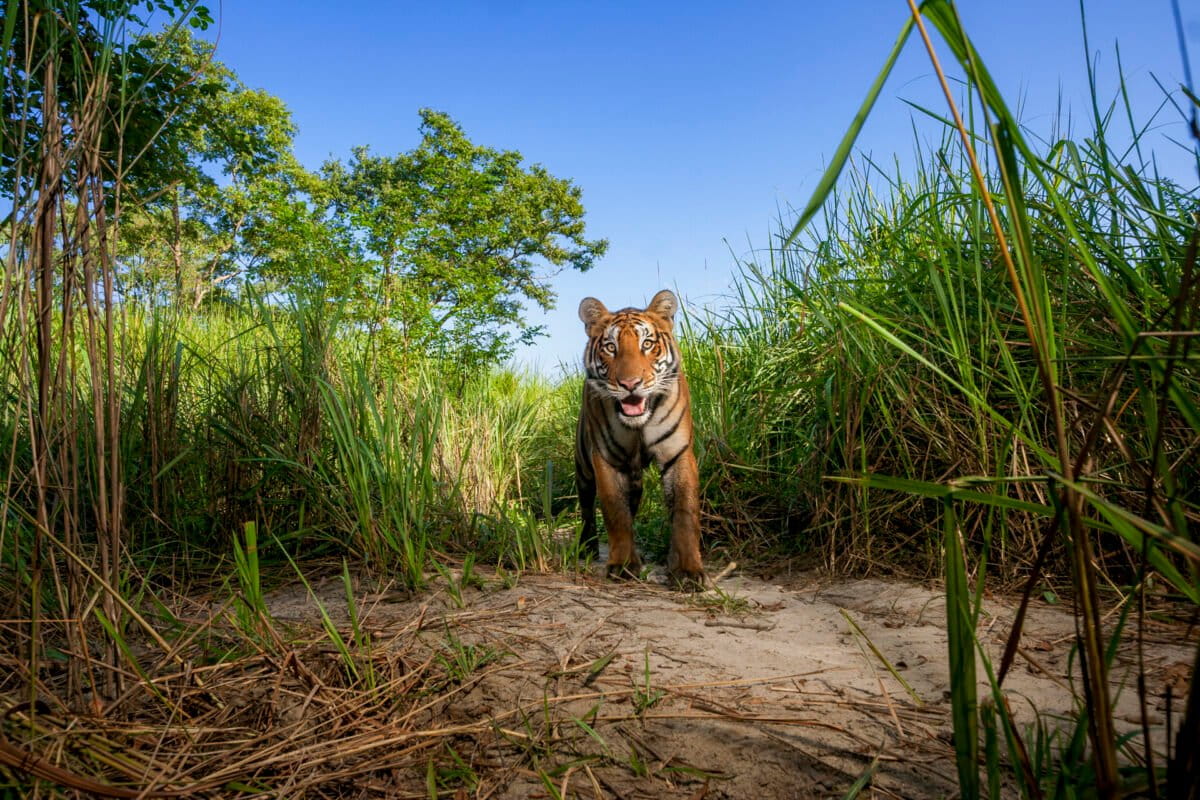
India has made progress in conserving its Bengal tigers, but now it must accommodate growing numbers as they disperse from protected habitats into human-dominated areas — even as poaching is on the rise and destruction of forested land continues.Protected forest corridors are crucial to restoring lost or tenuous connectivity between key habitats, enabling genetic exchange between tiger populations that otherwise risk isolation and inbreeding.India has built more mitigation structures than any other country in Asia, including the world’s 10 largest wildlife underpasses and overpasses.But even as the country is reconnecting habitat, it’s also rapidly expanding road infrastructure, and even protected forests remain under threat.
RAJAJI TIGER RESERVE, India — It is early morning in late May in the hardwood sal forests of Rajaji Tiger Reserve in north India, and the heat is rising. By afternoon it will reach 39° Celsius (102° Fahrenheit).
I am squatting on the forest floor under National Highway 72, a steady rumble of traffic above, looking at the footprints of a wild elephant in a patch of moist mud that has thus far survived this scorching summer.
This is the Teen Pani (Three Waters) underpass, just 400-odd meters (about 1,300 feet) in length, but good enough to allow everything from mice to elephants to pass safely beneath the highway.