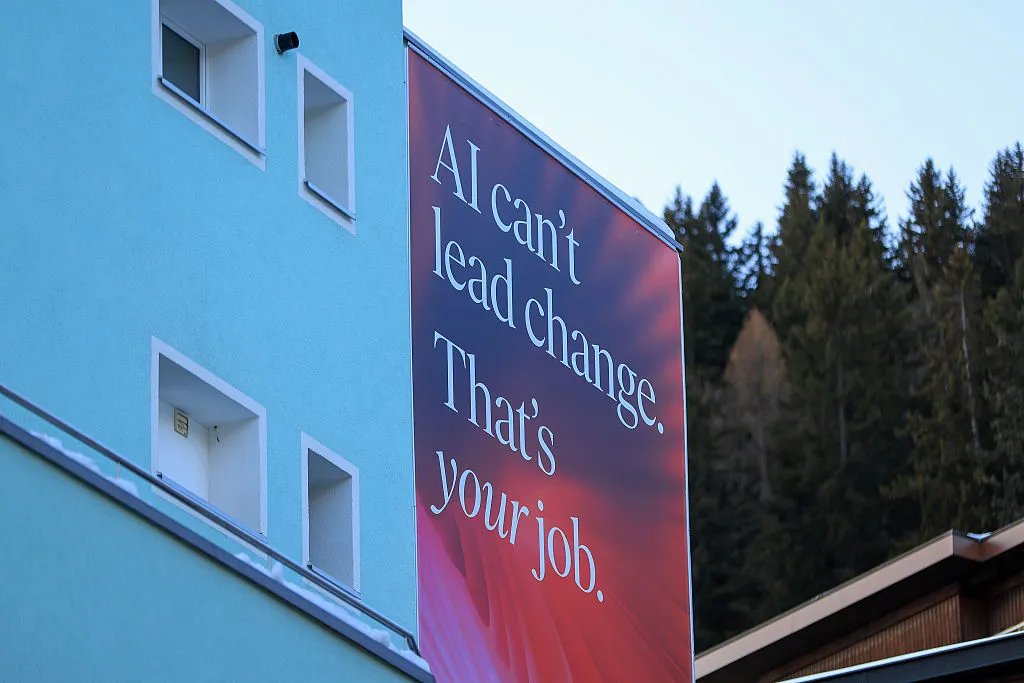
Hiring for entry-level roles spiked by 237% for one employer this year, even as AI eats away at the junior layer of white-collar workgettyWill AI remove entry-level jobs? No…but also, yes.The headlines and social media posts you’ve been reading tell you that AI is sunsetting entry-level work. There are mounting concerns about youth and graduate unemployment because AI removes the admin-level junior task layer of work, especially within the white-collar knowledge sector. However, that is highly subjective. Recent data shows that so far from removing demand for entry-level jobs, AI can actually accelerate entry-level hiring. Employers Are Hiring More Entry-Level JobsBrainlabs, a 1,000-person-strong U.S. media agency, onboarded 19 entry-level professionals in October 2023. By contrast, their April 2026 cohort had 64, growing their entry-level hiring by 237%.Dan Gilbert, founder and global CEO at Brainlabs explained:"Brainlabs has run an Academy program since the company started, always training entry-level hires on whatever skill mattered most at the time. AI wasn’t that thing ten years ago, it hadn't been deployed widescale yet. Since October 2023, we've used those cohorts to teach people how to actually work alongside AI from day one, not bolt it on after they've learned the old way of doing things.Commenting on the 237% jump, Gilbert said:“We didn’t do that by cutting junior roles to save money on tools. We did it because juniors trained to use AI properly become more valuable faster. A first-year strategist who knows how to build and run an AI workflow can do work that used to take a team of five. Instead of shrinking the team, it changes what the team gets asked to deliver, and it means we can take on more clients with the same people, or the same clients with better output. Either way, headcount goes up, not down.”(Gilbert’s comments have been edited for clarity.)Additionally, research from Ramp Economics Lab alongside workforce data by Revelio Labs (spanning more than 21,000 U.S. employers) found that companies that invest heavily in AI grow headcount 10% over the two years following adoption. Entry-level headcount increases even faster, by 12%.I can understand how this is possible, because when I recently interviewed Google’s vice president of recruiting, Brian Ong, for my podcast, he told me that at the Big Tech firm, entry-level hiring, so far from declining, has actually accelerated. So why are there conflicting stories abounding on the internet? Why do we see on the one hand that AI is driving unemployment for entry-level careers, while on the other hand, companies like Brainlabs and Google are proving the opposite? The Jevons paradox explains why AI has led to increased demand for entry-level hiringgettyWhy These Employers Are Hiring More Entry-Level Work, Even With AIAnalysis of the job market and AI adoption amongst the employers I mentioned above leads to one conclusion: The question of whether AI will eliminate entry-level jobs all comes down to how employers decide to implement AI.There are two components to this:First, how much employers are investing in AI. In the Ramp study, the top-third of employers seeing employee gain with AI adoption only realized this after adopting with “high intensity,” as the report put it. By “high intensity,” the study refers to employers that spend more per-employee-per-month on AI in the first three months. “These are the firms that spend on multiple models and use the most advanced and productivity-enhancing products available (coding agents and APIs as opposed to simple chat subscriptions),” the report noted.The second component to how employers decide to implement AI, which leads to an uptake in entry-level job postings, is how companies decide to redesign work. There’s a certain level of intentionality that’s needed if we are to preserve entry-level careers so that the incoming and future generations will be able to obtain meaningful pathways into their long-term career goals.As I repeatedly advise and mentioned in my last article about AI layoffs, rather than taking the easy route of eliminating roles and cutting down entry-level work altogether, it’s every employer’s social responsibility to safeguard the developing workforce by deliberately redesigning and reimagining what entry-level work would look like now that we have AI.Going back to BrainLabs as an example, they were able to recruit new entry-level workers because they have a two-year program in place that specifically nurtures upcoming talent in the current skills of the day--in this case, that skill being AI. Instead of saying, “Let’s shrink or freeze our entry-level hires,” this employer has intentionally built a system specifically designed to grow early-career talent and ensure they are safeguarded against digital transformation.This converse effect can best be described as Jevons paradox: a technological disruption increases efficiency of a resource and instead of reducing demand, it increases consumption becomes it becomes more valuable and widely used.That’s precisely what we see happening here. AI is producing the Jevons paradox because it is spiking demand in entry-level hiring--but only within organizations who redesign work around AI, are intentional about their entry-level strategy, and leverage more resources to empower their employees to implement AI. So to the question, Is AI reducing or cutting entry-level jobs? No, I don’t believe AI is a credible threat to entry-level work. It only becomes a threat when employers do not act with society in mind. And when graduates and entry-level professionals approach the job market with the same mindset as the class of 2019, an outdated approach to entry-level careers brings outdated results. No one gets hired.
Will AI Kill Entry-Level Jobs? New Hiring Data Says No
Will AI eliminate entry-level jobs? New hiring and spend data from Google, Brainlabs, and Ramp Economics Lab reveal the opposite.
903 words~4 min read