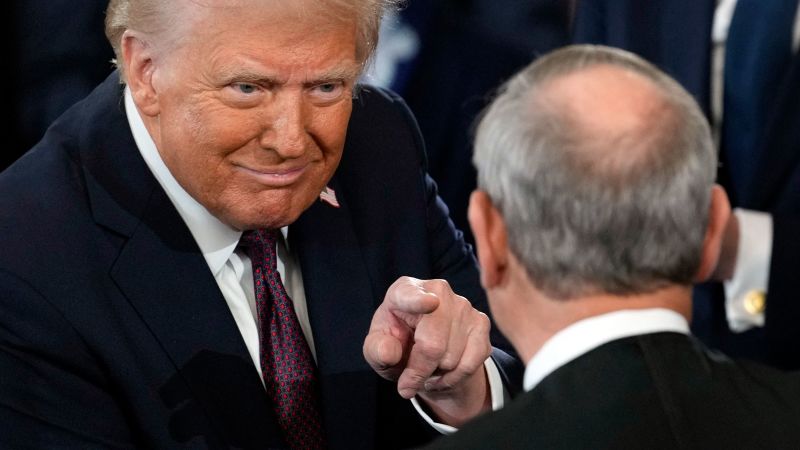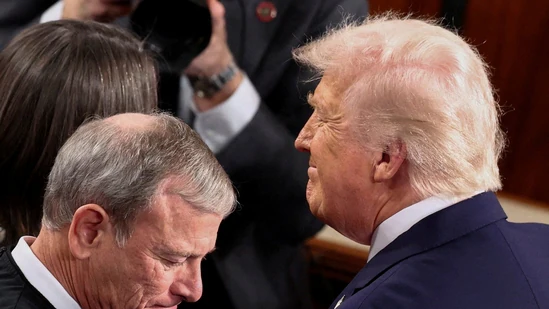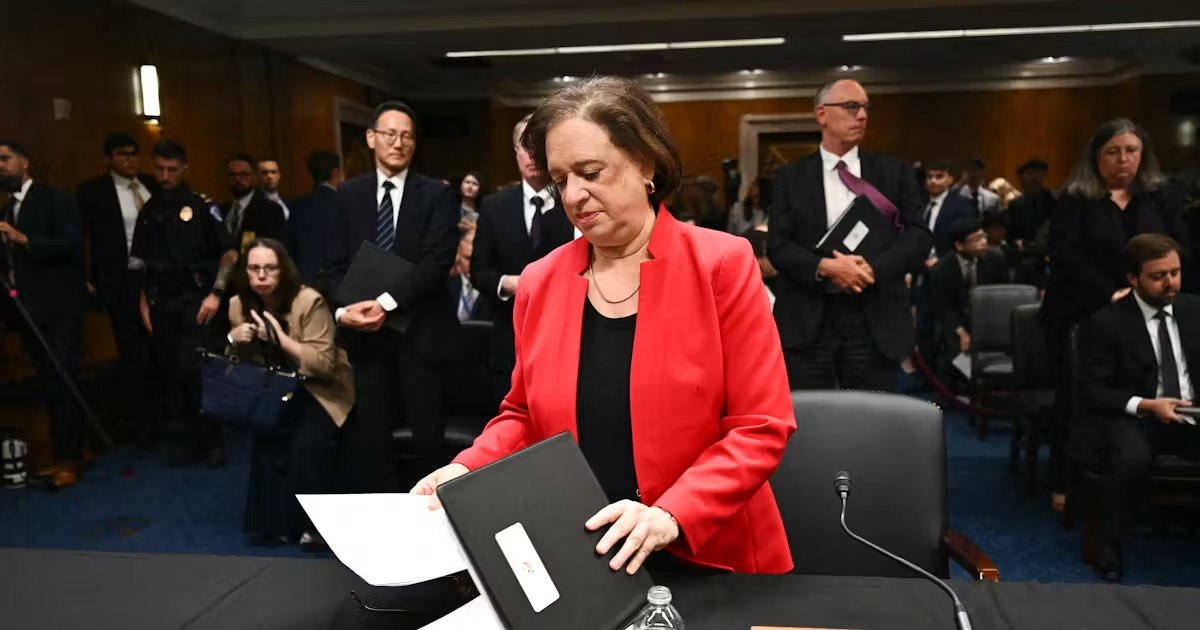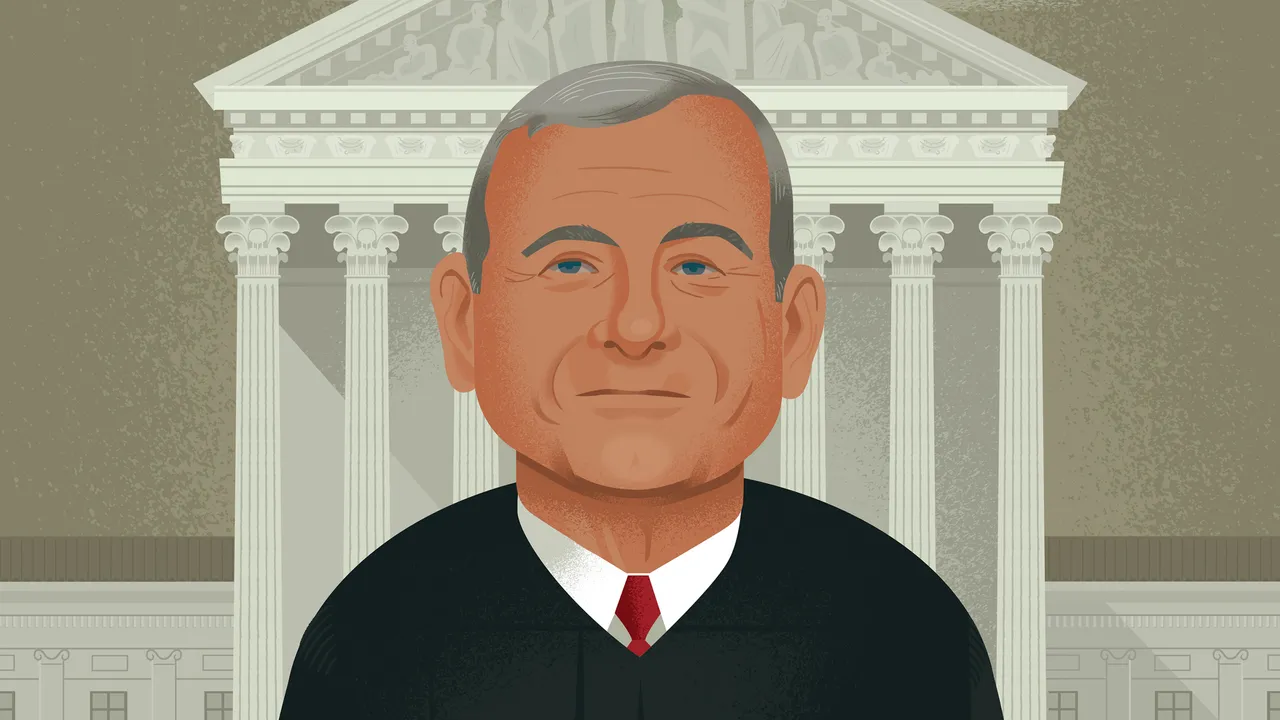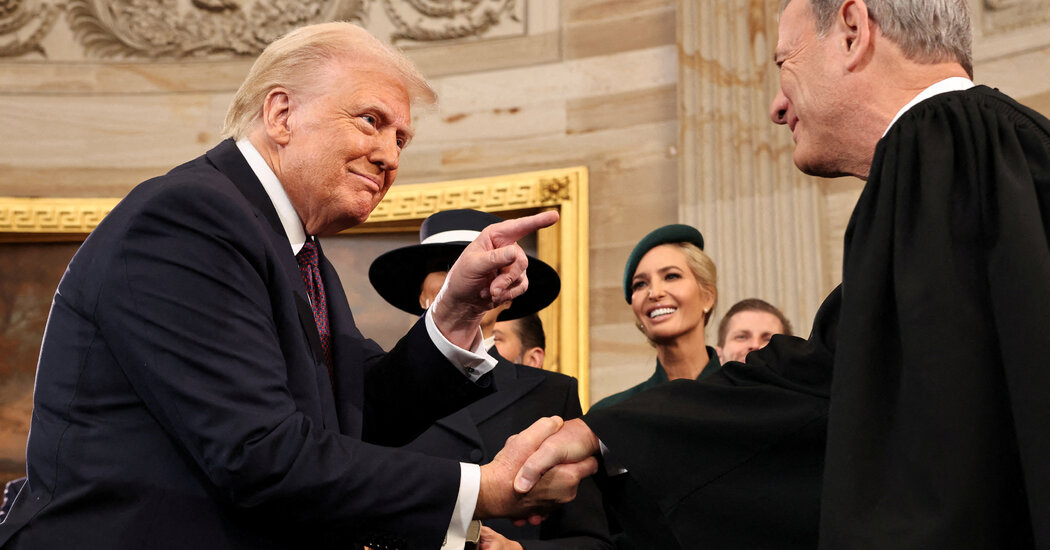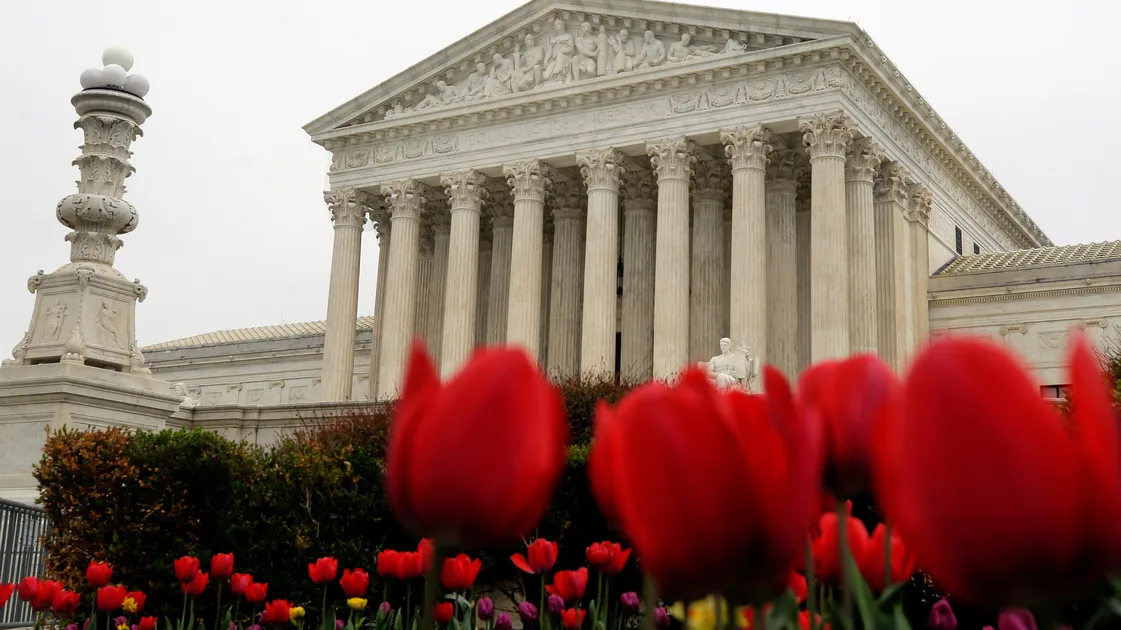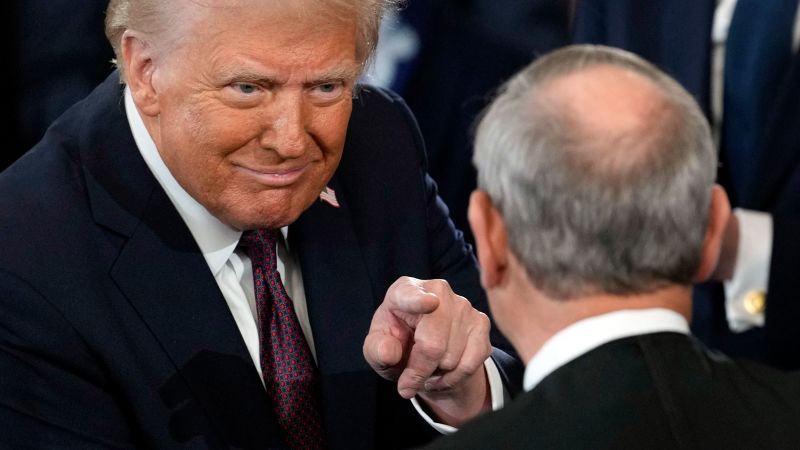
At the annual Supreme Court Historical Society dinner in June, Chief Justice John Roberts opened with a customary toast to the president of the United States.
In past years, the dinner ritual held in the court’s marble-columned Great Hall occurred without any disclaimer. But this year, the executive director of the Historical Society rose first to explain that the toast was part of a historic tradition, carried out through the decades for all who inhabit the White House.
Only then did Roberts raise his glass and say, “To the president of the United States.”
In the decade since Donald Trump was first elected, the judiciary has been roiled by tensions with the president. At the same time, the Supreme Court has demolished guardrails on the presidency, benefiting Trump in significant ways.
The court, steered today by a conservative supermajority, gave Trump substantial immunity from criminal prosecution. It curtailed lower court judges’ power to issue nationwide injunctions against potentially unlawful policies. And it allowed Trump to bar foreigners from this country when his action reflected some religious animus, as during his first term, or racial animus, as more recently.