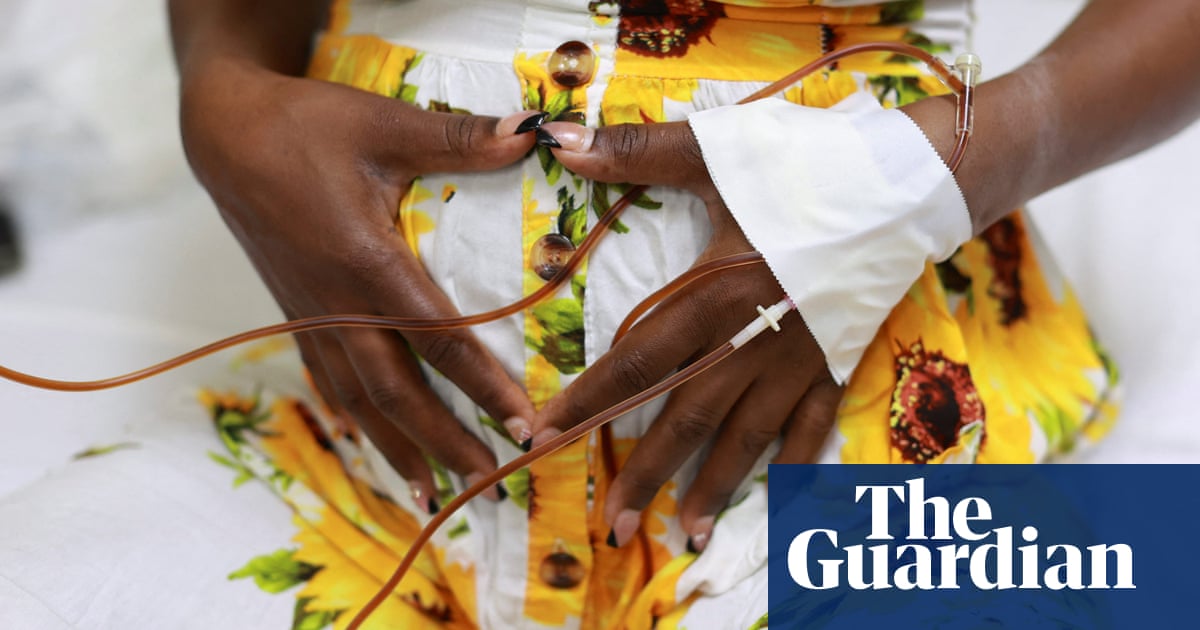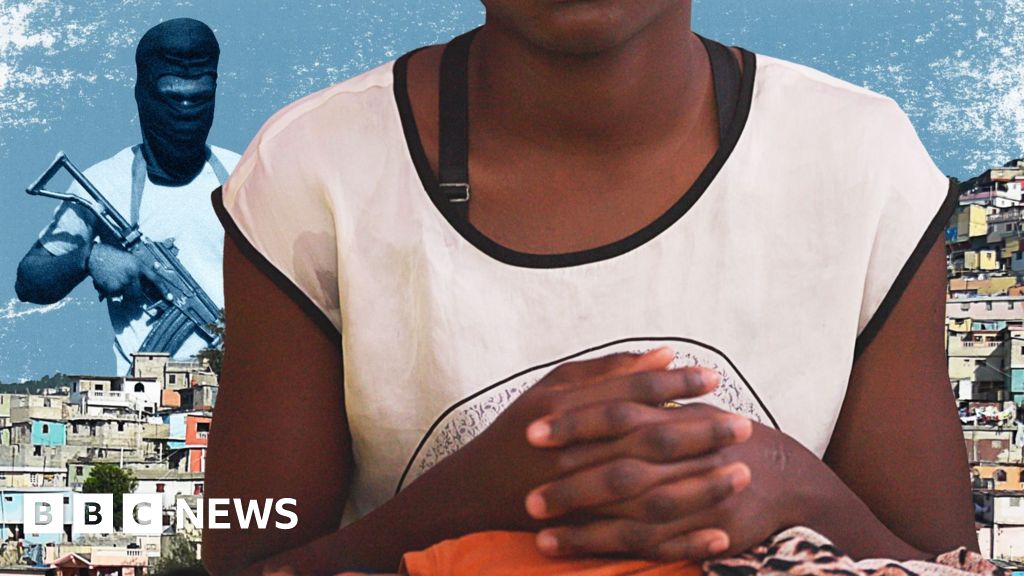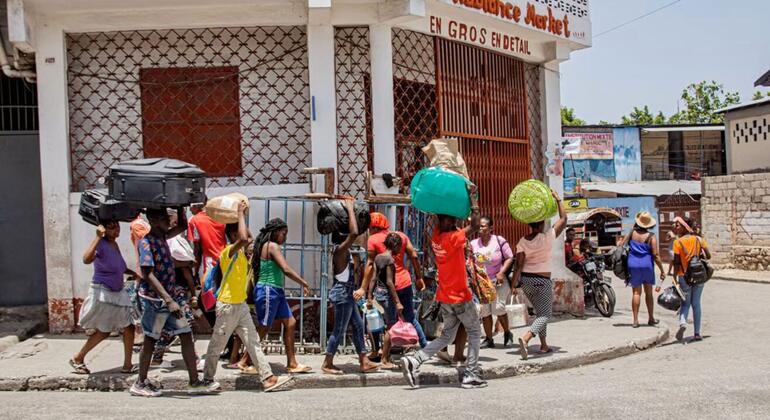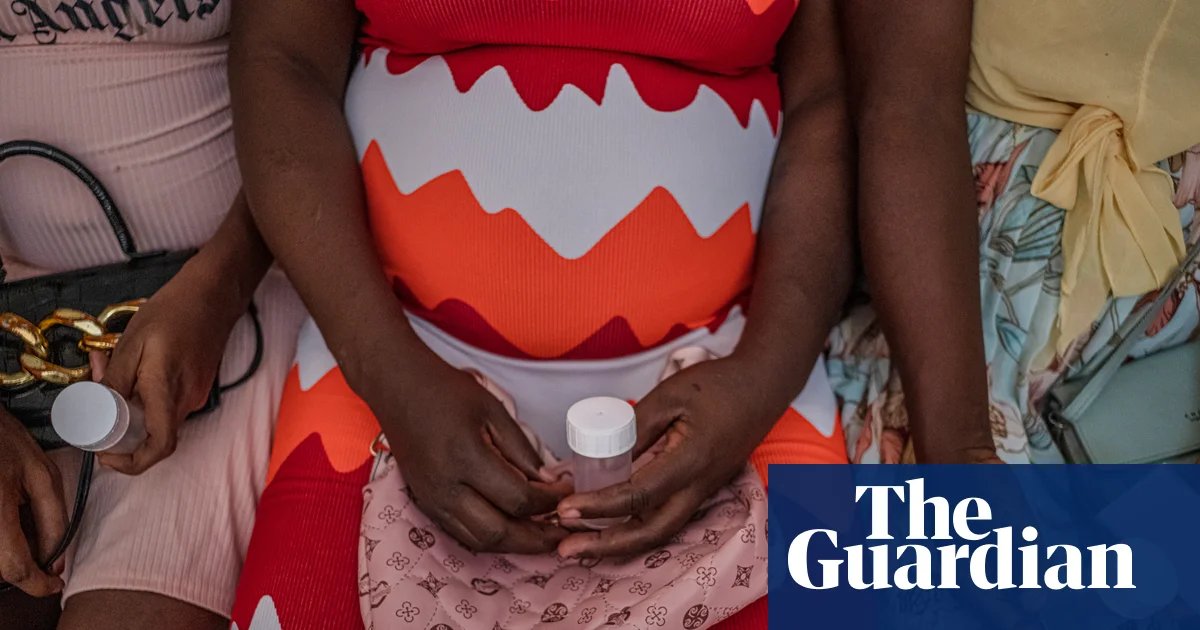
Eight months pregnant, Françoise, 45, arrives early in the morning at a deserted school in Bel Air. The hillside neighbourhood in Port-au-Prince has been controlled by gangs since a violent takeover in 2019. Schools have closed, electricity has been cut off and food is scarce. Gunfights can erupt at any time.
Françoise awaits a Doppler ultrasound in a clinic set up for a few hours inside a deserted school in Bel Air
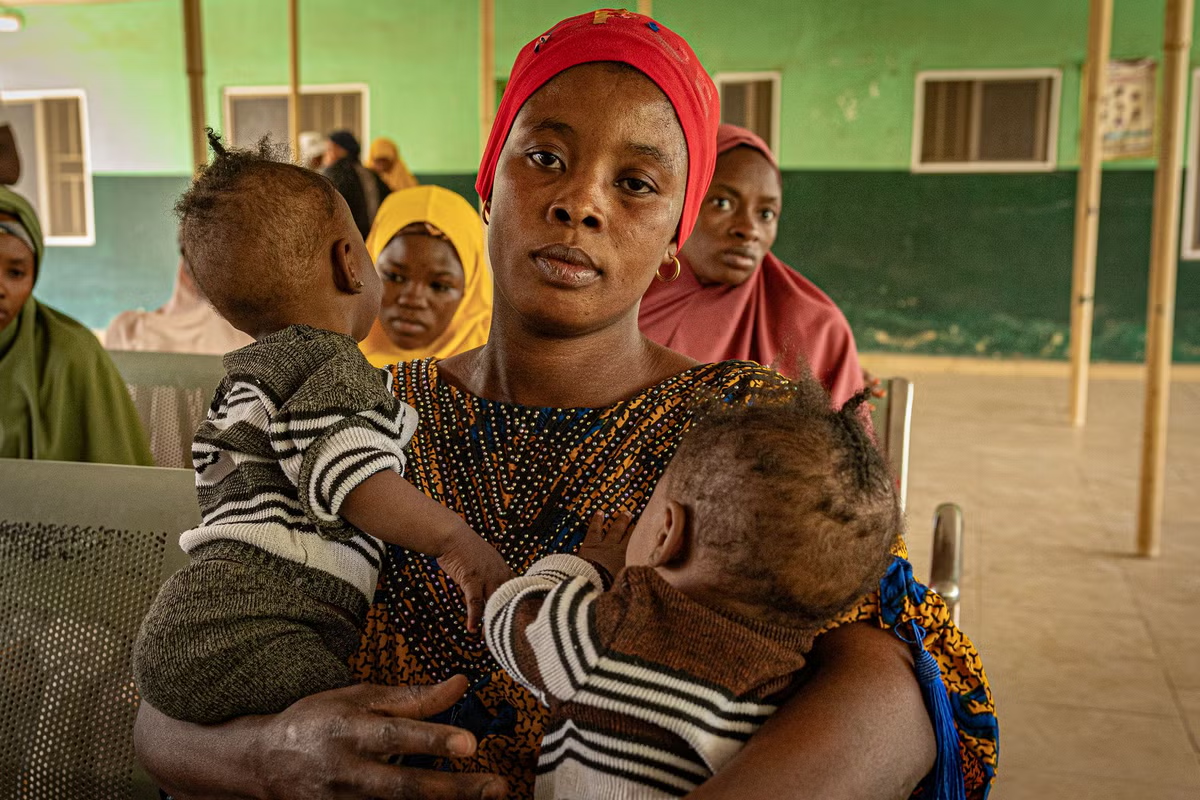
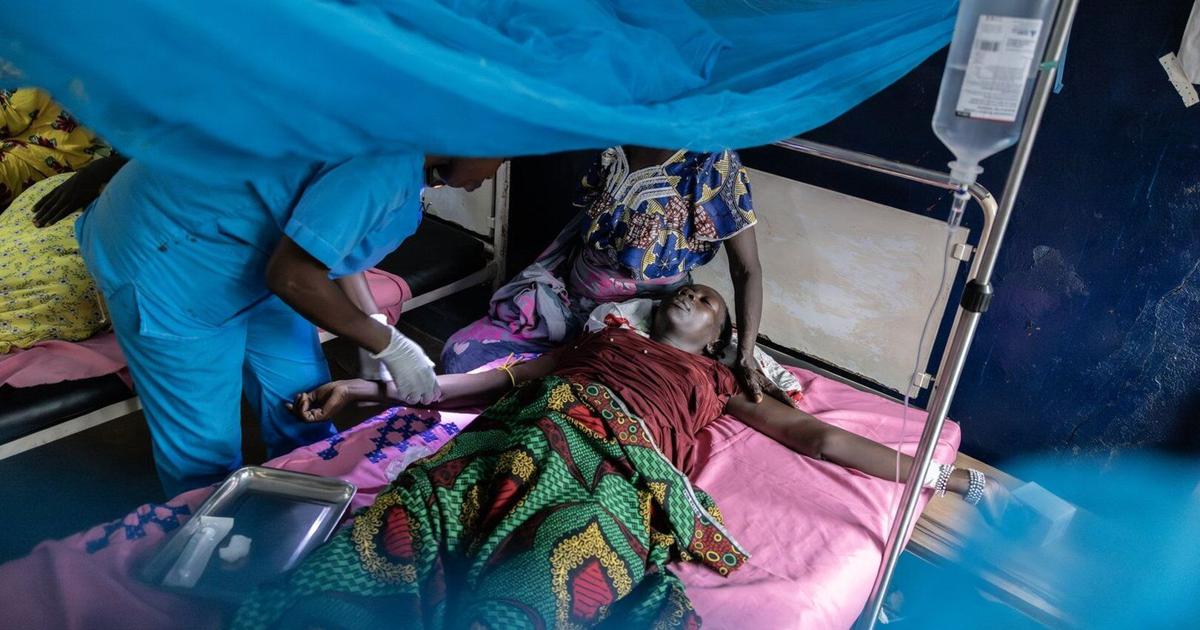
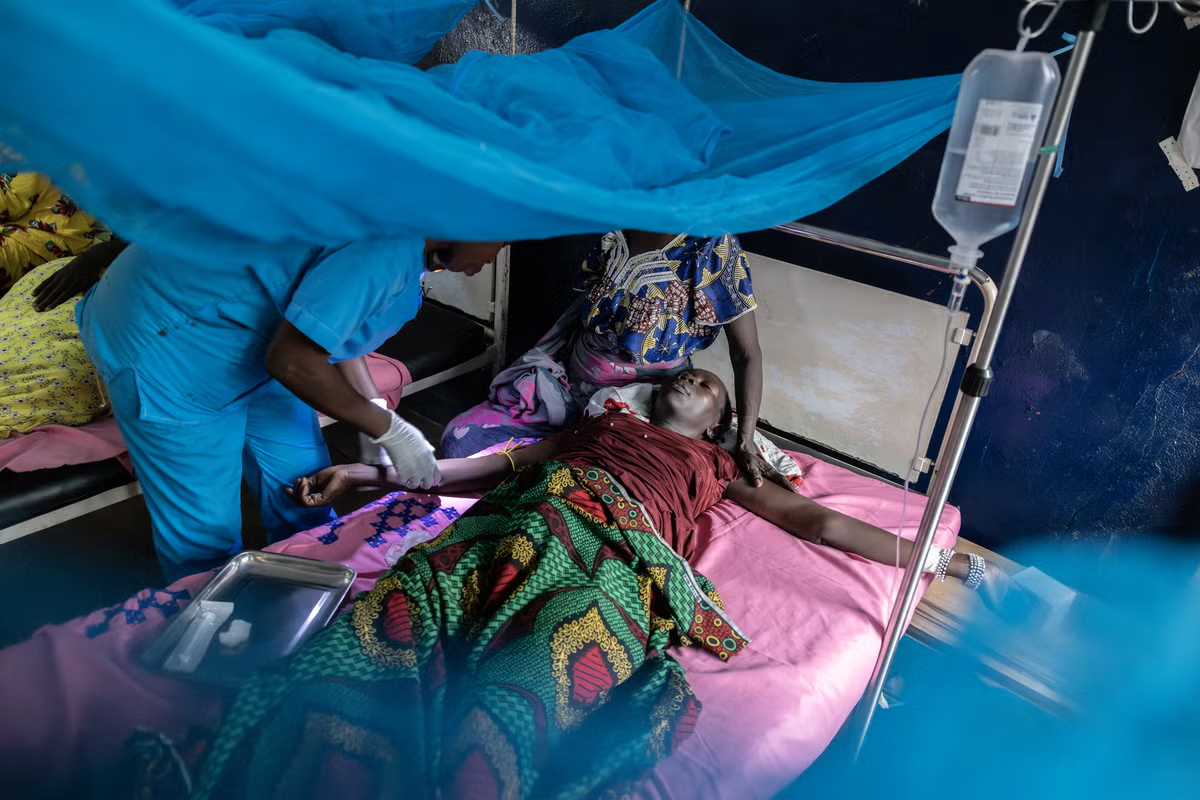
What was a school in safer times in Haiti’s capital has been turned into a temporary pop-up health clinic. The only light comes through the cracks in the boarded-up windows and over the sandbags stacked to stop stray bullets. A room lined with wooden benches is packed with newborns and their mothers and pregnant women seeking maternity services provided by the aid organisation Médecins Sans Frontières (MSF).According to Human Rights Watch, the Trump administration’s suspension of USAID funding in 2025 deprived about 750,000 women and girls in Haiti of access to healthcare. On the rare occasion it is still available, women line up and wait for hours.
The clinic in the abandoned school in Bel Air is operated by Médecins Sans Frontières
Ten days before Françoise’s visit to the clinic, the area was the scene of a violent clash between rival gangs. Dozens of people were killed, including 10 children, a local human rights group told Associated Press.In the final trimester of her pregnancy, Françoise feels she has no choice but to travel to the clinic, despite the risk. She has been diagnosed with a condition that significantly increases the risk of eclampsia, which can cause seizures during pregnancy and in the postpartum period. Left untreated, it can lead to coma, brain injury and, in some cases, death. If the clinic was not there, Françoise says, “only God knows” where she would go.