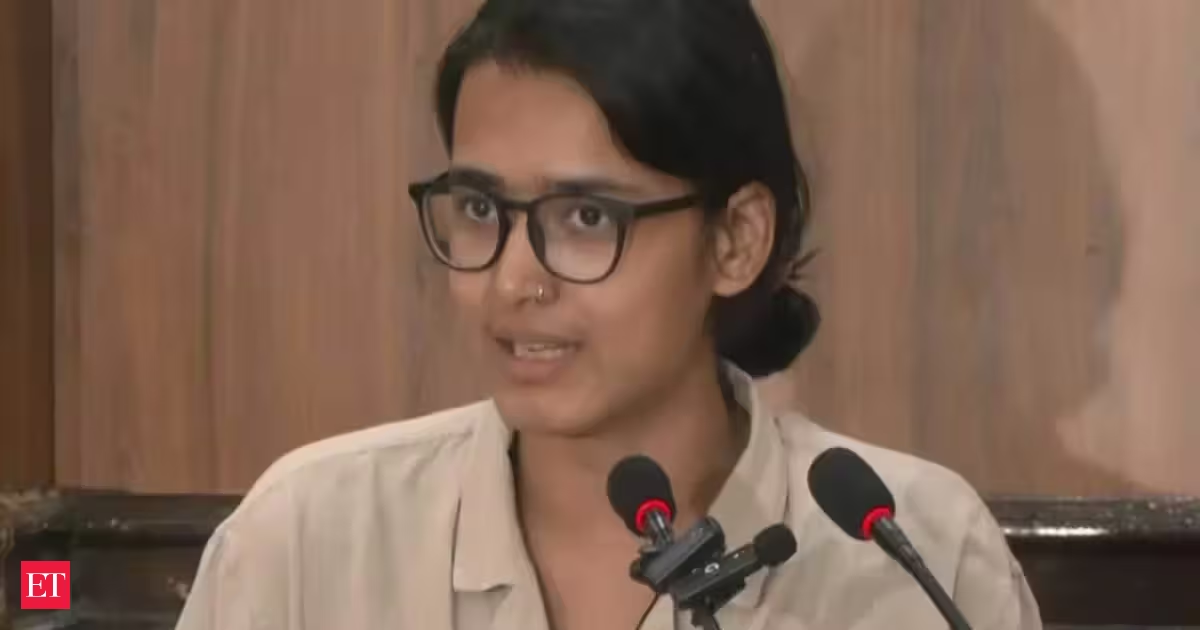
New Delhi: Some women at Delhi’s student protests have been criticised less for demanding accountability over examination failures than for the language in which that anger was expressed. Viral clips of young women peppering their speeches with expletives have prompted an entirely predictable response from India’s moral custodians.
A woman who swears, they insist, diminishes herself because the vocabulary of abuse in Indian languages is itself misogynistic. If every expletive ultimately circles back to a mother, a sister, a wife or a sex worker, then surely women should know better than to reproduce it.It is an argument that appears sophisticated until one asks a simple question: Why does the burden of purifying public language always make a stop at women’s doorstep? Indian society did not become profane because young women at Jantar Mantar discovered gaalis. The lexicon of abuse was authored, normalised and handed down almost exclusively through masculine speech. Even when Indian men abuse one another, they almost invariably do so through the bodies of women. Our profanity has long outsourced male humiliation to female sexuality. The same men who have spent generations weaponising women’s bodies in everyday speech now appear scandalised that women have begun speaking in the same language.