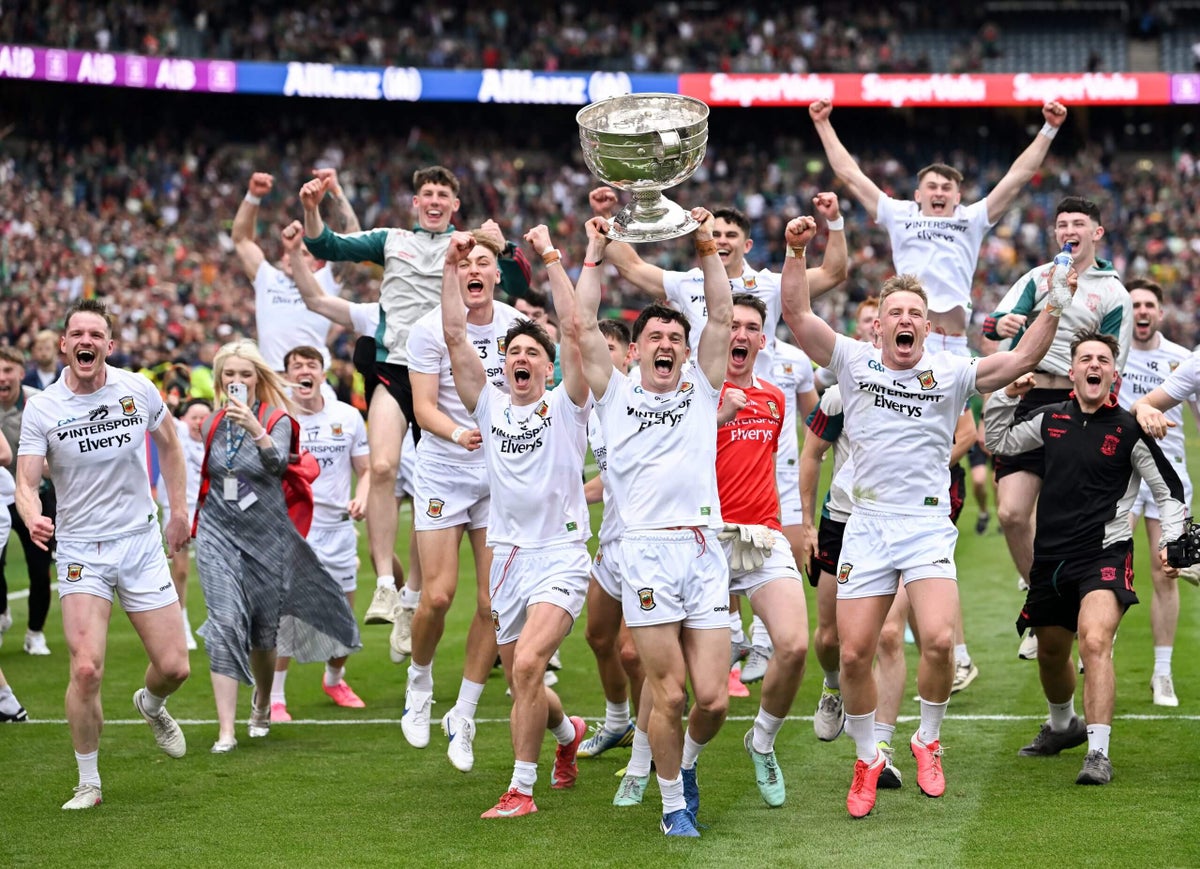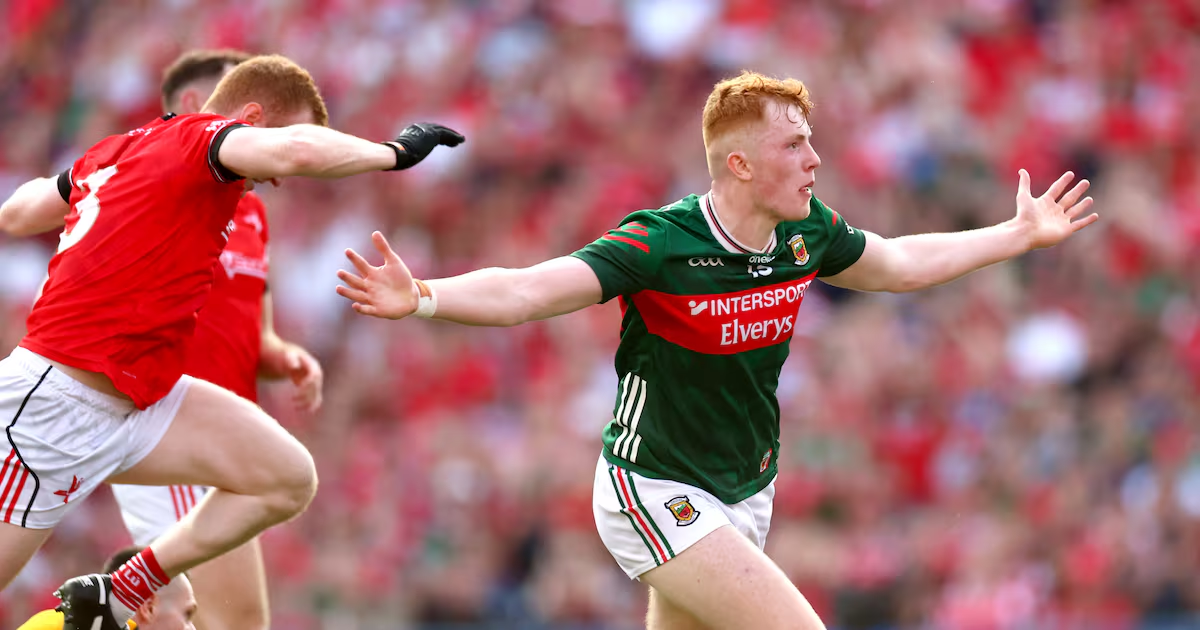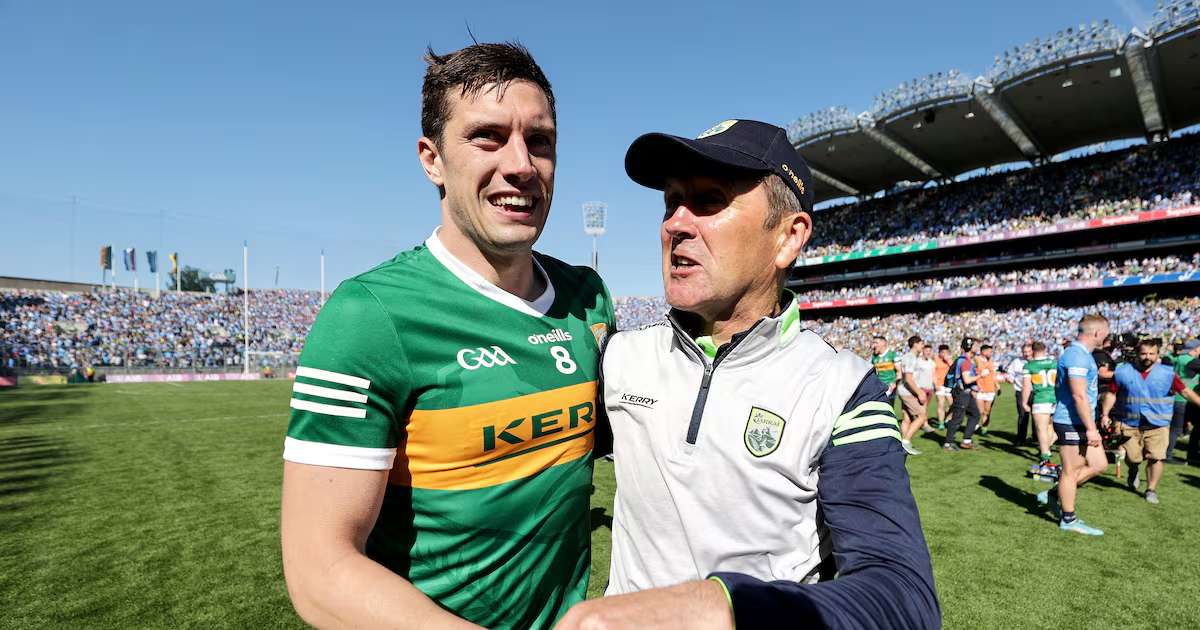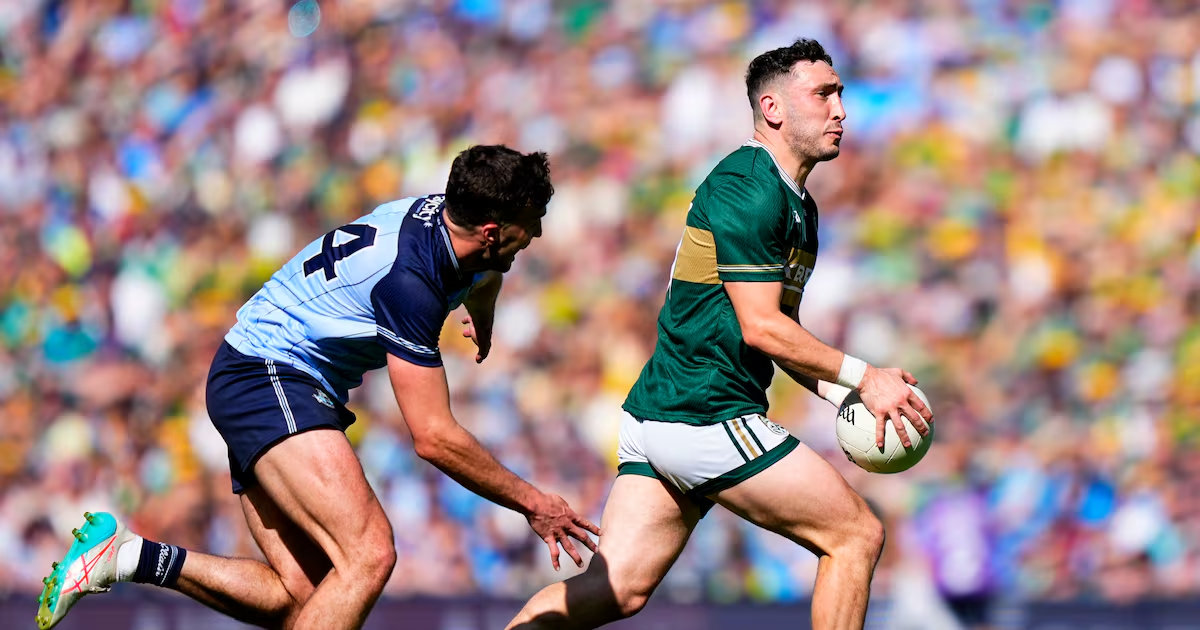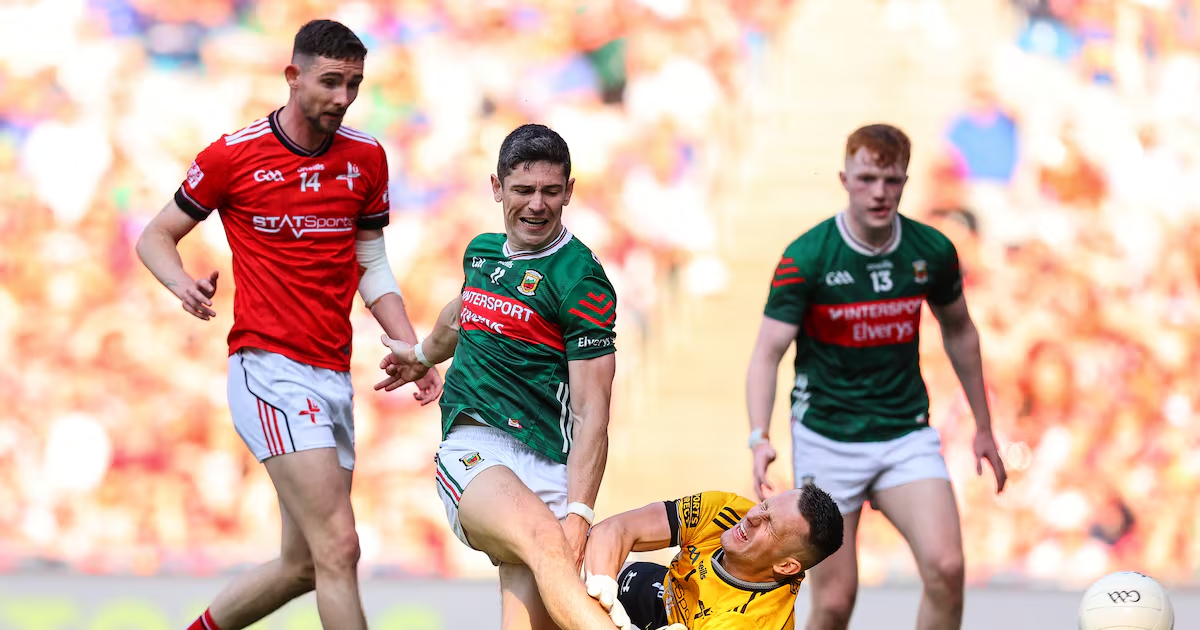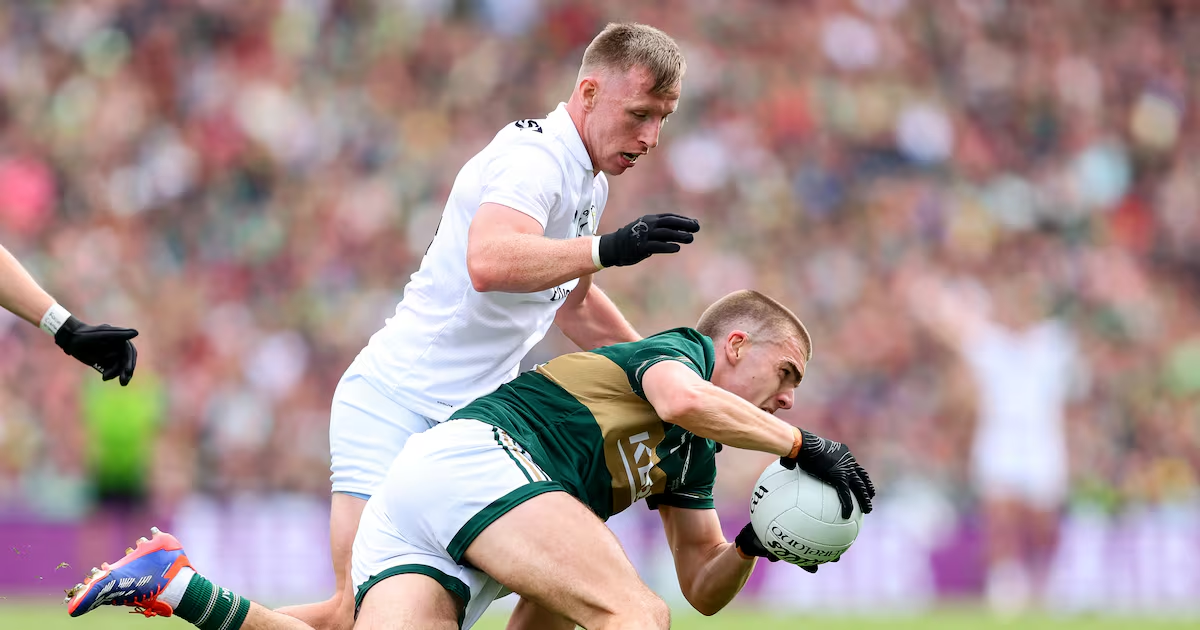
In the aftermath of the hurling final last week, one comment from Darragh O’Donovan stood out when he talked about the quality of his Doon clubmate Adam English, “I always say to our lads back in the club, ‘We carry the piano, Adam will play it.’” But Adam English and Mayo’s piano players both showed in the last week they have a shared characteristic - they have no problem carrying the piano as well. This was embodied by the high pressing throughout the All-Ireland final by Mayo - the sheer willingness of their forwards, and in particular the totemic Ryan O’Donoghue, was astounding. Kerry's Dylan Casey raids forward untracked for the opening score in the All-Ireland final. However, it wasn’t all plain sailing. At the 16 minute mark, Mayo trailed by 1-5 to 0-1, and it looked like being the same old story. Things looked ominous as Dylan Casey raided forward untracked for Kerry’s opening point and Kerry employed a kickout press which forced Jack Livingston long.Kerry’s big midfielders broke the ball forward aggressively with the fist as the first line of the kickout press came out for the breaks. This early gambit led to 1-1 of their early scores. One thing that was evident in this opening quarter was the contrast in the work Kerry demand from David Clifford off the ball. The Fossa man was turned over in the third minute and he didn’t make an effort to work back. This was noticeable across the day on both his turnovers and his kickout defence. He still lit up the occasion with 1-6, but the demands on him and Sean O’Shea from an attacking perspective were onerous. Kerry's goal came from their kickout press and then a nicely worked backdoor cut from David Clifford after the space had been opened up behind the fullback line. The Kerry dominance was slowed by Jack Carney’s two pointer in the 17th minute, which was their fifth attempt at a two-pointer effort at that point. It was obvious Mayo had a strategy of going for two-pointers, as they attempted 14 during the encounter, landing four. A 29% conversion rate, but the eight points registered 0.57 points per shot. The Mayo shot map is very reminiscent of the famous Kirk Goldsberry basketball shot map comparison which showed how NBA teams started to value the three pointer appropriately. This was a stark contrast to Mayo last year, with the Andy Moran carefree influence easily identifiable. He has spoke of wanting his team to express themselves, but they did that within an indentifiable gameplan.Mayo's shooting during the All-Ireland final along with a famous graphic illustrating the evolution of shooting in basketball. Another aspect to this two-point policy is it affords Mayo a chance to Gegenpress (as Jürgen Klopp would have it). Mayo dropped six of these efforts short and simply used it as an immediate opportunity to counter-press and try to win the ball back. After O’Donoghue’s two-point effort in the 32nd minute, he himself wins the ball back inside the 13m line within 12 seconds of his shot, resulting in a free which was converted by Beirne. It was a play that showed everything Mayo were about. Ryan O'Donoghue's two-point effort drops short, but within 12 seconds Mayo had recovered possession and won a scoreable free. This high pressing that was evident throughout the game in general play and on kickouts, really showed the ‘piano carrier’ mentality of the front three players (Darragh Beirne, O’Donoghue and Kobe McDonald). It is easy to say that it was just hard work, but they made a concerted effort to go at Paul Murphy and Gavin White in particular throughout the game. Murphy was hassled every time he got possession, twice he was turned over in possession and another three times he won frees from aggressive fouls which were right on the edge of an attacking turnover. The turnover and aggressive fouls map below shows how Mayo really went after Kerry up the field. We are more used to seeing turnovers concentrated in a team’s defensive third. It was interesting to note Jack O’Connor’s post-match comments that they didn’t deal well with this high press in the first half, his team were not providing enough support options and were “letting fellas hang out to dry a little bit”. Beirne and O’Donoghue were central to this, piano carriers. Mayo's surprisingly high press seemed to focus in on Paul Murphy and Gavin White in particular throughout the game. A map of Mayo's turnovers (green) and aggressive fouls (red) - some of the fouls were very close to being effective turnovers. Mayo managed to win nine out of 24 Kerry kickouts, but more importantly they also managed to nullify the possessions earned by Kerry. They turned over two of the three short kickouts in the first half before they got 50m out, both resulting in scores. These two kickouts brought huge energy to the rabid Mayo supporters. The 26th minute short kickout turnover by O’Donoghue and McDonald on Casey was magnified by Beirne’s fist pumping to the hill, adding to the roars still further. This celebration and feeding off the crowd was evident throughout on a day when Croke Park felt louder than it has ever been. There was also the huge four-versus-one turnover on Keith Evans in the 59th minute, as he won a breaking ball. These second phase kickout turnovers really mean Mayo acquired 50% of the Kerry kickout. Kerry's kickout map during the final, with balls won (green) and lost (white). Mayo's second phase turnovers though meant they ultimately took 50 per cent of the Kerry kickouts. Another interesting aspect was Mayo’s ability to slow the second ball when Kerry won long kickouts in the second half. Twice they fouled really smartly when there was space, disorganisation and Donnacha McHugh isolated with David Clifford behind them. Kerry still managed to get a one point return from these plays, but the damage could have been far worse. Kerry’s skill execution was put under tremendous pressure throughout the game as Mayo fought for everything - four key possessions in the Kerry attack were pressured leading to Coyne, Hession, McHugh and McBrien winning the ball back. It was Gavin White who gave the stray pass in three of these. The key one of these was the McBrien turnover in the 38th minute which started the move for Beirne’s goal. Again O’Donoghue’s sheer abandon in possession was evident as he left Mark O’Shea, Seán O’Brien and Joe O’Connor in his wake as he slalomed through the middle of the pitch. Ryan O’Donoghue leaves Kerry players in his wake on way to setting up Mayo's goal. The Belmullet man was a deserving man of the match - his piano carrying and piano playing was at another level. He tackled ferociously throughout, throwing his weight around whenever he could. When Tommy Conroy’s introduction on 24 minutes freed him to move out the field for the remainder of the first half, he made sure to let Seán O’Shea know when he missed a two-point effort and also left a bit on David Clifford at the end of the half before the hooter. He also left another Kerry player on the ground as the hooter sounded in the second half, fighting right until the end. O’Donoghue seemed to embody 75 years of hurt as he simply ran Croke Park. It still all came down to the final plays of the game. Jordan Flynn mentioned that they’d prepped over the last two weeks for the end game where Kerry hunted the two-pointer. Mayo’s approach to the efforts from Sean O’Shea and David Clifford belied the general consensus that Mayo are explicitly a man-to-man defence. Mayo defence against any late two-point efforts showed they weren't wedded to a man-to-man approach, looking to swarm the kicker and close down the kicking space. I am not sure if Croke Park has ever witnessed two out-of-possession performances like it has over the last two weekends from Limerick and Mayo. The All-Ireland successes of both teams were built on collective defiance. Beirne actually mentioned Limerick in a post-match interview and the similarities in coordinated work rate is plain for all to see.Paul O’Brien is a performance analyst with The Performance Process
The Mayo masterplan: How Andy Moran delivered a tactical blueprint for the ages in Croke Park
Mayo took lessons from the NBA, Jürgen Klopp and the Limerick hurlers in how they attacked the Kerry threat in All-Ireland final
1,378 words~6 min read