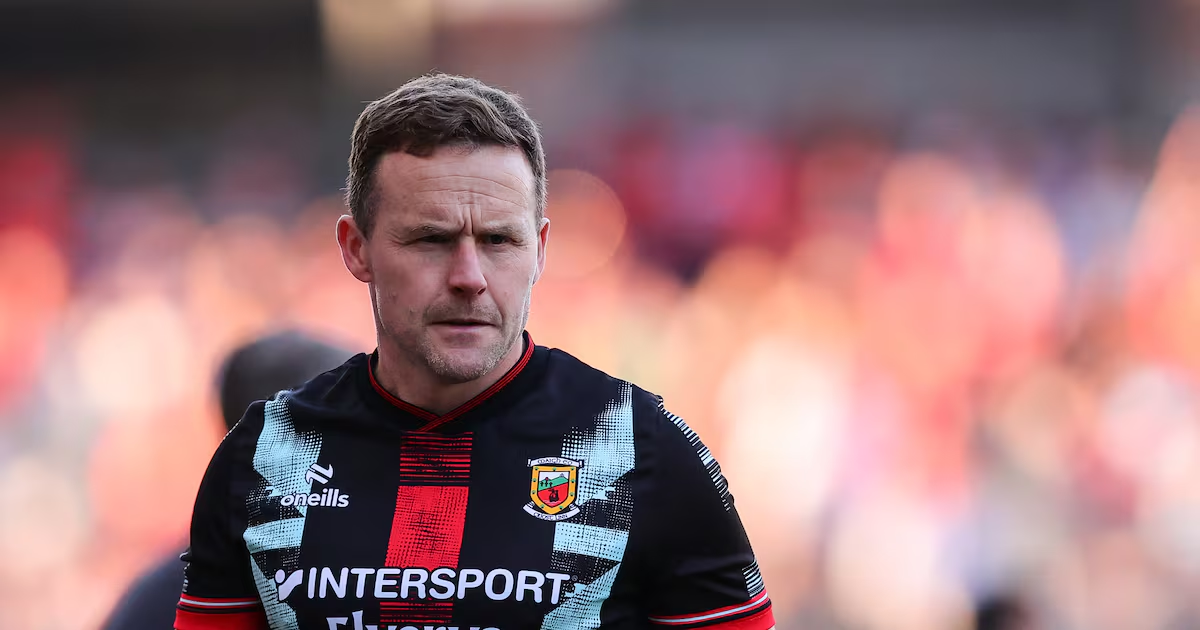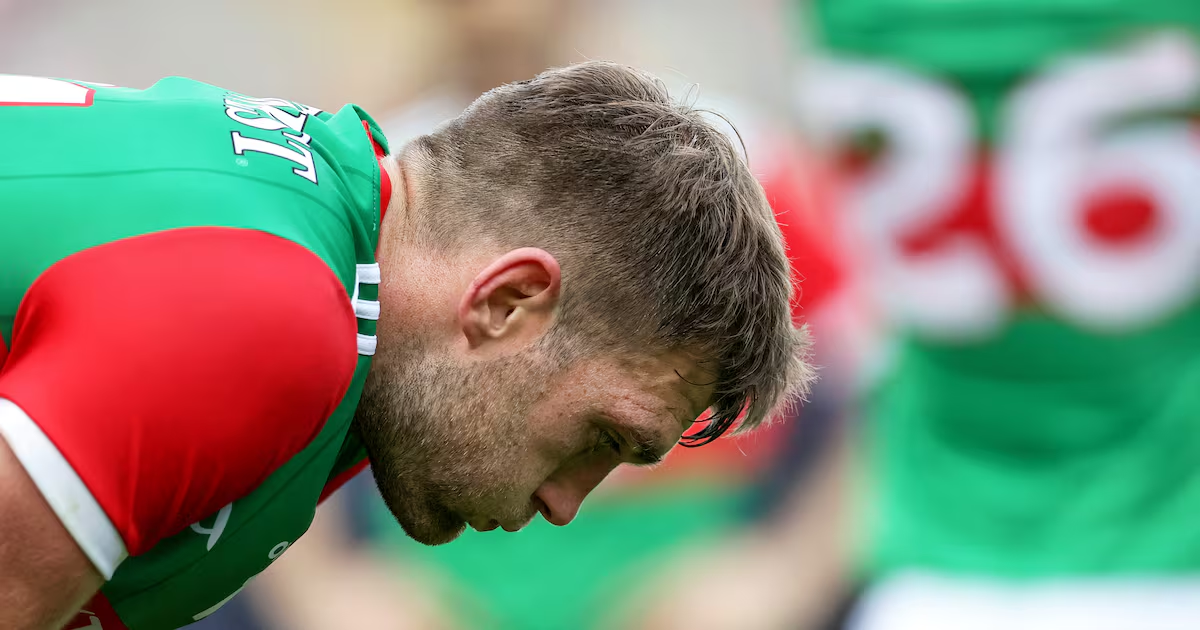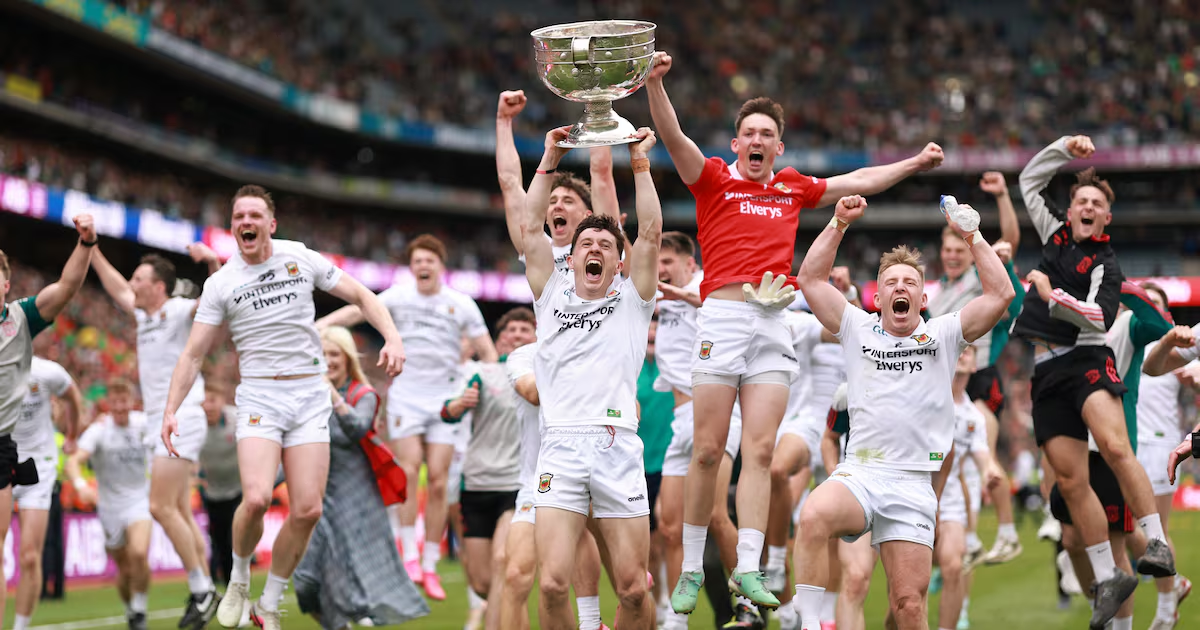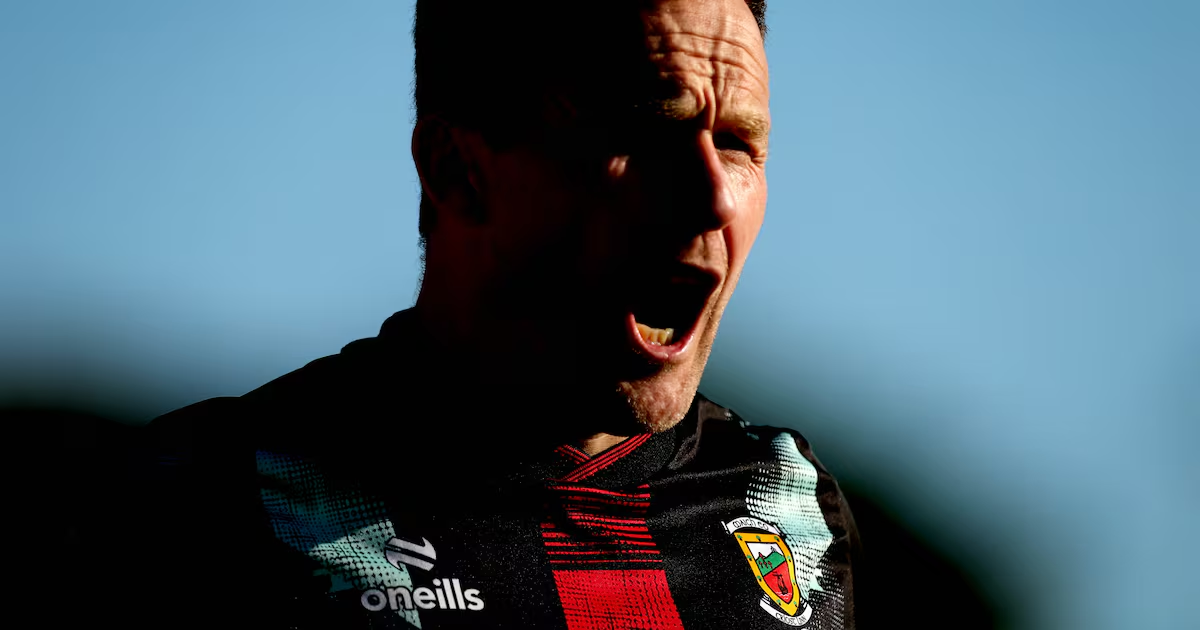
When James Horan took over as Mayo manager for the first time 16 years ago, he pursued a cultural revamp. A project like that involves architectural work, interior decorating and a degree of imitation. Munster Rugby were a touchstone of high performance at the time and on the walls of their training centre were pictures not just of old teams and past glories, but of current players who exemplified the values of the group.Horan liked the idea. So, in the Mayo dressingroom, he hung a picture of Alan Dillon and Andy Moran, two mid-career veterans who had experienced every downpour and lightning strike of the Mayo football experience without yielding to the weather.In the Mayo dressingroom, though, nobody needed to see Moran’s face in a frame to be reminded of anything. For the mood music, he was the in-house DJ. He made the others sing along and dance.“You’ll never meet another fella like this,” Mikey Conroy, his former Mayo team-mate, says. “You meet this guy at six in the morning or at ten o’clock at night and he’s smiling and talking. I think I have loads of energy and I think I’m always in good form, but he’ll beat you all day long. He’s incredible.“So much so that I’d say lads, at stages – and I mean this in the best possible way – would be like, ‘Oh Jesus, would you just give it a rest’. But he won’t. He won’t. He just manages his own energy really well, and then he’ll bring you along.”There were depths to his optimism. It wasn’t a pose; it was the public face of his deep ambition. He was part of a generation of Mayo players who pushed a boulder up a hill and were often deadlocked against the slope. Moran was committed to the strain. There is a story from the 2012 National League that clarified his outlook. Mayo had been destroyed by Donegal in a Division One game in Ballyshannon and, even in the league, Mayo were capable of kitchen sink dramas. “We looked every bit a terrible team and we’ve got a very bad beating,” James Horan said afterwards. “We need to react in a right way.”It was Bank Holiday weekend, though, and some of the Mayo players assumed permission to go on the town. In the disciplinary backwash, one was suspended the panel for a while. On the Monday morning, though, Moran called to the house of Donie Vaughan and solicited him for kicking practice. No matter where Mayo found themselves on the mountain, Moran was looking up.“He’s just a really positive person,” says Billy Joe Padden, who was established on the Mayo panel when Moran broke through more than 20 years ago. “Looks on the positive side of everything. He could never piss you off for long, do you know that kind of way. Andy is authentic. He is authentically that way. Anyone who played with him recognised that.”As a footballer, he never ceased to be a work in progress. He sweated the small stuff alongside the big stuff. In the 2011 All-Ireland semi-final against Kerry, Marc Ó Sé pushed him on to his weaker foot three times and Moran felt like he had been outflanked. In the same game he had three goal chances and didn’t take any of them. “If I do the same thing the next time then I’ll be angry with myself for not learning,” he said a few months later. He finished that year as an All-Star; that didn’t matter. In the quest for improvement, he only answered to himself.In the Connacht quarter-final against Galway in May 2013, Mayo's Andy Moran, right, celebrates scoring his side's fourth goal. Photograph: James Crombie/INPHO “I remember when he won Footballer of the Year [in 2017],” Conroy says. “What would he have been? Thirty-four? That winter he rang me wondering if I had been keeping an eye on his game and where did he think he could get an extra inch – after winning Footballer of the Year. “I went back and watched a couple of bits and pieces and we sat down and had a coffee. In all the years I played with him he was constantly critiquing your game as well to make you better. We used to have a saying [in the group], ‘The better you get, the better it gets’.”In Moran’s book, Andy – Lessons Learned in Pursuit of Glory, he said he suffered from impostor syndrome early in his Mayo career. He hadn’t been a brilliant age-grade player, he wasn’t fast tracked on to the senior team as Cillian O’Connor was or Kobe McDonald has been this season. There were seasons when he didn’t always start. Not all the doubts belonged to him.“I often felt I didn’t belong,” Moran wrote. “However, it also acutely enhanced my ability to observe and learn from others. I’m inquisitive by nature. If I saw somebody doing something different, I wanted to know why and how it could help me. I often wonder if I was a nuisance to managers and coaches – the annoying kid in the class always asking why.“That was partly because I may not have been as naturally talented as many of my peers, so I had a greater need to understand the why of things.”The book started as a journal during the pandemic. He was at a loose end. Moran had retired from intercounty football at the end of 2019, the gym that he had set up three years earlier was closed during the lockdowns and for months there were no teams to train. He saw it as a form of brainstorming. As he embarked on a new chapter in his football life, he wanted to interrogate his mind for everything that might be useful now.Mayo manager Andy Moran on the touchline before the Galway game last January. Photograph: James Crombie/INPHO Everyone who shared a dressingroom with him could see that he would be a coach. It was inevitable. “He was a captain even in the years when he wasn’t captain,” Conroy says. “He’d be involved in external stuff. There’d be stuff going on in the background that I wouldn’t know about, but he’d be totally engrossed in it. Stuff with the management or the leadership groups, where a lot of lads wouldn’t care, but he was leading it out.”Moran coached in his club and spent a year with the Mayo under-21s. Then, at the end of 2021 he took over as Leitrim manager. Two years later they lost to New York on penalties, New York’s first win in the Connacht championship since they had joined the province 24 years previously. The fallout on social media was so toxic that the Leitrim county board felt obliged to issue a statement.Emlyn Mulligan had left the Leitrim panel a few weeks before that game, but he had known Moran since they played Sigerson Cup together in Sligo IT and he understood what an explosion it had been.“If it had been another manager coming off a defeat like that in New York, players would have stepped away,” Mulligan says. “That could have finished off most teams. But he got every one of those players back the following year and got them out of Division Four. That was a very hard thing to do. Leitrim would have been in such a bad place after losing that game, but for him to be able to get the lads to stick together shows his true character.”After Leitrim he spent a year as part of the Monaghan coaching team and though all of it crystallised into an apprenticeship, nothing could have prepared him for the wildness of the Mayo job.The sense of optimism that he had brought to Mayo dressingroom for 15 years greeted his appointment, but optimism stains easily. Mayo got a thrashing from Kerry in the league and a hiding from Roscommon in the Connacht championship. And in the All-Ireland series they have been up and down like a pension.“I think Mayo are a very disjointed football team at the moment,” Padden says. “They’re probably struggling with the structure of the team because they have been open defensively, there’s no doubt about that. Mayo have been atrocious on long kick-outs and it’s definitely an area that Cork will try to challenge them on [in Saturday’s quarter-final].“But I do see elements of Andy’s personality in terms of the way they play with momentum and freedom. And when they get on a run they can be really dangerous – like in the second quarter against Monaghan and the second half against Meath. When they get an upper hand, they really try to drive it home. That’s something Andy would have always preached.” The crowd could have turned against the team at various times this summer, says David Clarke, the former Mayo goalkeeper who first played with Moran when they were teenagers. So far, they have been patient and loyal.“Andy has had some difficult days so far, but there’s an edge to him too somewhere – a hard side,” Clarke says. “I think there is an understanding that the team is developing. It is a young team. But, like in every place, people will only listen to that for so long.” Moran has given half a lifetime to the jersey. He needs the grace of time now.
Mayo’s Andy Moran still fighting the slope, but always looking up
In his topsy-turvy first season as manager, he has brought the county back to Croke Park
1,556 words~7 min read