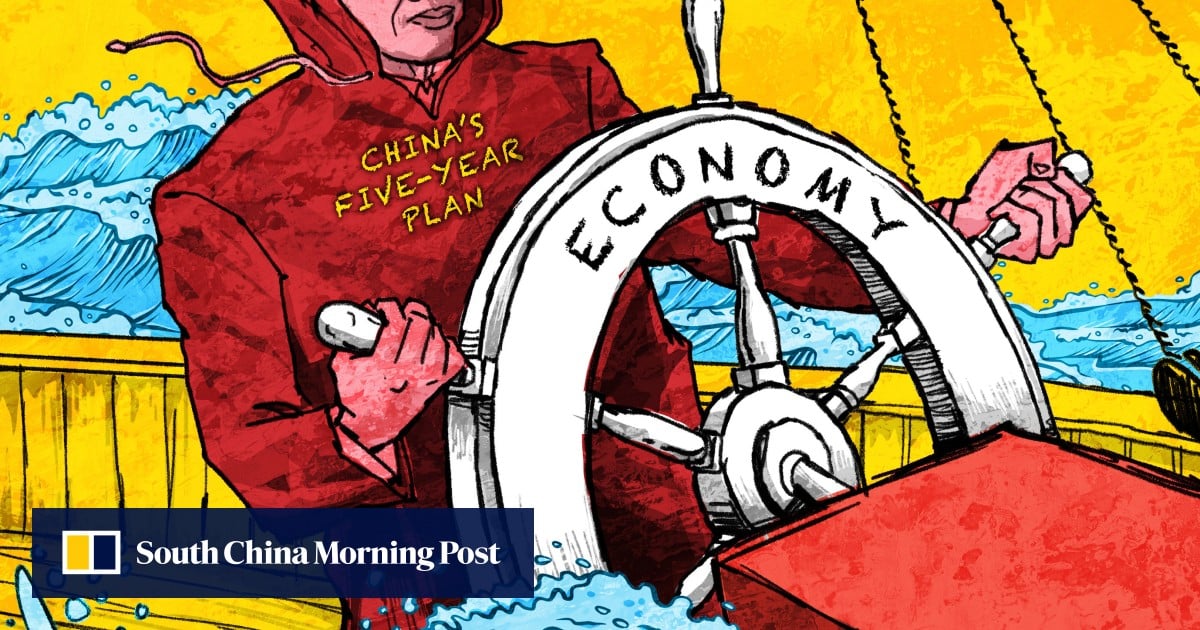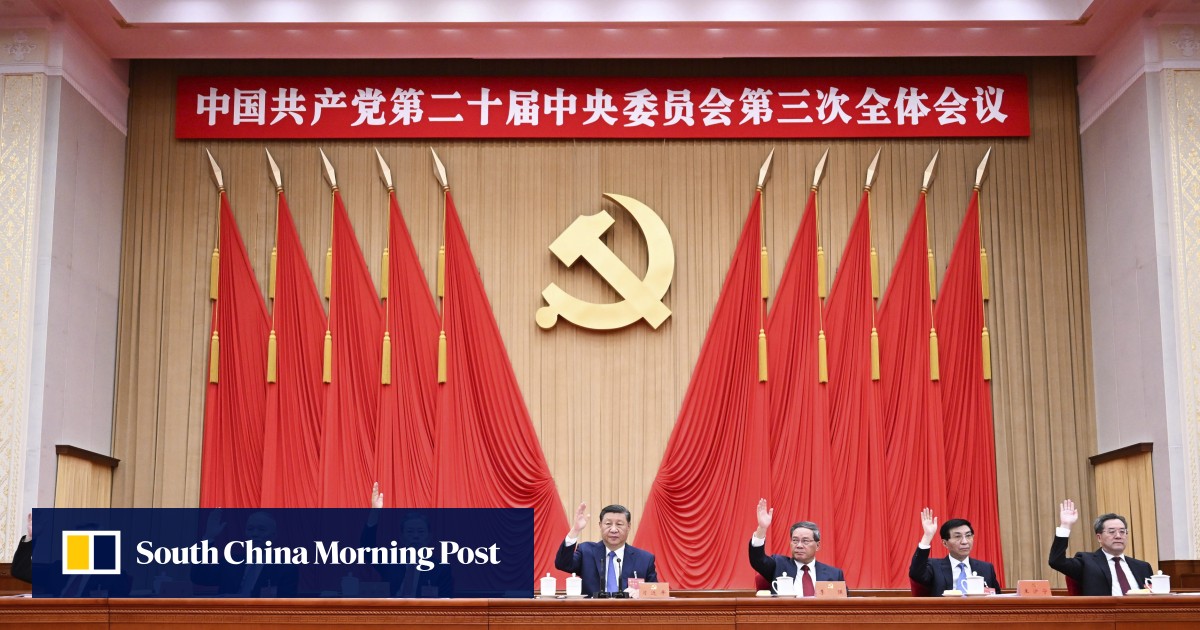
At a recent Politburo meeting, China’s top policymakers outlined a dual economic approach: maintaining consistent policy while preparing for timely interventions in response to emerging risks. This session set the stage for the Communist Party’s Fourth Plenary Session in October, which will focus on the blueprint for the 15th Five-Year Plan (2026–2030)[para. 1]. While the Chinese economy has sustained over 5% growth for three quarters, the leadership warned of ongoing challenges. They emphasized the need for policy “continuity and stability” but also stressed readiness for “flexibility and foresight”—implying preparedness for actions like fiscal and monetary adjustments if required[para. 2][para. 3]. Major domestic goals include stimulating service consumption, curbing excessive corporate competition, and dealing with risks from the tariff war, while financial strategies prioritize containing local government debt and bolstering capital markets[para. 4]. Notably, the real estate crisis was downplayed, with the statement focusing on “high-quality urban renewal” instead[para. 5].The meeting highlighted the 15th Five-Year Plan as a pivotal period for modernization, recognizing the coexistence of strategic opportunities and risks[para. 7]. China faces external threats from intensifying U.S. pressure, which impacts exports and forces industrial restructuring, while internal challenges include weak demand, local government fiscal strains, and an aging, shrinking population that could impede innovation and consumption[para. 8]. Nevertheless, Beijing seeks to exploit three main opportunities: forging alliances with Europe, ASEAN, and the Global South to hedge against U.S. tensions; enhancing the domestic market by removing internal barriers; and leveraging investments in science and education to spur innovation[para. 9].Despite 5.3% growth in the year’s first half, China anticipates a “U-shaped” annual trajectory as several headwinds converge: waning consumer stimulus, sliding property values, fragile exports due to tariff disputes, and fiscal constraints limiting local governments’ response capacity[para. 11][para. 12].Policymakers indicated they are prepared to escalate stimulus if conditions worsen, deploying trillions of yuan already injected via special treasury and purpose bonds[para. 15]. The focus is on targeted, counter-cyclical policies: budget adjustments to support affected industries and the unemployed, subsidies to boost consumption—especially in services—and the creation of a “real estate stabilization fund” valued at up to 2 trillion yuan ($278 billion)[para. 17][para. 20].Efforts to energize the underdeveloped service sector will pivot towards subsidies, public holidays, and the easing of barriers to migrant family urbanization, alongside public investment in sectors such as elder care and culture[para. 22][para. 23].The anti-“involution” campaign—which targets destructive, zero-sum competition—will prioritize fair competition and long-term market rules, with differentiated approaches between traditional heavy industries (stricter controls) and the dynamic tech sector (market-driven consolidation)[para. 25][para. 26][para. 27].With U.S.-China tariff tensions escalating, Beijing is preparing direct support for affected sectors and is promoting export market diversification, as well as boosting domestic demand for export goods[para. 29][para. 31].Real estate policies now prioritize “high-quality urban renewal” over traditional easing, focusing on urban redevelopment to create demand amid a sluggish property sector[para. 33][para. 34]. To address mounting local government debt, a three-part plan will resolve existing risks, enforce strict prohibitions on hidden debt, and push for restructuring of local government financing vehicles by 2027[para. 36][para. 37].Reform of capital markets continues, aiming to attract international and domestic investors, facilitate listings for tech firms, and promote long-term institutional capital involvement[para. 39][para. 40][para. 41].In summary, the Politburo’s economic strategy is marked by cautious optimism, policy flexibility, and readiness to intervene—balancing the pursuit of growth with prudent risk management in an increasingly complex global and domestic environment[para. 3][para. 7][para. 11][para. 15][para. 36][para. 39].AI generated, for reference only
Analysis: Nine Takeaways as Politburo Charts a Cautious and Flexible Economic Course
Politburo aware of emerging risks despite economy’s steady performance
569 words~3 min read