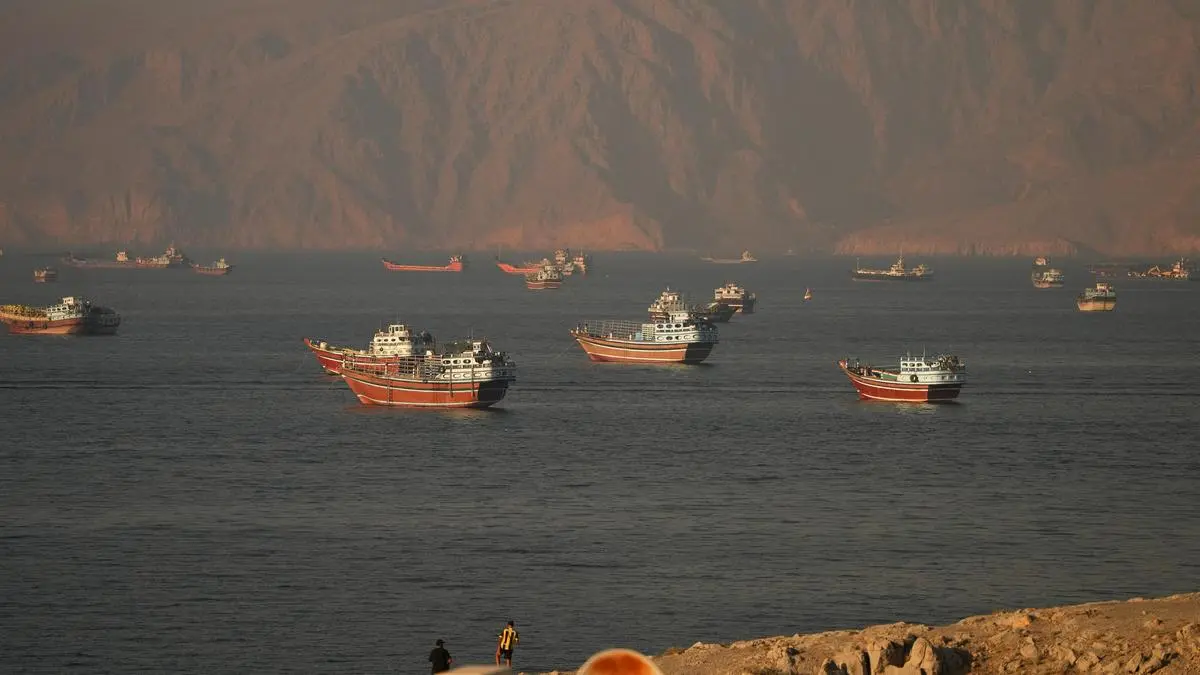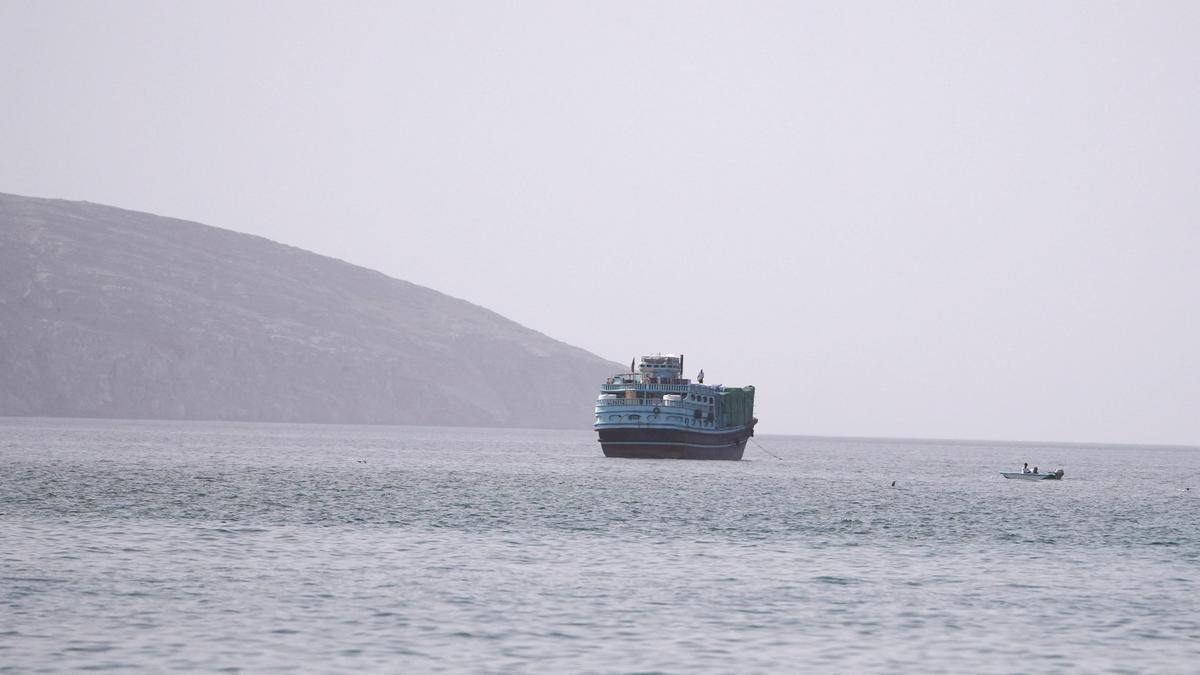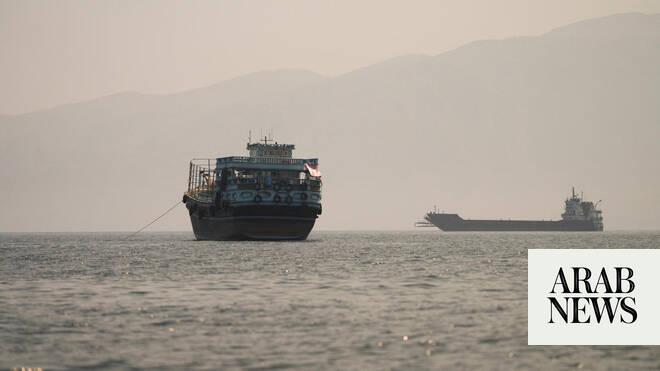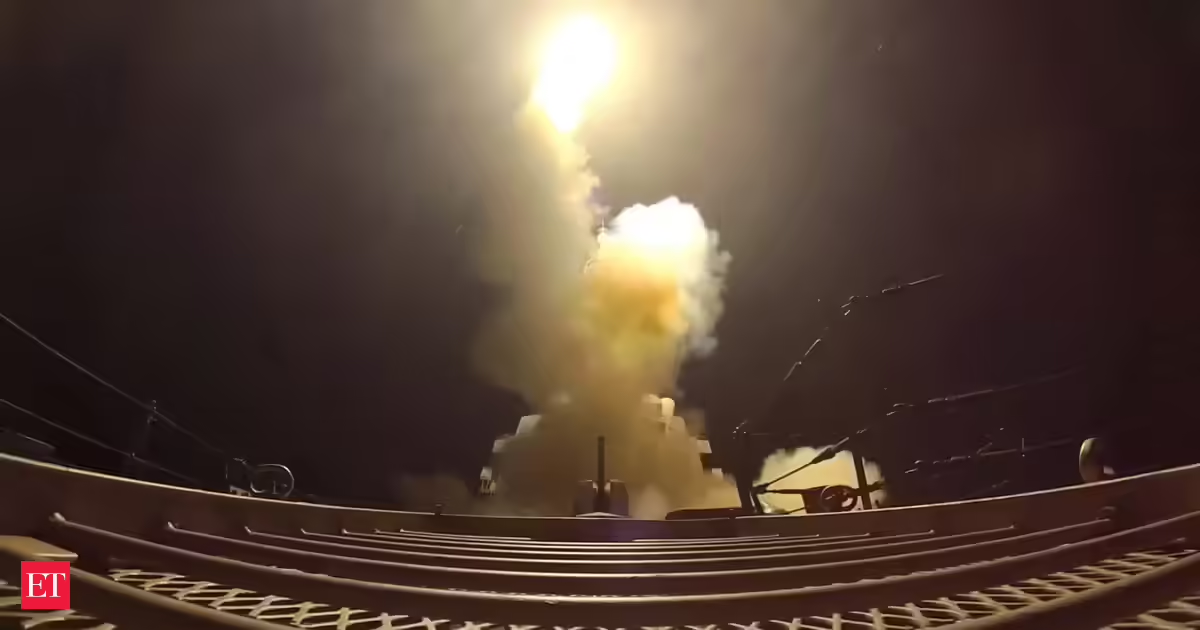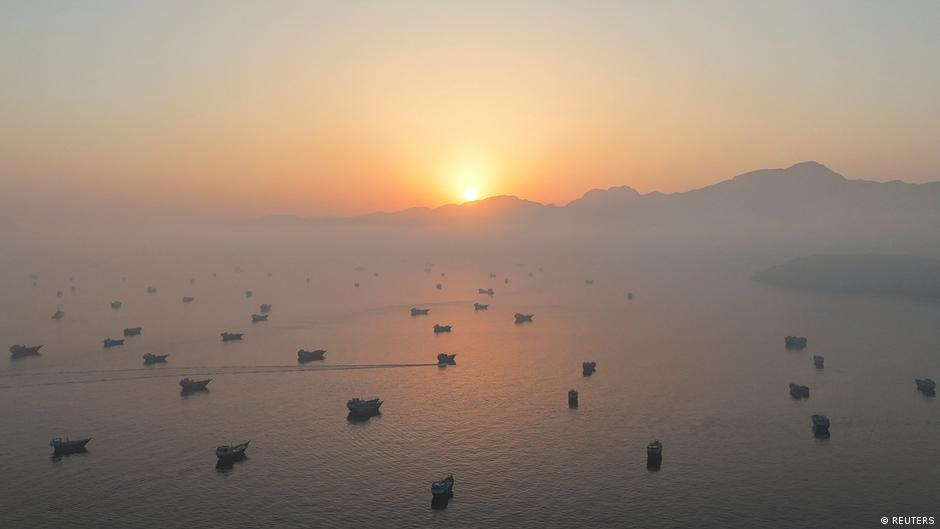
The Strait of Hormuz has become one of the world's most dangerous waterways since March, when Iran began attacking shipping vessels as a pressure tactic in its ceasefire talks with the United States. Still, though a significant proportion of the global oil trade bottlenecks at the strait, shipping traffic never completely halted.
With the United States and Iran issuing conflicting statements as to whether the Strait of Hormuz is open, DW analyzed public data sources to track how shipping traffic has changed during the course of the war and which vessels are still taking the risk of transiting the maritime choke point, which connects the Persian Gulf with the Gulf of Oman.
Shipping through Strait of Hormuz disrupted
As Iran's strikes on and interception of vessels in the Strait of Hormuz continue, mines have also been reported in the prewar shipping lanes.
The Joint Maritime Information Center (JMIC), a project of the US-led Combined Maritime Forces, assesses the threat to shippers as "severe," its second-highest warning level. However, according to one of JMIC's latest advisory notes, issued after attacks resumed on July 6 and 7, "commercial traffic through the Strait of Hormuz remained at reduced levels, with vessels transiting via both the southern Omani corridor and the northern Iranian-controlled route."