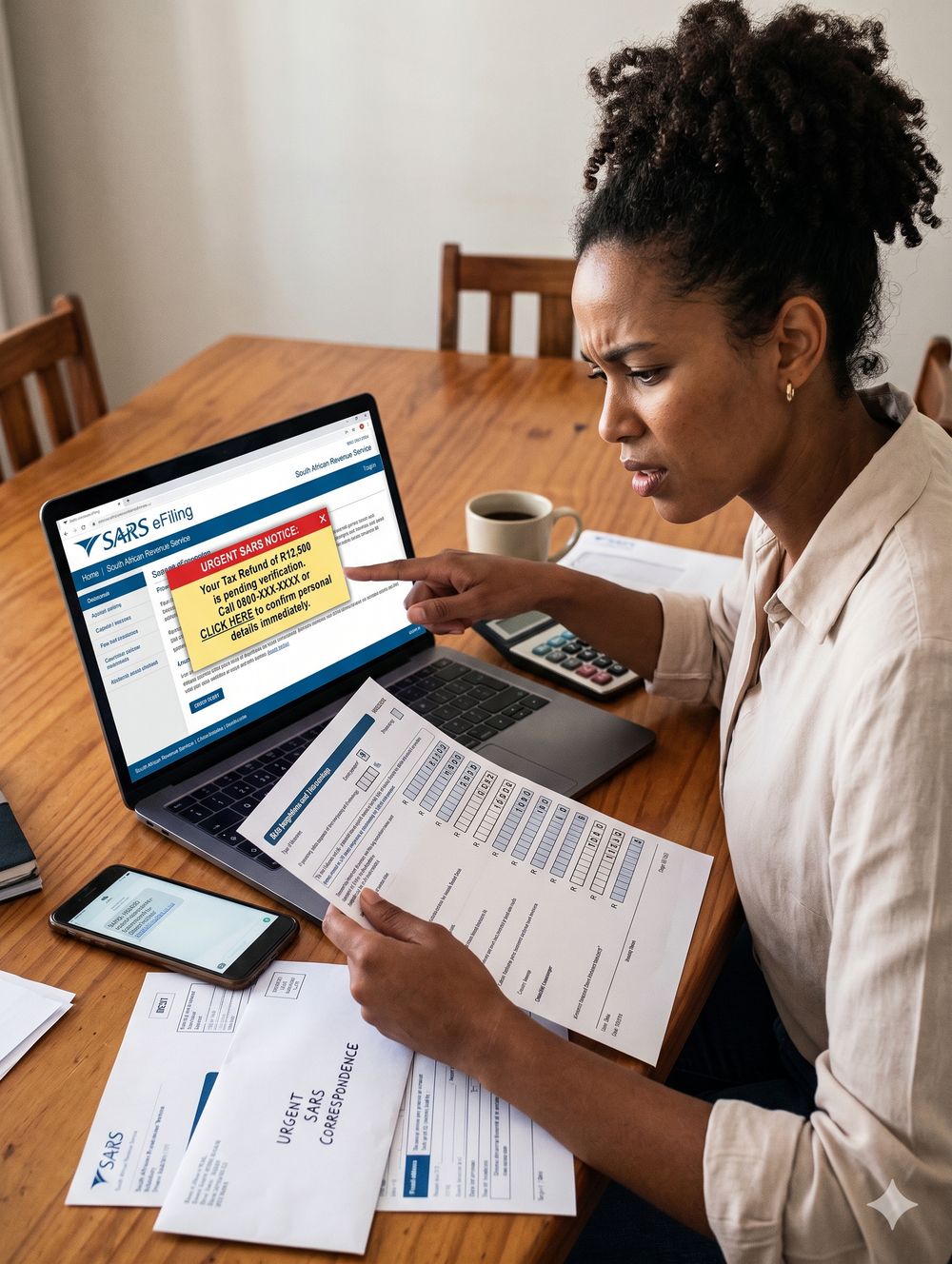
Staff Reporter|Published 27 minutes agoAs the South African tax season unfolds, millions of taxpayers are required to fulfil their obligations. However, amid the hustle of submitting tax returns, there lurks a sinister threat: fraudsters displaying an uncanny ability to exploit unsuspecting individuals. With the South African Revenue Service (SARS) enhancing its digital filing processes, including pre-assessment functions, the prevalence of sophisticated scams that mimic legitimate communication from the tax authorities has surged.According to Manie van Schalkwyk, CEO of the Southern African Fraud Prevention Service (SAFPS), the urgency of tax season often results in complacency, which scammers are quick to exploit. “Tax season consistently attracts fraudsters looking to exploit taxpayers. Scammers are constantly adapting their methods, making it essential for consumers to understand the latest tactics and remain alert throughout the filing process,” he warns.Common Scams to Watch Out ForThe tactics employed by scammers vary, but among the most common strategies are phishing emails and SMS messages. These fraudulent communications often impersonate SARS officials, compelling unsuspecting taxpayers to divulge sensitive information or make payments under false pretenses.Phishing Scams: Fraudulent messages appear to come from SARS, featuring links to counterfeit websites designed to harvest login credentials, banking details, and other personal information. “Always inspect the sender's email address carefully,” Van Schalkwyk advises. “Official SARS correspondence comes from an @sars.gov.za domain. If the address differs, treat it as suspicious and avoid clicking any links.”Fake Refund Notifications: Scammers frequently send messages promising refunds, urging recipients to follow links to confirm their banking details or to complete verification. The allure of unexpected payments can cloud judgement, leading many to overlook red flags.Outstanding Settlement Notifications: Fraudsters may warn taxpayers of outstanding liabilities, invoking threats of penalties or legal action. These messages often include manipulated banking details or direct users to fraudulent payment portals. It’s crucial to remember that SARS does not request payments into unfamiliar accounts provided through unsolicited outreach.Impersonation Scams: The rise of impersonation scams sees criminals contacting taxpayers directly via phone, email or messaging platforms, feigning representation of SARS. These fraudsters may claim issues with tax returns or refunds and request sensitive personal information.eFiling Profile Hijacking: A growing concern involves criminals taking control of legitimate SARS eFiling profiles. They manipulate personal information to change banking details linked to accounts, redirecting legitimate refunds to criminally controlled bank accounts. Victims often realise this only after discovering discrepancies in their refunds.Protecting Yourself Against Tax FraudThe SAFPS stresses that awareness serves as the frontline defence against tax-related fraud. Taxpayers are urged to:Never share eFiling usernames or passwords.Avoid disclosing banking information, personal identification numbers (PINs), or card details in response to unsolicited communications.Conduct all tax-related payments through official SARS platforms or verified banking channels.Refrain from clicking on links received via email, SMS, or messaging apps; always access SARS services directly through their official website.Use strong passwords, enable multi-factor authentication, and avoid public Wi-Fi when managing sensitive financial information.Van Schalkwyk also highlights the importance of remaining vigilant against communications that create a sense of urgency or coercion. “Scammers rely on fear tactics to prompt hasty decisions,” he cautions.What to Do if You Suspect FraudIf taxpayers suspect their tax profile or refund has been compromised, immediate action is crucial. They should:Contact their bank.Notify SARS directly.Report the incident to the South African Police Service.Report incidents to the SAFPS via Yima at www.yima.org.za, providing access to vital information about emerging fraud trends.Moreover, the SAFPS offers Protective Registration to mitigate identity theft risks and assists victims through a dedicated database. These services are provided at no cost.“Fraudsters continue to evolve their tactics,” Van Schalkwyk says, “but consumers can significantly reduce their risk by staying informed, verifying every communication, and using trusted reporting platforms.”IOSRelated Topics:
Tax season brings heightened risk of scams targeting South African taxpayers
As tax season proceeds, South Africans are reminded to remain vigilant. With scam tactics becoming more sophisticated, understanding the signs of potential fraud is essential for safeguarding your personal and financial information.
610 words~3 min read