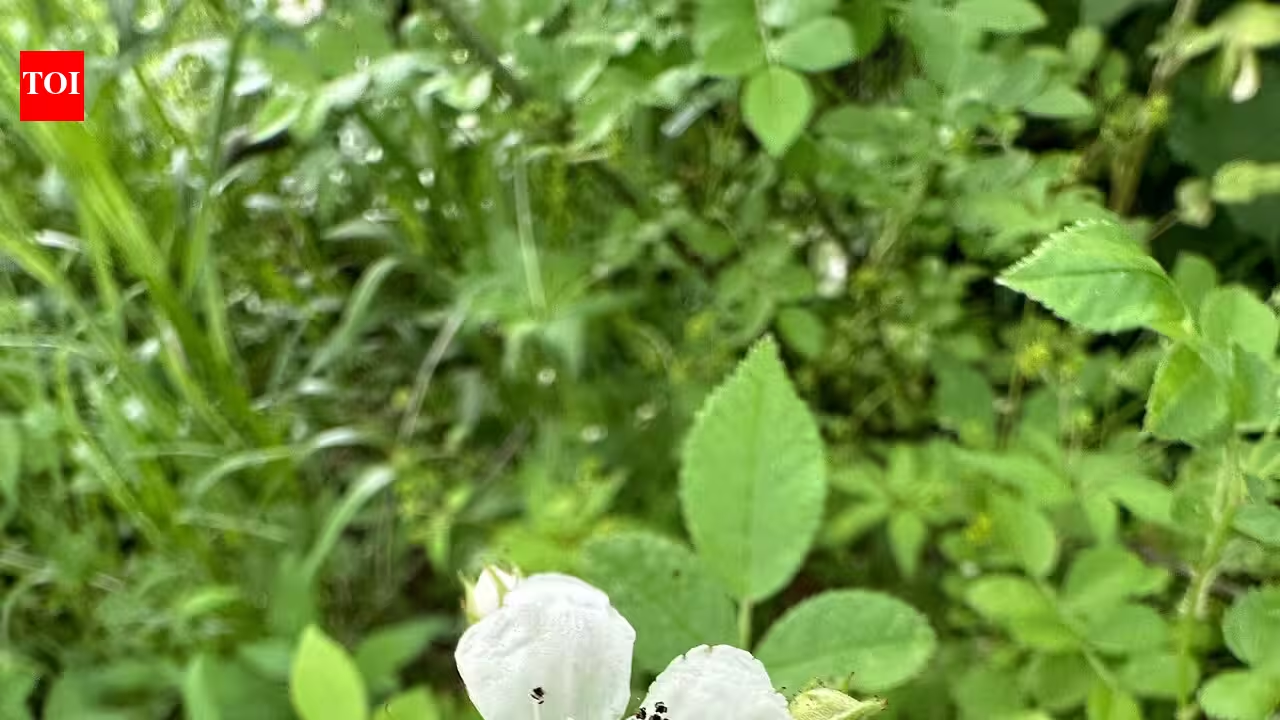
Multiflora rose, promoted for erosion control, now aggressively invades eastern United States woodlands. This thorny shrub forms dense thickets, crowding out native plants and disrupting local ecosystems. Image Credits: Wikimedia CommonsIn forests and old fields, the plant can seem like part of the landscape. But the spread of multiflora rose has changed many habitats. One example is multiflora rose, a vigorous, thorny shrub that has spread widely across the United States.According to a University of Maryland Extension article titled Invasives in Your Woodland: Multiflora Rose, the plant was widely promoted in the mid-20th century and later became invasive. In the mid-20th century, especially from the 1940s, agencies and conservation programmes promoted planting millions of these shrubs as living fences to control erosion and provide wildlife cover. What people did not expect was how aggressively the plant would spread. Today, the shrub is widespread across the eastern United States and infests millions of acres, forming dense thickets that crowd out native understory plants and disrupt habitats.Multiflora rose produces clusters of small white flowers in late spring and red rosehips that persist through winter. But the plant is highly effective at spreading and surviving. According to the University of Maryland Extension article, a mature multiflora rose can produce up to a million seeds per year, which birds and other animals disperse. The seeds do not germinate right away but can remain dormant in the soil for years until conditions are favourable. The shrub also spreads by layering, when cane tips touch the soil, take root, and form new plants.How to control multiflora rose in woodlandsControlling multiflora rose is a tough challenge for landowners and foresters working to preserve healthy woodland habitats. The plant has tough thorns and a strong ability to resprout, so simple trimming will not control it. According to the University of Maryland Extension, simply cutting back multiflora rose is often not enough for long-term control. The guide notes that plants can re-sprout from remaining roots, and disturbances such as bulldozing may also trigger seed germination, which is why it recommends combining cutting with appropriate herbicide treatment.University of Maryland Extension article recommends a targeted approach to controlling this invasive shrub. According to the University of Maryland Extension resource guide, small patches of multiflora rose can be removed by digging out the entire plant and root system. Early intervention is important because it helps prevent the shrub from storing energy and forming dense thickets. According to the University of Maryland Extension, well-established multiflora rose infestations are difficult to control and often require a combination of manual, mechanical, and chemical management strategies. A mature plant produces millions of seeds, which birds and animals disperse widely. Controlling this invasive species requires a targeted approach, addressing both roots and seeds. Cooperative efforts and community awareness are essential for effective long-term eradication. Image Credits: Wikimedia CommonsWhy multiflora rose control matters for local ecosystemsA University of Delaware article notes that while natural pressures such as rose rosette disease can impact multiflora rose populations, the underlying virus can also spread to cultivated roses in nearby gardens and landscapes, presenting a major management risk for growers.It is important to detect and control these species as early as possible to prevent them from conquering local forests and protect local biodiversity. As per the Global Invasive Species Database, apart from protecting habitats, it is also important to observe and eradicate these species using multiple processes to halt ecological deterioration. This is because the seeds buried under the soil remain viable for several years, and thus treated sites can get infested once again if not maintained later.It is important to maintain these areas to support native vegetationInvolving local communities and private landowners can improve the effectiveness of conservation efforts in the region. Since invasive species easily pass through property borders, individual action is unlikely to produce long-term effects. Formation of neighbourhood associations and exchange of experience on how to use herbicides, as well as the time and techniques of their usage, will provide a common front against the invaders. In the end, raising awareness about the negative impact of the introduction of non-native plants will result in a preventive approach.
From the 1940s, multiflora rose was widely planted as a living fence; the thorny shrub now infests millions of acres across the eastern US
In forests and old fields, the plant can seem like part of the landscape. But the spread of multiflora rose has changed many habitats.
689 words~3 min read