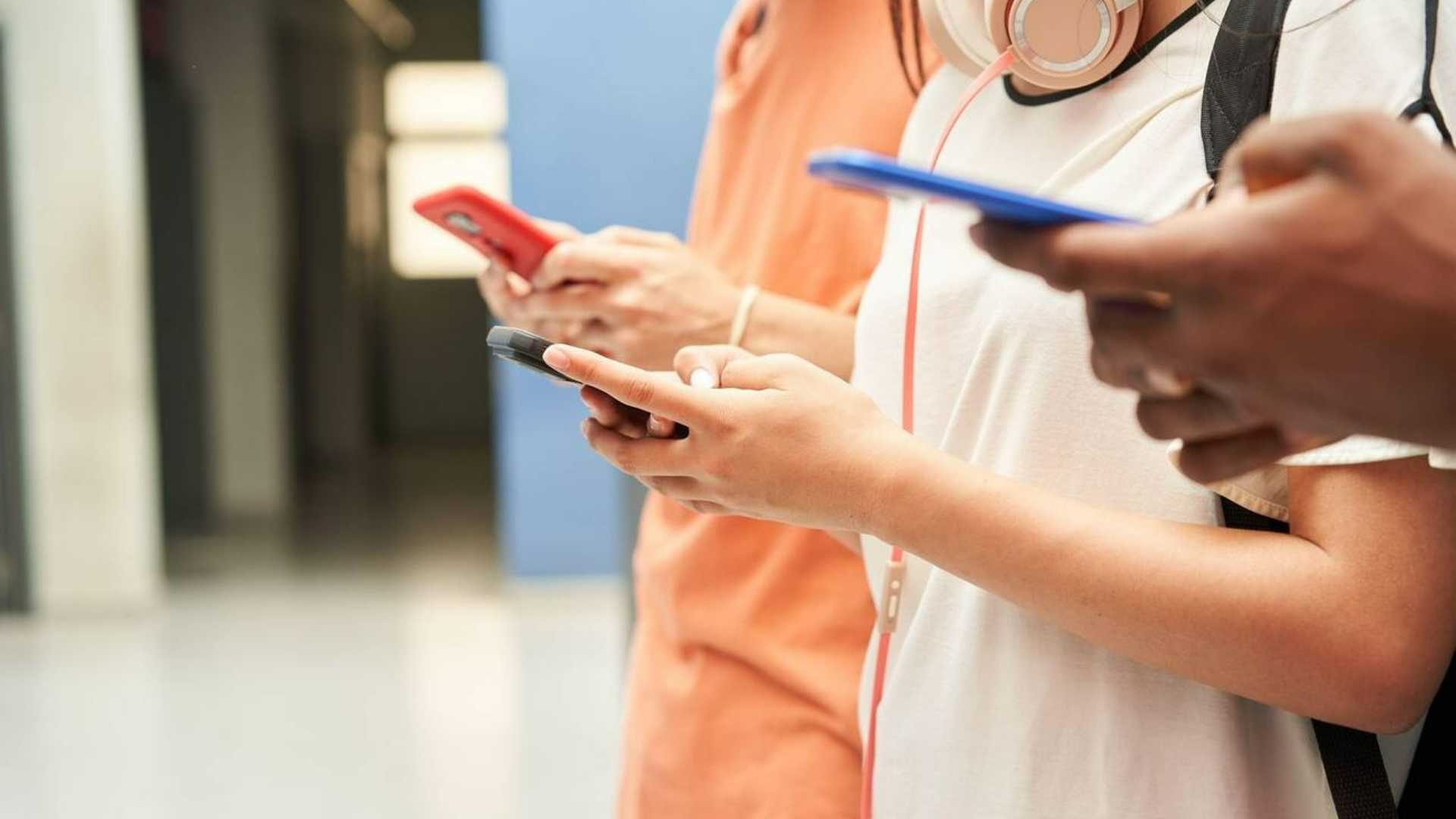
Children who own cellphones score lower on reading comprehension tests than classmates without phones — even if they never bring the devices to school, according to a new UCLA study.Researchers found that simply owning a cellphone was linked to poorer reading scores among elementary school students, raising fresh questions about whether kids should have smartphones at such a young age.The study, published in the journal Behavioral Sciences, followed third- and sixth-grade students from public schools in California's Antelope Valley and Coptic Church schools in Los Angeles County.Elementary school students who own cellphones have lower reading comprehension scores than classmates who do not own phones, a new study shows (Getty Images)Students were asked to read short passages and answer questions testing their understanding, while researchers also collected information about cellphone ownership and usage.The results showed a statistically significant link between owning a cellphone and lower reading comprehension scores."We found that there's no age at which you can give a child a phone that's better or worse for reading comprehension, so it's just having a phone at all," lead author Patricia Greenfield, a UCLA psychology professor, said in a statement. "That's true in third grade, and it's true in sixth grade."The researchers also found no meaningful difference between children who brought their phones to school and those who left them at home, suggesting that school cellphone bans alone may do little to improve reading performance."We found that there's no age at which you can give a child a phone that's better or worse for reading comprehension, so it's just having a phone at all," lead author Patricia Greenfield, a UCLA psychology professor, said in a statement. (Getty Images)But the study identified one notable exception.Children from homes where English was not the primary language appeared to benefit from using their phones to text at an earlier age."If you have a phone and if you're from a family where English is not spoken at home, it's better for reading comprehension to start texting earlier rather than later," Greenfield said.Researchers found that students from Arabic- and Spanish-speaking households who began texting in second or third grade had reading comprehension scores by sixth grade that were comparable to classmates who still did not own phones.The study was launched to examine whether cellphones interfere with the concentration needed for reading and testing, and whether school phone bans actually improve academic performance. Researchers said there has been relatively little research into how cellphone ownership affects reading skills in elementary-aged children.
Could your child’s cellphone be hurting their reading? UCLA study raises new concerns
Elementary school students who own cellphones have lower reading comprehension scores than classmates who do not own phones, a new study shows
412 words~2 min read