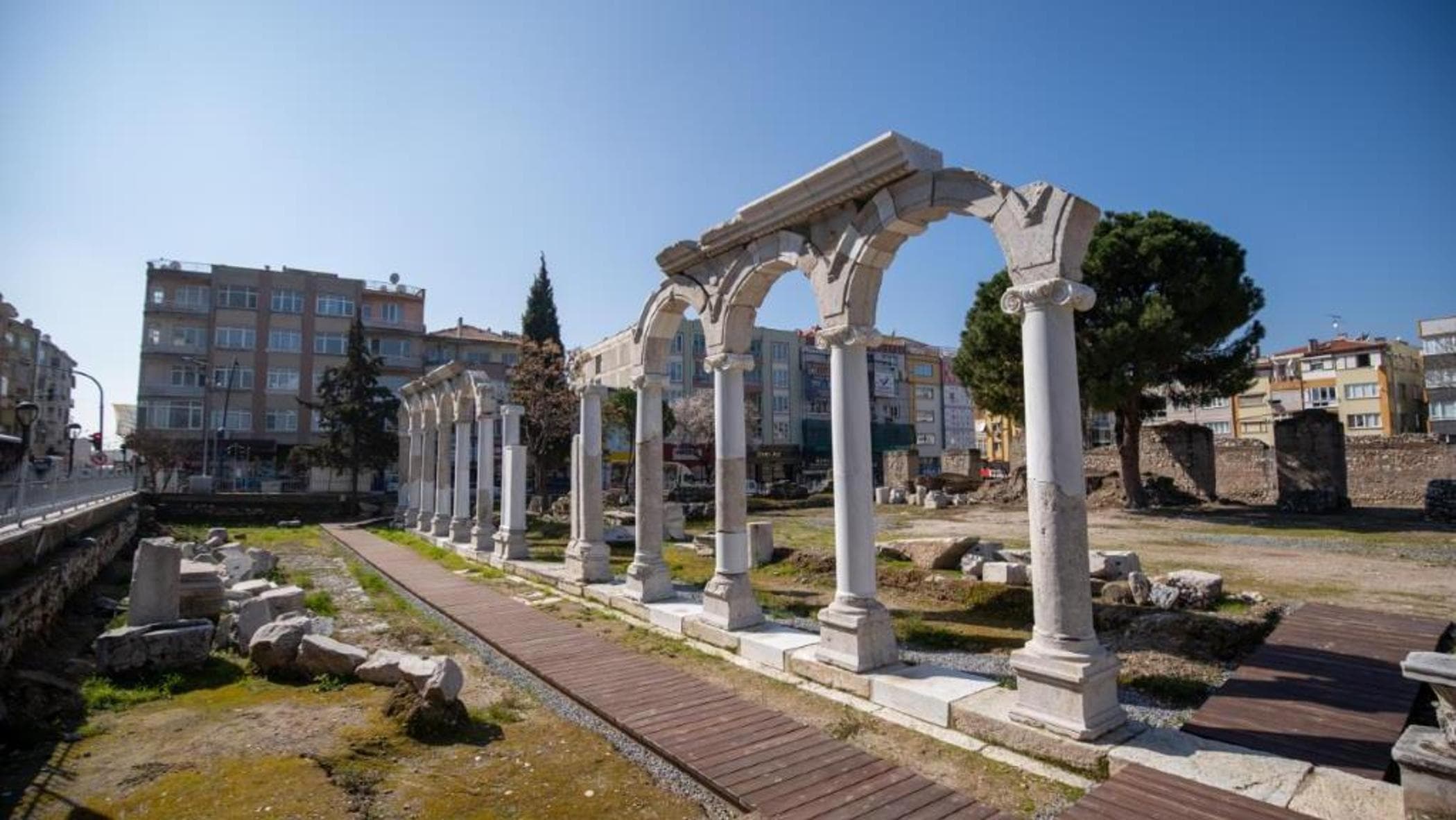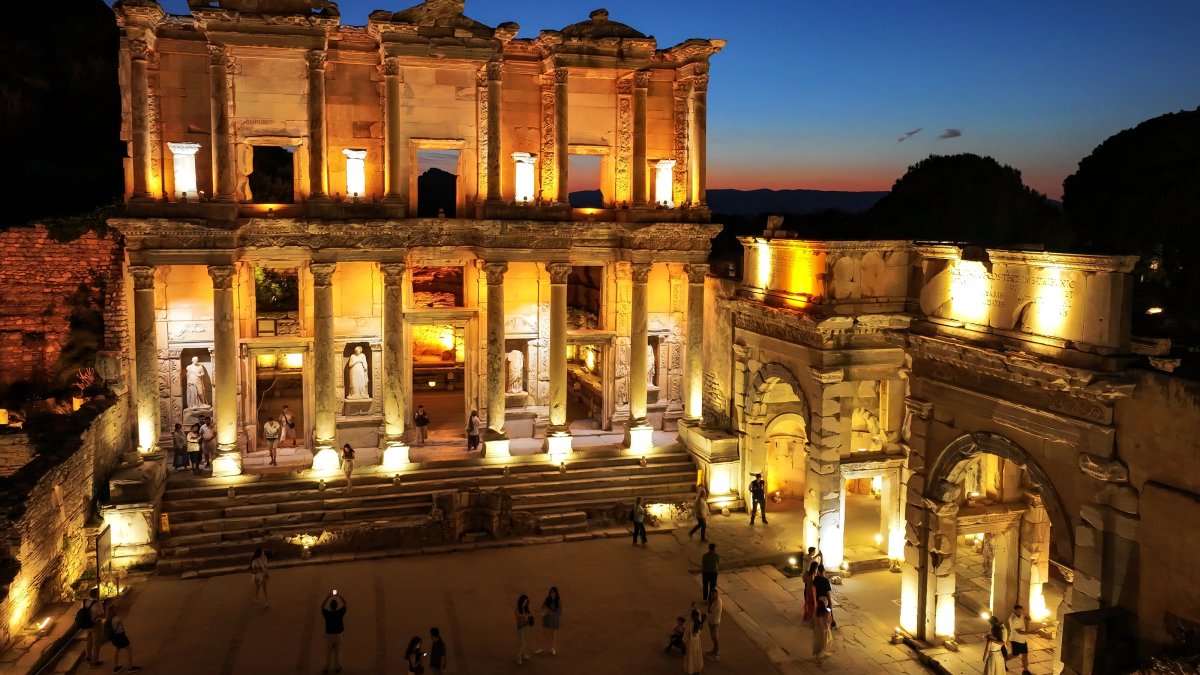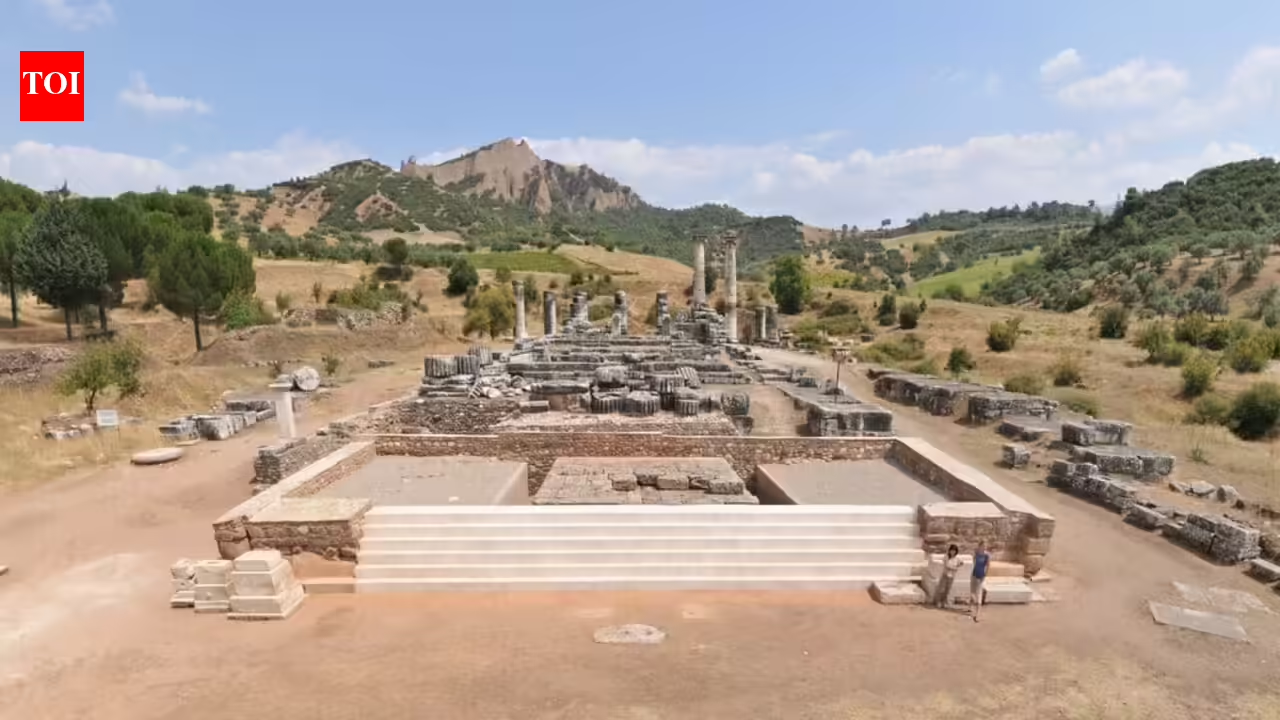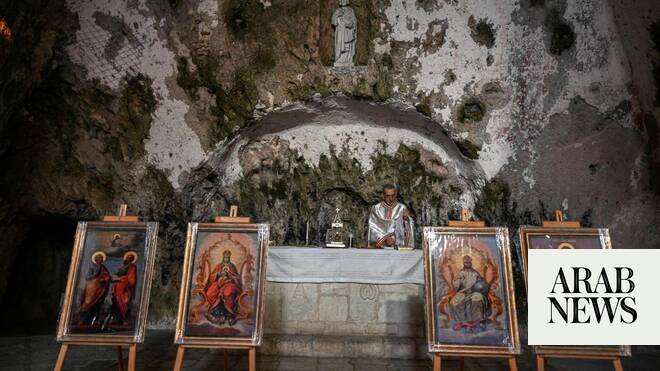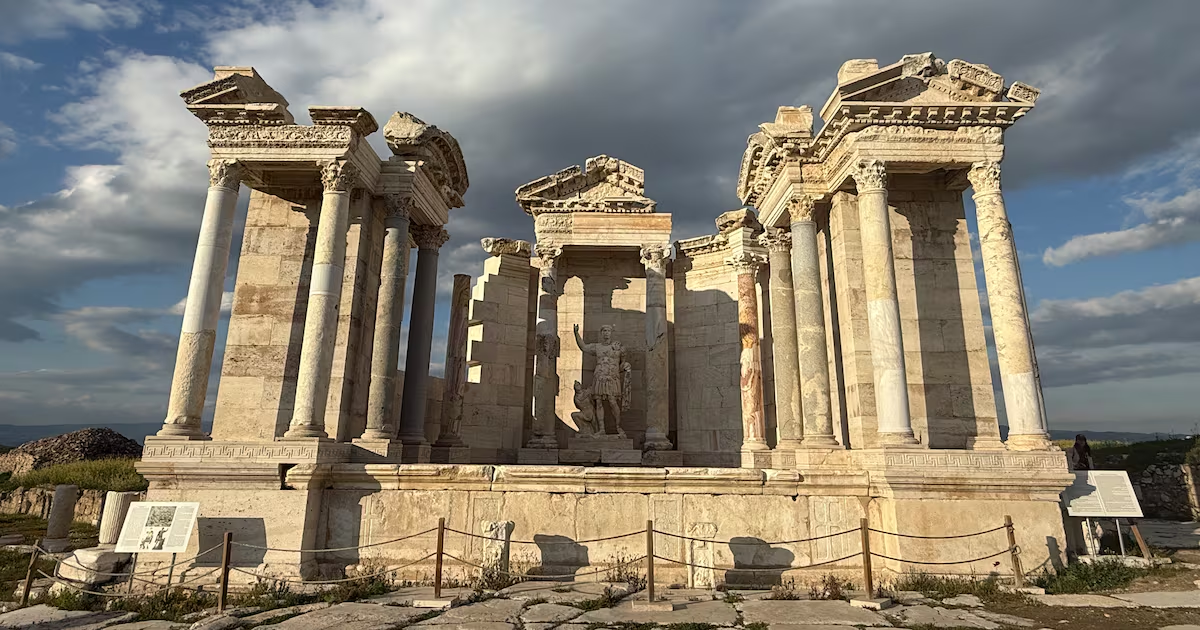
In the sun-soaked ruins of Ephesus, we learn about the end of the world. The apocalypse, it seems, has been nigh for quite some time. In this once fabled city, built on an earthquake fault line, perhaps it’s not surprising that from the times of the ancient gods there were rumblings both in the heavens and on Earth. Close to the seaside resort of Izmir in present-day Turkey, Ephesus was once one of the most powerful places in the world.A thriving port, it was second only to Constantinople – today’s Istanbul – in the Byzantine empire, and was a major gateway between east and west, anchoring the trade routes of the time. Nearby, the Temple of Artemis was considered to be one of the seven wonders of the ancient world. But the waterway silted up, access to the sea was lost and today all lies in ruins: powerful, profound, fascinating and frequently extremely beautiful; but ruins nonetheless. Of the Artemis temple, very little remains, and a wander around the site is a study in wonder at how vulnerable even vast and revered buildings – and their gods – are to nature and the passage of time.There is more to see in the separate and extensive Ephesus archaeological site, including an audiovisual extravaganza, which reconstructs both the temple and the ancient city in digital form. Each to their own, and you may wind up finding it fascinating, but the true wonder is in the city itself, where the old library still towers amid the fallen stones, and the layers of history and belief are complex and storied. Ephesus was one of the pivotal sites in the early Christian Church, as it was here, in AD 52 that St Paul first passed through, promising to return. Return, he did, preaching the gospel with a fervour that led to a riot in the great amphitheatre, the tiers of which still stand today. Ali, our guide, points out a carved fish, symbol of Christianity. He also draws our attention to another carving, this time scratched graffiti, pointing to the location of the local Ephesian brothel. “It’s the oldest advertising in the world,” he says, before bringing us to a quiet spot where he reads the text of the first of the seven letters from Jesus, known as the Seven Churches in St John’s enigmatic Book of Revelation. We are on a five-day trip around this part of southwestern Turkey that will take in all seven of the churches, although Ali is quick to point out that in this context “church” means congregation rather than, necessarily, a physical building. Just like the word church, other words have had shifting meanings too. Revelation and apocalypse originally meant a making clear, the revealing of a truth. Linking the terms with cataclysmic violence and death came later. We take turns to read St John’s Letters from Revelation at each stop, but do you have to be steeped in biblical studies to enjoy the trip? In our group, the Christian, Muslim and Jewish faiths are all represented, and we also have a smattering of agnostics. Even, or perhaps particularly within the Christian churches, there are differing views on the meaning of the Book of Revelation, ranging from the belief that it is a prophecy as to how the world will come to an end, to something more akin to social commentary and a guide to living a better spiritual life. And that, perhaps, is the most interesting thing: these are sites that have had, and continue to have, meaning for so many peoples, in many different ways.They also contain valuable lessons: in Elif Shafak’s most recent novel, There Are Rivers in the Sky, the Turkish writer notes that “Empires have a way of deceiving themselves into believing that, being superior to others, they will last forever”. The evidence of this truth is all around us as we travel. Still, things endure – at the Ephesus Archaeological Museum in nearby Selçuk, after an excellent lunch of kofta, we see the surviving twin statues of Artemis. One has a face of nurture, with a serene and gentle beauty; the other is dangerous in aspect, wild and fierce. Maybe we are all, and always will be, caught between these two facets of humanity. Our trip takes us north from Ephesus to Pergamum, before concluding southwest at the astonishing site of Laodicea near Denizli. So what are the Churches like, and what should you expect when you get there? First up, not all churches are created equal, and unless you have dreams of completion, you can still have a remarkable trip by exploring just one or two. Here’s the run down:The First Church: EphesusEphesus: 'Antony and Cleopatra came here in their day and, for a while, Alexander the Great was in charge.' Photograph: Gemma Tipton Some of the restorations at the edge of the site at Ephesus are a little iffy, one edifice being amusingly described as a “modern cubist architectural collage” (and it is an odd assemblage of bits of fallen stone), but further in, the site is truly astonishing. There are the covered remains of terraced houses, luxury homes of their time, built approximately 2,000 years ago, and complete with surviving parts of plumbing, frescoes and mosaics. Antony and Cleopatra came here in their day and, for a while, Alexander the Great was in charge. There are also the channels of civic irrigation systems, fountains, the amphitheatre, and library.Library at Ephesus, in southwestern Turkey. Photograph: Gemma Tipton In the museum at Selçuk, busts and statues from the site show astonishing sensitivity, as ancient faces appear full of life, humour, wisdom and, on occasion, cruelty. In the first letter, the Ephesians are praised for their “steadfast endurance”, but warned that they have forsaken their first love, which is taken variously to mean a love for Jesus, love for one another, love of spreading the gospel, and love itself. Nearby are the ruins of the Basilica of St John, originally built by the Byzantine emperor Justinian I, who also built the Hagia Sophia in Istanbul. The basilica is said to be the burial site of St John the Apostle, and is itself built over the ruins of an earlier city.The Second Church: SmyrnaSmyrna: The ancient water system has been marvellously restored. Photograph: Gemma Tipton The site at Smyrna, in modern-day Izmir, is surrounded by the town. Inside the complex, acres of stone lie in lines, with parts of columns, pediments and arches, almost like part of a vast garden centre, although here things are obviously more meaningful. Under the ruins of the old marketplace, the water-cistern system has been marvellously restored, and it is here that the early congregation gathered, to the sounds of running water, and where St Polycarp was martyred. The letter warns the church of trials to come, and promises eternal life to the faithful.The Third Church: PergamumPergamum, once 'the most famous city in Asia', Photograph: Gemma Tipton Reached by cable car, Pergamum sits high above the town of Bergama. Now a Unesco world heritage site, Pliny the Elder (who died in AD 79) wrote that it was the “most famous city in Asia”. It once held a vast library, to rival that at Alexandria. Today, there is a huge and hugely steep amphitheatre, acropolis, passages and squares, and, on the edge of the site, under olive trees, the empty spot where once stood the Pergamum Altar, also called the Altar of Zeus, dating to the second century BC. This was looted, although some still say “removed for preservation and research” and, between 1878 and 1886, transported to Berlin, where it now forms the centrepiece of the Pergamon Museum, which has been closed for works, and will not reopen until at least 2037. “At least it can be subjected to proper scholarship there,” says an English-speaking voice nearby. Our guide endeavours to be polite. St John’s letter to the congregation at Pergamum refers to Satan’s Seat, although opinion differs as to whether that is the altar itself, or a second site, the Asclepieion, which, on our visit, is undergoing renovations. After an excellent lunch of lahmacun at Sağlam Restaurant in Bergama, owner Mehmet Sağlam pours water on to the ground in farewell. “It is a Turkish tradition,” says Ali. “So that we may flow on our journeys, like water.” The Fourth Church: ThyatiraThyatira, in the centre of today’s Akhisar. Photograph: Gemma Tipton On our visit, Thyatira can only be seen through a fence, as temporary works are being done on the site. Once a military post and business centre, Thyatira, in the centre of today’s Akhisar, was on the old Silk Road, with wealth coming from wool and linen, dyes and slaves. Its congregation was warned against tolerating “that woman Jezebel” and “her sexual immorality”. Amusingly, although possibly only to me, it is tortoise mating season while we are there, and the words of the Fourth Letter are heard over the sound of clacking shells.The Fifth Church: SardisSardis: The Temple of Artemis. Photograph: Gemma Tipton Sardis is extraordinary. The ancient seat of the Lydian Empire, there is a huge synagogue with wonderful mosaic floors, streets, the sites of shops, and a (mostly reconstructed) bathhouse and gymnasium. The Lydians at Sardis were the first to create coinage: “electrum” in gold and silver; and it was here that King Croesus (as in “rich as”) reigned. In Greek mythology, King Midas washed away his golden curse in the nearby river, causing it to run with the coveted metal. [ Turkey’s beguiling food culture marries tradition and transformationOpens in new window ]The city walls follow the top of the surrounding mountains, also encircling a nearby temple to Artemis, which was never fully finished. Sardis eventually fell after Croesus consulted the oracle at Delphi, who told him that he would “destroy a great empire” should he attack the Persian king, Cyrus. The empire in question would prove to be his own. St John’s letter warns the congregation to wake up and repent of their idolatry. The Sixth Church: PhiladelphiaMarket at Philadelphia, Turkey. Photograph: Gemma Tipton The name Philadelphia means brotherly love, and this small rural town is charming. An old Massey Ferguson tractor trundles by as we park up, and at the local market, figs, lemons, herbs and spices are for sale on cloths spread out on the ground. Outside the local cafe, we get a lesson in brewing Turkish tea (slowly, from cold), and we eat fresh pastries from the cafe next door. The whole city was destroyed by an earthquake in 17 AD, and four huge pillars of the ancient church stand adjacent to the mosque, with its regular calls to prayer mingling with the sound of nesting house sparrows. In St John’s series of letters, the church at Philadelphia is the most praised, and the congregation is advised to “hold on to what you have”. The Seventh Church: LaodiceaLaodicea, where archaeological discoveries continue to be made. Photograph: Gemma Tipton A thunderstorm rumbles as we enter Laodicea. “The angels have been drinking,” remarks a local man. The city was once incredibly wealthy, and the continuing discoveries are phenomenal. “You could excavate for 24 hours a day, seven days a week for 500 years, and you still wouldn’t be done,” says local archaeologist Dogan Pecen, showing us around. There are kilometres of paved roads, water systems, a huge market place, complete with recovered frescoes, and two amphitheatres. In 2021, one of these played host to a classical music concert, its first event in 1,500 years. Amphitheatre in Laodicea. Photograph: Gemma Tipton On a stone tablet outside Trajan’s fountain, carved water laws detail the fair sharing of this vital resource. In the church, stone lions, mosaics and the former baptistery are all remarkably preserved. Peppery rocket grows in swathes across the site, which continues to yield its treasures. Laodicea is denounced by St John for having amassed great wealth, but through its focus on status and possessions, its congregation has actually gained nothing. Getting thereGemma Tipton was a guest of Go Türkiye. Aer Lingus fly direct from Dublin to Izmir on selected dates in summer, while Turkish Airlines have daily flights to Istanbul with connections to Izmir. Gemma flew back from Denizli, via Istanbul, to Dublin with Turkish. Viator and Get Your Guide both offer small-group tours with accommodation and transfers, but confirm before you book whether you want an emphasis on the biblical or archaeological aspects of your trip. Admission charges range from approx €3 in Laodicea and Sardis to €15 in Ephesus and Pergamum, with on- and off-site museums and additional attractions costing more. The smaller sites at Philadelphia and Thyatira are free. A Türkiye Museum Pass is €165 for a 15-day nationwide pass, while for the Seven Churches itinerary, an Aegean Region Museum Pass is better value at €95 for seven days. muze.gen.tr/MuseumPasses
Revelatory Turkey: Travelling in the footsteps of the ancients
The Seven Churches of Revelation in modern-day Turkey are fascinating for believers and non-believers alike
2,141 words~10 min read