Choi Ji-won
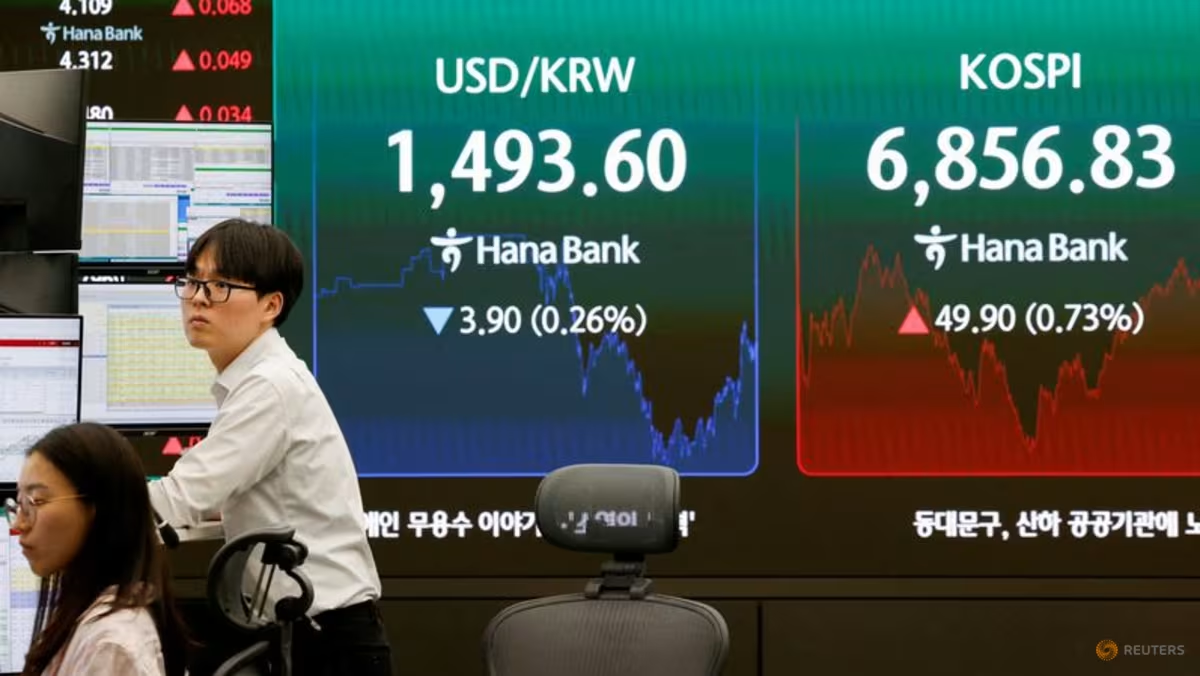
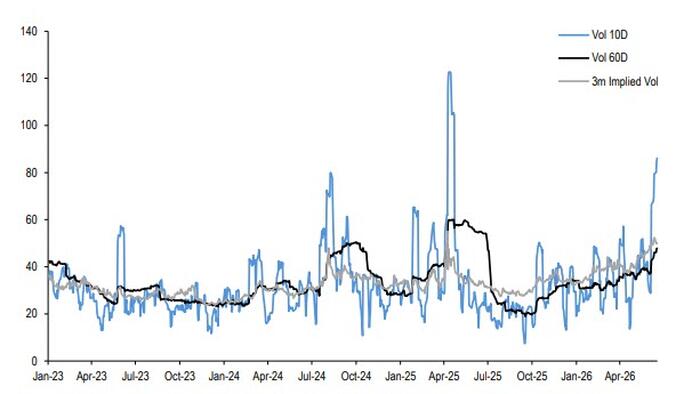
As semiconductor mania faces a reality check, discover how to counter market excess and pivot towards a resilient asset blend Steve Brice, global chief investment officer at Standard Chartered Bank's wealth solutions unit (Standard Chartered Bank) By Steve BriceThere are increasing signs of investor euphoria globally, most notably in the semiconductor space and especially in South Korea and Taiwan. In these two markets in particular, there has been a sense among investors that stocks can only go up. As a battle-hardened investor, I worry that we are getting closer to the peak of this sentiment. At the same time, I recognize that this euphoria can continue for longer than expected. So, what should investors do?The answer is they should strike a balance. We do not know when the bull market will experience a significant correction or transition into a more sustained bear market, but investors need to actively prepare for that possibility.The risks of overheated speculationThe fear of missing out is a very powerful force, and so is the allure of making a quick, easy buck. However, a decent adage, courtesy of Warren Buffett, is to "be greedy when people are fearful and fearful when people are greedy." There are plenty of signs of greed out there right now, ranging from mere anecdotes picked up in my conversations with investors to concrete market data. For instance, we are seeing record exposure to leveraged, single-stock exchange-traded funds — which are basically designed to deliver twice the daily return of a given stock.Recently, South Korean regulators signaled regret about allowing such products to be made available to retail customers, causing the Kospi to fall 10 percent the very next day. As of the time of writing, the market is simultaneously up over 75 percent this year and down 20 percent from its peak of around three weeks ago, meaning it has entered bear-market territory. Investors are still positioned greedily, but they are starting to feel fearful. They thought the market could only go up, but now it is heading down — fast.Beyond the buzz — from euphoria to realitySo, how do we translate these powerful forces into actionable advice for investors, especially when our fundamental outlook remains quite positive?The first step is to challenge the potentially false assumptions underpinning our current view of the world. One of my favorite sayings is that a lot of money can be made when things go from "really, really terrible" to just "really terrible." Of course, the reverse can also be true. When markets are richly priced, even a modest slowing of growth expectations or an earnings miss can be devastating in the short term. Could demand for a company’s product fail to live up to expectations? Could margins come under pressure? Or could other companies suddenly become more competitive? Of course, these risks are all interrelated, but they matter most when investors are greedy.So, where do I stand? I see the pockets of extreme greed as being quite narrow. Therefore, I am still optimistic about the 6 to 12-month outlook for global equities, supported by accelerating earnings growth. At the beginning of 2026, the consensus for global earnings growth was 14 percent, whereas today it is over 26 percent. This shift indicates a broadening of the equity market rally. Crucially, it is far from a dot-com style bubble and suggests the optimists may well prevail for a while to come.That said, the quality of US earnings is deteriorating. For instance, the "other income" revenue line for the three largest tech companies accounted for around 8 percent of S&P 500 pre-tax income in Q1 — up from 2.5 percent a year earlier. This spike was likely driven by a revaluation of private equity stakes in companies, which US accounting laws require to be passed through the income line. The good news is that the latest initial public offerings will likely support strong gains in this line in the near term. And, while many are concerned about the record level of IPOs in US dollar terms, these figures remain well below the 2000 and 2007 peaks when measured as a percentage of market capitalization.The real long-term risk from these IPOs, however, might not be their liquidity-draining effect, but the potential removal of a source of "other income" in the coming years, which would temporarily hit earnings.Now, you are probably reading this and feeling whipsawed by conflicting factors — but that’s precisely the point. Nobody knows what the future holds, so we must digest all these signals before deciding on an investment strategy. Doing nothing, however, is likely a losing strategy in a world of still-elevated inflation.Building a ballast against fear and greedWe retain an overweight allocation to global equities, but we are very keen to diversify equity exposure both geographically and sectorally. This is not the time to go all-in on one market, let alone one sector or industry. We expect the gains to broaden out, which makes an allocation to equal-weighted indices — thereby increasing diversification across different sectors — a sensible move.We like global high-dividend stocks, the US healthcare sector and Japanese banks, which provide defensive ballast to our still-bullish prognosis on US technology and communication services.We are also overweight Asia ex-Japan. Within Asia, we are overweight China and India, alongside Taiwan. This exposes investors to domestic demand growth and the re-engineering of global supply chains, rather than leaving them entirely reliant on the semiconductor industry that dominated H1 2026 performance.The bottom line is that we live in a complex world. We need to consider what the current FOMO-driven trends are based on, as well as what could go right or wrong. Once you do this, you will likely understand that it is impossible to forecast with accuracy. My hope is that, instead of succumbing to hopelessness and analysis paralysis, this realization prompts you to plan for different scenarios as you invest. An inevitable byproduct of this approach would be a more diversified portfolio, which would ultimately smoothen your investment journey and stop you from oscillating between fear and greed.Steve Brice is global chief investment officer at Standard Chartered Bank’s wealth solutions unit. The views in this column are his own. — Ed.