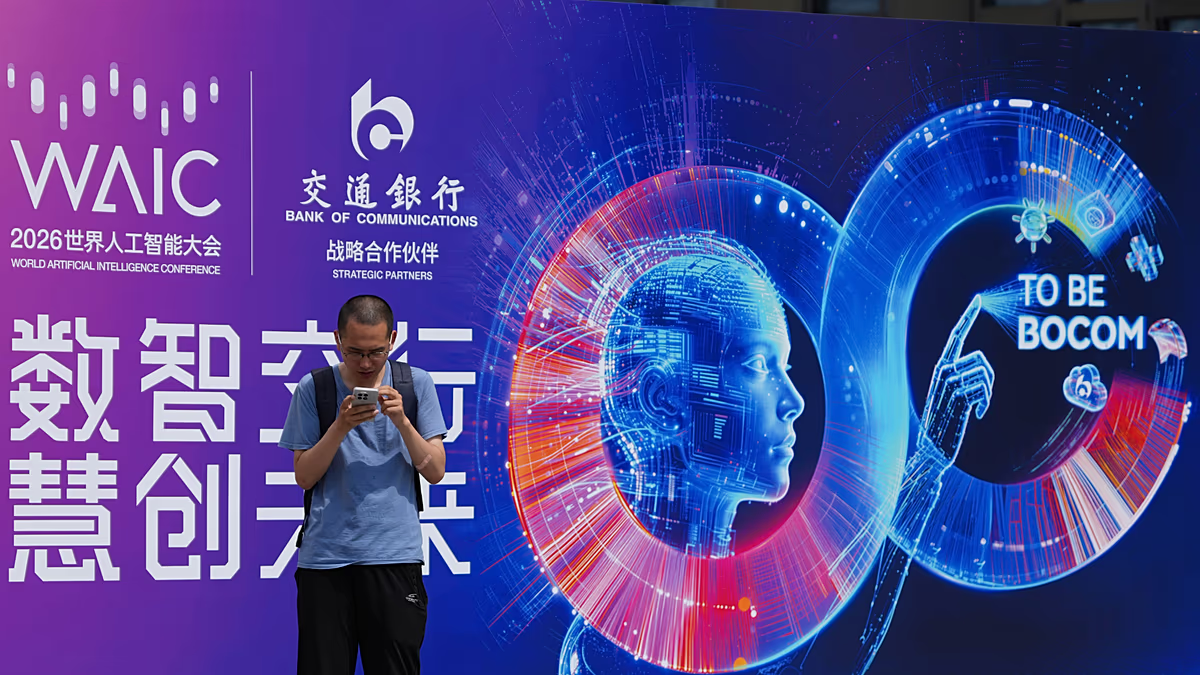
China's AI ambitions defy expectations as it embraces open-source collaboration, challenging the West's closed systems. This article explores the implications of this pivotal shift in the AI landscape.
It was a moment of profound irony, the sort that often reshapes the trajectory of technological history. For years, the prevailing wisdom in the West was that China’s AI ambitions would be stifled by scarcity—a supposed desperation born of limited access to the high-end chips that serve as the engines of modern intelligence.
Yet, while Western companies retreated into the guarded fortresses of proprietary code, the Chinese ecosystem executed a pivot that caught the giants of Silicon Valley off guard: they embraced the expansive, collaborative power of the open-source spirit.
This was not merely a tactical decision; it was a philosophical divergence.
While Western AI development largely adhered to the "walled garden" model—each firm treating its architecture as a singular, guarded asset rather than a shared foundation—the open approach in China had yielded something unexpected: a potent combination of higher quality and lower costs. The "wisdom of crowds," it turned out, was faster and more efficient than the siloed ingenuity of individual corporations.