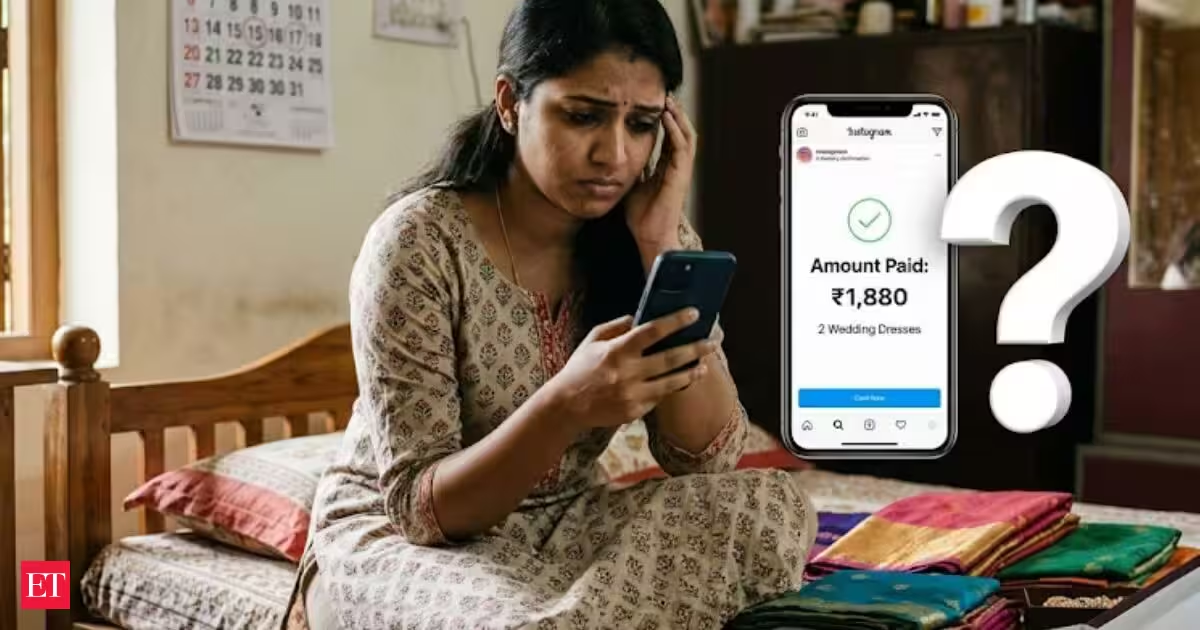
A Kerala consumer commission has ordered an Instagram-based boutique to pay ₹36,880 to a woman after it collected full payment for two dresses needed for a family wedding, delivered only one after repeated delays, and then told her to take legal action when she asked for her money back. The order was passed on 17 July 2026 by the District Consumer Disputes Redressal Commission, Kollam, and it carries a pointed message for the fast-growing world of Instagram shopping: sellers operating through social media platforms have no special immunity. Consumer protection law applies to them just as it does to any shop on the high street. An Instagram story, a wedding, and a promise that fell apart Devi Priya R, an assistant professor from Kollam, came across Alankritha Boutique on Instagram in early 2025. The boutique's posts caught her eye, and in February that year she placed an order for two dresses through the platform, paying ₹3,760 in two instalments via Google Pay on 13 and 14 February 2025. The dresses were needed for a close relative's wedding. The boutique assured her delivery by the last week of April 2025. That deadline came and went. A revised promise of the first week of May followed. That too was missed. What came next made things worse. On 10 May 2025, Devi Priya was told both dresses had already been dispatched and would arrive the following day. Only one dress showed up, on 14 May, weeks late. The second dress never came. Abusive calls, broken promises, and a court notice ignored Devi Priya continued to follow up over calls and messages. The boutique's responses ranged from evasive to hostile. It promised to refund 50 per cent of the amount for the undelivered dress by 10 June 2025. No refund came. Then, on 21 May 2025, during a WhatsApp voice call, the boutique's representative told her in no uncertain terms that no refund would be made and that she was free to file a case if she wanted, as they were not concerned about the consequences. She did exactly that. When the consumer commission sent a notice to the boutique, it was returned marked "Unclaimed." The commission treated this as deemed service, meaning the boutique was considered to have received it. The boutique neither appeared before the commission nor filed any response. What the commission ruled and why it matters With no rebuttal from the boutique's side, the commission accepted Devi Priya's evidence, including Google Pay receipts, email communications, and order records, as unchallenged. But beyond the facts of this particular case, the commission made a ruling that has wider implications for anyone who shops through Instagram, Facebook, or any other social media platform. It stated clearly that consumer transactions carried out through social media are equally governed by the Consumer Protection Act, 2019. A seller who receives payment through an online platform cannot escape liability by simply not delivering the goods or going silent after the money has been transferred. This matters because a significant and growing portion of India's informal retail economy now runs through Instagram boutiques, WhatsApp groups, and similar channels, often with no formal receipts, no return policies, and no customer support to speak of. Many buyers assume they have little legal recourse when things go wrong. This ruling says otherwise. The commission found the boutique guilty of both deficiency in service and unfair trade practice, noting that accepting payment and then failing to either deliver the product or issue a refund is not just bad business but a violation of the law. What the commission ordered The boutique has been directed to refund ₹1,880, the value of the dress that was never delivered. It must also pay ₹25,000 as compensation for deficiency in service, unfair trade practice, mental agony, inconvenience, and hardship caused to the complainant. An additional ₹10,000 has been ordered towards the cost of proceedings. The total payout comes to ₹36,880. All amounts must be paid within 45 days of the boutique receiving the order. If it fails to comply, the outstanding amount will carry interest at 9 per cent per annum from the date of default until full payment is made.Check the case judgement here:
Kerala woman wins Rs 36,880 payout after Instagram boutique fails to deliver a dress worth Rs 1,880 she ordered for wedding
A Kerala consumer commission has ordered an Instagram boutique to pay ₹36,880 to a woman who paid for two dresses needed for a wedding, received only one after months of delays, and was told to "go ahead and file a case" when she asked for a refund. The court ruled that Instagram sellers are fully bound by consumer protection law.
699 words~3 min read