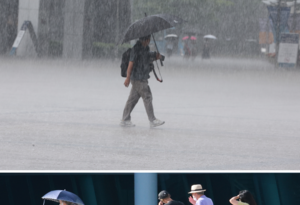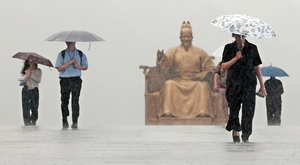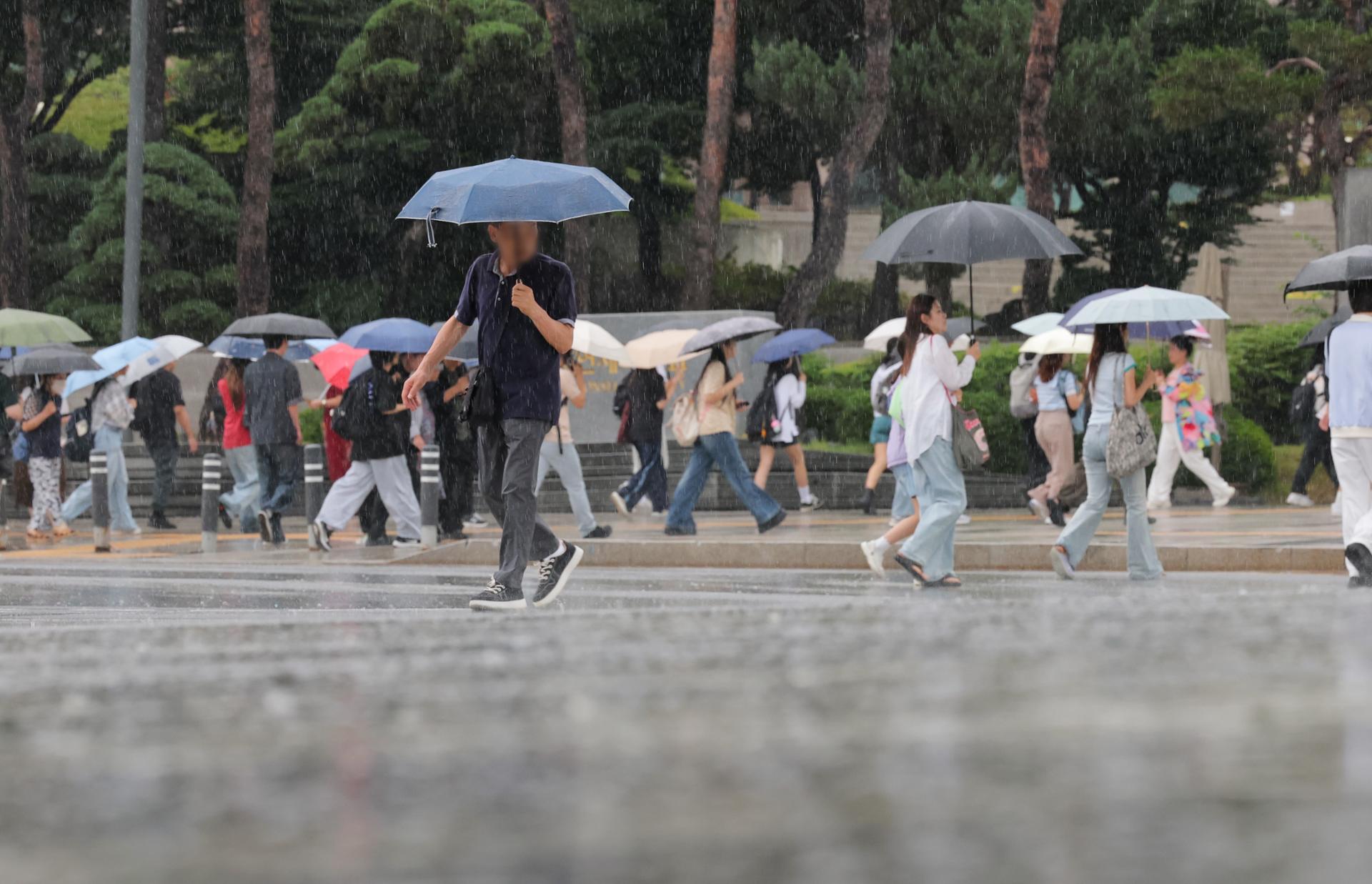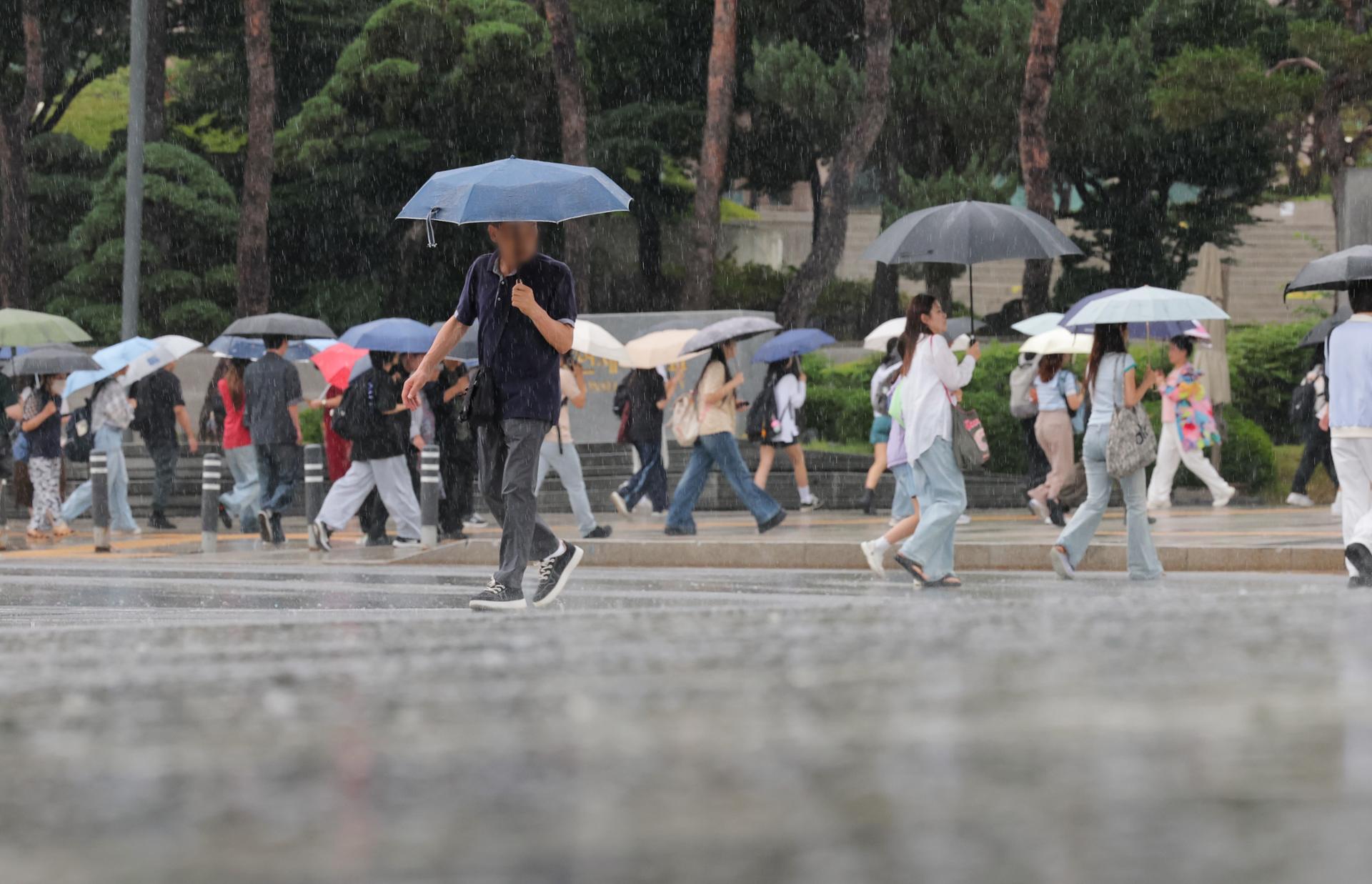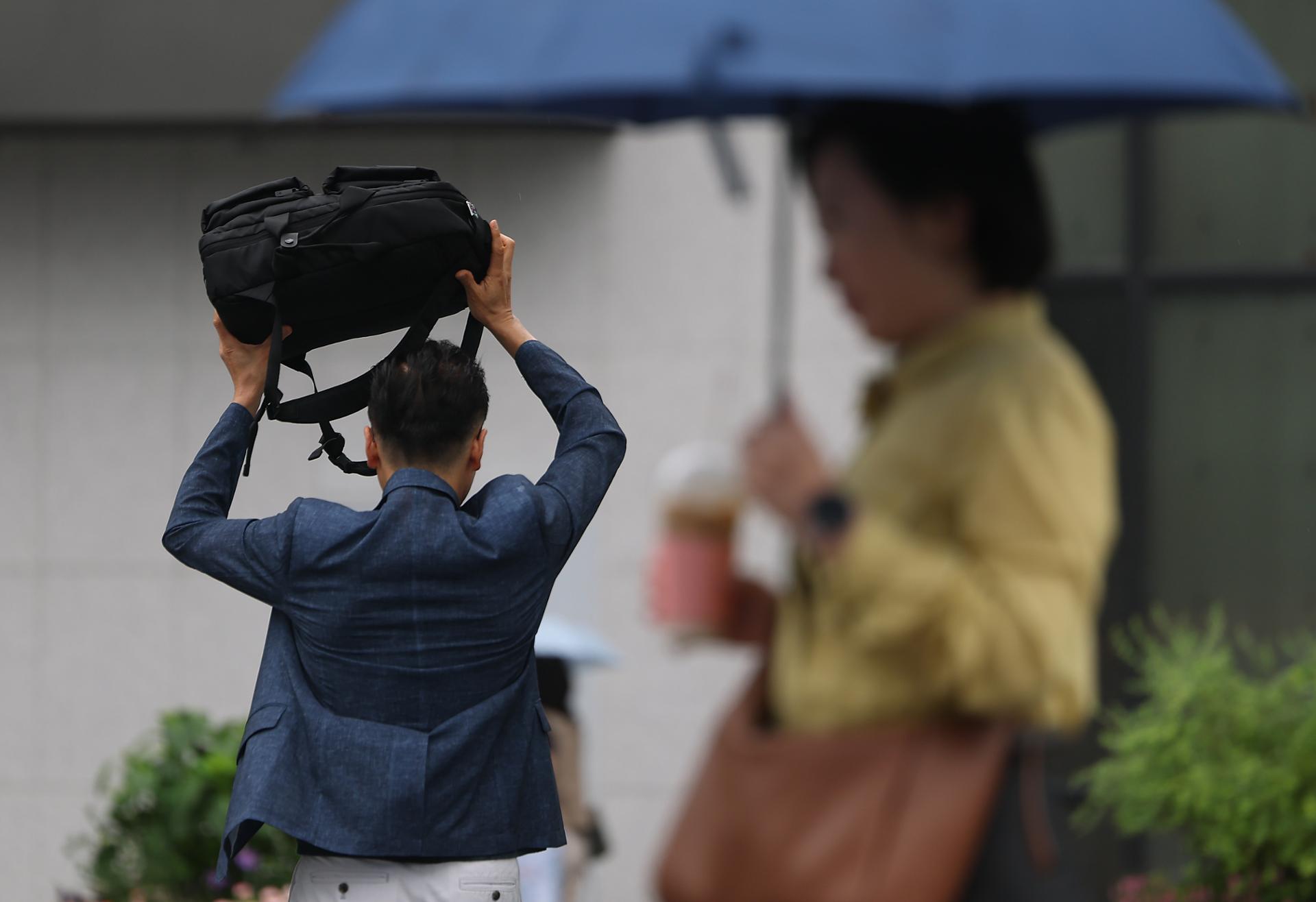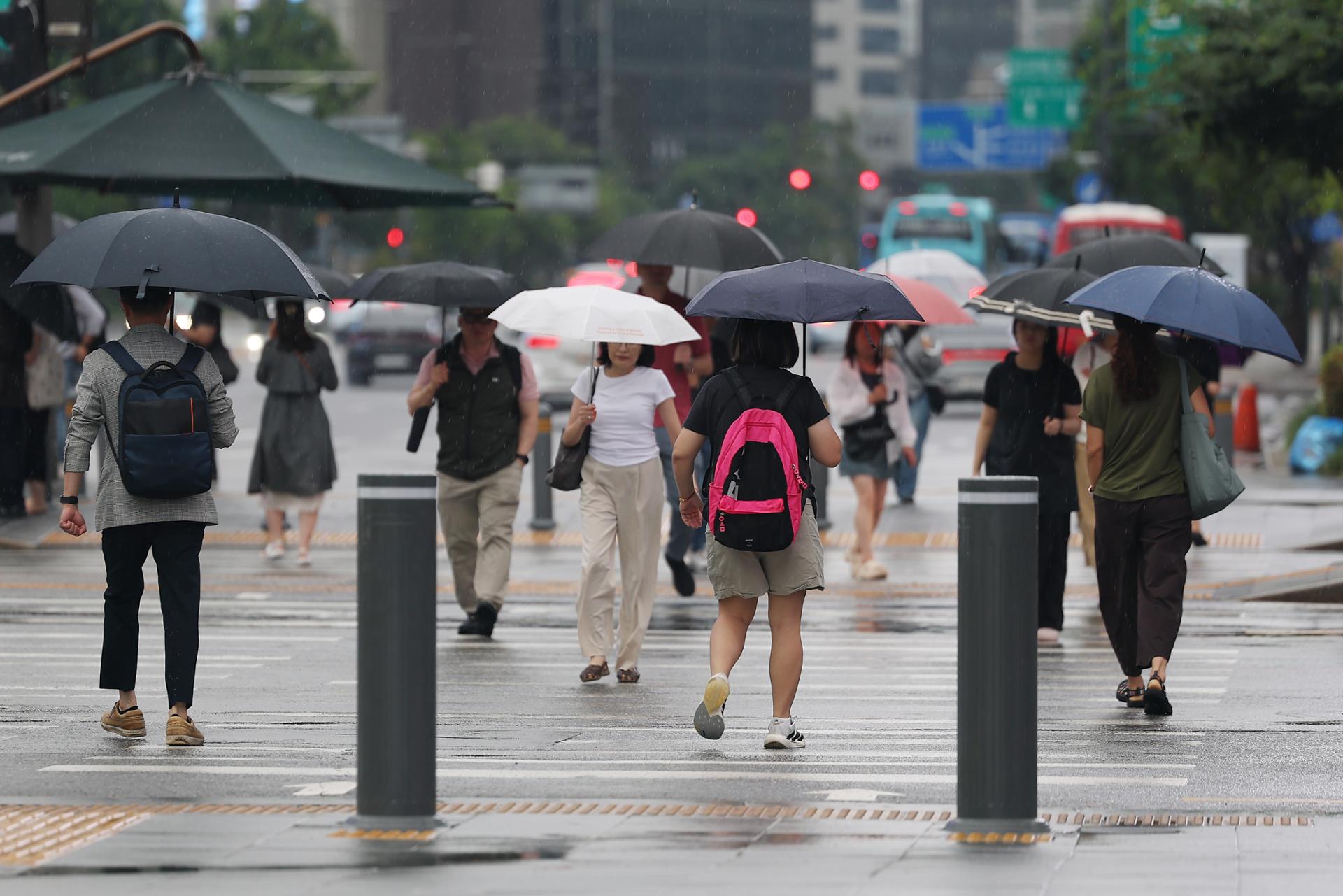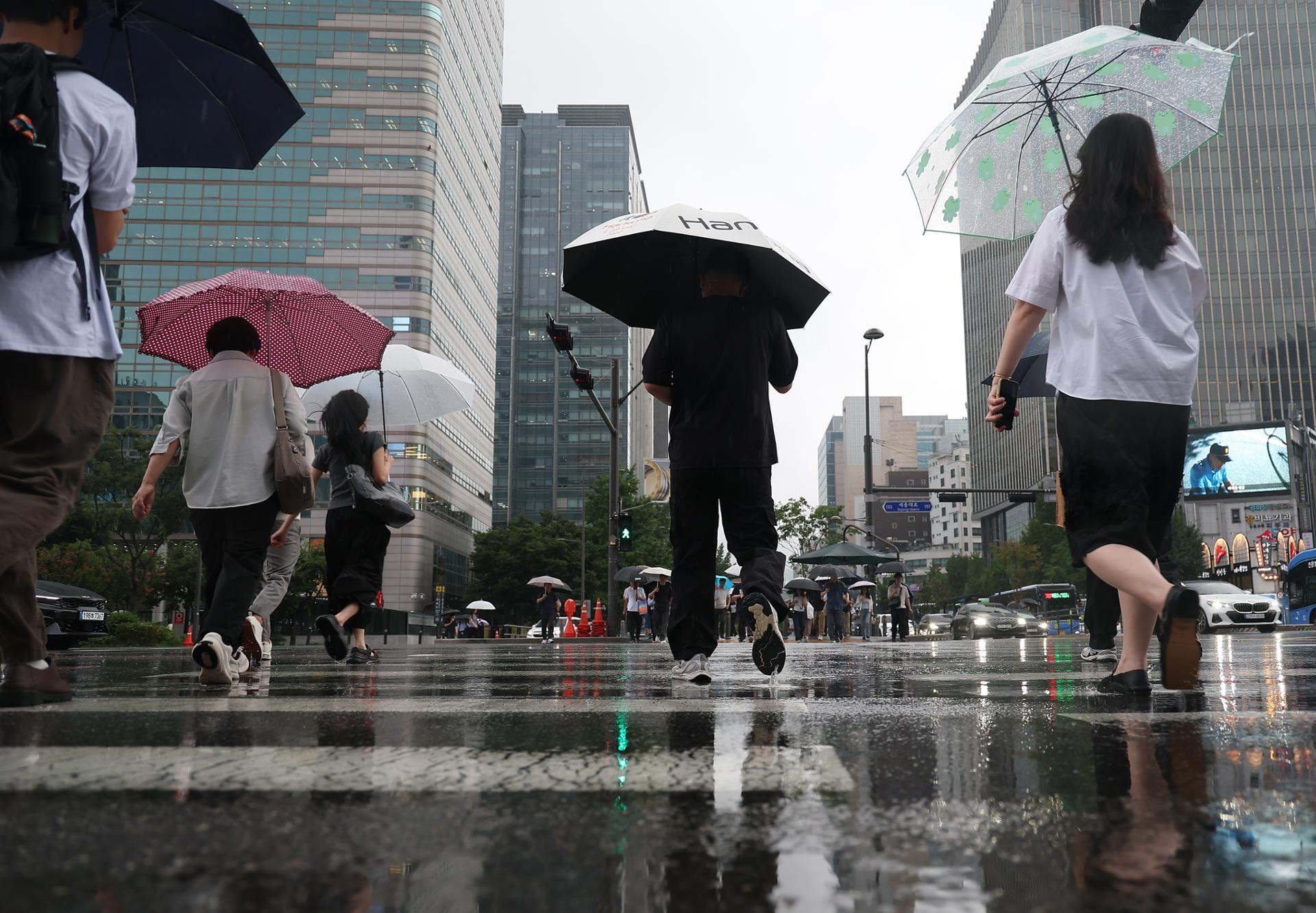
People walk near Gwanghwamun Square in Jongno District, Seoul, July 20 as monsoon rain falls across central Korea. Yonhap
When 57-year-old construction day laborer Kwon Jae-hyuk tuned in to the weather forecast last Monday evening, the report warned that a powerful rainstorm would sweep across Seoul the following morning, bringing 30 to 50 millimeters of rain per hour.
Knowing that construction sites shut down in such severe weather, Kwon decided not to work. But the next morning brought only a light drizzle of no more than 3 mm per hour, leaving him frustrated.
“I decided not to work because the forecast said it was going to pour, with as much as 50 millimeters of rain per hour, but all we got was a trickle,” Kwon said. “For day laborers like us, inaccurate forecasts like this are infuriating.”
The same frustration resurfaces every summer, as complaints pour in over inaccurate forecasts from the Korea Meteorological Administration (KMA). Summer weather has always been difficult to predict because of atmospheric instability, but the KMA says forecasting has become even harder in recent years for a more fundamental reason: Climate change is making the atmosphere over Korea increasingly unstable, while sudden, highly localized downpours have become an almost daily occurrence.