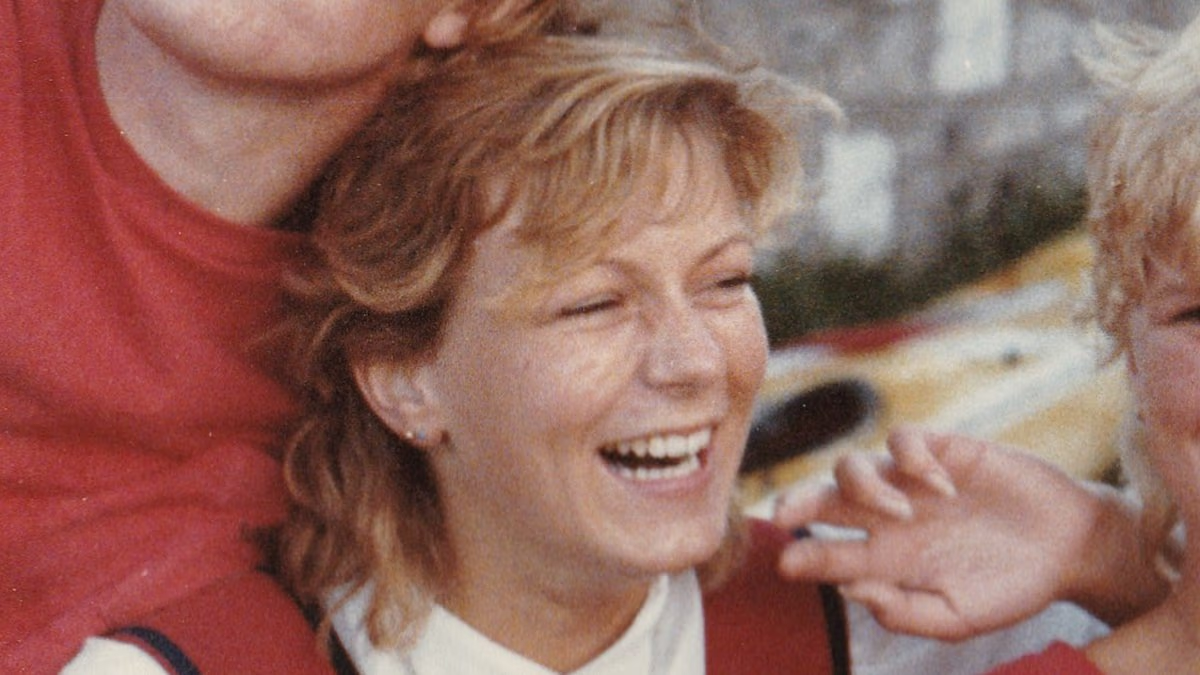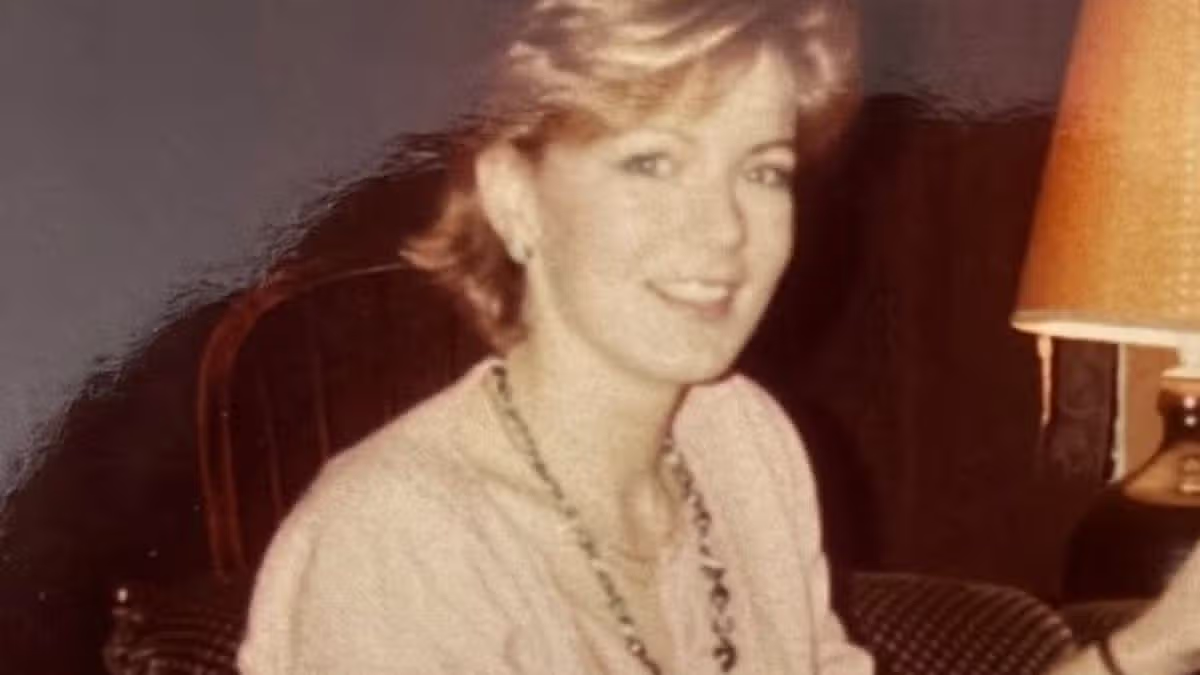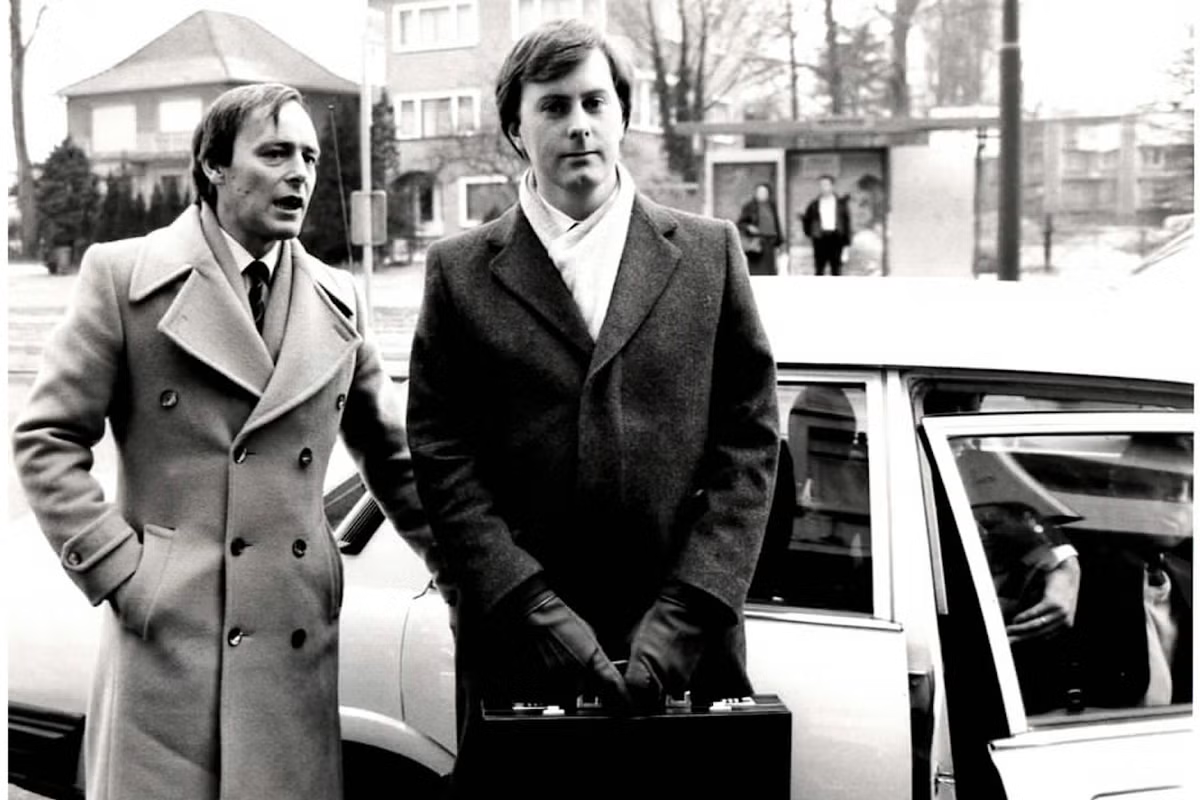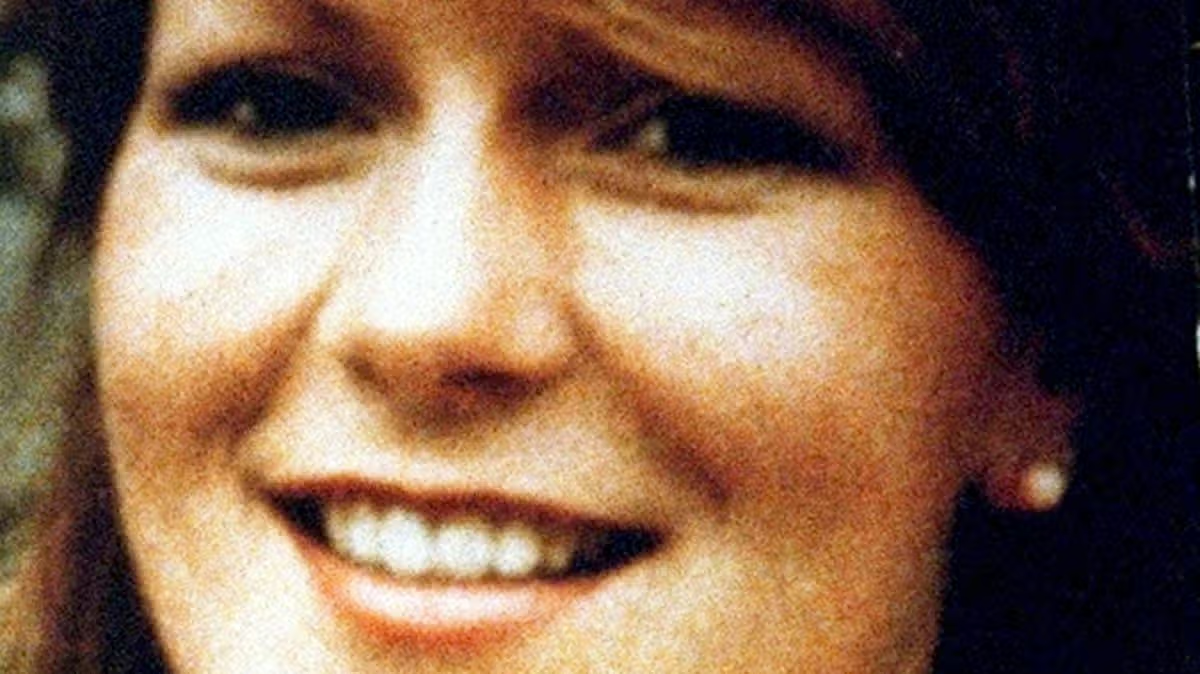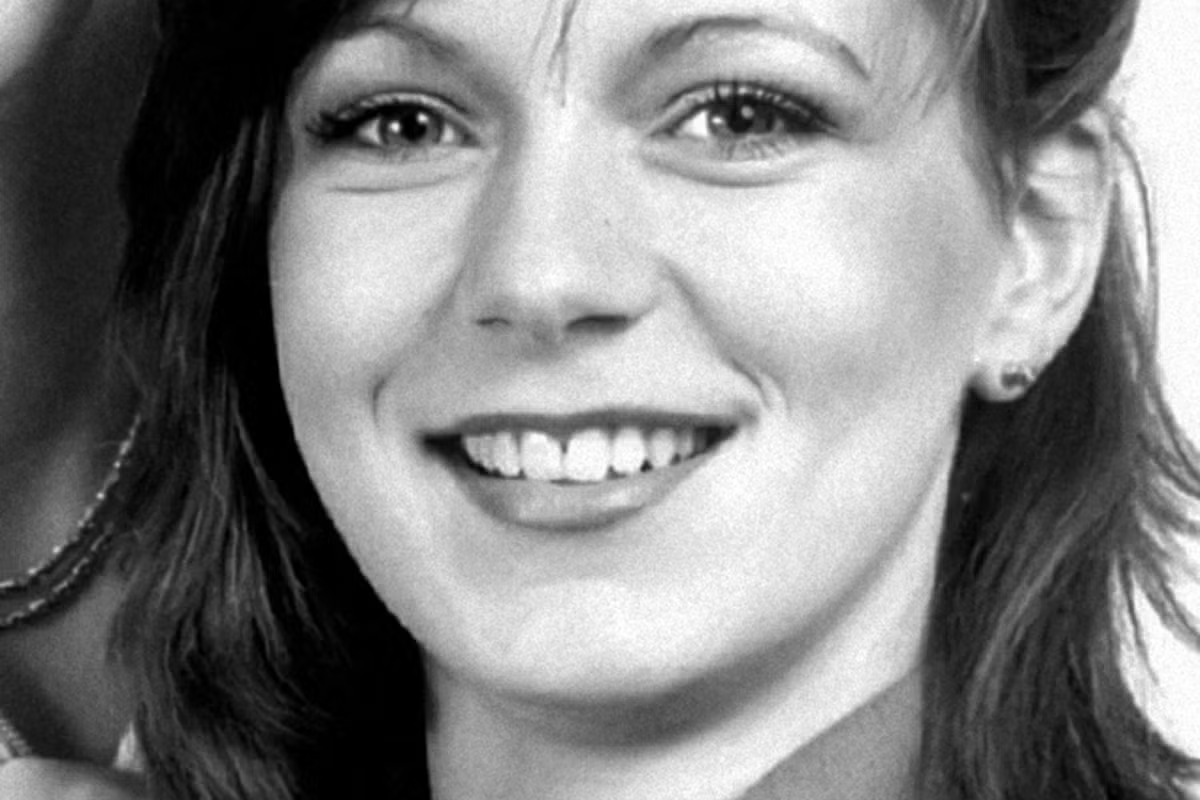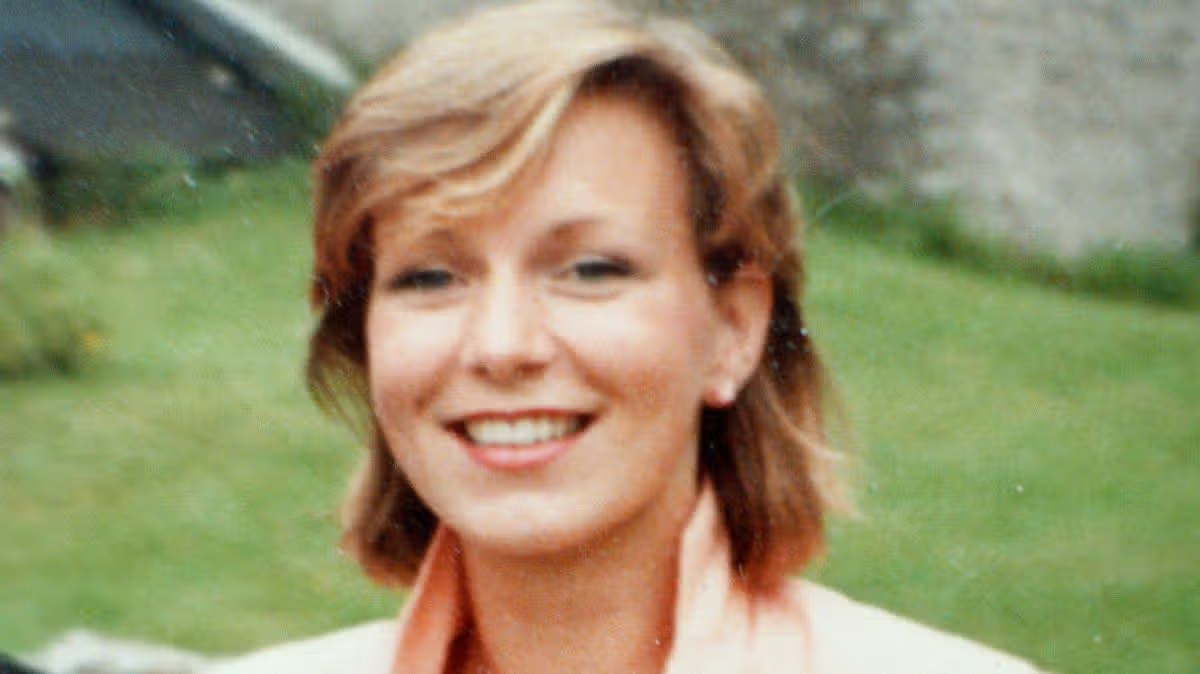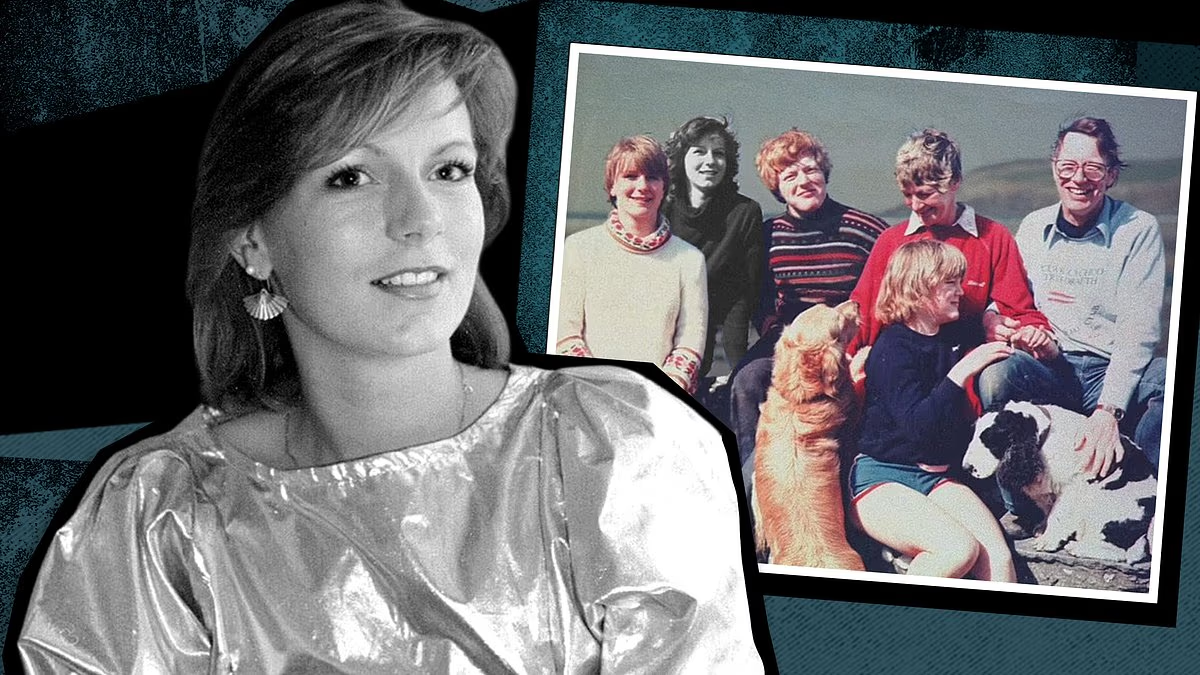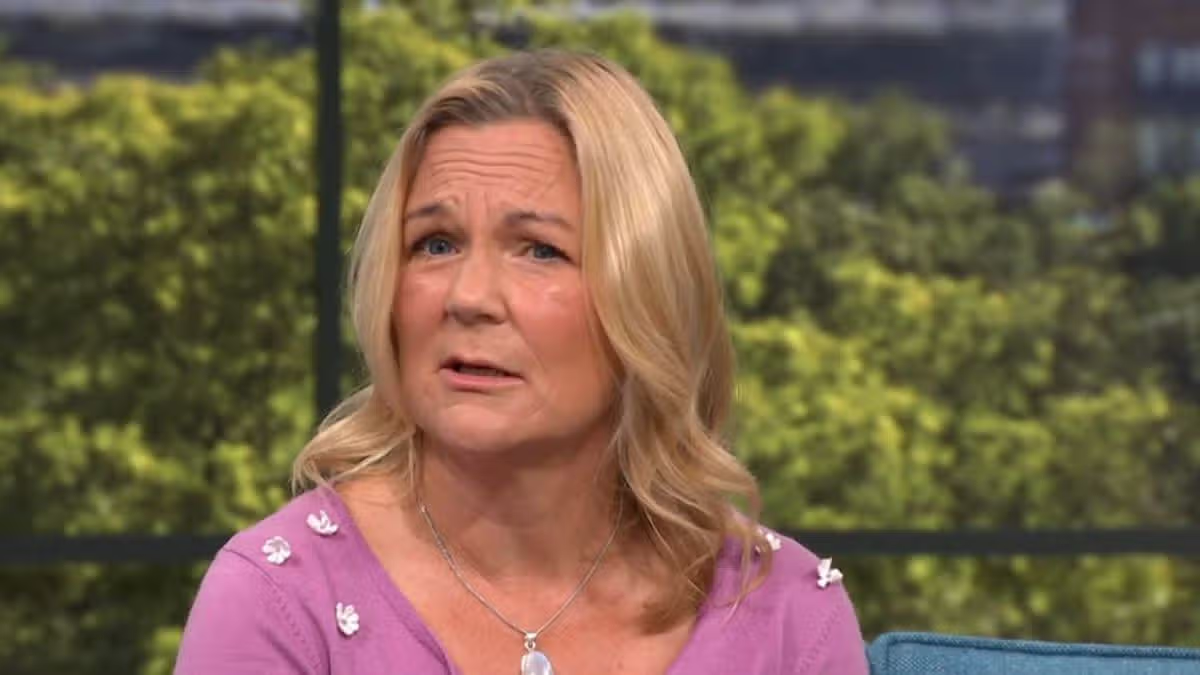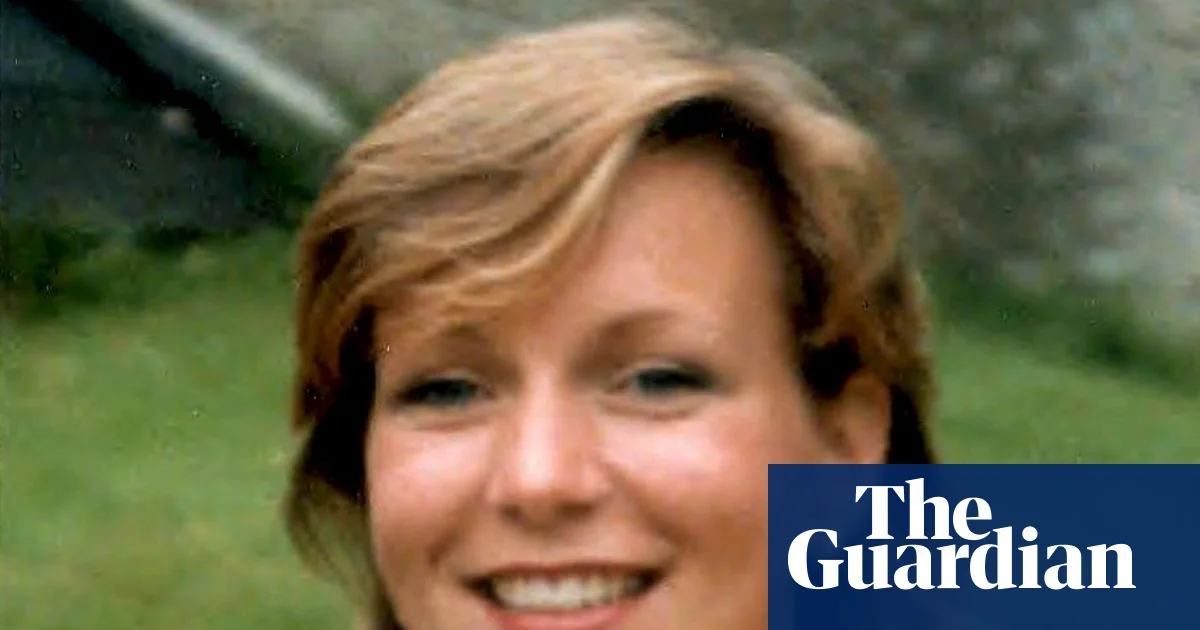
Det Ch Insp Teresa Foster, who leads the Metropolitan police’s cold case homicide team, first heard about the disappearance of the London estate agent Suzy Lamplugh when she was 12 years old watching the TV news at home in the small New Zealand town where she grew up.“It was a huge story,” she said, recalling how the unsolved case attracted global attention in 1986. “It was shocking.” Foster later emigrated to the UK and four decades on is making a final appeal for information that could lead to the discovery of Lamplugh’s body and bring closure for her family.Foster’s 15-strong team remains hopeful that people who had met or knew her killer could still contact police with new information, edging them towards understanding what happened to Lamplugh. Met detectives have this year solved two other similarly historic cold cases, a murder and a manslaughter, after family members of those involved came forward, having decided to abandon loyalties to their relatives in later life.“We’re not going to give up on trying to find where Suzy is,” Foster said, before the 40th anniversary of her disappearance. “It’s going to take a change in forensics or technology, or a change of allegiance, or someone coming forward.”Lamplugh (second left) with her siblings (left to right) Richard, Tamsin and Lizzie. Photograph: Family handout/PAThe search for Lamplugh was one of the largest missing persons investigations ever mounted in the UK. The 25-year-old left her south-west London office at about 12.40pm on Monday 28 July and was never seen again. Colleagues believed she intended to take a client on a viewing because she took the keys for a nearby flat; a note in her diary said she had a 12.45pm meeting with a Mr Kipper at 37 Shorrolds Road, Fulham.A few days before she disappeared, Prince Andrew and Sarah Ferguson were married in Westminster Abbey. That year, countries across Europe were dealing with contamination from the April Chornobyl explosion, “mad cow disease” was developing in herds of British cattle, and Mikhail Gorbachev introduced the concepts of glasnost and perestroika (openness and restructuring) to the Soviet Union. Despite the significant passage of time since these events, Lamplugh’s case continues to trouble Met police officers.“We’re very close to the family, so it does haunt us that we can’t give them answers,” Foster said, adding that the Putney police station where her team is based is just a short drive away from Lamplugh’s former home and the streets where she worked and where her car was later found abandoned. The team’s priority is “finding her resting place and bringing her back”.Lamplugh was legally declared dead in 1993, presumed abducted and murdered. The case is one of the Met’s oldest open murder investigations. Police failed to gather enough evidence to charge their prime suspect, John Cannan, who was arrested in 2000. A forensic review of all the significant material available was completed in 2024 but failed to unearth any DNA or fingerprints that might have helped detectives resolve who killed Lamplugh.The Met police’s carousel of filing cards, with 26,000 individual index cards recording tipoffs, and persons of interest and witnesses to the case. Photograph: Metropolitan policePolice are storing 178 boxes of notes and evidence relating to her case, 3,000 files have been uploaded to Holmes (Home Office large major enquiry system), while a carousel filing system, where tipoffs received from the public were recorded in the 1980s, contains 26,000 entries.Foster showed a block of cards relating to Cannan. “It might not look much, but everybody else here just has one card; John Cannan has quite a lot of cards all attached together,” Foster said. After Cannan died in Full Sutton prison in November 2024, aged 70, her colleagues went to his cell to search his possessions but found nothing to further their investigations.A photo from 1987 issued by police of John Cannan, the prime suspect in Suzy Lamplugh’s disappearance. Photograph: Avon and Somerset police/PAThey plan to follow up a further 30 potential witness leads over the next 12 months, but if no useful information is discovered the case will finally be classified as inactive, which means officers will continue to respond to new leads if they emerge but will no longer be regularly working on the case. They hope forensic advances in the future could enable detectives to reanalyse materials gathered from the Ford Fiesta that Lamplugh was driving on the day she disappeared – a rearview mirror, seat tape from the seats. There are two smudged fingerprints detected on the rearview mirror that have yet to be matched with any suspect’s DNA profile. “They could come up as a match at some stage through our European database,” Foster said.She is still hoping that someone who knew Cannan may decide belatedly to speak to officers. “Often we find it is a family member that will come forward in these cold cases,” she said. In May, Janice Nix, 67, was convicted of the 1978 manslaughter of her five-year-old stepdaughter, after the girl’s older brother went to the police in 2022 with a new account of what had happened. Earlier this month Michael Stewart, 57, and his brother Anthony Stewart, 60, were found guilty of murdering the civil servant Anthony Littler in 1984, after their younger brother Daniel tipped off police.Foster promised protection to new informants, saying: “If anybody has that information, we’ll take it forward, but we’ll also safeguard them in any way we can.”Police believe they would be much better equipped to handle a case like Lamplugh’s were it to happen now, because they would be able to access mobile phone GPS data and CCTV footage, and would no longer have to rely on clunky and time-consuming index card records of tipoffs and suspects.Lamplugh (third left) with her siblings and their parents, Paul and Diane. Photograph: Family handout/PABoth Lamplugh’s parents are now dead, but her siblings recently gathered with friends to celebrate her life. “She was, as she is always portrayed, a truly beautiful person inside and out. Everyone who met Suz was touched by her kindness, empathy, strength of character and joy for life,” they said in a statement. Her parents established the Suzy Lamplugh Trust, which has a focus on reducing stalking and harassment.Foster believes Lamplugh was targeted by a stalker, “a predator of some type who then lured her into a false meeting”. Her handwritten diaries remain with the police. In one entry she recorded her happiness at getting a job with the estate agency, noting: “The company puts me in the window desk, as the most attractive female. That’s how it is, the most attractive female on display for any man to see.”
‘We’re not going to give up’: 40 years since Suzy Lamplugh vanished, police still hope to find her
Met officers issue a final appeal for information as they seek a breakthrough in hunt for missing London estate agent
1,106 words~5 min read