Support CleanTechnica's work through a Substack subscription, on Patreon, or on Stripe. Help us produce all of the high-quality, original content we publish week after week despite the challenges of content-scraping AI, antisocial media, inflation, and other hurdles.
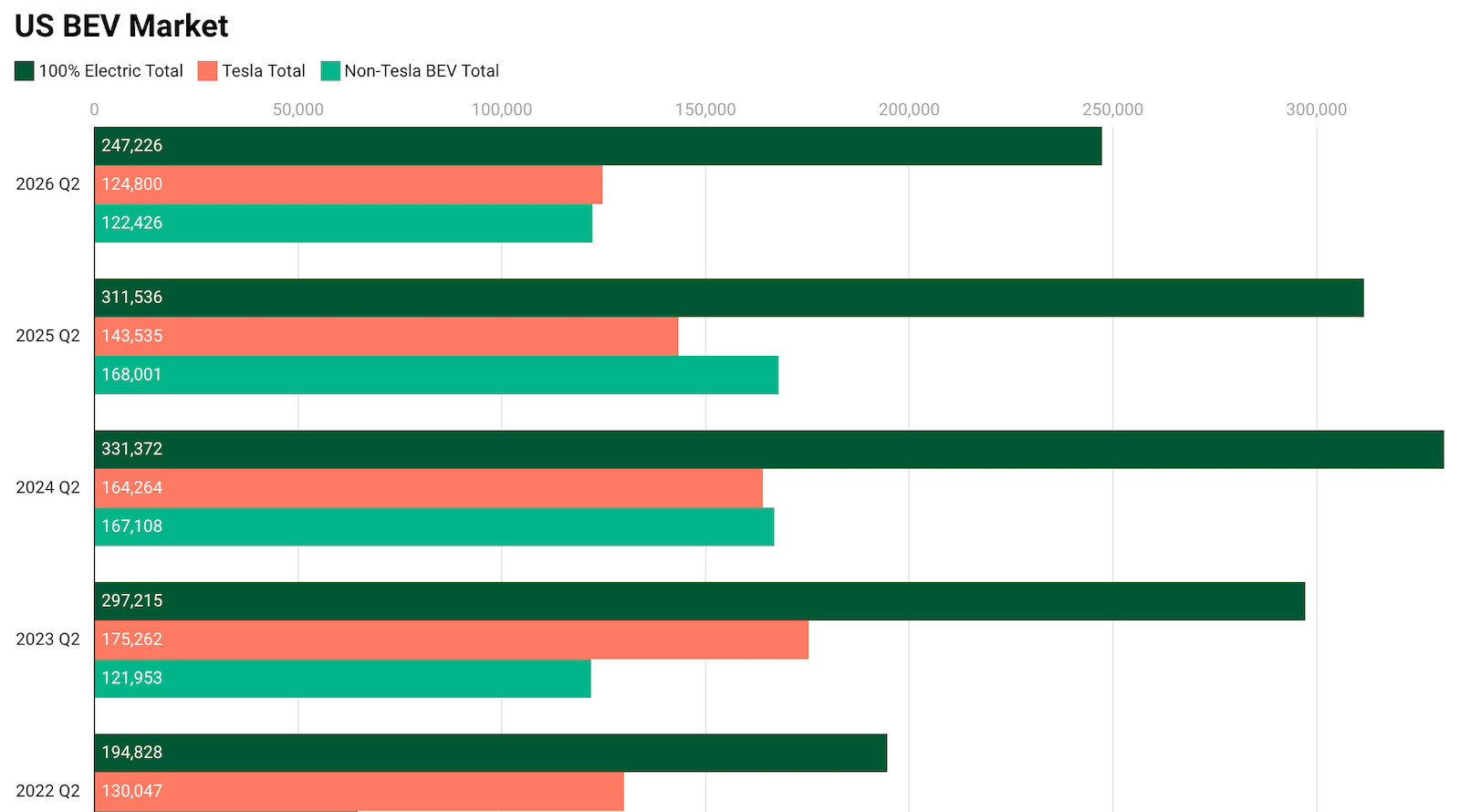
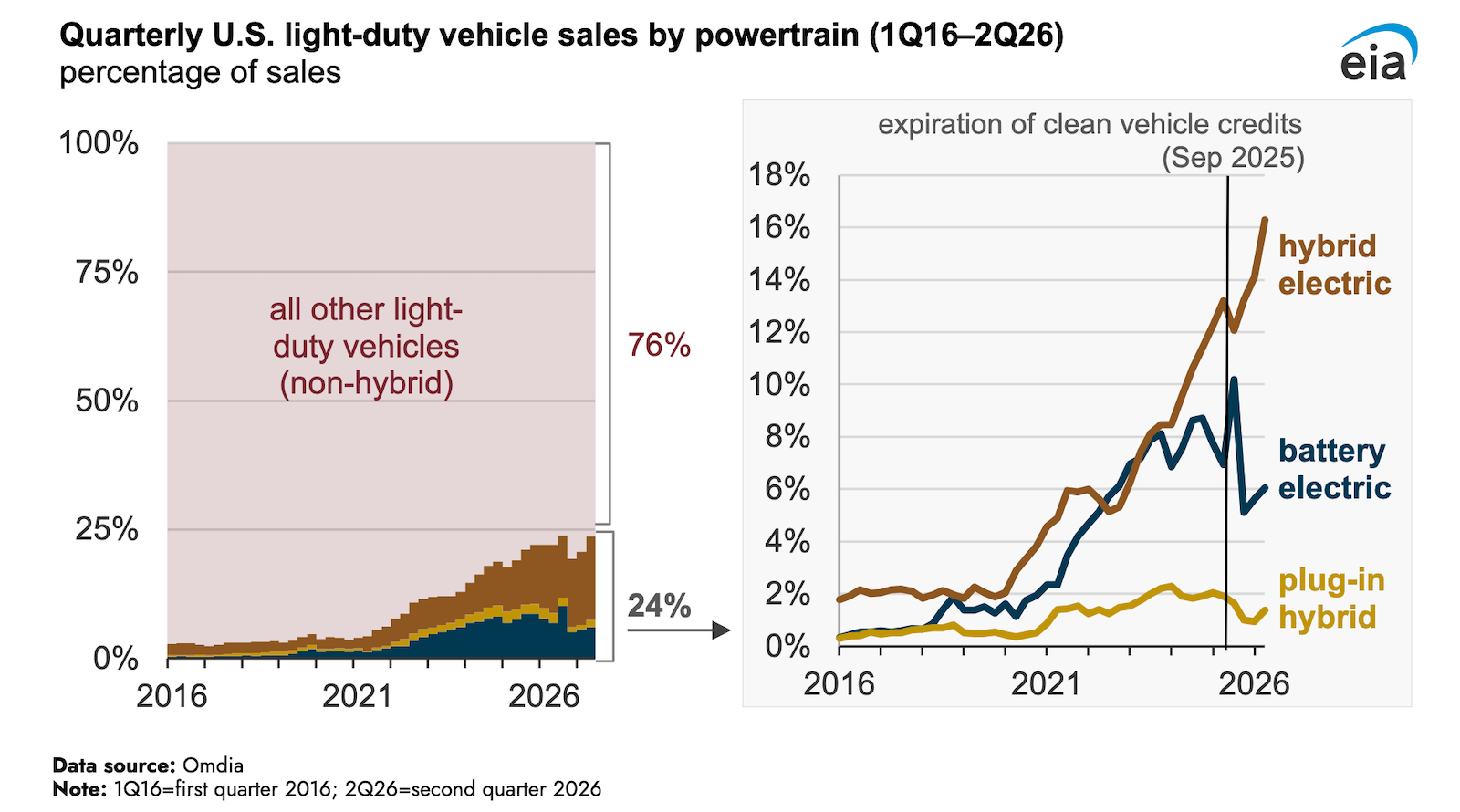
In the second quarter of 2026 (2Q26), 24% of new light-duty vehicles sold in the United States were hybrid electric, battery electric, or plug-in hybrid electric vehicles, up from 22% in 2Q25. Between 2Q25 and 2Q26, hybrid electric vehicles continued to gain market share, reaching a record 16% of light-duty vehicle sales. The market shares of battery electric and plug-in hybrid electric vehicles decreased, according to estimates from Omdia. In 2Q26, battery electric vehicle sales were 6% of new light-duty vehicles sold, down from 7% in 2Q25; plug-in hybrid electric vehicle sales fell from 1.9% to 1.4% over the same period.
These different vehicle types affect the broader energy sector in different ways. Battery electric and plug-in hybrid electric vehicles can consume electricity from the grid, which affects electricity demand. By comparison, hybrid electric vehicles consume liquid fuels and do not connect to the grid. Hybrid vehicles were not eligible for any of the federal tax credits that expired in September 2025.