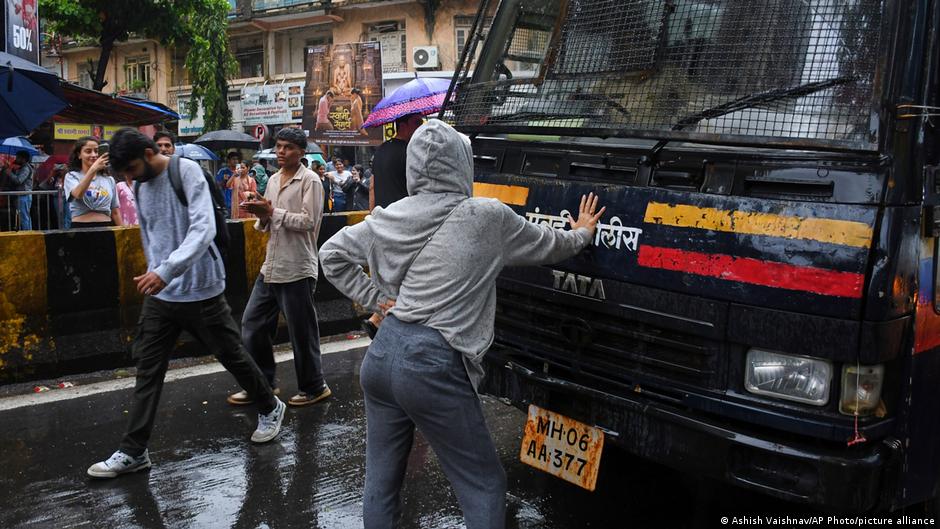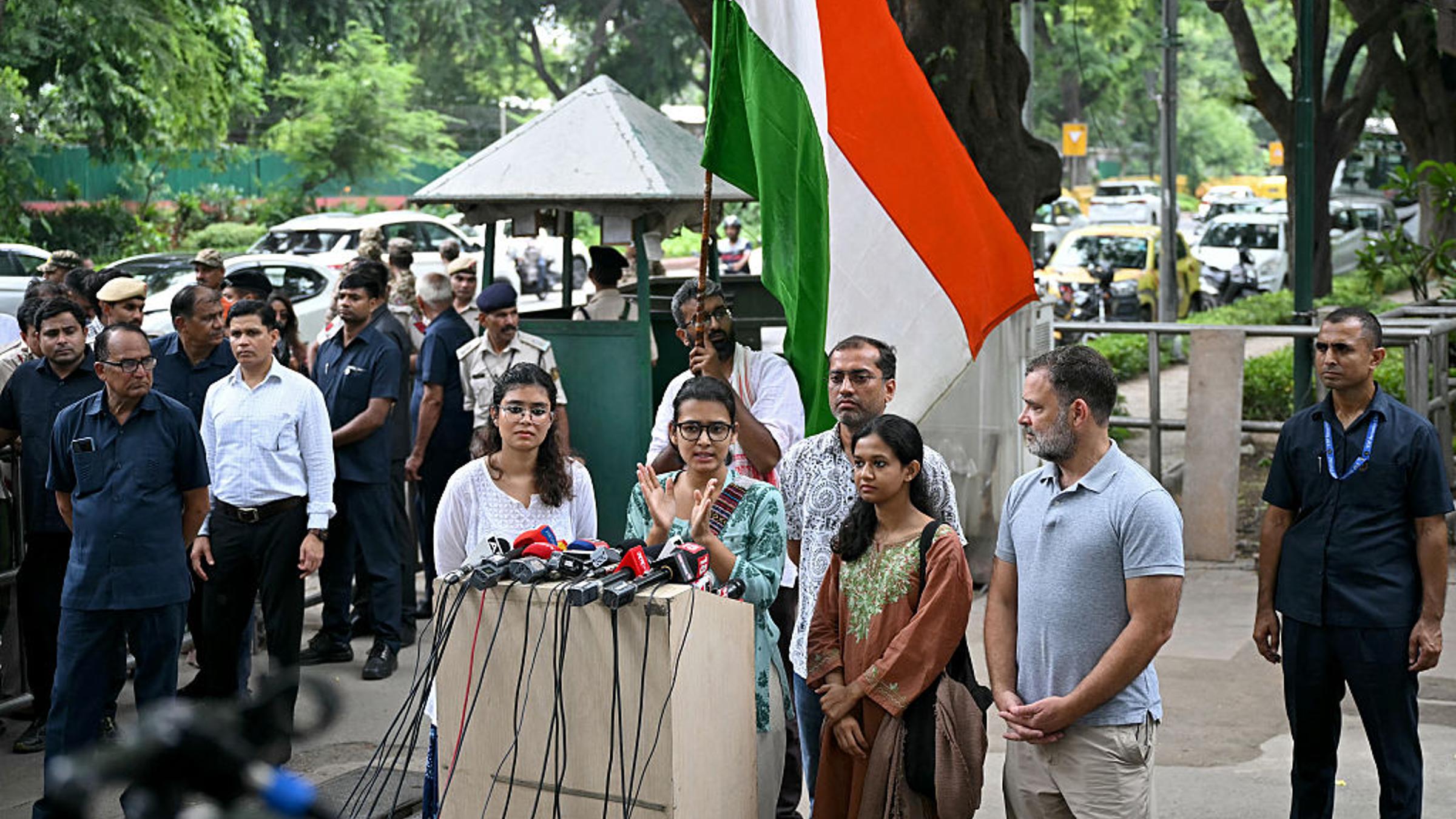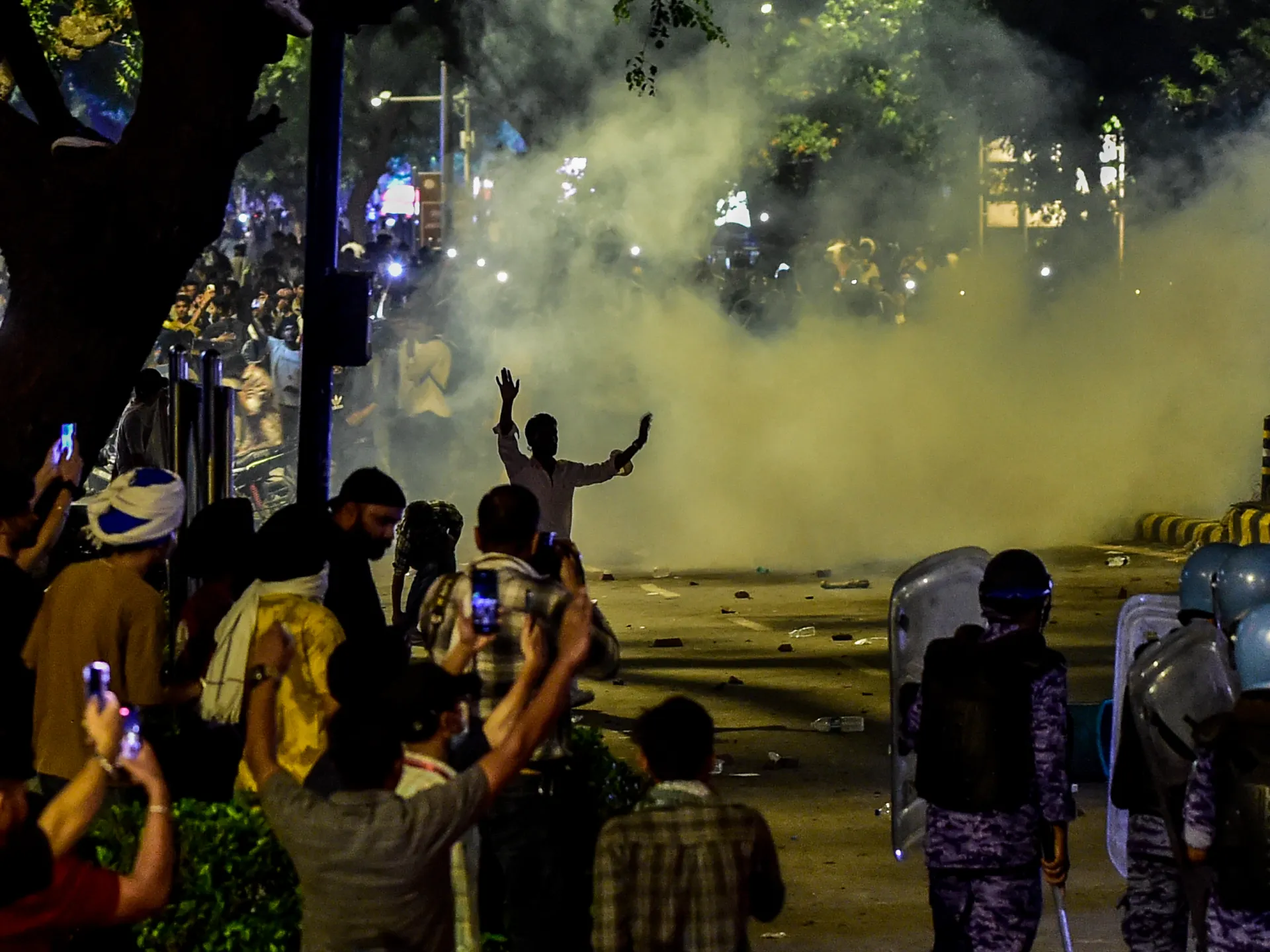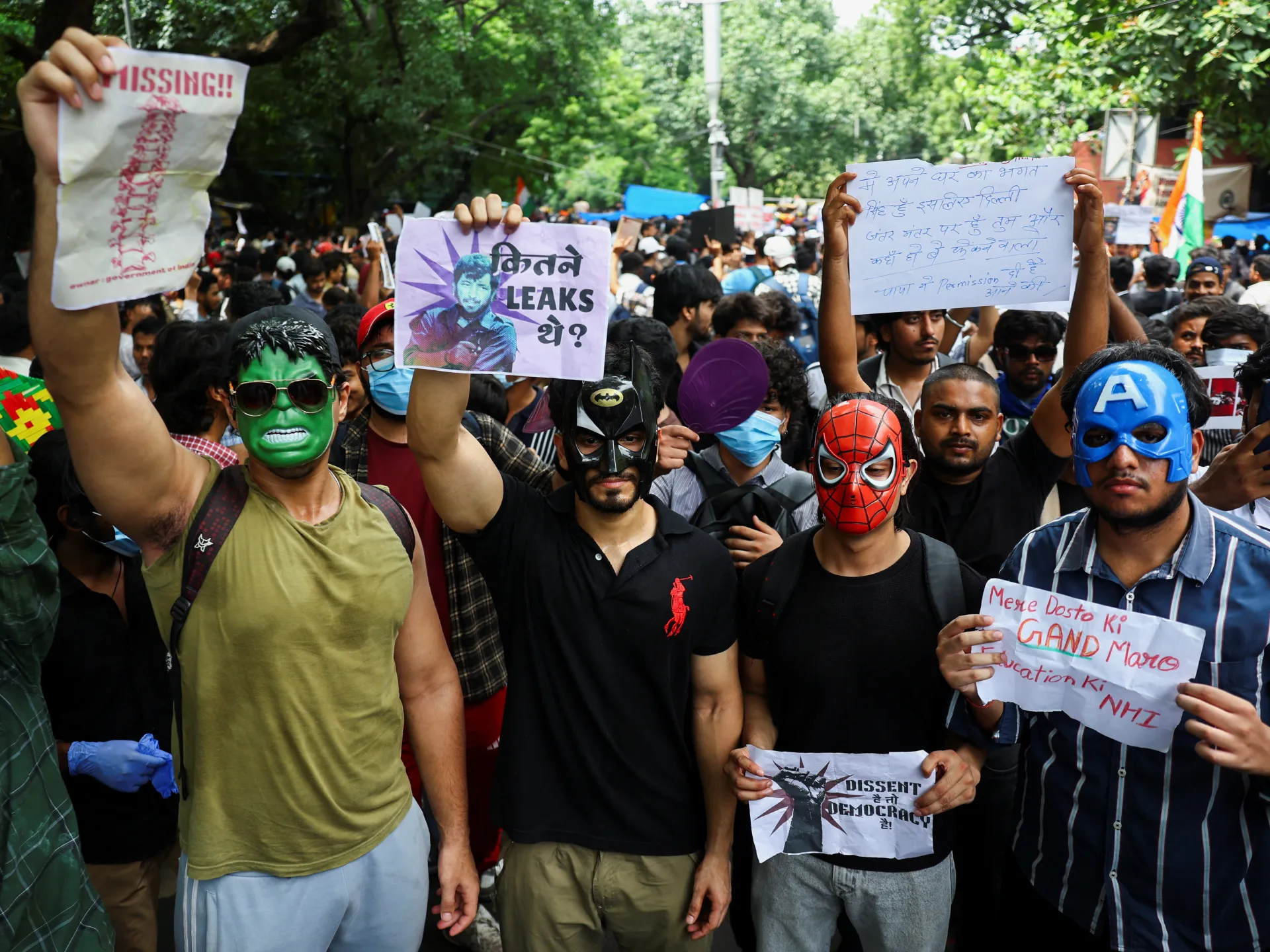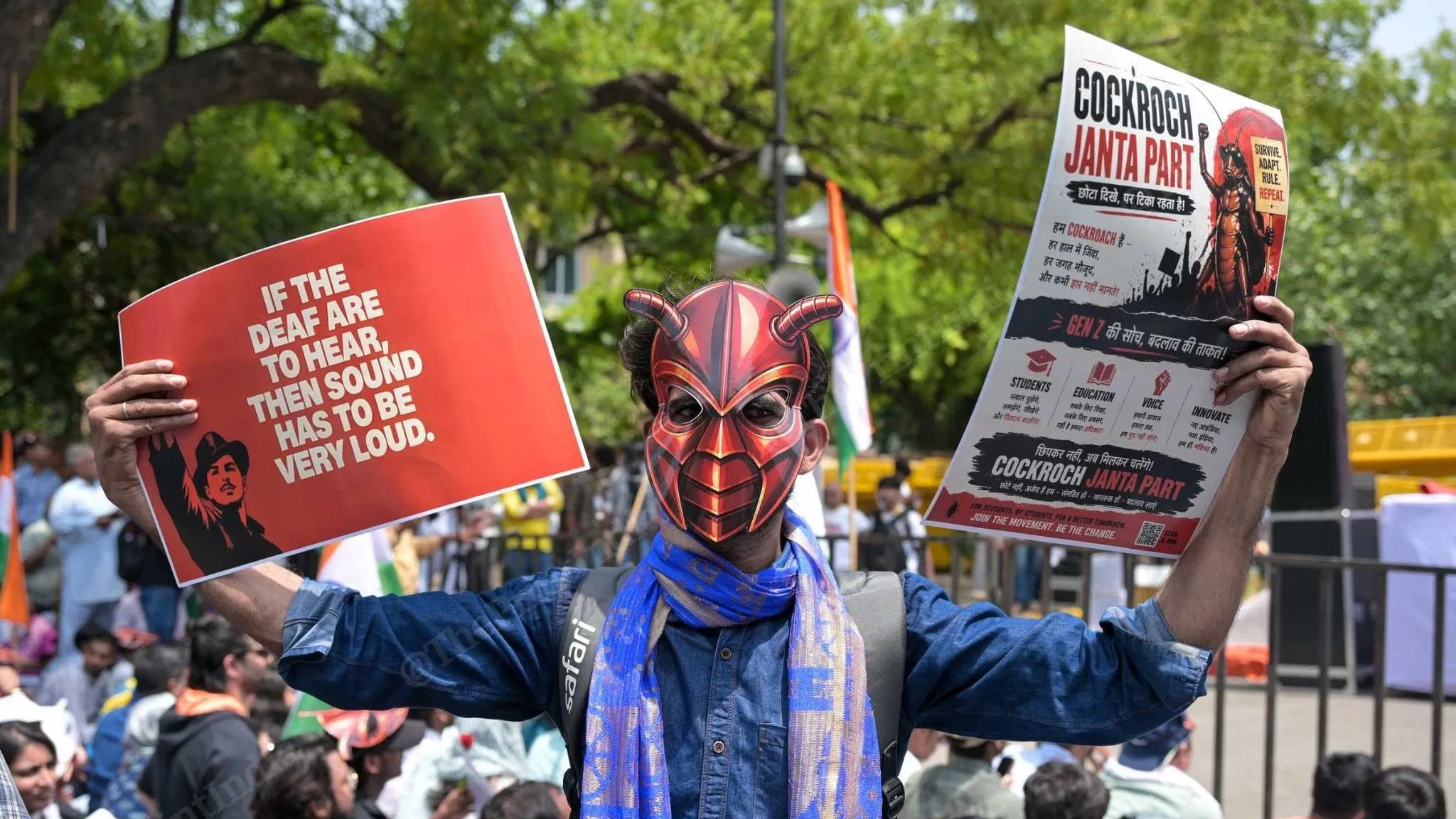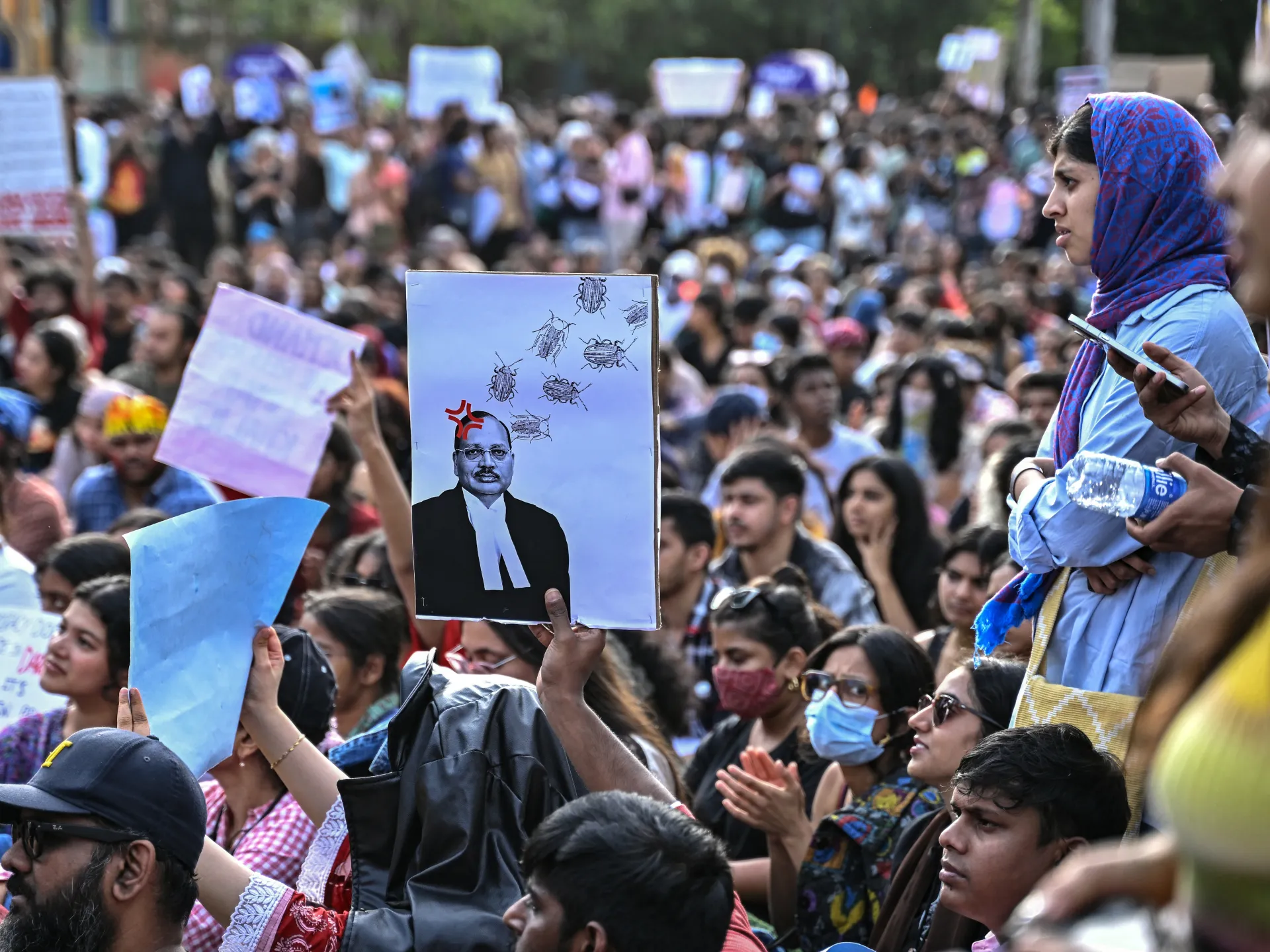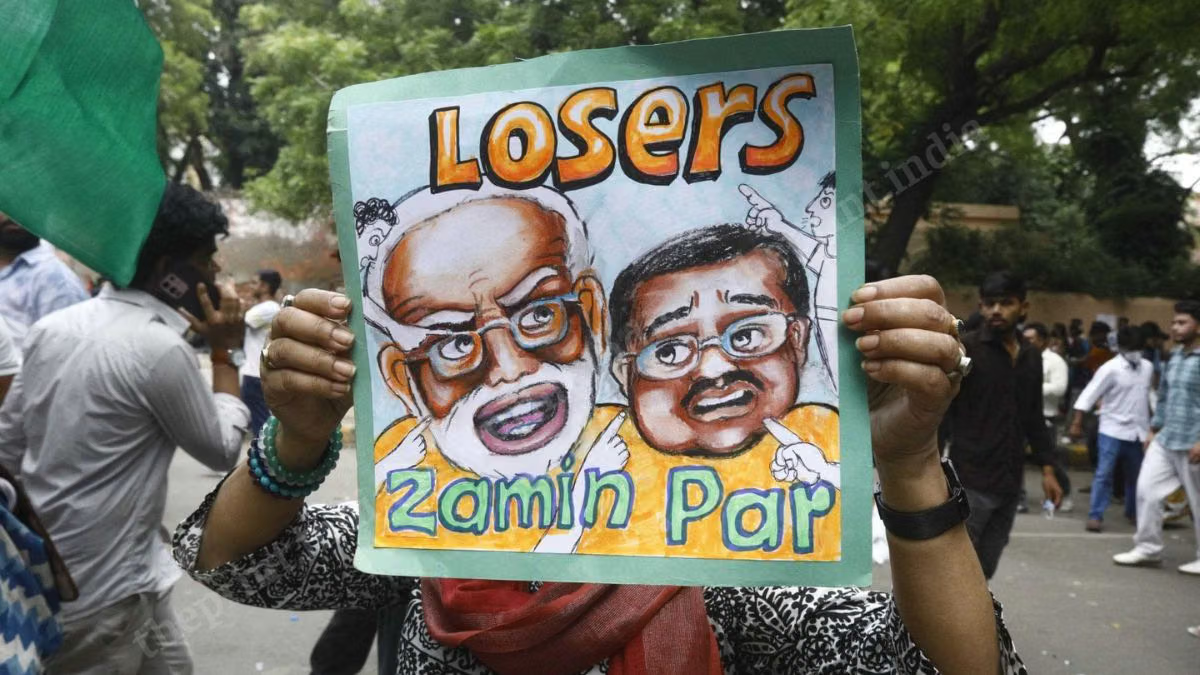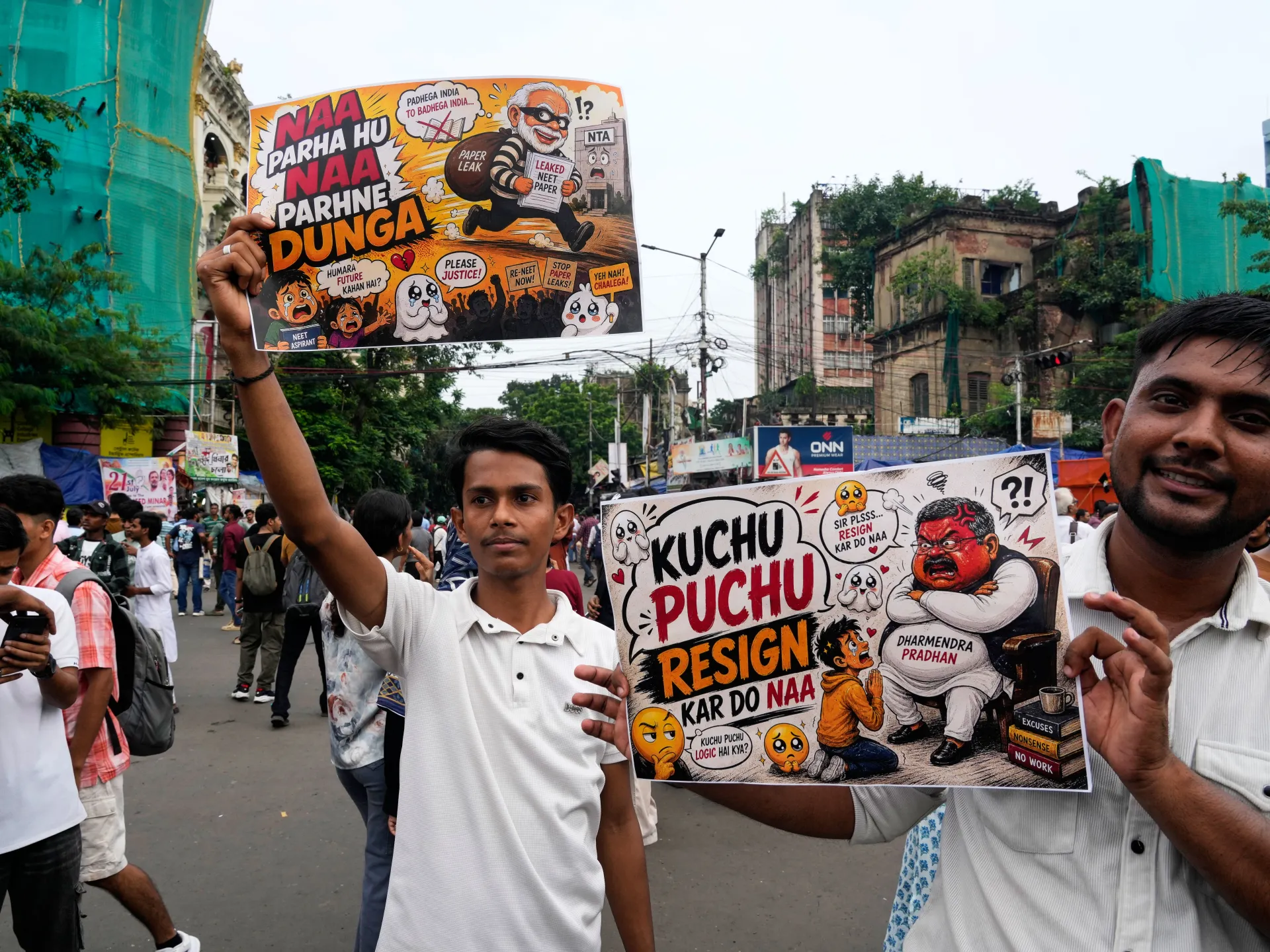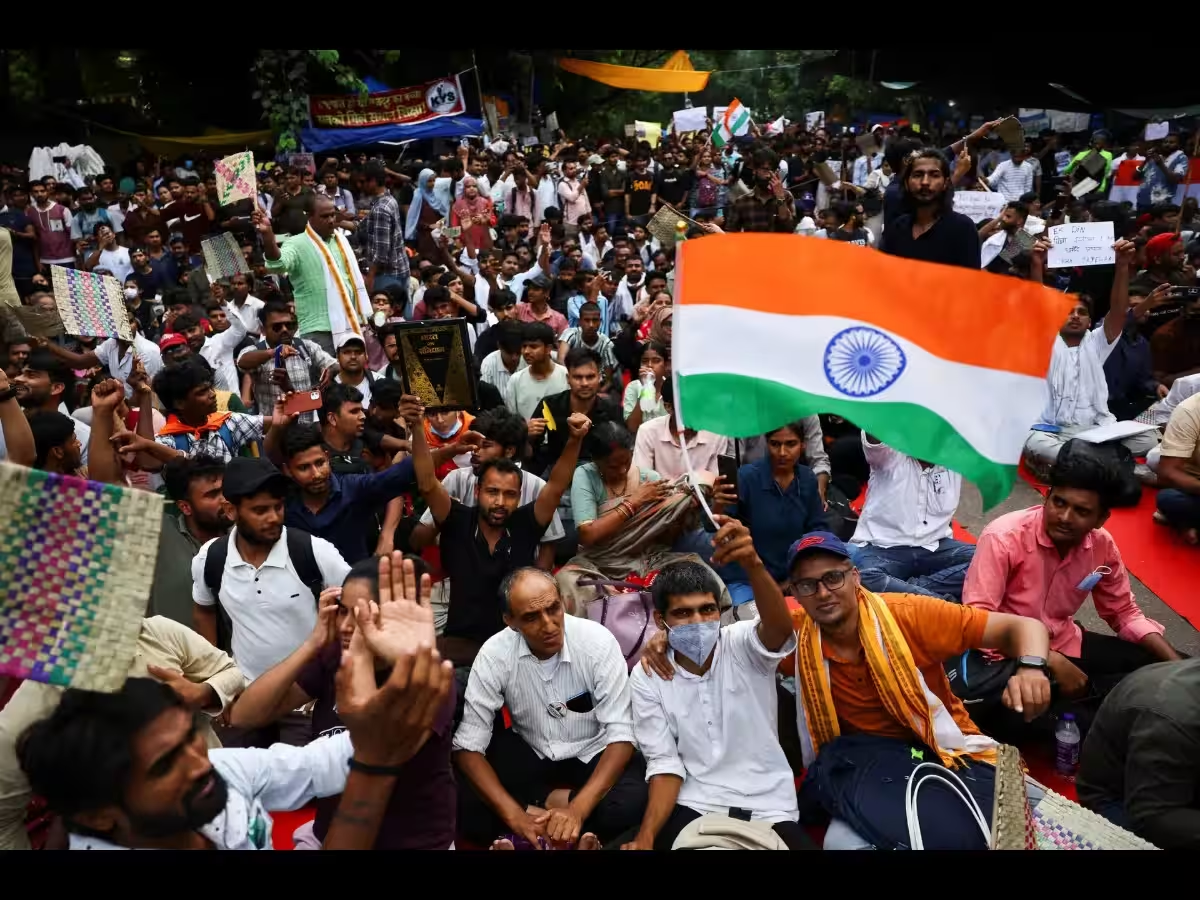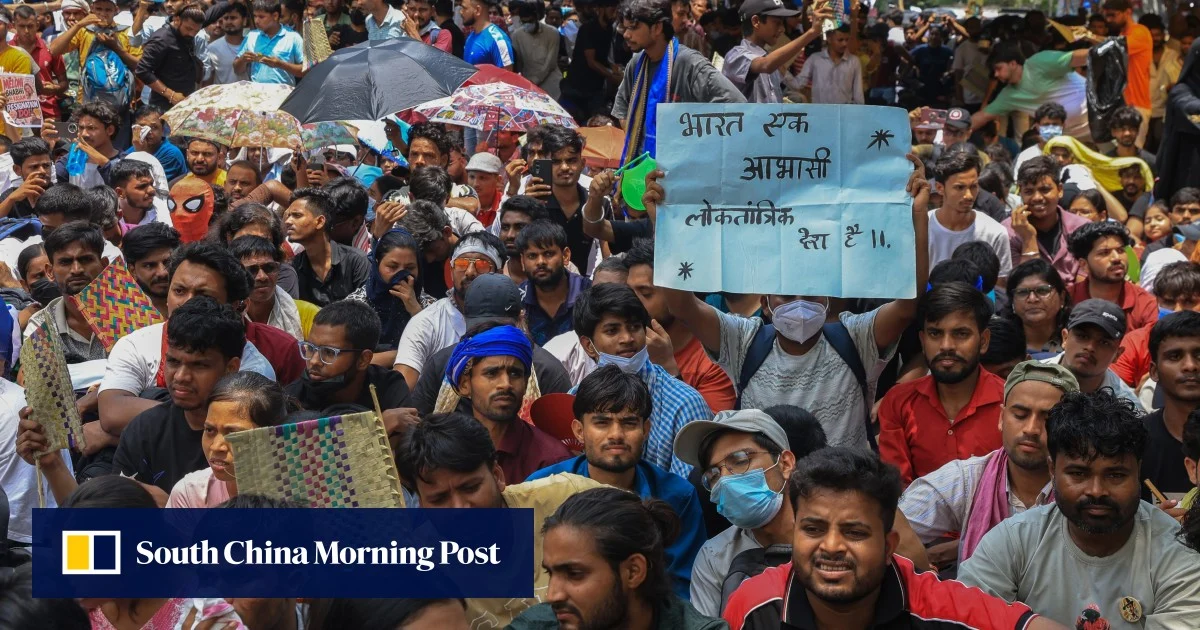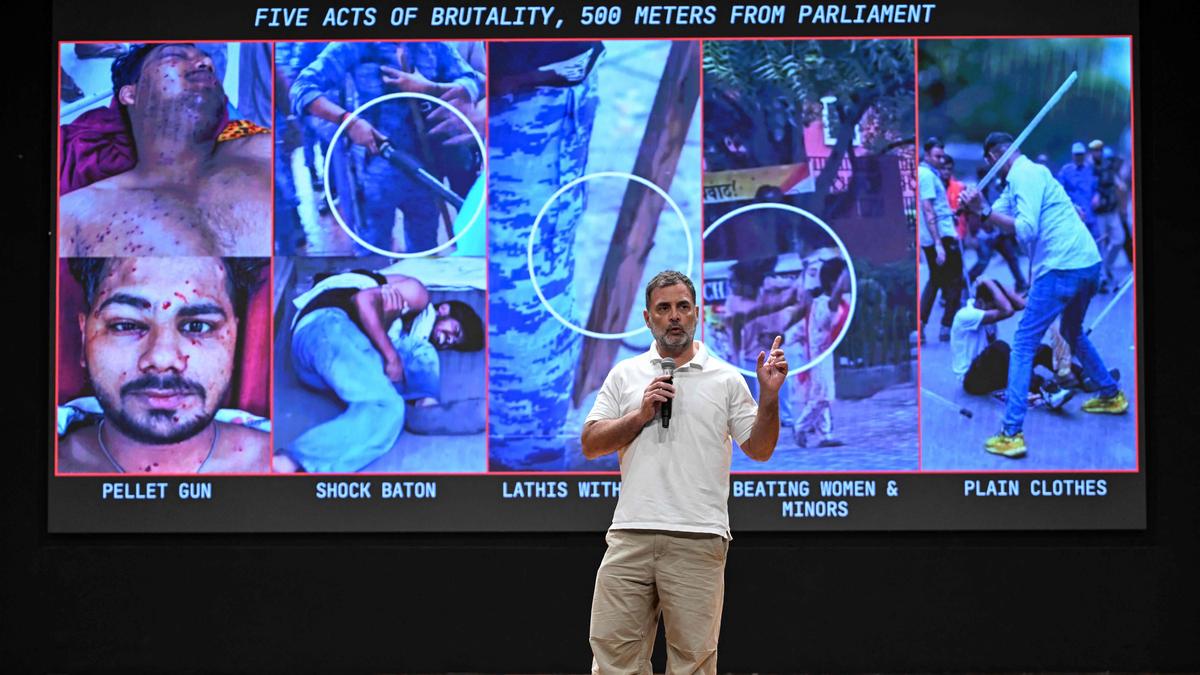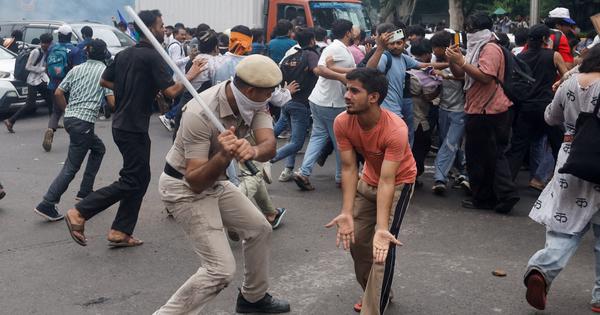
India will never be the same after July 20.Something moved, something changed in a country that had for too long been broken by fear and hate.We saw the beginning of the mending of this fractured land.And this was accomplished by the uprising of hundreds of thousands of young people around the country, young people of every faith, caste, class, language and culture. They were the satyagrahis of the Instagram generation.The July 20 march to parliamentOn July 20, the morning when the protesting students had announced a march from Jantar Mantar to the national parliament, I reached the protest site early. Young people had already begun to pour in massive numbers from the night before. All efforts by the police to block the passage of young people to the protest site had failed: their usual playbook of road blocks, closure of metro stations, jamming of the internet and a massive display of armed police and paramilitary soldiers.The crowd still swelled well beyond the furthest expectations of both the organisers and the security establishment.The surging gathering became restive when some of the leaders tried to discourage the march to parliament, fearing for their safety. But the young people were determined: their only response was the chant, “Sansad, Sansad, Sansad!”The march could no longer be halted. And as I walked in the middle of this huge surge of young humanity, I had a powerful sense that I was witnessing history being made.I was stirred first by the sheer diversity of the crowd of which the average age was 20. Every section of young India was represented here. Hindus, Muslims, Sikhs, Christians, Buddhists, Dalit, Adivasi, people of every caste, language and identity, men, women and other genders, elite, middle class and working class. There was even an animated group communicating in sign language.A young man who I walked beside for a stretch asked me, “Have you before this in your long life ever experienced a mass uprising like ours?”The young people were immensely conscious – although often without clear articulation – of the rare worth of what they were setting out to accomplish.What was in effect a leaderless crowd displayed both discipline and a sense of purpose. Volunteers emerged. They regulated themselves. I often heard them reminding each other of the importance of non-violence and of remaining calm.Police assault on the studentsAnd then the police bared their faces, and fell upon the crowd of marching students. They were armed with batons, some of these rendered more dangerous with nails and electric shocks, and with tear gas shells and pellet guns. They brutally assaulted the students, and male policemen even attacked women, sometimes tearing their clothes and groping their bodies.The young people had of course never experienced anything remotely like this in their lives. But their instincts were extraordinary. They reached out to protect those who were near them, often at great risk to themselves. These were frequently strangers. Their religion, caste, class, gender, language – none of this mattered at that moment. What mattered was that they were all in this together. Men protected women, and many women protected men.The police stopped at nothing. It lobbed stones to discredit the students. It even fired pellet guns that could blind the protesting students.Fight back in a carnival of protestThe brutality with which the police had turned upon the country’s children shook the conscience of the nation. The next evening, I decided to drive to the protest site in a small personal bid to offer solidarity to the battered young people who I expected to be demoralised and frightened.But what we encountered, when my wife and I reached Jantar Mantar, staggered and exhilarated us. The mood was far from sombre. It was a carnival of defiant protest.The state had entirely miscalculated the mettle of the young. The police violence had only made them much more determined. The students who had been beaten by the police were back at the protest site with their bandages. Th ousands more had joined them. And their anger had shifted entirely to one target, and this was prime minister Narendra Modi.Their anger they expressed through an outpouring of creative satire lampooning the prime minister. Many held up their posters posing with Melody chocolates in their mouth, making fun of the gift he had made of Melody chocolates to the Italian prime minister Giorgia Meloni. A young protester holds up a bag of Melody toffees at a protest in Pune on July 24. Credit: Divya Aslesha/Scroll.One poster said, “Bure din hi acche the”. The “bad” days were much better than the promised “good days'“. Another, “Democracy Ha Ha Ha”. “They try to bury us, they don’t know we are seeds.”A poster showed Modi and his cabinet colleagues dressed in British colonial army uniforms with the words “Hamare Zamane ki East India Company” – the East India Company of our generation. One was titled “List of 5 Best Works by Modi”, was followed by a blank sheet. Another poster showed a skeleton with the words: “Waiting for government exams that do not leak.” And a lovely one, “Proud mother of a cockroach.”Many posters mocked the massive scandal of temple trust authorities stealing the temple offerings to the Ram Temple in Ayodhya. One showed Modi begging Lord Ram to save him. Ram replies, “First return my money!” In another, a young man describes his plight in the Modi era. Before appearing for a competitive examination, he drove his scooter to the temple and made a cash offering. But the paper leaked, the government added ethanol to the petrol for his scooter, and the money he had donated to the temple was stolen by the temple priest!Many protestors also joked about the absurd claim that the protest was funded variously by Pakistan, China and the perennial bugbear George Soros. One young man stood on the dais announcing that he was definitely funded. Pakistan had paid his bus fare from the hostel, China the metro fare. He hoped maybe Nepal would pay his return fare!I loved a poster held up by a scowling young man. It read: “No one funds me. I hate this corrupt government for free!”And there was an explosion of songs, dances and feverish slogans created for the occasion. These pierced the humid night sky as a challenge to the hubris of all unaccountable authority.The protest site – just like in the site of the 13-month farmers’ protest at the borders of Delhi in 2020-’21- also grew quickly into a site of friendly sewa or service. At every turn, young people would smilingly urge you to accept food packets, burgers, cold drinks and water bottles. Young doctors volunteered to help treat wounds or participants who collapsed briefly with heat exhaustion. Another group of young people took on the role of picking up the litter. Volunteers regulated the crowds.There was humour here as well. A young man urged us to accept a banana. When we politely declined, he said, “You cannot refuse. This is the prasad from Modi’s tehervi (his 13-day funeral prayers)!”People from around the country ordered food from food delivery apps to be delivered to any of the assembled protesters at Jantar Mantar. I loved a cartoon by Sandeep Adhwaryu depicting the police interrogating a delivery man. Who ordered this, he is asked. The reply – India. What’s the destination? Reply – Democracy. Who’s paying for this? – is the next question. The delivery man replies – Hope.#JantarMantar #Accountability @timesofindia pic.twitter.com/Vq06VR9xZm— Sandeep Adhwaryu 🇮🇳 (@CartoonistSan) July 23, 2026
Harsh Mander: Instagram satyagrahis led India’s great student uprising with humour and courage
Their courageous resistance has breached the citadel of fear.
3,299 words~15 min read