After getting his hands on a rope driver module from the Apollo project era that had a big ‘Scrapped Module’ stamped on it, [Mike Stewart] was naturally left curious as to what exactly had failed in this module. Originally destined for the Apollo Guidance Computer, these Raytheon-manufactured modules were the pinnacle of space-grade high-tech of the 1960s, with requisite acceptance testing so as to not endanger a very expensive space mission.
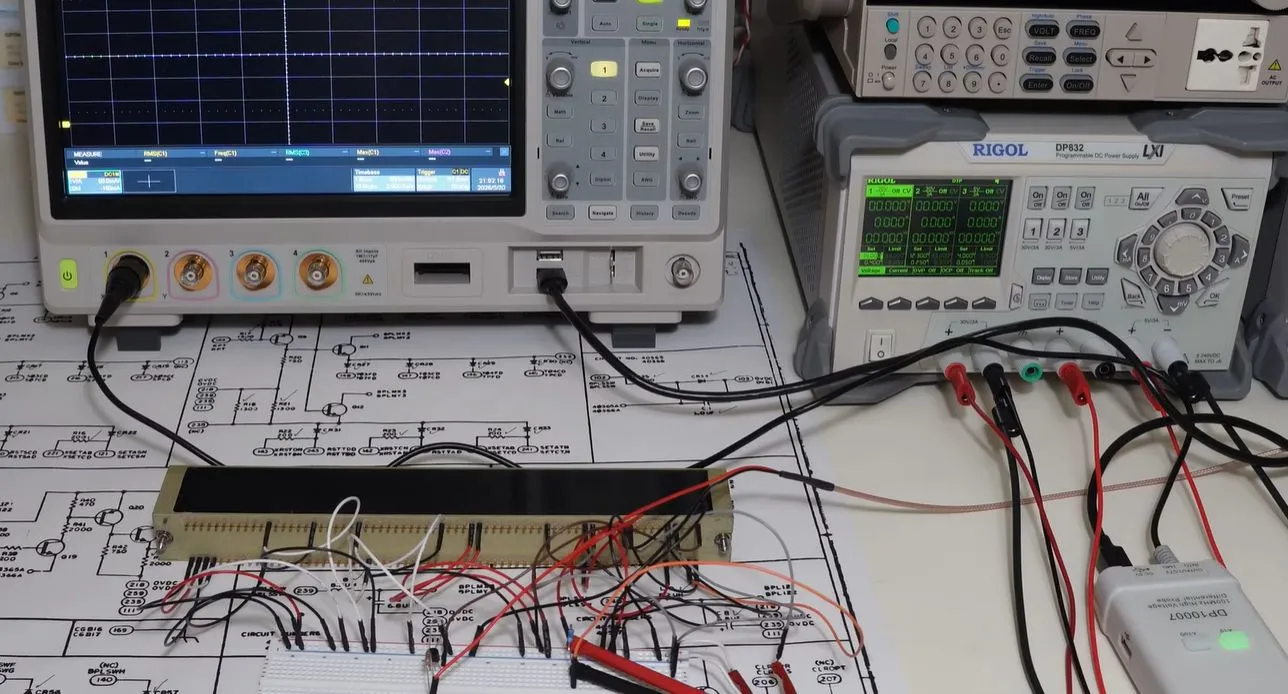
The cool part here is that the acceptance documents for the module in question (B16-B17) have been scanned in and can be found on the Internet Archive. With the part itself being potted and very much inaccessible, this document helpfully lays out the expected measurements on the module’s pins, as well as schematics and mechanical drawings. Unfortunately the reasons for the rejection were not recorded, so replicating the failing test results is required to understand the reason.
NASA Rope Driver Module with suspicious exploration marks. (Credit: Mike Stewart, YouTube)
A slight complication here is that the testing procedure doesn’t just involve hooking up a multimeter for some voltage and capacitance measurements. There are also temperature and voltage extremes, and vibration tolerance involved, which would be somewhat complex to test, but most of all risk damaging a historical artefact. Thus a somewhat conservative testing procedure was chosen, even if this may not reveal the actual fault.