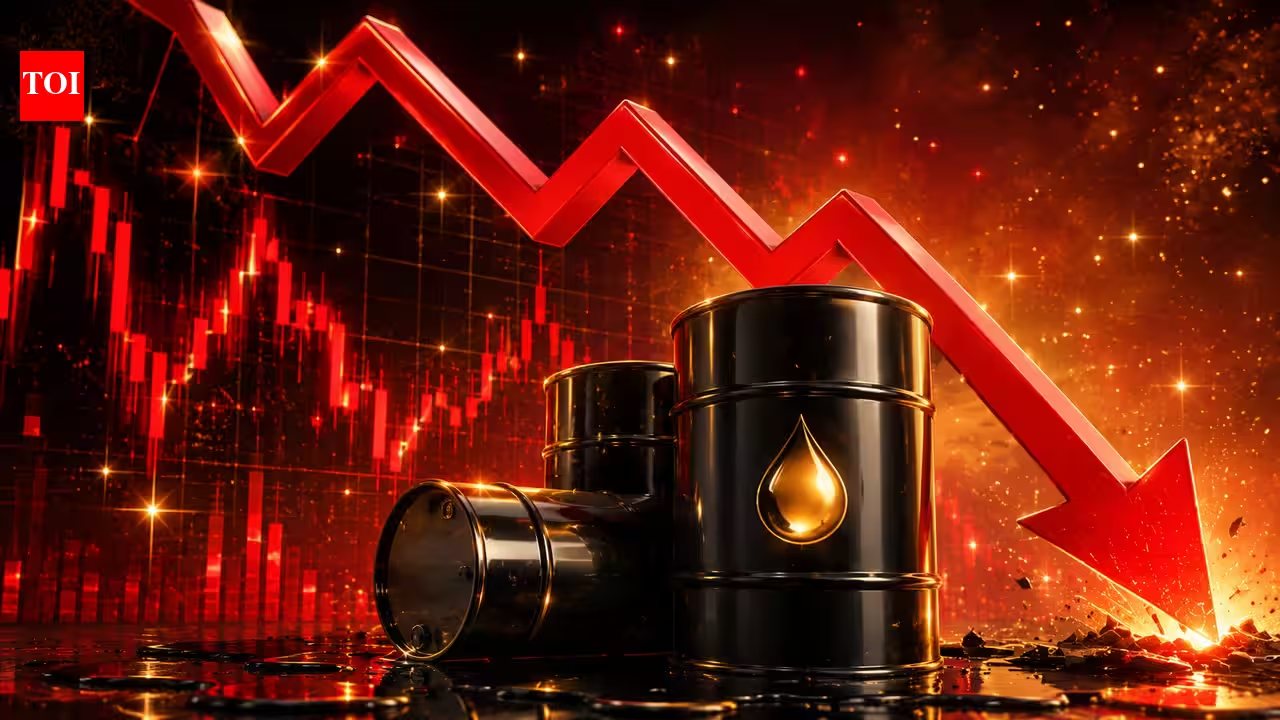
Oil prices fell after President Donald Trump announced that the United States and Iran are engaged in talks aimed at resolving ongoing conflicts. This development, reported by Bloomberg Markets, comes as welcome news for markets that have been sensitive to geopolitical tensions in the Middle East. The discussions between the U.S. and Iran suggest a possible easing of supply disruption risks, particularly in the Strait of Hormuz, a critical chokepoint for global oil transport. Brent crude and U.S. West Texas Intermediate (WTI), the two primary oil benchmarks, have reflected these dynamics with price adjustments.
The broader context indicates that oil markets have been highly reactive to U.S.-Iran relations, with fluctuations in prices occurring as negotiations progress or stall. Previously, oil prices have dropped in response to indications of de-escalation, while any signs of renewed conflict have led to price increases. The recent announcement by Trump appears consistent with a scenario where de-escalation could stabilize oil prices.
Key Takeaways
Recent U.S.-Iran talks appear to suggest a potential stabilization in the Middle East, impacting oil price expectations.
Market pricing implies a decreased likelihood of crude oil reaching a new all-time high by September 30, now at 6.2% YES.