view more
Wild seabirds that face high energy demands during the breeding season go on to migrate farther and raise more chicks the next year, but at a cost to their own survival. An international team, led by researchers from Nagoya University, raised the energy cost of flight for some birds and tracked them through the next year of their annual cycle. The researchers introduce a concept called "energetic flexibility" and offer rare experimental evidence for how the costs of one season carry over to shape the next. The study appears in Proceedings of the Royal Society B.
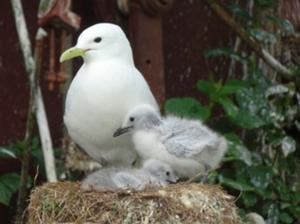
The team studied 251 black-legged kittiwakes on Middleton Island, Alaska, from 2021 to 2024. In 2021, they altered the energy cost of breeding for three groups. One group received extra food, which reduced the energy cost of raising chicks. For a second group, the team clipped three wing feathers and two tail feathers at the base shortly after the birds had laid their eggs. This raised the energy cost of flight for the rest of the breeding season. The feathers grew back at the birds' next molt. A third group was left alone as a control.
Each bird carried a geolocator that recorded its movements through the non-breeding season. The team recovered 203 of the 251 devices the next year and tracked the same individuals through 2024.